In this article
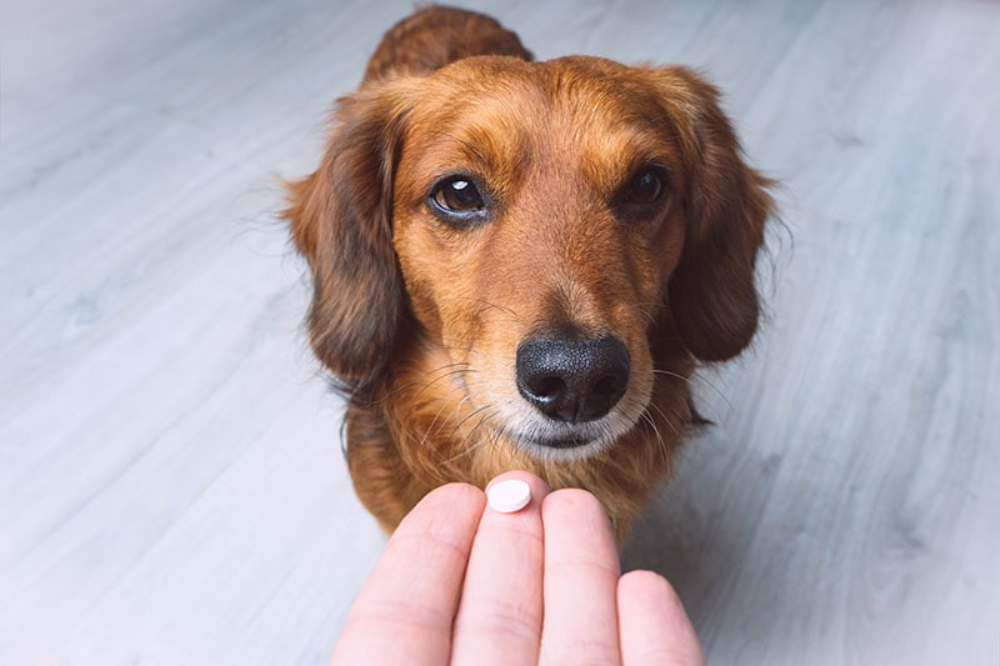
Most dogs are so happy-go-lucky that you could never imagine any of them experiencing something like anxiety. But the fact of the matter is that some canines do have anxiety, and sometimes, it’s severe enough that they need medication.
Fortunately, there are many good anxiety meds for dogs out there that your vet can prescribe for things like separation anxiety, fear-based anxiety, and compulsive behaviors. If you’re curious how they all compare, we have the details for you here.
Keep in mind that this list is not a substitute for a veterinarian’s recommendations, especially since these are prescription medications, but it may give you a bit more information.

The 12 Common Prescription Anxiety Medications for Dogs
1. Amitriptyline

| Brand Names: | Elavil |
| Best For: | Separation anxiety, generalized anxiety, compulsive behaviors |
| Potential Side Effects: | Sedation, constipation, urine retention (holding urine) |
Amitriptyline is a long-term antidepressant that works by increasing a dog’s serotonin and norepinephrine levels and can help with generalized anxiety and separation anxiety. It can also be helpful for chronic itchy skin.
Your dog will need to take amitriptyline twice daily for a couple of weeks before you see its effects, and they should not stop taking it suddenly but instead, have a tapered dose to finish the medication. Dogs with diabetes should not take amitriptyline.
2. Alprazolam

| Brand Names: | Xanax |
| Best For: | Situation anxiety, such as noise phobias, social anxiety, or travel |
| Potential Side Effects: | Sedation, increased appetite, incoordination |
Alprazolam is a common short-acting anxiety medication for dogs suffering from situational anxiety, such as noise phobias or travel. It can be given 30–60 minutes before a thunderstorm, fireworks, or trip to the vet, to help the pup relax and handle the situation more easily.
Alprazolam can be given up to four times a day but can also be used in the long term for more chronic phobias or anxiety issues. Since alprazolam partially depresses the central nervous system, most dogs will be slightly lethargic or sedate while on this medication.
3. Diazepam

| Brand Names: | Valium |
| Best For: | Phobias, situation anxiety |
| Potential Side Effects: | Sedation, incoordination, agitation, increased appetite, aggression |
While you might be more familiar with diazepam as a muscle relaxant, its depressive action on the central nervous system can also help with situational anxiety, including phobias and travel. Dogs that are afraid of loud noises or car trips can benefit from diazepam’s short action within 30–60 minutes of taking the medication.
It can be given up to four times daily for intense days or can be given consistently over time. However, since it can cause lethargy and potentially, aggression, there may be a better option for long-term use.
4. Clomipramine

| Brand Names: | Clomicalm |
| Best For: | Separation anxiety, situational anxiety, compulsive disorders |
| Potential Side Effects: | Decreased appetite, vomiting, diarrhea, sedation |
Clomipramine is a popular long-term antidepressant used for separation, situational anxiety, and obsessive-compulsive disorders like overgrooming, pacing, etc. It increases serotonin and norepinephrine levels in the brain to help dogs feel calmer and more at ease.
You should expect to wait several weeks or even up to 2 months to see the full effects in your dog. Clomipramine should be given twice a day with or without food and not stopped abruptly, but rather on a tapered dose if ending the medication.
5. Buspirone

| Brand Names: | BuSpar |
| Best For: | Social anxiety with other dogs, certain phobias |
| Potential Side Effects: | Vomiting, decreased appetite, sedation |
Buspirone is an anti-anxiety medication that’s best for long-term issues, including social anxiety with other dogs and certain phobias. To work optimally, it needs to have a continued supply to a dog’s system that will help increase serotonin and dopamine concentrations. This means it doesn’t work well for things like noise phobias or travel. It can take 1–6 weeks to reach its full effect and can be taken two to three times a day.
6. Fluoxetine

| Brand Names: | Prozac, Reconcile |
| Best For: | Aggression, obsessive-compulsive behaviors, separation anxiety, generalized anxiety |
| Potential Side Effects: | Lethargy, vomiting, diarrhea, agitation, decreased appetite, urine retention |
Fluoxetine increases the levels of serotonin in the brain to help regulate a dog’s mood. It can help in the long term with generalized and separation anxiety and compulsive disorders like circling, chewing, or overgrooming. This medication may also play a role in helping with aggression against people and other animals.
It can take 4–6 weeks to see the full effects of fluoxetine, and it shouldn’t be stopped abruptly but instead, tapered gradually when ending the medication.
7. Dexmedetomidine

| Brand Names: | Sileo |
| Best For: | Noise phobias, aversions |
| Potential Side Effects: | Lethargy, sedation, vomiting, diarrhea, facial swelling |
Dexmedetomidine works by depressing certain parts of the brain that can lead to reduced anxiety. It is best for short-term use in cases of noise phobias, travel, grooming, houseguests, or whatever makes your dog situationally anxious.
Instead of a pill, dexmedetomidine is prescribed in the form of a gel, which is spread on the gums and inside of the cheeks, where it’s absorbed and takes effect within 30–60 minutes. It can still be tricky to give, since you will need to wear gloves to protect your skin.
8. Lorazepam

| Brand Names: | Ativan |
| Best For: | Situational anxiety, phobias |
| Potential Side Effects: | Increased appetite, aggression, excitement, sedation |
Lorazepam is similar to diazepam in that it depresses part of the central nervous system to help decrease anxiety. Due to this action, it is also used as a treatment for seizure disorders.
This medication can be used in the short term for things like noise phobias or travel or in the long term for certain situational anxieties, such as social anxiety. It typically takes effect within 30–60 minutes and can be given up to three times a day. If taken continuously over time, be sure to gradually taper the dose when stopping treatment.
9. Sertraline

| Brand Names: | Zoloft |
| Best For: | Aggression, obsessive-compulsive behaviors, separation anxiety, phobias |
| Potential Side Effects: | Lethargy, vomiting, irritability, diarrhea, sedation, urine retention |
Sertraline increases the amount of serotonin in the brain to help improve mood and decrease anxiety, aggression, and compulsion. It is for long-term use, as it takes 4–6 weeks to reach full effect, and works best for separation anxiety, certain phobias, and obsessive-compulsive behaviors like chewing, excessive grooming, and circling.
It can even help with fear-based aggression, since it helps level out a dog’s reactivity to certain stimuli. Sertraline should be given every day and tapered gradually when stopping the medication.
10. Paroxetine

| Brand Names: | Paxil |
| Best For: | Aggression, obsessive-compulsive behaviors, generalized anxiety, phobias |
| Potential Side Effects: | Lethargy, vomiting, diarrhea, decreased appetite, drooling, constipation, agitation |
Paroxetine increases the amount of serotonin in the brain to benefit a dog’s mood, decrease anxiety, and decrease reactivity. Its most common uses are for obsessive-compulsive behaviors like circling, excessive grooming, chewing, or hair pulling. It can also help with fear-based aggression and certain situational phobias.
This medication takes 4–6 weeks to reach its full potential, is typically given once daily, and should be tapered gradually when discontinuing treatment.
11. Trazodone

| Brand Names: | Desyrel |
| Best For: | Separation anxiety, phobias |
| Potential Side Effects: | Sedation, lethargy, vomiting, incoordination, increased appetite |
Trazodone is an antidepressant that increases the amount of serotonin in the brain. It can be given in the short term for things like noise phobias, travel, or grooming, or it can be given in the long term for separation anxiety or situational anxiety. When given briefly, trazodone usually takes effect within 1–2 hours. When given continuously, it can take several weeks to see the desired benefits. Use a gradual tapering of the dose when discontinuing treatment.
12. Gabapentin

| Brand Names: | Neurontin |
| Best For: | Social anxiety, generalized anxiety, obsessive-compulsive disorders |
| Potential Side Effects: | Sedation, lethargy |
Gabapentin’s main functions have historically been pain management for neuropathic pain and as an anti-seizure medication. However, it can also be used in conjunction with other anti-anxiety medications if the desired outcomes aren’t quite there. Gabapentin pairs well with fluoxetine, sertraline, and clomipramine when an extra boost is needed to help curb generalized and social anxiety, certain phobias, and compulsive behaviors. It is typically started at a low dose, increasing the amount as needed.
How Prescription Anxiety Medications Are Used for Dogs
Just giving anxiety medication to your dog isn’t the whole story. These medications work best when used with behavior modification and training. Desensitization and counterconditioning are often recommended for things like noise phobias and social and separation anxiety, and using positive reinforcement in any kind of training is always better than punishing your dog for unwanted behaviors. If you need help with any of this, don’t be afraid to talk to a veterinarian or enlist the help of a professional trainer.
If you need to speak with a vet but can't get to one, head over to PangoVet. It's our online service where you can talk to a vet online and get the advice you need for your pet — all at an affordable price!

Conclusion
Just like humans, there are dogs that need medical help when it comes to managing their anxiety and related behaviors. This list has the most commonly used anxiety medications prescribed by veterinarians to help canines with anything from separation anxiety and noise phobias to aggression. These aren’t standalone treatments, however; they work best with behavior modification methods to have your dog feel calmer and less reactive.
Featured Image Credit: Creative Cat Studio, Shutterstock