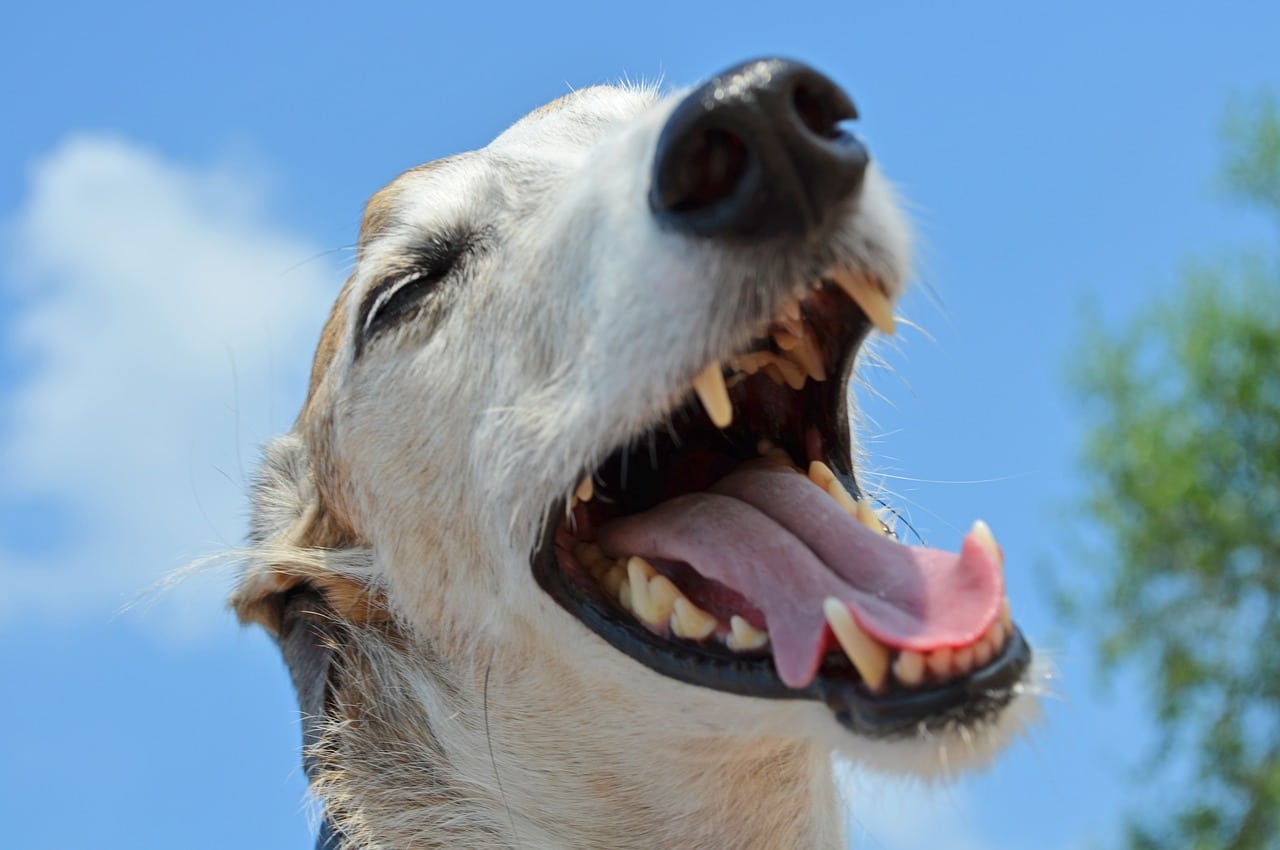
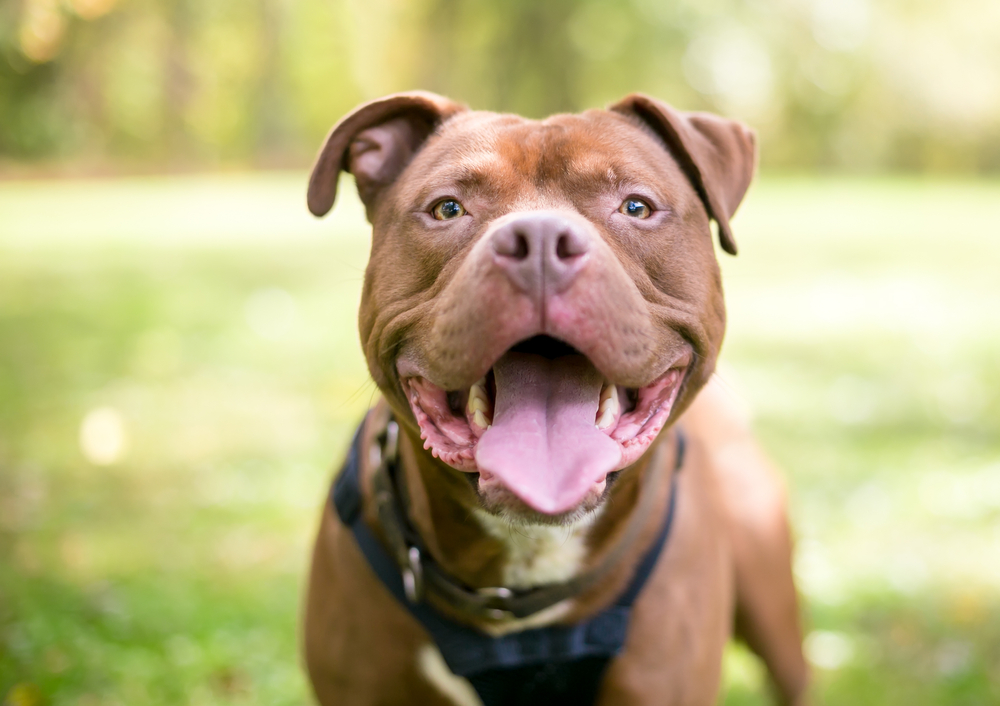
Panting is normal behavior that all dogs do because they are hot, are trying to catch their breath after a vigorous run in the park, or are stressed or excited. But what if your dog is panting when there’s no reason for it? Is this a sign that your dog is having trouble breathing?
If a dog is open-mouth breathing when it seems as though they shouldn’t be, it is possibly a medical emergency that must be attended to by a veterinarian.
Let’s look at what might cause a dog to have trouble breathing and when you should seek veterinarian help.

What Is Open-Mouth Breathing?
Open-mouth breathing can be as simple as a dog panting, or it might be heavy breathing due to breathing problems. The respiration process for dogs involves the nose, mouth, throat, trachea (windpipe), and lungs. Respiration sends oxygen-rich blood throughout the dog’s body and helps remove carbon dioxide.
Breathing also helps regulate the dog’s internal temperature, which is why they pant after they’ve worked hard. The harder they pant, the hotter they are or the more they have exerted themselves. But when the dog is resting, they will resort to breathing through their nose. In fact, panting is what enables dogs to lose heat effectively, since they don’t sweat through their skin the way that we do. They can sweat through their paws but this isn’t much use when trying to cool off quickly.
When a dog pants, air is rapidly inhaled, humidified and exhaled. This quick movement of air causes moisture along the airways and in the lungs to evaporate which has a cooling effect.
What Are the Signs of Open-Mouth Breathing Issues in Dogs?
A panting dog is quite normal under the right circumstances. But if your dog hasn’t been exercising, if it isn’t hot outside, and if they aren’t stressed or excited yet they are breathing hard, speak to your vet.
This is even more critical if the following signs accompany the open-mouth breathing:
- Eye discharge
- Nose discharge
- Lethargy
- Coughing
- Gums being pale, gray, or purple/blue
- Collapse
- Weakness
- High respiratory rate while resting
- Bruising
- Bleeding
Along with the labored breathing, these are signs of a potential underlying injury or illness. A few of the conditions with these signs can be life threatening.
If your dog is these signs, we suggest you speak to a vet.
If you need to speak with a vet but can't get to one, head over to PangoVet. It's our online service where you can talk to a vet online and get the advice you need for your pet — all at an affordable price!

What Are the Causes of Open-Mouth Breathing?
There are several causes, other than heat, exertion and stress that can result in open-mouth breathing in dogs. These include:
- Pain: Dogs experiencing pain might pant and breathe heavier than usual.
- Heartworm disease: Heartworms (Dirofilaria immitis) infest the dog’s heart and obstruct the blood vessels within the lungs. The arteries in the lungs can experience scarring and fluid can build up, making breathing labored and difficult. Right-sided congestive heart failure can eventually result. Lungworms can also cause lung damage and labored breathing.
- Left-sided congestive heart failure: There are a number of causes of left-sided congestive heart failure in dogs, but the most common cause is Mitral Valve Insufficiency, where the valve that separates the atrium and ventricle on the left side of the heart isn’t working properly. This means that every time the heart contracts, some blood that is meant to be pumped around the body is regurgitated back into the atrium. In turn this leads to an accumulation of fluid in the lungs, causing breathing difficulties, exercise intolerance and a higher than normal resting respiratory rate.
- Bronchitis: Bronchitis can lead to heavy breathing due to chronic inflammation or decreased flexibility in the lungs and airways.
- Pneumonia: Pneumonia can result from a bacterial, viral, or fungal infection or inflammation in the lungs. The signs of pneumonia are lethargy, fever, lack of appetite, nasal and eye discharge, coughing, and labored breathing.
- Pulmonary hypertension: Pulmonary hypertension is when the small capillaries in the lungs experience high blood pressure which can lead to an enlarged heart (and subsequent heart failure) and low oxygen transfer. Signs of this may include heavy breathing, coughing, fainting, or death.
- Heatstroke: Heatstroke is a medical emergency and requires immediate attention! It is vital that you seek the closest emergency clinic if you suspect that your dog might be suffering from heatstroke.
- Cushing’s disease: Cushing’s disease is a disease in which a dog’s adrenal glands produce too much cortisol, which is the main stress hormone. The main visible signs of dogs with Cushing’s disease are urination, thirst, and excessive
How Do I Care for a Dog With Open-Mouth Breathing?
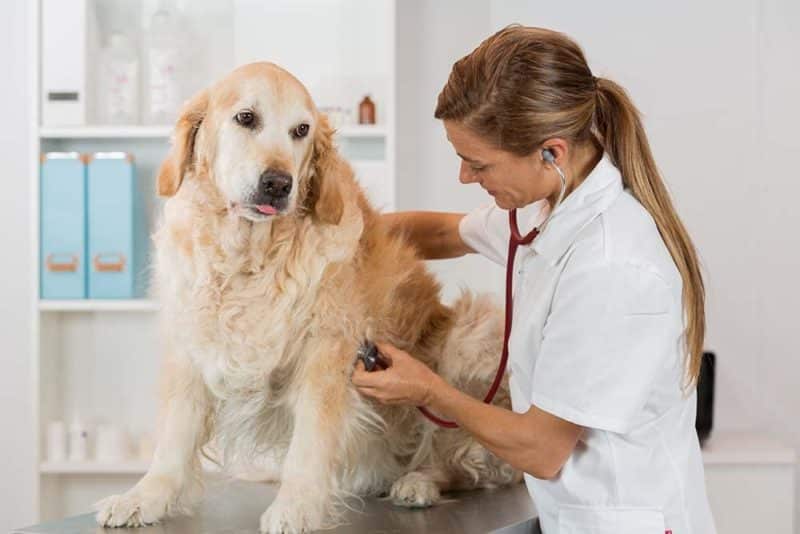
This entirely depends on the condition causing the open-mouth breathing, and there are several potential causes. Your veterinarian will need to run tests, which can include:
- Physical exam
- Blood tests
- Pulse oximetry to measure how much oxygen is in the blood
- Fecal analysis
- Chest X-ray
- Heart ultrasound (echocardiography)
Depending on the results, further tests might be warranted:
- Bronchoscopy, which checks the airways
- Broncho-alveolar lavage – sampling fluid from inside the lungs
- CT scan, to check for issues with the airways and lung tissues
Following these tests, your veterinarian should be able to give you a good idea about the cause/s behind your dog’s breathing difficulties. In many cases, they will be able to offer you treatment to help improve your dog’s quality of life or treat your dog fully.
If the open-mouth breathing is due to your dog overheating, you must get them to a cooler place immediately and ensure that they have water. Lying on cool tiles can help, pouring cool (not cold) water over their armpits, stomach, head and feet is a good idea also. Ensure a constant supply of cool air is provided and contact your vet.
If you suspect that your dog is excessively panting due to stress or anxiety, you should speak to your vet to find ways of managing their stress levels, particularly if it’s a common occurrence.

Frequently Asked Questions (FAQ)
Are There Dog Breeds More Prone to Open-Mouth Breeding?
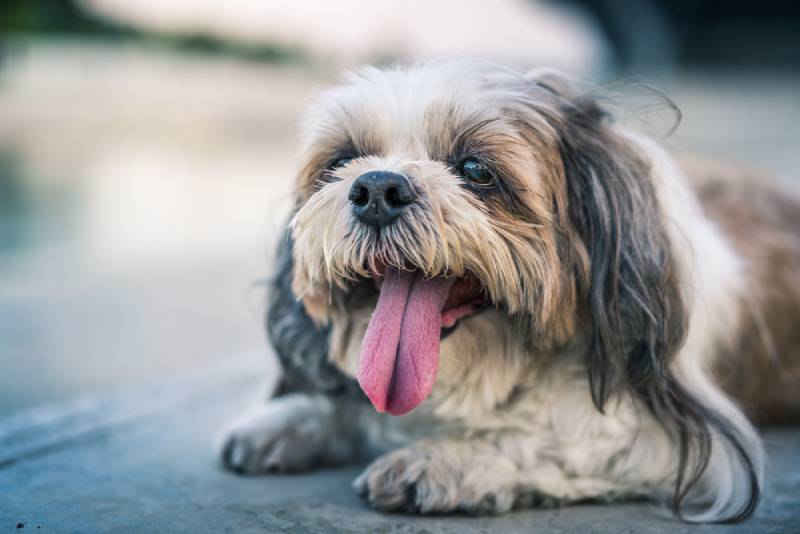
Unfortunately, flat-faced breeds are prone to brachycephalic airway syndrome, predisposing them to breathing problems.
Dogs like Pugs, Bulldogs, and Shih Tzus are just a few of the breeds with this issue. They should never be heavily exercised, and their time outside must be limited in hot weather. Ensuring they aren’t overweight is extremely important in helping them to breathe as well as possible.
What Is the Normal Breathing Rate for Dogs?
The breathing rate for a healthy dog is usually between 18-34 breaths a minute, but this depends on the size and weight of the dog. Some dogs breathe a little faster and others a little slower.
If you take your dog’s resting respiratory rate once a month, then you know what it is normally. If you then find it is markedly more than that, it is a good reason to take them for a check up. If your adult dog takes more than 40 breaths a minute and shows any of the discussed signs, get them to your vet immediately!
How Do I Help My Dog That Is Struggling to Breathe?
The first thing that you need to remember is to stay calm. If you’re panicking and upset, your dog will pick up on it, and this will only make their breathing worse.
- Make sure your dog is cool
- Check they aren’t choking on anything, and if you can remove it safely, do.
- If they are lying on their side, lift them so that they are lying on their sternum. This allows both lungs to work more efficiently.
- Check the color of their gums
Call your vet and book an emergency appointment. If your dog seems to be in real trouble, take them immediately to the closest vet clinic, and call to let them know that you’re on the way. Time is of the essence when it comes to breathing difficulties.

Conclusion
Open-mouth breathing can be just normal panting behavior, but if it seems to be occurring for no reason, it might be a sign of a more serious issue. Take note if your dog starts behaving differently than expected, which might be a red flag for a problem. If your dog is panting because it’s hot, ensure that they have access to shade and water. Be on the lookout for any worrying signs.
All that said, don’t worry too much and jump to conclusions. You might just have a happy and excited dog on your hands!
Featured Image Credit: KlausHausmann, Pixabay