In this article
When dogs experience eye irritation and discomfort, owners will do anything possible to give their dogs some relief. Dog eyes can be highly susceptible to damage and infection throughout the day, with glaring redness, tearing, and gunky buildup telling us they need help, it may leave you asking yourself “Can you use human eye drops on dogs?” While we want to take immediate steps before heading to the vet, on-hand remedies like human over-the-counter (OTC) eye drops can do more harm than good.
Over-the-counter eye drops are specifically suited to humans and for certain human eye conditions. Therefore, human over the counter eye drops shouldn’t be used for dogs without your vet’s supervision. We’ll explain why you shouldn’t use human OTC eye drops on dogs and what you can do instead to help your pet as quickly as possible.

Can You Use Human OTC Eye Drops on Dogs?
We usually reach for a product like Visine or Clear Eyes when we experience itchy, red eyes. Using lubricants and decongestants, these products moisturize the eyes and temporarily reduce redness by constricting blood vessels. Some products include antihistamines and other ingredients to combat irritation from itchiness, allergies, and swelling.
Although they may lubricate the eye and relieve minor irritation, you should not use human OTC eye drops on your dogs. They are not tested for animal use and are FDA-approved only for people.
It is important to note that when any medication is applied as an eye drop, it can reach the dog’s mouth and body. This means that very common ingredients in allergy eye drops, such as tetrahydrozoline and naphazoline or brimonidine found in glaucoma eye drops, can cause toxicity in dogs. Dogs may experience severe consequences, such as changes in heart rate or blood pressure and neurological effects from even a tiny dose.
What Kind of Eye Drops Can I Use on My Dog?
OTC dog eye drops are generally much different than human eye drops, typically using hypochlorous acid or lubricating agents (artificial tears) as the active ingredients. Although you shouldn’t use any redness-relieving human eye drops, a standard eye wash solution is usually safe for dogs.
Eye washes can help flush allergens, remove debris, and gunky buildup while relieving the stinging, burning, and other discomfort that may have your dog pawing at their eye. They typically only use purified water, so they shouldn’t create any concerns. A sterile saline eye wash is also an excellent option to safely flush irritants without causing added damage.
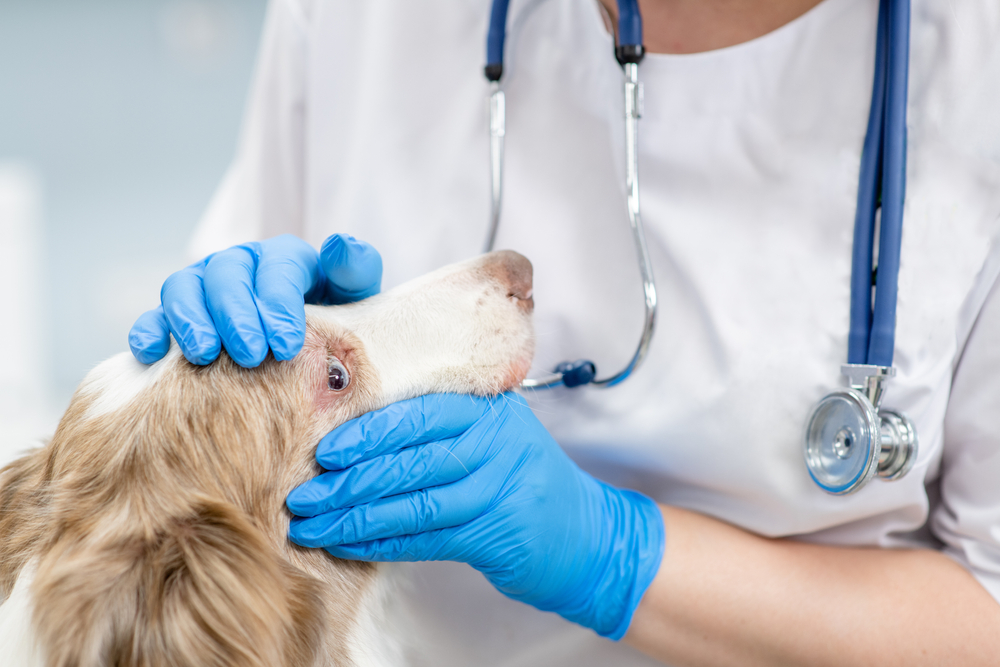
Some antihistamine and lubricating human OTC eye drops can be used safely and might be very helpful for dogs under your vet’s guidance. Although some human eye drops can work, your dog should be examined by a vet, who can make a diagnosis and create a specific treatment plan for their condition.
Why You Should Follow Up With Your Vet
Eye issues come in many forms, and each requires a particular treatment to heal completely. Despite being safe for cleaning debris and moisturizing the eye, an eye wash won’t do much for infections or damage. Your vet will examine your dog and do some tests to understand your pet’s problem. Then, your vet will prescribe eye drops, possibly among other treatments, that fix the eye issue and root cause.
Even if you have dog eye drops at home, you should always contact your vet for guidance. Unique problems demand specific solutions. There are countless antihistamine and antibiotic treatments to manage the numerous eye issues dogs face. And unfortunately, many problems share similar signs.
An important consideration to keep in mind is that once an eye drop bottle is opened, it usually has to be thrown away after 30 days. Some, like the single-dose bottles, have no preservatives and should be discarded after each use. So, an old bottle of drops may not only contain ingredients that are toxic to your dog or not be indicated for your dog’s eye condition, but it may be contaminated and create an infection. Additionally, as with eye drops for people, using the wrong dog eye drops can prolong your dog’s suffering and increase your bill at the vet.
If you need to speak with a vet but can't get to one, head over to PangoVet. It's our online service where you can talk to a vet online and get the advice you need for your pet — all at an affordable price!

When Will You Need Eye Drops for Dogs?
Your vet will prescribe one or multiple types of eye drops or ointments, such as lubricants, steroids, antihistamines, non-steroidal anti-inflammatories, or anti-bacterials, depending on your pet’s eye problem. The following are typical eye conditions dogs experience that usually require eye drops.
1. Allergies
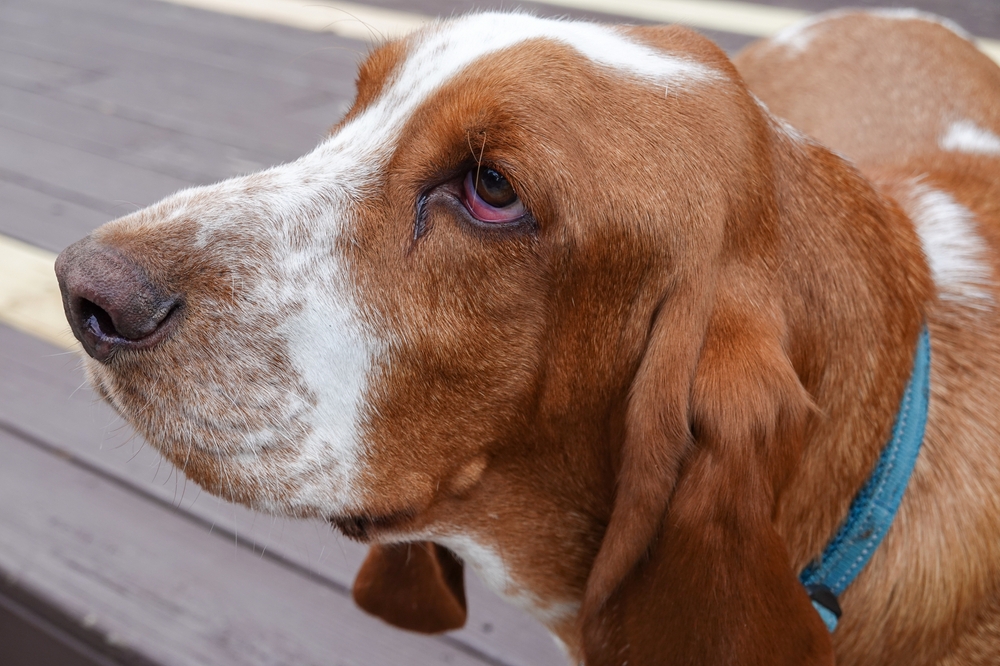
Allergies to pollen, mold, dust mites, and other hazards can take their toll on a dog’s eyes. Seasonal allergies may worsen during the spring and summer. General signs of allergic irritation include eye redness, puffy eyelids, and clear discharge.
Your dog might squint or paw at the affected eye constantly. Vets typically use antihistamine eye drops, steroids, and eye washes if your dog has allergic conjunctivitis along with tablets or injections in some cases.
2. Dry Eye
Keratoconjunctivitis sicca (KCS, or dry eye) occurs when the eye lacks tears, and the cornea, conjunctiva, and other eye tissues get damaged. Conditions like immune-mediated destruction of the tear gland, diabetes, hypothyroidism, distemper, or drug toxicity may cause the eye’s glands to stop producing tears and dry the eyes.
Typical signs of conjunctivitis and thick discharge appear, as can corneal ulcers. Treatment often includes topical eye ointments to boost tear production and lubricants. On occasion, antibiotics or anti-inflammatories are also needed.
3. Corneal Damage
Corneal scratches are an everyday hazard for dogs as they go about their day. Simple accidents like a paw to the face or getting some plant material in the eye can abrade or puncture the cornea, leading to intense pain, excessive tearing, and redness. Vets usually prescribe pain relief medication, antibiotic ointment, and a protective collar while the wound heals. Surgery may be necessary in severe cases.

4. Pink Eye
Pink eye, or conjunctivitis, usually occurs from eyelid problems, irritation from foreign material, viral or bacterial infections, immune-mediated problems, parasites, and tumors. Dogs can also develop it through trauma or inflammation. Your vet may give your dog antibiotic eye drops, steroids, and other medications, depending on the cause.

Conclusion
While some OTC human eye drops and eye washes can be safe for dogs and are sometimes recommended by your vet, you should always use them after your dog has been medically evaluated and following your vet’s instructions. Using human eye drops for dogs from non-professionals can leave your dog open to even worse problems if the wrong one is used. Your dog’s health is too valuable. Play it safe, and make contacting your vet your first option to handle any of your dog’s eye issues.
Featured Image Credit: Ivonne Wierink, Shutterstock