In this article
Some dogs can be a challenge to bathe in the best of conditions. But if your dog hates water or fears the bath, the entire experience can be much more stressful. Even dogs that happily play in the mud puddle may run from the faucet.
Fortunately, there are several ways to make bath time more pleasant for your dog and create a more positive association.

First, Why Do Dogs Hate Baths?
Some dogs, like retrievers, flock to bodies of water. However, not all dogs like baths, and a natural body of water is vastly different from clean bathwater with shampoo.
For one, bathing can be an unfamiliar experience with a lot of different sensory and noise stimuli, particularly for dogs that have never had a bath, rescue dogs that have experienced less socialization with people and adjustment to a house life or that may be fearful. There are new sounds and smells, which can create stress. It is also less fun than getting wet and muddy in a pond or lake that they voluntarily jumped into.
It is also possible for dogs to have negative associations with bath time, such as being washed with water of an inadequate temperature, being picked up or handled in a way they dislike, having certain body areas touched that they do not generally enjoy, or that some may not even allow, having their legs and paws picked up, or slipping on the tub surface. With rescues, they may have had an owner who wasn’t so nice about bath time, or they were never bathed. An owner who is stressed, rushing, yelling at their dog, or maybe even being rough when picking them up may cause them more stress and fear.
Ideally, dogs should be taught to get used to baths when they are puppies, with special care during the fear period. Baby steps, positive reinforcement, and lots of treats can turn a dreaded grooming activity into another fun bonding experience.
Dry Shampoo and Dog Bath Wipes
You may find that your dog needs more time to get used to a bath before he can have a full one. Dry shampoo and pet wipes are not substitutes for a bath, but they’re good options for a quick refresh, or for early stages of getting your dog accustomed to being cleaned.
Our Favorite Products
The Hepper Waterless No Rinse Shampoo and Wash Wipes are great products to keep on hand if you're looking to clean up your pet in a pinch. Both are all-natural, easy to use, and lightly scented, offering a great way to freshen up your dog when on the go. Find out if these products are right for you and your pet below.
| Image | Product | Details | |
|---|---|---|---|
Waterless Shampoo

|
Hepper No-Rinse Pet Shampoo |
|
Check Price |
For On-The-Go

|
Hepper Wash Wipes |
|
Check Price |
At Dogster, we've admired Hepper for many years, and decided to take a controlling ownership interest so that we could benefit from the outstanding designs of this cool pet company!
How Often Should I Bathe My Dog
First of all, you may wonder how often your dog should have a bath. This will depend on your dog’s age, breed, coat length, underlying skin issues, and lifestyle. Generally, healthy dogs are washed when there is a need, such as after a particularly muddy dog play, or every 1-3 months, or even less frequently. However, during the rainy season, you may need to rinse your dog’s paws daily.
Washing too frequently is not recommended, as it may impact the skin pH and lead to dry skin. If your dog is suffering from allergic skin disease, consult with your vet about how often they should be washed and which shampoo would be most appropriate, as they may require a medicated one, or if only a particular affected body area should be washed. Avoid washing the dog’s head, and certainly don’t put the shampoo on their head or in their ears or eyes. Use a wet cloth to wipe their face if there is any dirt on it. If their ears need cleaning, consult with your vet to ensure they don’t have an ear infection. Your vet will show you how to clean them regularly and which products to use safely.
If you need to speak with a vet but can't get to one, head over to PangoVet. It's our online service where you can talk to a vet online and get the advice you need for your dog — all at an affordable price!

Our 6 Tips to Make Bath Time Fun for a Dog That Hates Water
1. Gather Your Supplies and Set Up the Bath
Make sure you have all your supplies set up for a bath. You’ll have your work cut out for you getting your dog into the tub as it is.
- An unscented, dog-safe shampoo that’s gentle on the skin
- Washcloths
- A pitcher or bowl of water
- Extra towels
- A non-slip bath mat
- Lots of high-value treats
Set up your supplies near the tub or shower within reach, including the treats. Put the non-slip mat on the surface of the tub or shower and stack the towels and washcloths nearby.
Our Favorite Products
Selecting the right shampoo and conditioner makes the world of a difference when grooming your pup. Our favorite products are the duo by Hepper. The Oatmeal Pet Shampoo is formulated with aloe and oatmeal to soothe skin and hydrate the coat. The Pet Conditioner works at eliminating tangles and taming frizz and static. Both products are pH-balanced and formulated with pet-friendly ingredients, free of harsh soaps, chemicals, and dyes. Give this duo a try to heal and nourish your dog's coat, and leave them with an irresistible just-left-the-spa cucumber and aloe scent.
| Image | Product | Details | |
|---|---|---|---|

|
Hepper Oatmeal Pet Shampoo |
|
Check Price |

|
Hepper Pet Conditioner |
|
Check Price |
At Dogster, we’ve admired Hepper for many years and decided to take a controlling ownership interest so that we could benefit from the outstanding designs of this cool pet company!
2. Adjust the Water Temperature
Dogs can have a negative bath experience if the water is too cold or too hot. Cold water is shocking, but hot water can be painful and may even leave a burn.
Remember, it’s not about the temperature you prefer. Your scalding showers may be uncomfortable for your dog, so stick with a lukewarm temperature and check it regularly to make sure it hasn’t gotten extreme.
3. Avoid Overstimulation
A bath has a lot of different sounds and smells. You don’t want to stress your dog out even more, so limit the extra sensations.
Choose a gentle, unscented shampoo that’s safe for dogs. Never use a human shampoo or shampoo designed for other animals, such as horses, unless it specifies dogs on the label.
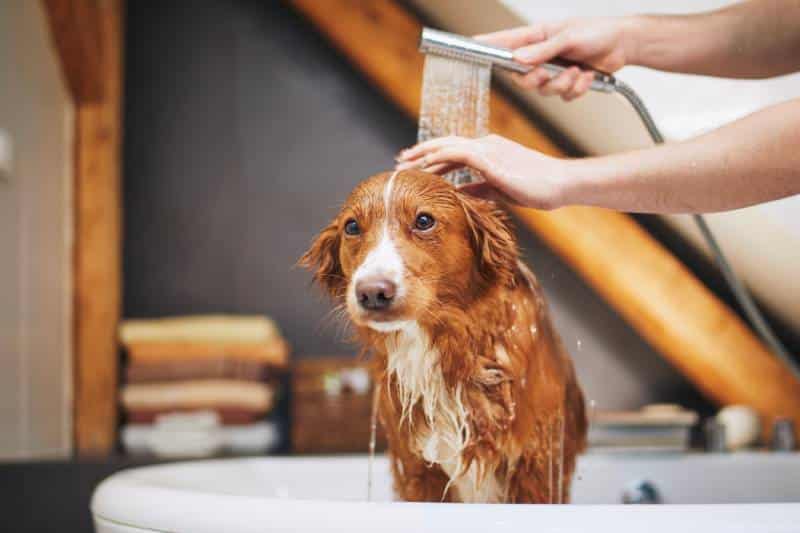
Be strategic with the water. When your dog is in the shower or tub, turn off the water after you’ve wet or rinsed them to reduce the sound. Being in a tiled bathroom can amplify the sound of running water to your dog’s sensitive ears.
The same may be true of feeling water. Some dogs don’t like having water pouring directly on them. If you have a shower spray attachment, set it to a gentle water flow. If you don’t, use a wet washcloth to wipe your dog down and rinse thick areas with a bowl or pitcher, not the faucet.
4. Desensitize Your Dog
Giving your dog rewards and praise can turn a scary bath into a fun experience they look forward to, but it takes time and baby steps.
- First, bring your dog into the bathroom and reward them for coming in. If this seems stressful, stop at this step for the day.
- Next, place your dog in the dry tub or shower. Give lots of treats and don’t make them stay too long. You can gradually increase the time they spend in the dry tub over multiple sessions.
- When being in the dry tub is comfortable, try running the water for a few seconds, but don’t wet your dog. Again, give lots of treats, and don’t overdo the time they spend with the running water.
- If you have a setback, go back to the previous step and wait until they’re comfortable to move forward again.
Building up to a full bath using short, happy sessions like this can help your dog associate good things with bath time and reduce their fear response. Be patient.
5. Try Distractions
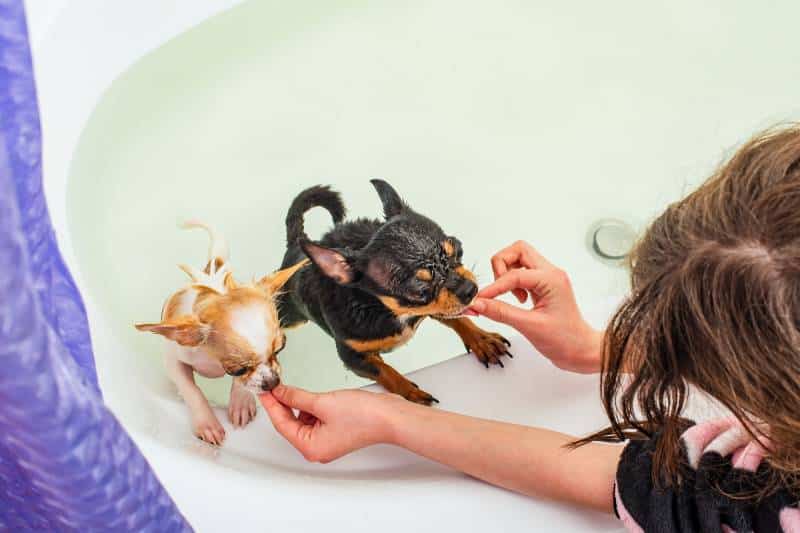
For some dogs, having something else to focus on can get their mind off what they fear. A lick mat is a great option that keeps your dog occupied with something positive for a long period, teaching them to ignore the bath. There’s a benefit for you as well—a dog that stands still for a quicker shampoo and rinse.
When you’re looking at lick mats, consider larger options with a lot of different style grooves and a suction cup to make sure the lick mat stays put. Smear whatever your dog likes that spreads easily, such as xylitol-free peanut butter or wet food.
If your dog makes a quick task of lick mats, try freezing them to make the topping last longer.
6. Check in on Your Dog
There’s a difference between a dog that’s just scared or nervous and a dog that is in extreme distress. If your best efforts aren’t making bath time any more comfortable for your dog, and they’re only panicking more, stop what you’re doing and try again at a different time.
It’s possible that your dog isn’t fearful. They may have an injury or skin issue that’s making baths uncomfortable. If you’re not making progress, make an appointment with your vet for a checkup.
Conclusion
Dog baths are a regular part of life, especially for active dogs. Having a dog that hates water or fears the bath can make this routine task even more difficult. With these tips and tricks—plus a lot of patience—you can slowly turn bath time into an activity your dog actually looks forward to (really).
Featured Image Credit: Sundays Photography, Shutterstock