Stelfonta For Dogs: Our Vet Explains the Dosage, Usage & Treaments


In this article
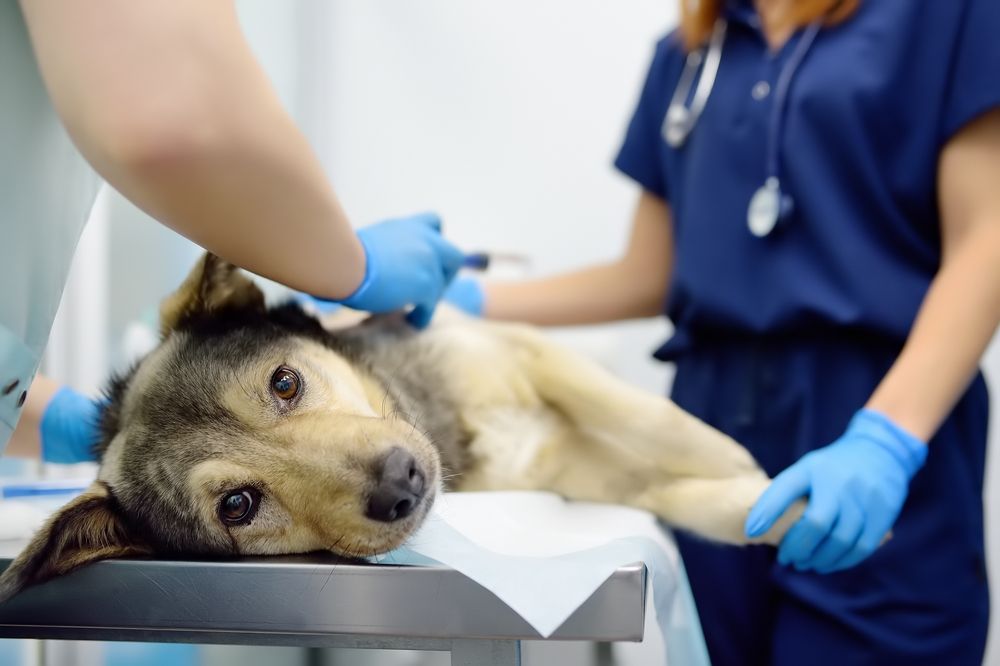
View 4 More +Stelfonta is an injectable treatment for canine mast cell tumors of the skin or under the skin surface that haven’t spread. A veterinarian injects it directly into the tumor, and it usually doesn’t require anesthetic or sedation.
While not all mast cell tumors are suitable for treatment with Stelfonta, the injection has a high success rate in studies. However, you and your vet should consider several things before deciding whether Stelfonta might be a suitable treatment for your dog. In this article, we’ll discuss what you need to know about this innovative treatment so you know what it involves and what to expect.

What Is Stelfonta?
Stelfonta is the brand name of the tigilanol tiglate injection. This compound is extracted from the seed of the Fontainea picrosperma shrub found in the rainforest of North Queensland, Australia. This prescription medicine is used to treat mast cell tumors on the skin or in the tissues just under the skin (subcutaneous). It is injected directly into the tumor by a veterinarian. It is a targeted treatment that does not require long-term drug therapy.
Mast cell tumors are the most common type of skin cancer in dogs, accounting for up to 21% of skin cancer cases. Surgical excision is usually the treatment of choice, but in some cases, it can be difficult to get clean and wide surgical margins to prevent recurrence, particularly for mast cell tumors on the legs and face.
There may also be increased anesthetic risk to consider, for example, in brachycephalic (short-nosed) dogs, elderly pets, and dogs with heart disease, which might make Stelfonta a preferable treatment option.
Stelfonta destroys mast cell tumors by killing the tumor cells. It disrupts the cancer cell membranes and cuts off the blood supply to the tumor while leaving surrounding normal cells unharmed. It also stimulates the dog’s immunity to fight the cancer. The mast cell tumor comes away from the healthy tissue after Stelfonta treatment, leaving an open wound that typically heals within 4 to 6 weeks.
Stelfonta is approved for the treatment of mast cell tumors on the skin and under the skin surface below the elbow or hock only in certain situations:
- The cancer must not have spread to other sites of the body beyond the initial tumor (non-metastatic).
- The mast cell tumor is less than 10cm3, which is roughly the size of a walnut.
- The tumor must be accessible for injection.
Studies have shown that Stelfonta removes 87% of mast cell tumors with up to two injections and that 89% of dogs remain cancer-free at the site of the tumor a year after the treatment.

How Is Stelfonta Given?
Stelfonta is given as an injection directly into the mast cell tumor. Most dogs do not need sedation or an anesthetic, but occasionally, a dog may need to be sedated for the injection.
Before and after treatment with Stelfonta, your dog will need to be given certain medications; it’s essential not to miss these. Oral medications start two days before the injection to reduce the risk of mast cell degranulation and the release of inflammatory substances from the tumor during treatment. Degranulation is when mast cells release large amounts of chemicals like histamine, which pose serious and even fatal risks to your dog’s health.
Your veterinarian will let you know the dosage and timing of the medications before, during, and after treatment. To help you understand what to expect, the Stelfonta protocol consists of the following concomitant medications:1
- Corticosteroids (prednisolone/prednisone) orally are started 2 days before the day of treatment with Stelfonta and given continuously through to 7 days after the treatment (10 days in total).
- H1 (e.g., diphenhydramine) and H2 blockers (e.g., famotidine) are started on the day of Stelfonta treatment and continued until seven days after the treatment (8 days in total).
- Pain relief is given preemptively and as needed.
What Happens if You Miss a Dose?
Since Stelfonta's dosing schedule usually involves one, possibly two, injections given by your veterinarian, missing a dose is not typically a problem.
However, it is vitally important that you don’t miss a dose of the concomitant medications prescribed by your veterinarian. These medications are critical in preventing severe and potentially life-threatening inflammatory responses that can be seen with mast cell destruction. Contact your veterinarian straight away if you have missed a dose of these medications.

Potential Side Effects of Stelfonta
Many of the adverse effects are related to the mode of action of Stelfonta and how it works. In order to know what to expect and to be prepared for the stages of Stelfonta treatment we would advise having a look at Virbac’s information page on Stelfonta at some of the patient photos of wounds during treatment. You should also familiarize yourself with knowledge of potential reactions and know when to contact your veterinarian.
Wound Formation
Wound formation is an expected part of treatment. Localized inflammation, swelling, and bruising is also common. The wound heals by a process referred to as “second intention,” which is when a wound is not closed surgically. It is left open and, therefore, heals more slowly. This may cause pain, particularly in areas like legs and lameness. Pain medication is usually prescribed at the vet's discretion.
In some cases, extensive swelling, pain, odor, or discharge can occur. Larger tumors may also cause very large wounds that may extend into the surrounding tissue, delay healing, and even necessitate amputation.
Lymph Node Enlargement
This is expected as part of the immune response that Stelfonta induces. However, drainage of edema fluid from the treatment site and surrounding tissue can be affected, which can lead to larger wound formation.

Side Effects of Concomitant Medications
Increased drinking, urination, appetite, and panting are commonly seen as side effects of glucocorticoids.
Degranulation
As we mentioned earlier, mast cells contain little granules full of inflammatory substances like histamine, heparin, and various inflammatory cytokines. These can be released when the cancer cells are killed, having either effects local to the tumor or systemic effects all around the body, which can be fatal.
Contact your veterinarian straight away if you notice any of the following:
Frequently Asked Questions (FAQ)
How effective is Stelfonta?
Stelfonta removes 87 % of mast cell tumors after one or two treatments and 75% after a single treatment. In one study, 89% of dogs were still disease-free at 12 months.
Is Stelfonta a type of chemotherapy?
Conventional chemotherapy works by inhibiting cell division or protein synthesis, whereas Stelfonta is a specific anti-tumor agent injected directly into the tumor.
Before giving any medication to your dog, we recommend you consult a veterinarian for the best advice on which would be the best treatment for your pup.
Conclusion
Mast cell tumors are the second most common type of malignant cancer in dogs and the most common type on the skin. Stelfonta can be an effective option to treat mast cell tumors that in the past would have required amputations or extremely disfiguring surgery and has given some dogs better chances than before. If your vet has determined that your dog is a good candidate for treatment with Stelfonta, hopefully, this article has helped you know what to expect.
Sources
Featured Image Credit: Maria Sbytova, Shutterstock
Expert dog care, straight to your inbox
News, insights, expert advice, and everything dog.

No spam — unsubscribe anytime.
By signing up, you agree to our Terms & Conditions and Privacy & Cookies Policy.
How useful was this post?
Click a star to rate. You can leave written feedback afterwards. (We read all feedback.)

Dr. Amanda Charles BVSc MRCVS (Veterinarian)
Dr. Amanda Charles, a 2002 graduate from Liverpool University, has built a prolific career in small animal medicine. She is passionate about providing pet owners with reliable and current information, enjoying the varied aspects of veterinary work. Outside the clinic, Amanda's life is filled with the energy of her two young sons, her spirited Cocker Spaniel, along with a spunky Ragdoll cat.
Dr. Charles is an accomplished veterinarian with a focus on small animals, particularly in the area of skin conditions, backed by over 20 years of experience and a Postgraduate Certificate in Dermatology. She practices part-time, offering extensive consultations on dermatology, and finds fulfillment in telemedicine and editorial roles.