How to Remove a Tick From a Dog: Vet-Approved Step-by-Step Guide


In this article
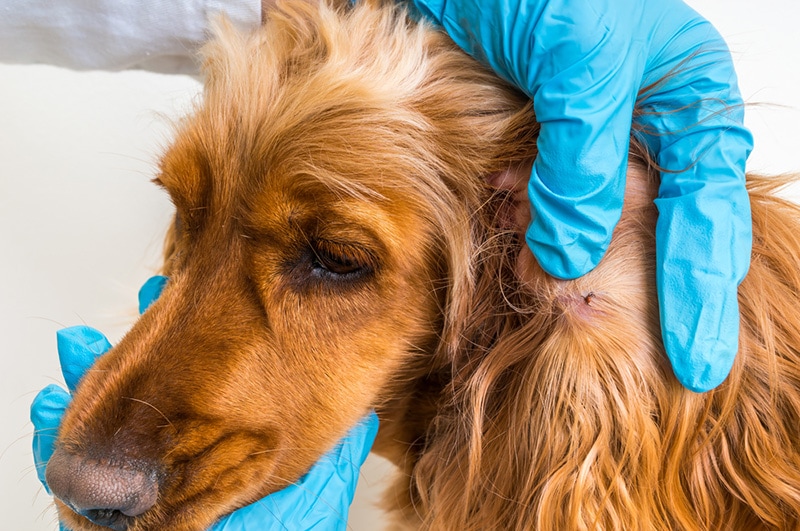
If your dog has a tick on them, it's easy to panic. These parasites can carry diseases and are simply unpleasant creatures to encounter. But having a dog means it's more likely you'll need to deal with ticks from time to time, and if your dog gets a tick on them, you need to know how to remove it safely. It's a more straightforward process than you might think, and with a bit of education, we're confident that you can handle it!

Before You Start
While you don't want to put off removing a tick from your dog, it's essential that you have everything you need to do it right the first time. Waiting a few extra minutes won't hurt your dog, but doing it wrong can! Before you jump right in and try to get the tick off your dog, there are a few supplies you'll need to gather. These include:
- Tweezers
- Isopropyl alcohol
- Rubber or latex gloves
- Hand soap
- Small container with a lid
In addition, prepare yourself. While removing a tick isn't dangerous, it can make quite a few people uncomfortable. There's nothing wrong with this; just take a few extra deep breaths before you start, and prepare yourself mentally before diving right in.

Did You Actually Find a Tick?
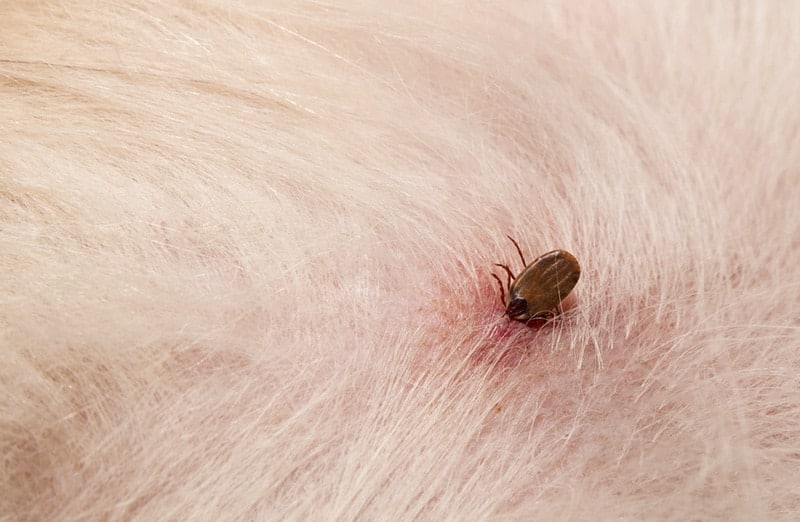
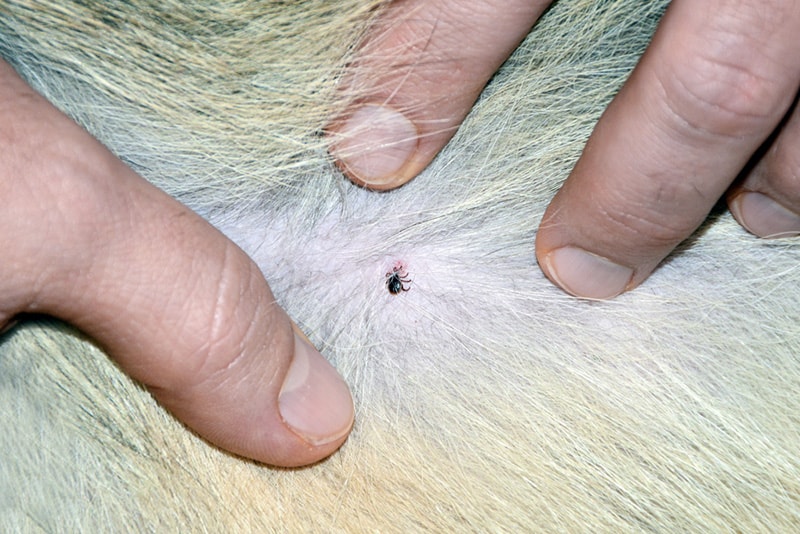
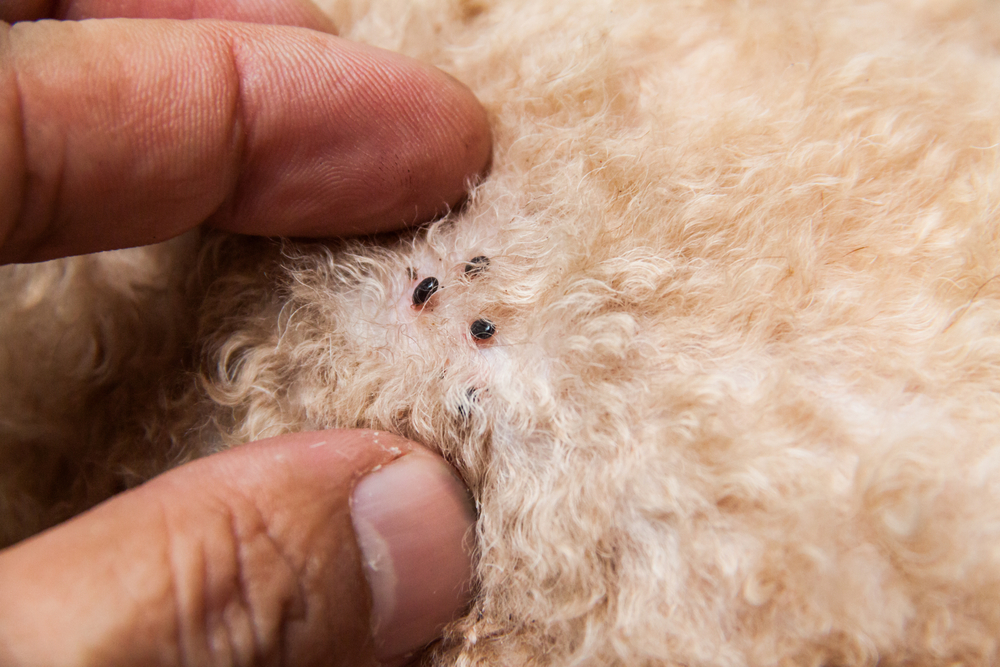
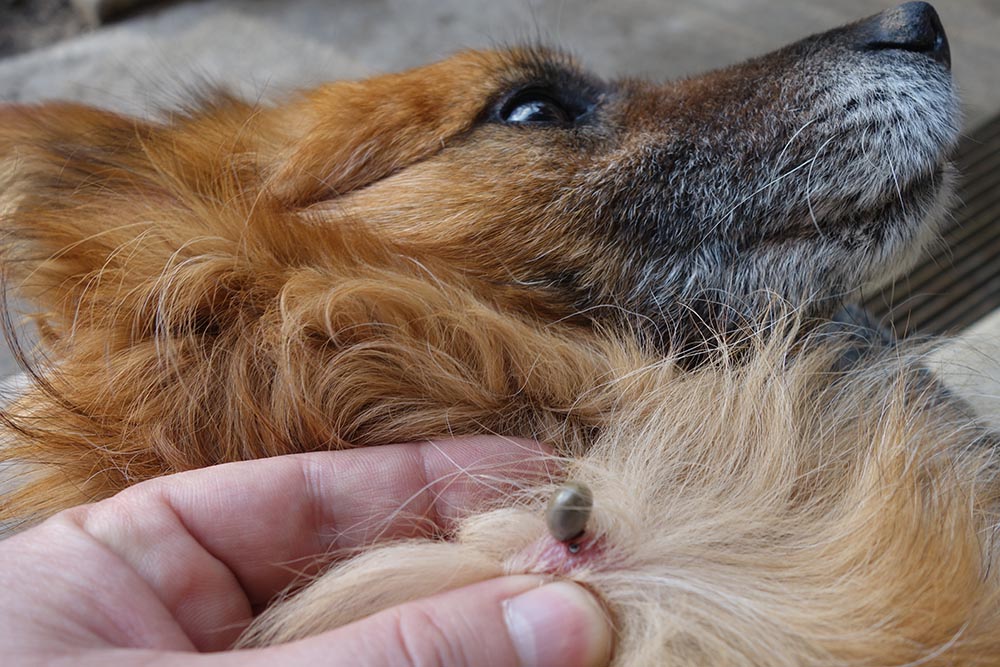
Ticks are usually tan, brown, or black, and they have eight legs. Some are tiny and only as large as the head of a pin, but they can also be larger and grow while feeding off their host. They often hide on your dog’s torso, between toes, around the legs, on the insides of the ear, and around the chin, neck, and face. Ticks can often be confused with skin tags, papillomas, or other random lumps and bumps, so make sure you see legs before you start pulling. As a side note, finding any unknown lump or bump should warrant a veterinary visit.

The 6 Steps to Remove a Tick From a Dog
While removing a tick can seem a little overwhelming at first, it's actually a straightforward process. Take your time and follow these steps, and you'll have a tick-free pup in no time!
1. Use Tweezers to Grab the Head
Put gloves on. Using tweezers, grab the tick as close to the tick’s head as possible without pinching your dog. The farther back on the tick's body you are, the more likely it is to break off mouth parts. How easy it is to get to their head will vary depending on how far they've burrowed, but try to get as close to your dog’s skin as possible.

2. Steadily Pull the Tick Straight Out
While there are misconceptions out there about twisting to remove a tick, it's best to gently and steadily pull straight out. This makes it less likely to break off mouth parts, which minimizes the risk of irritation and infection.
3. Kill the Tick
Once you remove the tick from your dog, you'll want to put the tick directly into isopropyl alcohol to kill them. Pour some into your container and drop the tick inside. This will keep them from wandering off and potentially biting you, your dog, or someone else.

4. Clean the Tick Bite
After removing the tick, take a moment to disinfect the bite. You can wash the area with mild soap and warm water and rinse it thoroughly.
5. Wash Your Hands
Ticks carry diseases, and the last thing you want is to wind up sick because you removed a tick. Even though you used gloves, once you remove them, use soap and warm water to thoroughly wash your hands.

6. Keep an Eye on Your Pet
As we already mentioned, ticks can carry quite a few diseases. While you don't need to rush them straight to the vet after a tick bite, if they start to display signs of a tick-borne disease, you should take them in for testing.
Signs to look out for include:
If part of the head came off during removal, immediately contact your vet.
Preventing Future Tick Bites
It's better to prevent tick bites than to treat them after the fact, and while there's no 100% foolproof way to prevent tick bites, there are some things you can do to make them less likely. Start by keeping the grass in your lawn short and by limiting your pup's access to popular tick hangout spots. Ticks love wooded areas and underbrush, so be especially careful in these locations. Next, always check for ticks when you come inside so you can remove them before they can burrow. Finally, your vet can recommend a preventative that can kill or ward off many tick species. Keep up to date with flea and tick prevention to so this doesn't happen again.
Final Thoughts
Now that you know all about how to remove ticks and how to prevent future ticks, all that's left is for you to get your pup on a preventative! Of course, if a tick bite seems like too much for you to handle, you can take them to their vet so they can do it for you, but you'll still want to take them right away.
Related read: What Does a Tick Bite Look Like on a Dog?
Sources
Featured Image Credit: Ivan Popovych, Shutterstock
Expert dog care, straight to your inbox
Vet-reviewed advice, training tips, and the best of Dogster. Free, and you can unsubscribe anytime.
By signing up, you agree to our Terms & Conditions and Privacy & Cookies Policy.
Adam is a professional freelance writer and animal enthusiast who has rescued countless animals throughout the years. He's been a freelance writer for ten years and has been rescuing animals for even longer! Adam is also a proud father of three kids and is always up for a challenge and adventure!
Join the conversation
Ask a question, share your story, or send private feedback.