In this article
View 6 More +Anaphylaxis is a rare but life-threatening allergic reaction that happens quickly after exposure to the inciting cause and affects various organs of the body. This can occur not only in humans but also in some dogs. Of course, this may cause many owners to wonder if an EpiPen can be used if their dog suffers from anaphylaxis. In this article, we discover the answer to this question and additional information on anaphylaxis in dogs.
What Is an EpiPen?
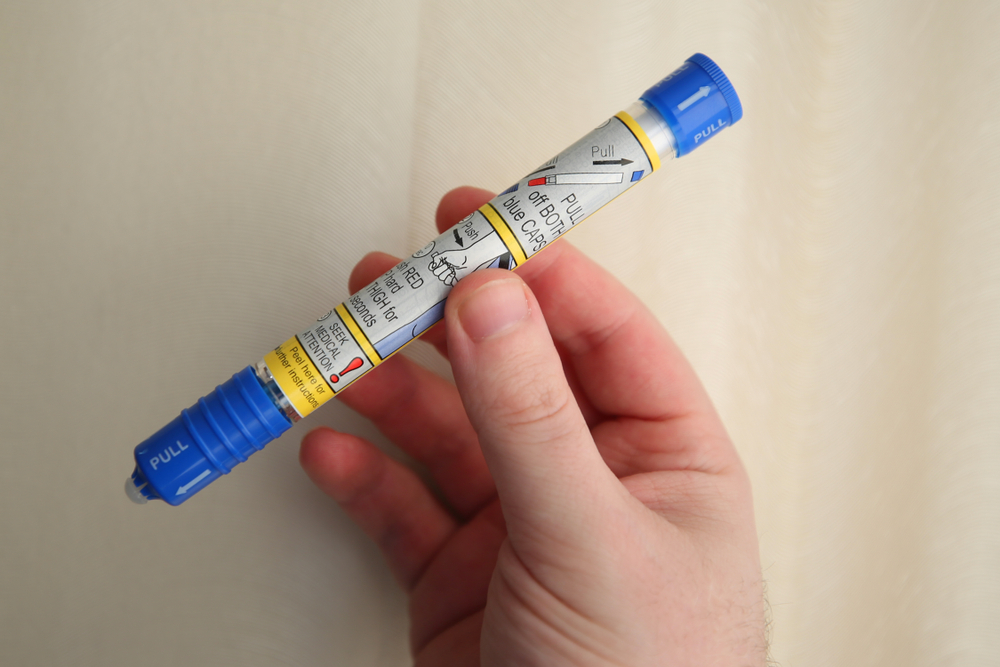
An EpiPen is a pre-filled auto-injector device that contains a fixed amount of the drug epinephrine (also known as adrenaline). This product can quickly act to help normalize heart rate and blood pressure, improve breathing by relaxing the airway muscles, and reverse other signs of an allergic reaction, such as swelling or hives.
It is available via prescription and is used to be injected into the muscle of people having allergic reaction emergencies (including anaphylaxis). This could be due to reactions to substances to which the subject is allergic, such as insect bites or stings or certain foods and medications. When an EpiPen is needed and used, it is recommended to seek further emergency medical care.

Are There EpiPens for Dogs?
At this point in time, there are no veterinary-labeled EpiPens specifically for use in dogs. However, human-formulated ones (which come in various sizes) may be able to be prescribed by a veterinarian via extra-label use for dogs. “Extra” or “off-label” means that with some restrictions, veterinarians legally have the ability to use a medication or drug in a way that is different from the approved directions of that particular product.
There is a good chance that a veterinarian will want to have a documented anaphylactic reaction from your dog before prescribing emergency medications for home use. In addition, they will discuss the dosing, indications for use, and other additional directions should a future episode of anaphylaxis occur. Pet owners should be aware that if they choose to have an EpiPen on hand, this can be a pricey option, as a name-brand option could easily cost several hundred U.S. dollars.
It is important to note that one study found that dogs that were given epinephrine intranasally (into the nose) actually did better overall than those that were given epinephrine intramuscularly via an autoinjector. With this newer available information, a veterinarian could also elect to prescribe epinephrine and a syringe to be given intranasally.
Allergic Reactions and Anaphylaxis in Dogs
An excess of activity from the immune system, causing inflammation and damage to the body, can be classified into four different types. The first type, type 1 hypersensitive reaction, is the category that allergic reactions and anaphylactic reactions fall under and can range from mild to severe. Type 1 hypersensitive reactions occur quickly, as the body reacts to a foreign substance, also referred to as an allergen or antigen. The allergen attaches to certain markers on specific cells called mast cells and basophils. The body then releases inflammatory mediators, such as histamine, which starts a cascade of follow-up events that negatively affect the body. The reaction can be local (contained in one area) or generalized (effects experienced in multiple areas or organs spread throughout the body). It can also be mild or severe based on numerous factors, such as the amount and type of allergen, how the exposure occurred, the level of the dog’s response, etc.
In dogs, the primary organs that are affected by anaphylaxis are the liver and those of the gastrointestinal tract. A mild, more localized reaction is most common in dogs. In rare but severe cases, the reaction moves beyond the immediate area to affect multiple organs throughout the body. A very severe reaction that is generalized is referred to as anaphylaxis. Essentially, anaphylaxis is an allergic reaction on steroids! It can be life-threatening and is considered a medical emergency.

Causes of Anaphylaxis
- Venom of stinging or biting insects (for example ants, wasps, hornets)
- Foods
- Drugs
- Vaccines
- Blood products from transfusion
Signs of Anaphylaxis
- Hives (these alone are the least severe reaction)
- Restlessness/excitement
- Itching around the face or at the site of exposure
- Swelling of the face
- Salivation
- Vomiting, diarrhea
- Difficulty breathing
- White or blue-colored gums
- Incoordination
- Shock
- Collapse
- Convulsions
Consulting a veterinarian is recommended for the best course of action.
Did you know you can speak to a veterinarian without having to travel? Just head over to PangoVet. It's our online service where you can talk to a vet online and get the advice you need for your pet — all at an affordable price!

Treatment of Anaphylaxis
In the cases where epinephrine has been prescribed and directed for home use, after being given, seeking immediate further medical care is essential. Severe allergic reactions or anaphylaxis can be life-threatening and are an emergency. In these circumstances, certain medications, such as epinephrine, antihistamines, and/or fast-acting steroids, can be given.
In addition, supportive therapy may be needed, such as intravenous fluids for shock, oxygen therapy to help with respiration, or blood pressure support. Dogs that experience anaphylaxis should ideally be hospitalized and monitored well after the inciting event. There can be biphasic reactions, where signs resolve for a time and then reappear suddenly several hours later. These secondary responses can lead to an increase in the likelihood of death if additional care is not utilized.
Anaphylaxis Prevention
Unfortunately, we usually don’t know what a dog will be allergic to until they have a reaction. Even if a reaction occurs, we don’t always know with 100% certainty what may have caused it. That said, after careful consideration with the owner of the effects and timeline, if we do know or suspect what the offending cause is, avoidance is key. In cases of reactions to medication, alternative ones may then be elected for treatment going forward.
For vaccine reactions, a veterinarian can discuss different options, such as pretreatment with an antihistamine or trying a different type of vaccine. In rare cases, some dogs may be medically recommended to not be vaccinated with a specific vaccine. In cases of allergies to insect bites, depending on the severity of the reaction, an antihistamine or EpiPen may be an option for the dog in question.
Conclusion
Experiencing a severe allergic reaction like anaphylaxis in dogs, while rare, can be a frightening and even lethal event. If this does occur in your dog, epinephrine could be a life-saving drug. Whether this product is given originally at home (and then seeking further medical care) via an injectable EpiPen or intranasally—or alternatively, given intravenously at a veterinary hospital—a conversation with a veterinarian would be the best bet to determine what would be ideal for your canine companion.
Featured Image Credit: Leonard Zhukovsky, Shutterstock