In this article
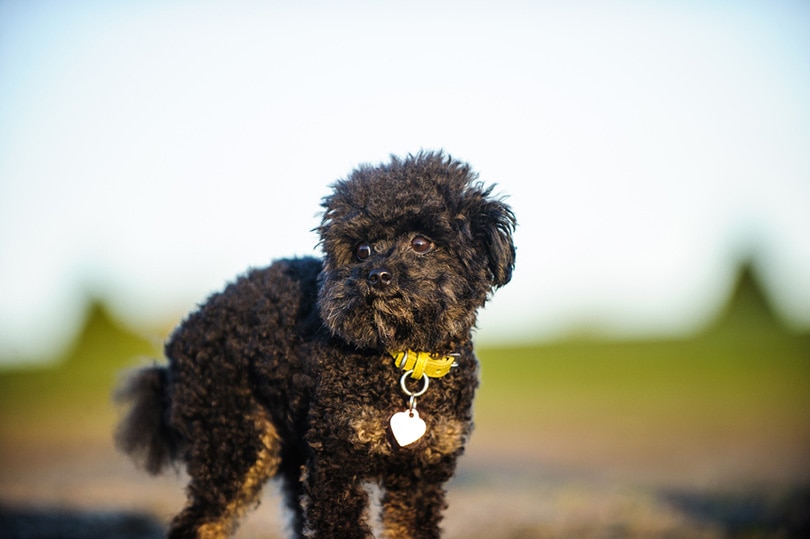
View 8 More +Tiny dogs and tiny humans somehow always seem to draw the strongest reaction from us. Dogs don’t come much tinier than the Teacup Poodle, the smallest of all types of Poodles.
Breed Overview
Height:
Up to 9 inches
Weight:
Up to 6 pounds
Lifespan:
12–14 years
Colors:
Apricot, silver, cream, white, black, silver, blue, red, brown
Suitable for:
Small space living, individuals, seniors, families with older children, those in need of a low-shedding, allergy-friendly breed
Temperament:
Smart, playful, loving, alert, social
These pocket-sized dogs are full of personality and pep, often making up in attitude what they lack in size. Because of that size, they must be handled with care and don’t make the best choice for every family. Teacup poodles can also have some serious health concerns that potential owners should be aware of before buying. We’ll cover the good and the bad of the Teacup Poodle in this article, so keep reading!
Teacup Poodle Characteristics

Teacup Poodle Puppies
Teacup poodles usually only have very small litters of 1-2 puppies at a time, meaning demand for the puppies is usually higher than the number of dogs available. Because of how they are bred, Teacup poodles are prone to many health issues (more on this later!), making it even more important to choose a responsible breeder focused on producing the healthiest puppies possible.
If you prefer to adopt a new pet rather than buy one, check local shelters or Poodle rescue groups to see if any Teacup Poodles are available. Teacup poodles are low-shedding and are a great option for people with allergies. They’re also great with children and seniors.
Temperament & Intelligence of the Teacup Poodle

Teacup Poodles are generally known for their calm, friendly, and playful temperaments. They’re social dogs who prefer to be in the constant company of their humans. Although they are smart dogs, Teacup Poodles can be a little bit stubborn and prone to having dominant personalities.
Owners of small dogs sometimes are not as diligent with training and socialization as large dog owners and Teacup Poodles can take advantage of this, often leading to behavioral issues including aggression.
Are These Dogs Good for Families? 🧑🧑🧒
Because of their size, Teacup Poodles can live in nearly any size housing situation, from homes with yards to apartments to senior living facilities. However, also because of their small size, they’re not a good fit for families with young children.
Teacup Poodles, especially as puppies, are fragile and easily injured. Active young children could unintentionally hurt these tiny dogs. If the family has only older children, who are calmer and more knowledgeable about how to handle a small dog, Teacup Poodles make excellent family pets.
Teacup Poodles enjoy spending time with their humans and their small size makes them easily portable, allowing them to tag along on many family adventures. Plenty of socialization will help Teacup Poodles grow into well-adjusted adult dogs and help avoid problem behaviors like excessive barking.
Does This Breed Get Along With Other Pets? 🐶 😽
With proper socialization, Teacup Poodles generally get along well with other dogs. Obviously, because of their size, they’ll come out on the wrong end of nearly any aggressive encounter with another dog. Even rough play could injure these tiny dogs so use caution during even friendly interactions with other dogs.
Teacup Poodles also get along with cats, again with socialization and supervision. Because of their mellow personalities and small size, they may be more well-tolerated by cats who are afraid of bigger dogs. Again, because Teacup Poodles are smaller than even many cats, they could easily be hurt by kitties who don’t appreciate their presence.
Teacup Poodles probably won’t be aggressive toward any small, exotic pets or birds and might make good housemates for these creatures. However, the exotic pets may still view even tiny Teacup Poodles as predators and could become stressed by their presence.

Things to Know When Owning a Teacup Poodle
Before deciding to bring home any new pet, you must do your research and find out as much as possible about what’s required to take care of them. Here’s what you need to know about owning a Teacup Poodle!
Food & Diet Requirements 🦴
Teacup Poodles should do well on any quality, nutritionally balanced dog food, canned or dry. The breed is often prone to allergies, including food allergies, which could impact what kind of diet is best for them. Some owners choose to create homemade diets for their Teacup Poodles because of this.
Homemade diets can be a healthy choice, but only with the input of a veterinarian to ensure the food contains all required nutrients. Small breeds like Teacup Poodles can have trouble keeping their blood sugar at the right level, especially as puppies, and they mustn’t skip meals. Teacup Poodles are also prone to dental disease, which could require special diets to manage.
Exercise 🐕
Teacup Poodles are a moderately active breed, but because of their size, keeping them properly exercised is much easier than for larger dogs. A yard isn’t necessary for a Teacup Poodle, making them a good choice for seniors or apartment living. Adult Teacup Poodles need about an hour of exercise total per day, ideally split into 20- to 30-minute sessions.
Walks or playing fetch are good exercise options for Teacup Poodles. They may also enjoy training sessions and learning tricks, which will allow them mental as well as physical exercise.
When Teacup Poodles are growing, be careful not to let them overexert themselves. Their bones and joints are still developing and they can easily injure themselves playing too hard.
Training 🎾
Poodles, as a breed, are considered one of the most intelligent dogs, and Teacup Poodles are no exception. They are generally smart and learn quickly when trained with positive, reward-based methods. Like many small dogs, Teacup Poodles can be surprisingly stubborn and even dominant at times.
Teacup Poodle owners who neglect to socialize and train their dogs may end up with a tiny pet who rules the roost at their home. In some cases, these Teacup Poodles may even develop behavior problems, including biting and aggression.
All dogs do best when given structure and boundaries, and Teacup Poodles are the same. You might not take a snarling Teacup Poodle as seriously as you would a snarling Rottweiler, but for the sake of the Poodle’s mental well-being and safety, take the time to train and socialize them.
Grooming ✂️
Like all-size Poodles, Teacup Poodles have fairly demanding grooming needs. The good news is because they are so small, brushing a Teacup Poodle doesn’t take very long! Teacup Poodles are considered an allergy-friendly breed because they don’t shed much into their environment.
However, because the hair they shed stays trapped in their coat, the Teacup Poodle’s coat can quickly become matted and tangled. They should be brushed 4–5 times a week at a minimum. A Teacup Poodle’s coat also grows continuously and they need regular hair trims to keep it under control.
Teacup Poodles need a trip to the groomer for a trim every 6–8 weeks or so. Some owners learn to clip their dogs’ coats themselves to save money. Teacup Poodles also need regular nail trimming and ear plucking and cleaning.
As we mentioned, Teacup Poodles often suffer from dental disease. Beginning a dental health routine early in life can help keep your dog’s teeth as healthy as possible.
Health and Conditions 🏥
Unfortunately, the process of breeding extra small Teacup Poodles often results in dogs who are prone to numerous health conditions. Teacup dogs are often bred from the runts of the litter, many of whom are small due to genetic medical issues.
Ideally, dog breeders should choose the healthiest specimens to reproduce, but in the case of Teacup Poodles, breeding for small size often takes priority over health and temperament.
Before you decide to buy a Teacup Poodle, make sure you’re educated and prepared to deal with any health issues your dog may encounter.
- Dental disease
- Allergies
- Progressive retinal atrophy
- Luxating patellas
- Hypoglycemic
- Portosystemic shunt
- Hydrocephalus
- Heart defects
- Collapsing trachea
Serious Conditions
- Teacup Poodles can suffer from luxating patellas or loose kneecaps.
- Especially as puppies, Teacup Poodles can easily become hypoglycemic or have low blood sugar.
- Teacup Poodles are prone to a genetic liver condition called a portosystemic shunt.
- They are also prone to a brain condition called hydrocephalus.
- Heart defects are another concern for Teacup Poodles.
- They may also suffer from collapsing trachea and related respiratory conditions.
Minor Conditions
- Dental disease is common in Teacup Poodles.
- Allergies, both food and environmental, are another concern in Teacup Poodles.
- Teacup Poodles are also prone to eye conditions such as Progressive Retinal Atrophy.
Male vs. Female
Male Teacup Poodles are usually a little bit heavier than females. Male dogs are often thought to be more playful and easier to train than females. Female Teacup Poodles tend to be more independent and stubborn.
Of course, female Teacup Poodles will go into heat about twice a year unless they are spayed. Spaying and neutering are typically the healthiest choices for any dog who isn’t going to be used for breeding.

3 Little-Known Facts About the Teacup Poodle
1. They aren’t a separate, AKC-recognized breed.
The AKC recognizes three separate sizes of Poodle officially: Standard, Miniature, and Toy. Technically, Teacup Poodles are Toy Poodles, because the AKC considers any Poodle less than 10 inches a Toy Poodle. “Teacup Poodle” is primarily a term used by breeders to describe their extra small dogs and, often, to charge more money for them!
2. They don’t always act like tiny dogs.
Teacup Poodles may be tiny, but they’ll flex every bit of their miniature muscles without hesitation. If given the chance, they’ll take charge of the house and boss everyone else around, human or animal.
3. They are often known by other, fancier names.
Teacup Poodles are known by other names as well. You may see them called the French Poodle, Caniche, Barbone, Chien Canne, or Pudle.
Conclusion
They say that bigger isn’t always better, and in the case of the Teacup Poodle, smaller isn’t either. If you have your heart set on one of these tiny pups, make sure you’re aware of the potential problems you might be dealing with. All dogs deserve loving homes, but they also deserve owners who’ve done their research and know what they’re getting into before they buy. Make sure you’re prepared to give your Teacup Poodle a safe and secure home no matter what.
See Also:
Featured Image Credit: everydoghasastory, Shutterstock