In this article
View 3 More +When it comes to giant dog breeds, the St. Bernard and the Mastiff often find themselves in the spotlight. These majestic canines command attention with their size and presence. Choosing between the two breeds can be quite a challenging decision.
Both breeds offer unique qualities that can make it challenging to pick just one. They both have gentle and calm natures with a tendency to protect. Still, key aspects of their temperament, size, and needs can be quite different.
Understanding these differences will allow you to pick the breed that suits you best. Let’s delve into the differences and similarities between St. Bernards and Mastiffs to make an informed decision.

Visual Differences
At a Glance
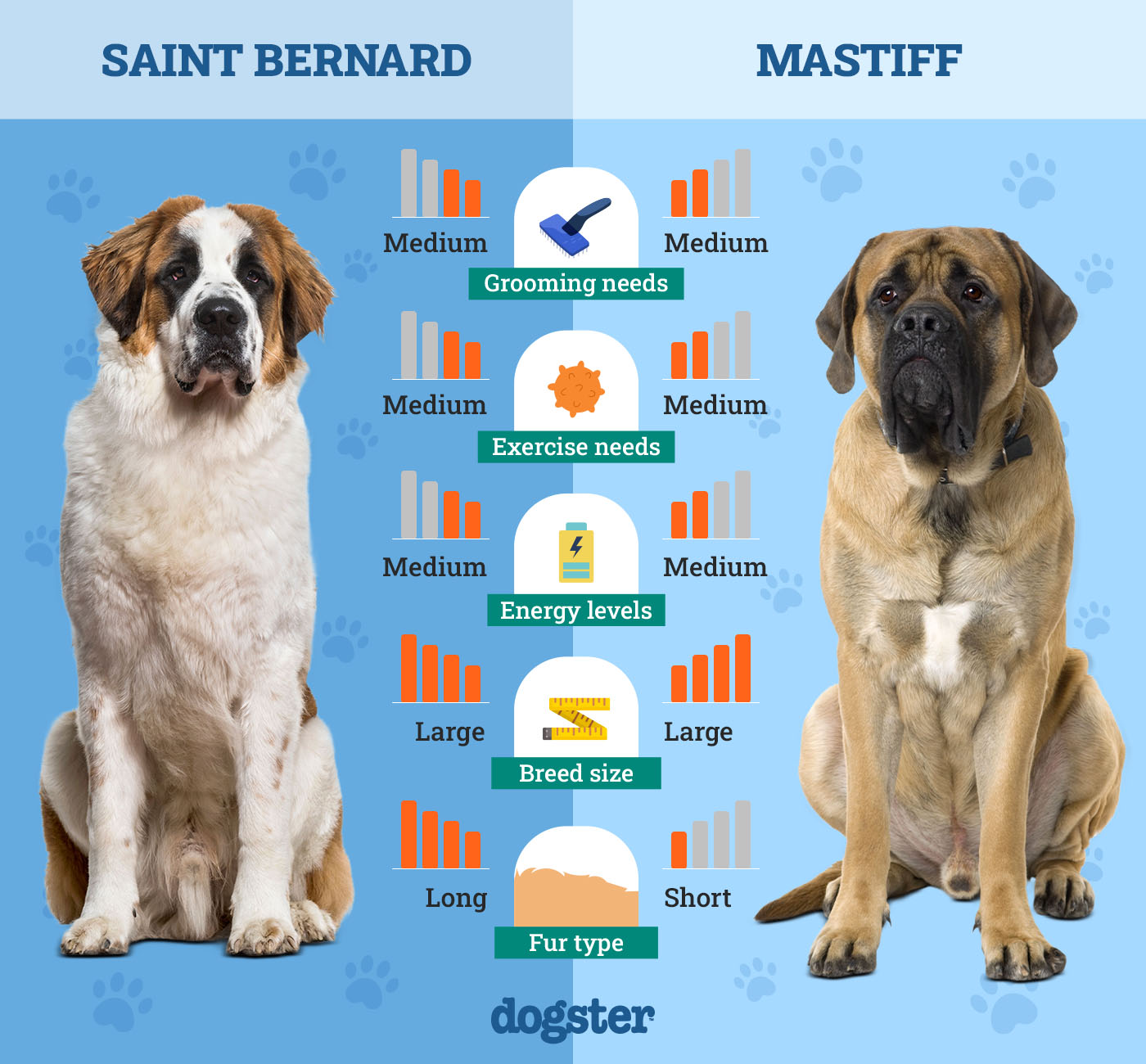
- Average height (adult): 28 to 30 inches
- Average weight (adult): 140 to 180 pounds
- Lifespan: 8 to 10 years
- Exercise: 30 mins a day
- Grooming needs: Low maintenance
- Family-friendly: Yes
- Other pet-friendly: Yes
- Trainability: Intelligent, quick to learn
- Average height (adult): 30 inches
- Average weight (adult): 200 pounds
- Lifespan: 6 to 12 years
- Exercise: 1 hour a day
- Grooming needs: Moderate
- Family-friendly: Yes
- Other pet-friendly: Yes
- Trainability: Eager to please

St. Bernard Overview

The history of St. Bernards dates back to the 17th century in the Swiss Alps. Monks first bred these dogs at the Saint Bernard Hospice in the Great St. Bernard Pass. The hospice was a refuge for travelers crossing the mountain pass between Switzerland and Italy. St. Bernards were developed for their remarkable rescue abilities in harsh alpine conditions.
The monks bred the dogs with local Swiss mountain dogs. This created a breed with strength, endurance, and a keen sense of direction. These traits were vital for locating lost or injured travelers in the deep snow.
In the early 19th century, the breed’s name changed to St. Bernard, honoring the hospice. Over time, St. Bernards transitioned from working dogs to beloved family pets. Today, people cherish them for their gentle and friendly nature.
Personality / Character
St. Bernards have a friendly and gentle personality. They are generally affectionate, patient, and tolerant, making them excellent family dogs.
St. Bernards are loyal and form strong bonds with their owners. You’ll often see them displaying a protective instinct. Despite their large size, they’re calm and easygoing, adapting well to various environments.
They’re also good with children and other pets when properly socialized. St. Bernards are kind-hearted and loving, enjoying the company of their family members. While they can be independent sometimes, they thrive on human companionship.
Their gentle nature and intelligence make them trainable and easy to live with.
Exercise
St. Bernards have moderate exercise needs despite their large size. They’re not active dogs, but some physical activity can maintain their general health. Daily walks are essential for St. Bernards to help them stay fit and prevent weight gain.
They don’t need intense exercise or high-impact activities, but you must still provide mental stimulation and occasional opportunities for exercise. That includes playing in a fenced area or playing gentle games like fetch.
Still, consider their physical limitations due to their size and potential joint issues. St. Bernards should exercise in moderation, avoiding excessive strain on their bodies. Consult a vet to create an exercise routine that suits your St. Bernard’s needs.

Training
Training a St. Bernard requires patience, consistency, and positive reinforcement. Start training early to establish good behaviors and socialization. Focus on easy and basic commands like sit, stay, and come.
St. Bernards are intelligent, but they can also be independent. So, keep your training sessions engaging and fun. Use rewards such as occasional treats and praise to motivate and encourage them.
You must also socialize them with different people, animals, and environments. This will ensure they become well-rounded adult dogs. St. Bernards tend to pull on the leash due to their size, so leash training is essential.
Lastly, consider enrolling your St. Bernard in obedience classes. Working with a professional St. Bernard trainer will help you maximize your dog’s potential.
Health & Care
St. Bernards are prone to hip and elbow dysplasia, bloat, and heart problems. Regular check-ups with a vet are crucial for early detection and proper management.
Large breeds need a specific balanced diet to support their growth and bone health. Be cautious of overfeeding to prevent obesity, which can put extra strain on their joints.
St. Bernards have a dense double coat that needs regular brushing to prevent matting. They shed moderately, with heavier shedding during seasonal changes. Clean their facial folds and ears often to prevent infections.
They are also incredibly sensitive to heat and can easily overheat. Ensure they have full access to shade and fresh water, especially during hot weather. Avoid strenuous exercise in high temperatures.

Breeding
Breeding a St. Bernard requires careful consideration and responsible practices.
Before breeding, both the male and female St. Bernards undergo thorough health screenings. This allows breeders to check for potential genetic issues. That includes hip and elbow dysplasia, heart conditions, and eye problems.
It’s crucial to select breeding pairs with good health and sound genetics. That reduces the risk of passing on hereditary diseases.
Breeding should be done to solely improve the breed and produce healthy puppies. Breeders must research the breed’s standards for the responsible selection of breeding pairs.
Breeding should also be carried out with the dogs’ best interests in mind. Proper care, nutrition, and socialization for the dam and the puppies are essential. Responsible breeders prioritize the well-being of the dogs over aesthetics.
Suitable For:
St. Bernards are gentle and patient, making them ideal for families with children. They are often tolerant of kids and can form strong bonds with them.
While not highly energetic, they still need regular exercise to maintain physical health. They can also be an ideal match for active individuals who enjoy outdoor activities. That includes walks, hikes, or gentle play sessions.
Due to their stubbornness, St. Bernards are better suited for experienced dog owners. They can provide consistent training and leadership.
- Loyal and devoted
- Gentle and tolerant
- Naturally protective
- Excellent “nanny” dogs
- Great for families
- Not suitable for small homes
- Frequent drooling and slobbering
- Prone to specific health issues
- Expensive to own

Mastiff Overview

The history of Mastiffs goes back thousands of years, making them one of the oldest dog breeds. They have a rich lineage that stretches across different regions and cultures.
Mastiffs are seen in ancient Egyptian artwork and historical texts from Babylon, Assyria, and Persia. They were highly esteemed for their strength, courage, and protective instincts.
In ancient Rome, Mastiffs worked as war dogs and guard dogs. They were appreciated for their fierce loyalty and ability to intimidate adversaries. Mastiffs were also present in medieval Europe, where they worked as guard dogs to hunt big game.
The breed gained prominence in England. While King Henry VIII was reigning, the nobility favored the dog for its imposing size and loyalty. They were often used to guard estates and protect livestock.
Over time, the breed’s role shifted from working dogs to becoming beloved companions. Efforts to preserve the Mastiff breed led to its recognition by kennel clubs. Today, Mastiffs are known for their gentle and calm temperament.
Personality / Character
Mastiffs have a distinct personality characterized by their gentle and calm demeanor. They’re known for their loyalty and devotion to their families. Despite their large size, they are considered gentle giants.
They display a patient and tolerant nature, particularly with children. Mastiffs have a protective instinct, and their imposing presence alone often deters potential intruders. They’re also watchful and can be pretty territorial.
While they may appear aloof with strangers, they form deep bonds with their loved ones. Mastiffs have a stable and steady temperament, rarely prone to excessive aggression. Their docile nature and eagerness to please make them responsive to training efforts. Mastiffs bring a sense of calm and security to their homes with their unwavering loyalty.
Exercise
Mastiffs have low exercise needs compared to other large breeds. They are generally low-energy dogs and are content with moderate exercise. Daily walks should be on a leash to prevent strain on their joints. These are beneficial for maintaining their physical health and mental stimulation.
Still, avoid excessive or strenuous exercise. This can harm their growing bodies or exacerbate underlying joint or bone conditions.
Let your Mastiff set their own pace during exercise, as they are prone to overheating and fatigue. Shorter, controlled play sessions in a secure area can provide ample stimulation.

Training
You must practice consistency, patience, and positive reinforcement when training a Mastiff. Starting training early will help establish good behaviors and socialization. We recommend starting with basic obedience commands like sit, stay, and come.
Mastiffs are known for being intelligent and eager to please. Unfortunately, they can also be stubborn sometimes. Treats and praise can help you motivate and reward good behavior. Socialize them early on as puppies to ensure they become well-adjusted dogs.
Health & Care
Mastiffs need special attention due to their large size and specific breed considerations. They’re prone to hip and elbow dysplasia, bloat, heart problems, and certain cancers. Regular screenings and preventive care are important to monitor their overall health.
Mastiffs have moderate exercise needs. But it’s essential to track their weight and provide regular exercise to keep them fit. Intense or prolonged exercise should be avoided to prevent injuries.
Regular dental hygiene is also vital to maintain good oral health. That includes brushing their teeth and providing appropriate chew toys.

Breeding
Breeding a Mastiff requires careful planning and a commitment to the breed’s well-being. Responsible breeders prioritize the welfare of the dogs. Adequate care, nutrition, and socialization are crucial for the dam and puppies.
Finding suitable, loving homes for the puppies should be the breeder’s top priority. They must follow the local regulations for breeding dogs. That includes licensing, health certifications, and responsible ownership practices.
Breeding Mastiffs should be approached with knowledge and a genuine concern for the breed’s future. Seeking guidance from experienced breeders and professionals can help ensure responsible breeding practices.
Suitable For:
Mastiffs are a large and powerful breed. They require owners who can provide strong leadership and consistent training. Experienced dog owners who have learned the needs of large breeds may be able to handle them.
Mastiffs have a gentle and calm nature, making them suitable for families. They are also good with children, but interactions should be supervised due to their size.
Mastiffs are also known for being incredibly loyal and protective. This means they can serve as a reliable guardian, providing a sense of security.
These dogs have low exercise needs compared to some other breeds. They are content with moderate exercise and prefer a relaxed and calm lifestyle. This makes them highly suitable for those who prefer a more laid-back companion.
- Gentle and calm nature
- Good with other pets
- Low exercise needs
- Affectionate and loyal
- Excellent guard dogs
- Needs a lot of space
- Excessive drooling and slobbering
- Shorter lifespan
- Prone to specific health issues
Which Breed Is Right for You?
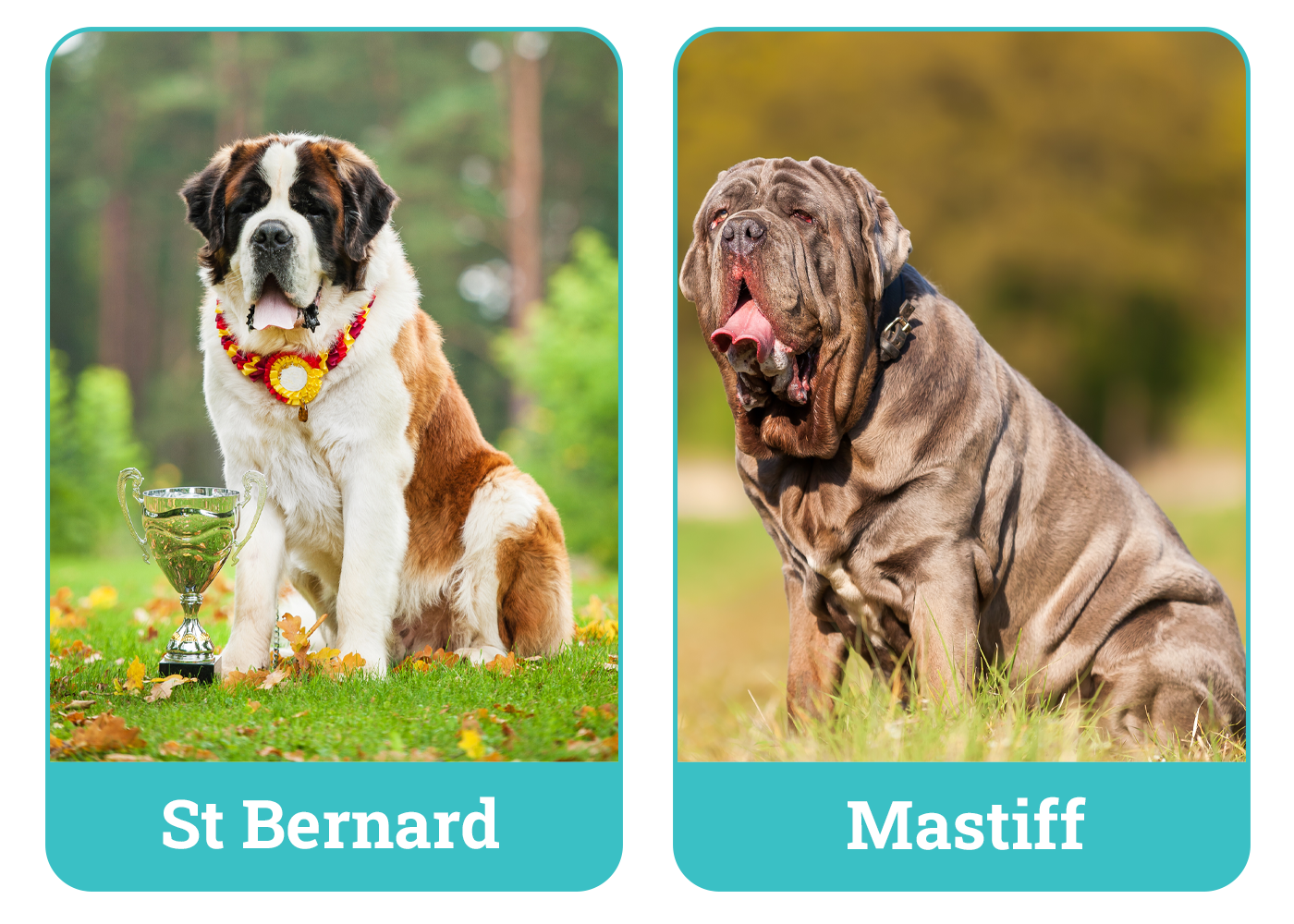
Choosing the right breed for you ultimately depends on your preferences and lifestyle. Both breeds have unique qualities and considerations that should be taken into account.
St. Bernard may be a suitable choice if you’re looking for a gentle and patient family companion. They’re good with children and have a loving and affectionate nature. Still, their large size and moderate exercise needs should be considered.
Conversely, if you prefer a loyal and protective companion, the Mastiff may be a better fit. Mastiffs have a calm and steady temperament, making them excellent family guardians. Their low-energy needs may be ideal for those who prefer a more relaxed lifestyle.
It’s important to assess your experience as a dog owner and the time and attention you can dedicate to a dog. Both breeds need responsible ownership, including proper training, socialization, and regular veterinary care.
Meeting and spending time with individual dogs of each breed can help with your decision. Consider contacting breeders, rescue organizations, or dog shows to interact with St. Bernards and Mastiffs.
Related Read:
- Does UV Light Kill Fleas? Vet-Reviewed Effectiveness Facts
- Is a Mastiff Good for a First-Time Dog Owner? Care & Traits Explained
Featured Image Credit: (T) Siddharth shah, Unsplash | (B) Michelle Cavanagh, Shutterstock