Red Merle Australian Shepherd: Info, Pictures, Origin & History

In this article
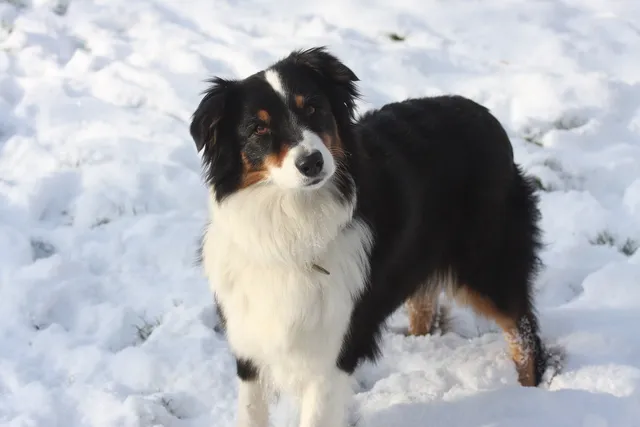
Australian Shepherds are incredibly popular thanks to their beauty, intelligence, and vibrant personalities. The Australian Shepherd’s coat is one of their most eye-catching features, and there are four colors that the American Kennel Club accepts as standard: black, red, blue merle, and red merle.
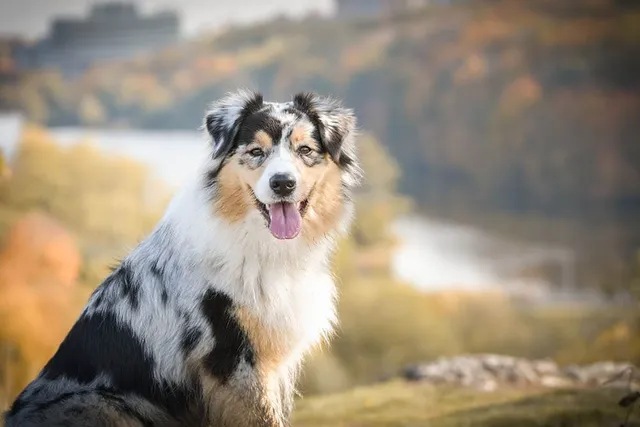
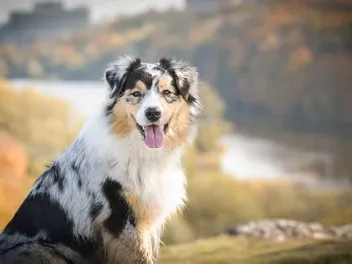
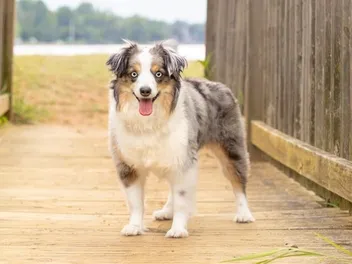
Merle is a color pattern that is best described as “marbled” or “mottled” and typically means the dog has dark shades on top of a light base. Merle comes about when a dog inherits the dominant merle gene variant—only a single copy of this gene is necessary to create the merle coat color pattern.
Breed Overview
Height:
Weight:
Lifespan:
Colors:
Suitable for:
Temperament:
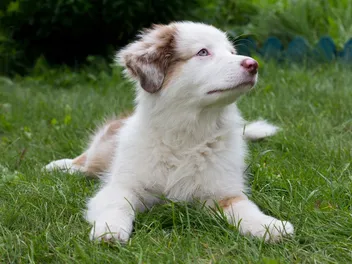
Australian Shepherds with the merle gene can be either blue or red merle, depending on the color gene they receive. Though, in some cases, they can inherit double merle genes This results in the dog being almost completely white.
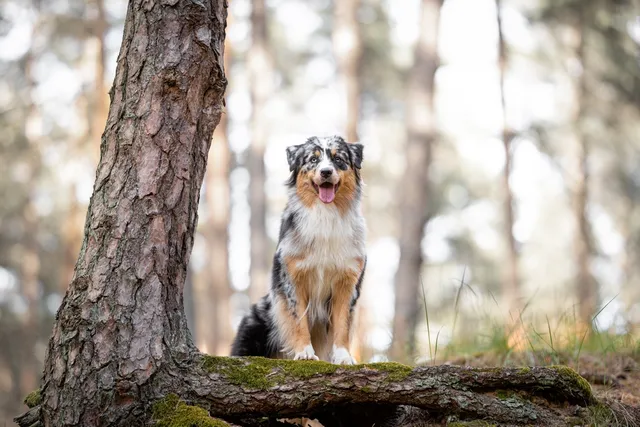
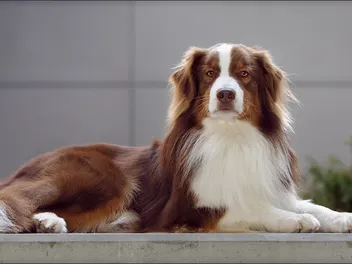
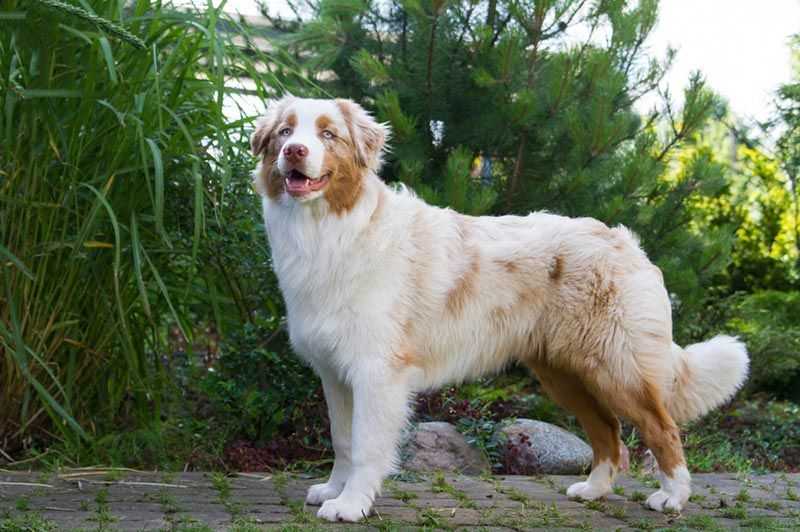
Red merles are no different in personality or temperament than other Australian Shepherds—the only thing that sets them apart is their coat color, which is best described as a sort of liver/dark golden color on a white base with darker color splotches.
Australian Shepherd Characteristics

The Earliest Records of Red Merle Australian Shepherds in History
Australian Shepherds were developed in the US, a fact that may surprise some given what their name suggests. Their ancestors were herding dogs that first arrived on American soil with conquistadors in the 16th century and continued to be bred in America. Later on, it gets more complicated.
When the sheep population boomed in the mid-19th century, more herding dogs were needed to tend them. As a result, farmers started to send their sheepdogs that descended from British Collie's west, and dogs were imported from Australia—dogs that also had mostly British origins. Confusing, right?!
In short, Australian Shepherds as we know them today are the result of a real mélange of dogs from various cultures but studies show that they are likely derived from British dogs.1

How Red Merle Australian Shepherds Gained Popularity
As well as being popular herding and ranch dogs thanks to their intelligence and capability, Australian Shepherds were frequently involved in rodeos which helped bring them to the public’s attention. At rodeos, they would help keep bulls in order and entertain the audience with tricks. Australian Shepherds are still known today for their intelligence and how easy they are to train.
Famous Australian Shepherd owners have included Steven Spielberg, Steve Jobs, Amanda Seyfriend, Bruce Willis, Demi Moore, and Paul Bettany among others. In terms of coat color, blue merles are more common than red merles. In 2021, the AKC ranked Australian Shepherds number 12 on its most popular dog breeds in America list.
Formal Recognition of Red Merle Australian Shepherds
Red merle is one of four coat color patterns accepted as standard by the AKC. Australian Shepherds were first formally recognized by the AKC in 1991, which is pretty late given how far back the breed dates. The breed was, however, recognized by the United Kennel Club in 1979.
Part of the Australian Shepherd breed standard laid out by the AKC is that the dog must be 20 to 23 inches if male or 18 to 20 inches if female. They should also be slightly longer than they are tall, have a strong head and neck, an intelligent and attentive appearance, long shoulder blades, thick pads, an easy gait, and a medium textured coat that is straight to wavy. The coat color must be blue merle, red merle, red, or black either with or without white markings.

Top 3 Unique Facts About Red Merle Australian Shepherds
1. Two Different Colored Eyes Are Common in Australian Shepherds
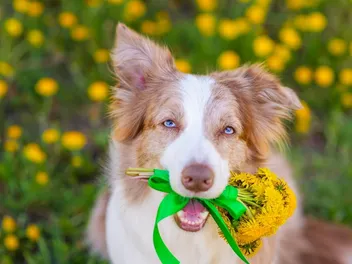
Australian Shepherds commonly have heterochromia, a condition that causes one eye color to be different from the other. You can find Australian Shepherds with a combination of green, brown, hazel, blue, or amber eyes. Other dog breeds that often have the same condition are Australian Cattle Dogs, Border Collies, Great Danes, and Chihuahuas, among others.
2. Red Merles Don’t Need to Have Two Red Merle Parents
For an Australian Shepherd to be born a red merle, it’s not necessary for the parents to be red merles. The gene can be carried by parents without them actually being red merles themselves. In fact, mating two merles is not encouraged as the puppies in a litter could end up inheriting double merle genes—this is associated with an array of health problems.
3. Bobbed Tails are Common in Australian Shepherds
According to statistics, one in every five Australian Shepherds will be born with a bobbed (short) tail.

Does a Red Merle Australian Shepherd Make a Good Pet?
Yes! Australian Shepherds in all colors are known for being loyal, energetic, playful, and fun-loving. They’re the perfect dogs for active families—especially those that like to spend time outdoors adventuring here and there. If you need someone to keep you motivated as you keep fit or explore an interesting new location, an Australian Shepherd would be right up your street.
One thing to be aware of is that some Australian Shepherds find it hard to shake their natural herding instinct. They might inadvertently knock over small children or perturb other pets by attempting to “herd” them. Rest assured, this is not a display of aggression; the Aussie is just acting on their instincts and they can be trained out of this behavior.
Australian Shepherds are not suited to those without an active lifestyle or who don’t want a high-energy dog. These dogs need an hour or two of exercise on a daily basis. They also shed quite heavily during shedding season, so be prepared for a lot of undercoat raking during these periods.


Conclusion
In conclusion, red merle Australian Shepherds inherited their coat color pattern from red color and merle genes passed down by their parents. Aside from this, they’re no different from Australian Shepherds in other colors unless you count the fact that they’re less common than blue merles. They make great family dogs for active families that will keep them mentally and physically stimulated enough.
See Also:
Red Merle Aussiedoodle: Facts, Origin & History (With Pictures)
Blue Merle Australian Shepherd: Facts, Pictures, Origin & History
Sources
Featured Image Credit: Eve Photography, Shutterstock
Expert dog care, straight to your inbox
News, insights, expert advice, and everything dog.

No spam — unsubscribe anytime.
By signing up, you agree to our Terms & Conditions and Privacy & Cookies Policy.
How useful was this post?
Click a star to rate. You can leave written feedback afterwards. (We read all feedback.)
Kit Copson is a freelance writer and lifelong animal lover with a strong interest in animal welfare. She has parented many furry beings over the years and is currently a proud cat mom of two—one very chilled (unless hungry) Siamese and a skittish but adorable Domestic Shorthair—and dog mom of one—an adopted Bichon Poodle cross. When not writing about or spending time with pets, Kit can be found drawing in her sketchpad, reading, or more often than not, drinking tea.