In this article
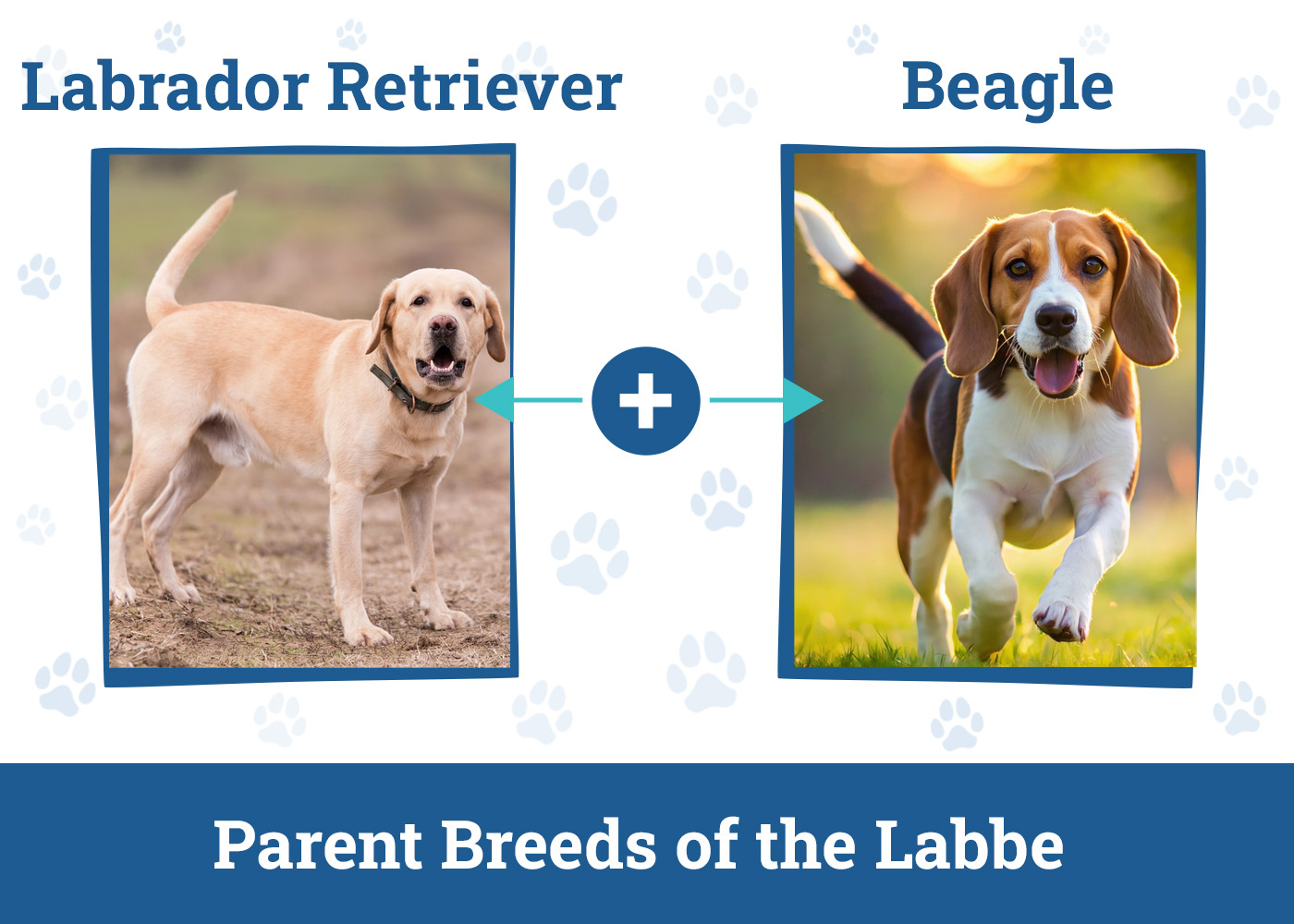
View 8 More +The Labrador Retriever and Beagle are two of the most popular dog breeds out there. According to the AKC, they held the number two and number eight spots, respectively, in the 2023 ranking of the most popular dog breeds.1 But what if you mixed these two popular dogs?
Breed Overview
Height:
19 – 24 inches
Weight:
25 – 40 pounds
Lifespan:
10 – 15 years
Colors:
White, brown, black, red, tan
Suitable for:
Active families, homes with a yard, experienced dog owners, apartment living
Temperament:
Intelligent, loyal, sometimes stubborn
That’s exactly what the Labbe is. This medium-sized designer dog is highly intelligent and loyal (if sometimes stubborn), making it a very popular pet for many different types of families. In this article, we will discuss every aspect of owning a Labbe, from the price of buying a Labbe puppy to the primary differences between males and females. We hope our guide helps you better understand whether the Labrador and Beagle mix is the right breed for you and your family!
Labbe Characteristics

Labbe Puppies
When looking for a Labbe, avoid pet stores, puppy mills, and so-called “backyard breeders” in favor of breeders with an established reputation in the pet community. When you meet a potential breeder, don’t be afraid to ask questions. A good breeder will be able to answer your questions and allow you to tour the breeding facility to see for yourself the conditions in which the dogs are raised. Keep in mind that the Labbe is a designer dog and therefore will not come with pedigree papers detailing its ancestry and health history. However, a breeder should be able to tell you about your dog’s ancestry and usually will let you meet your dog’s parents for yourself.
After bringing home a Labbe, remember that there are other costs to keep in mind when caring for a dog. It’s important to have a high-quality dog food, a dog crate, a bed, a collar, toys, and treats. Also, keep in mind that you should take your pup to regular vet checkups and keep their vaccination schedule complete.
Temperament & Intelligence of the Labbe
Are These Dogs Good for Families? 🧑🧑🧒
The Labrador and Beagle mix tends to be an excellent choice for families with children as they are usually very patient animals that can tolerate kids. In fact, your kids and your dog can be great companions for one another, as both will encourage the other to run around and play outside. Though it may be tempting to send your kids outside to play with the dog, however, it’s important that you always supervise your kids when they are playing with your dog, especially if they are young. Though they are fairly small, Labbes are extremely energetic dogs that can get excited and knock small children over.
Does This Breed Get Along With Other Pets? 🐶 😽
In general, the Labbe does well with other dogs, especially if they have been raised together. It’s helpful to socialize your Labbe with other dogs from an early age to help prevent any issues with your other dogs. Other pets can present a problem, as Labbes have a naturally high prey drive that may cause them to chase cats, rabbits, and other small animals. Socialization will help with small animals, too, but you are unlikely to completely override your dog’s prey drive.
Things to Know When Owning a Labbe:
Food & Diet Requirements 🦴
When looking for the right dog food for your Labbe, make sure to choose a high-quality food formulated for medium-sized dogs. Other factors that will influence the type of food you buy include your dog’s age and activity level. In general, Labbes need between 1.5-2.25 cups of food each day. Talk to your veterinarian about your dog’s specific nutritional needs.
Exercise 🐕
When it comes to activity requirements, the Labbe takes after its Labrador Retriever parent. Labbe owners need to make sure this dog gets at least 30 to 45 minutes of vigorous exercise each day. A Labbe that isn’t getting enough exercise is more likely to act out and may even become destructive. While the Labbe is small enough for apartment living, you need to make a structured plan for daily exercise if you do not have access to a fenced-in yard. Regular visits to a local dog park can be beneficial, as your dog can both get some much-needed exercise and socialize with other dogs in the park.
Training 🎾
In general, the Labbe is a highly trainable dog because they are very intelligent animals that tend to be eager to please their owners. However, Beagles can have a stubborn streak, so if your Labbe takes after its Beagle parent, training may be a bit more challenging. For this reason, Labbes may be less suitable for first-time dog owners. Of course, if you have any trouble getting your dog to do what you want it to do, you can always opt to bring your dog to a professional trainer.
If you are training your own pup, make sure to use positive reinforcement such as praise and plenty of treats to keep your dog on task. You should also maintain a firm, confident, and consistent attitude when training your Labbe so that it knows who’s in charge.
Grooming ✂️
The Labbe is a moderate to heavy shedder, so you will need to brush your dog regularly to prevent too much hair from collecting in your home. Aim to brush your Labbe about two to three times per week. In terms of bathing, you should only really bathe your Labbe when it needs it–otherwise, you could dry out your dog’s skin and strip its fur of important oils.
In addition to brushing and bathing, make sure to clip your dog’s nails, brush its teeth, and wipe out its ears on a regular basis. Dogs with floppy ears are especially prone to ear infections, so it’s important that you don’t skip the ears in your weekly grooming routine.
Health and Conditions 🏥
Like all breeds, Labbes are prone to developing certain health conditions that you should be aware of before adopting one of these dogs. Below, we have listed both serious and minor conditions you should know about.
- Eye problems
- Ear infections
- Beagle dwarfism
- Patellar Luxation
- Bloat
- Myopathy
- Hip dysplasia
- Intervertebral disk disease
Male vs Female
Like humans, dogs are individuals with individual personalities. While your dog’s sex can tell you something about how your dog is likely to behave, the only way to know whether or not a dog is compatible with you and your family is by spending some time with it. That being said, there are distinguishable differences between male and female dogs that you need to be aware of.
While there is little information about the differences between male and female Labbes, we can infer differences between males and females based on what we know about their parent breeds, the Labrador Retriever and the Beagle. It’s important to note that, unlike other breeds, female Beagles tend to be high-energy in comparison to their more laid-back male counterparts. If your female Labbe takes after its Beagle parent, she might be more difficult to handle than you might expect. Regarding dogs that take after the Labrador Retriever, you can expect females to be more independent than males, who tend to be more attached to their humans.
Size is also a consideration when it comes to choosing a male or female Labbe. Since Labbes are medium-sized dogs, the difference may not be too significant, but males can weigh up to 15 pounds more than females. This may be especially important for seniors or anyone with concerns about being able to handle a larger dog to keep in mind.
3 Little-Known Facts About the Labbe
1. The Labbe goes by many different names.
You might hear them referred to as Labeagles, Beagadors, or Labbe Retrievers.
2. Though the Labbe isn’t recognized by the American Kennel Club, it is recognized by five other organizations and registries.
The organizations that recognize the Labbe as a breed are the Designer Breed Registry, the Designer Dogs Kennel Club, the American Canine Hybrid Club, the International Designer Canine Registry, and the Dog Registry of America, Inc.
3. Labbes’ personalities can vary greatly depending on which parent it favors more.
While the Beagle is quite stubborn, the Labrador Retriever is typically eager to please and easy to train. Therefore, there is no one personality type that is true for all Labbes.
Conclusion
Labbes can make wonderful pets, but they aren’t for everyone. If you aren’t very active or lead a busy lifestyle, the Labbe probably isn’t a good choice for you. These dogs may also not be the best fit for first-time dog owners, as they can sometimes be challenging to train. However, if you are looking for a highly intelligent companion that is great with kids and other dogs, the Labbe might just be the breed you’ve been looking for.
Related Read:
- Labernese (Labrador Retriever and Burmese Mountain Dog Mix)
- Petite Goldendoodle (Labrador Retriever, Poodle & Cocker Spaniel Mix)
Featured Image Credit: Mary Swift, Shutterstock