When you think of Hungary, perhaps you think of thermal springs, festivals, and goulash (this national dish is actually called gulyás). But what about their dogs? Hungary doesn’t have as many national dogs as other countries, but there are nine Hungarian breeds that are all amazing animals in their own right.
We’ve compiled these Hungarian dogs into a list that includes bits of information about each breed. Many of these dogs were brought to Hungary by the Magyars, early Hungarians in the 9th century, for herding and guarding purposes.

The 9 Hungarian Dog Breeds
1. Hungarian Greyhound

| Lifespan: | 12 to 14 years |
| Temperament: | Intelligent, devoted, reserved, energetic, loving |
| Colors: | Multiple |
| Size: | Medium to large |
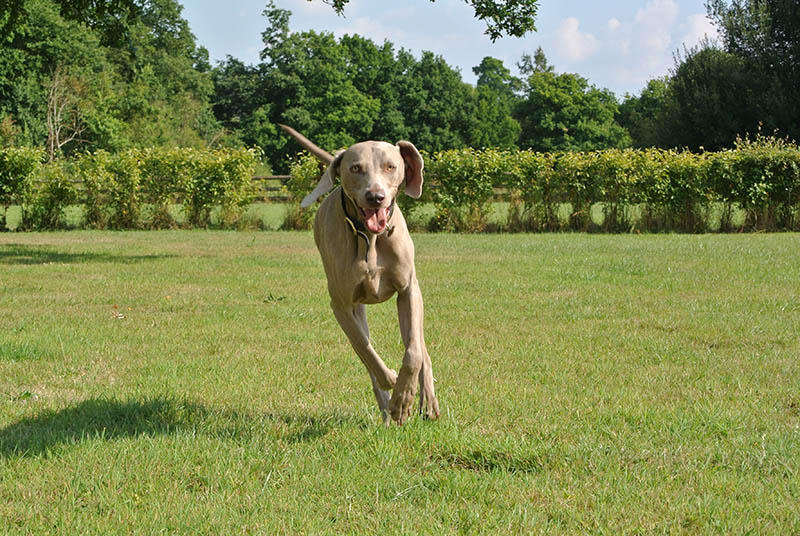
Also known as Magyar Agár, the Hungarian Greyhound was used by the Magyars as far back as the 10th century for hunting. They are excellent runners and were also used for racing, but these pups also make wonderful family pets.
The Hungarian Greyhound is great with kids and other dogs, but their hunting instincts might kick in around smaller pets like cats. They can be somewhat shy around strangers and protective of their families but without any real aggression. Hungarian Greyhounds are smart and easily trained, but they do require a fair amount of exercise.
2. Komondor
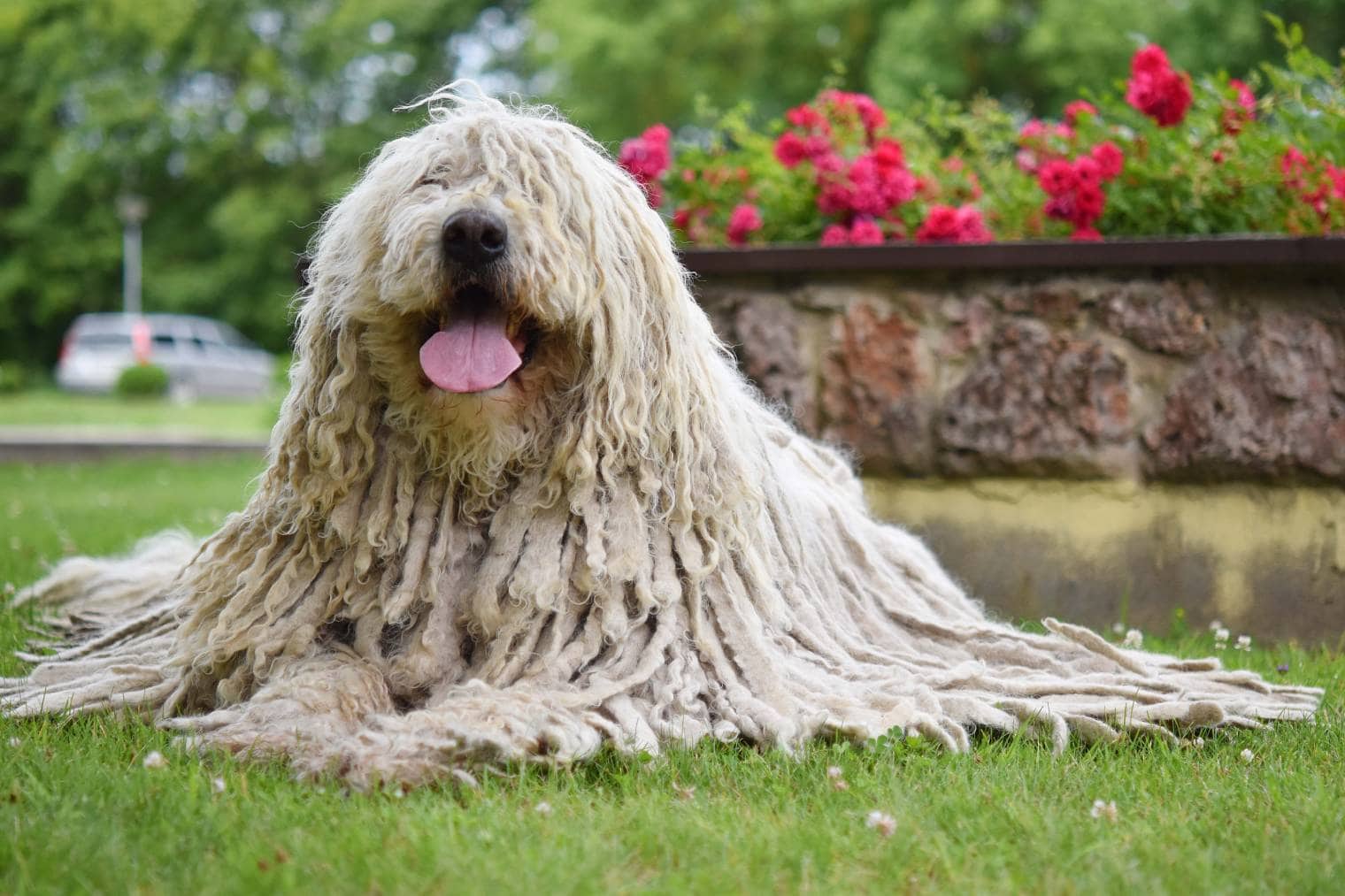
| Lifespan: | 10 to 12 years |
| Temperament: | Devoted, courageous, independent, confident |
| Color: | White |
| Size: | Large |
The Komondor is a guard dog and protector of sheep and cattle and, like the Hungarian Greyhound, was brought to Hungary by the Magyars over a thousand years ago. This makes them perfect guard dogs for the family.
Komondorok (plural for Komondor) are muscular and large dogs that have a white and corded coat. They need baths, but brushing requirements are minimal. Their guarding and herding instincts make other pets not a great idea. They need plenty of exercise, and training is tricky due to their independent natures.
3. Kuvasz

| Lifespan: | 10 to 12 years |
| Temperament: | Brave, devoted, intelligent, loving |
| Color: | White |
| Size: | Large |
The Kuvasz (pronounced koo-vas) are guards of flocks that have been in Hungary since the Middle Ages but are thought to have originated in Tibet and Turkey. They were actually popular with royalty and were a part of King Matthias’ court.
Kuvaszok are excellent guard dogs for the family but are very gentle with children. They need weekly brushing and do require a fenced yard to run around in. Their independence and intelligence make them a challenge to train, and they are recommended for experienced dog owners.
4. Mudi

| Lifespan: | 12 to 14 years |
| Temperament: | Alert, smart, brave, energetic, playful |
| Colors: | Black, gray, brown, white, yellow, gray-brown |
| Size: | Medium |
The Mudi (pronounced moody) is another breed that originated with the Magyars towards the end of the 9th century. These sheepdogs have a very similar history to the Pumi and Puli (coming up next) but weren’t actually an official breed until 1936.
The Mudi works very well with stubborn flocks and will protect the property and family without any real aggression. They are exceptionally energetic dogs that require a lot of exercise and are easily trained thanks to their intelligence and devotion to their owners.
5. Puli

| Lifespan: | 10 to 15 years |
| Temperament: | Intelligent, devoted, independent, quick learners |
| Colors: | Black, silver, white |
| Size: | Medium |
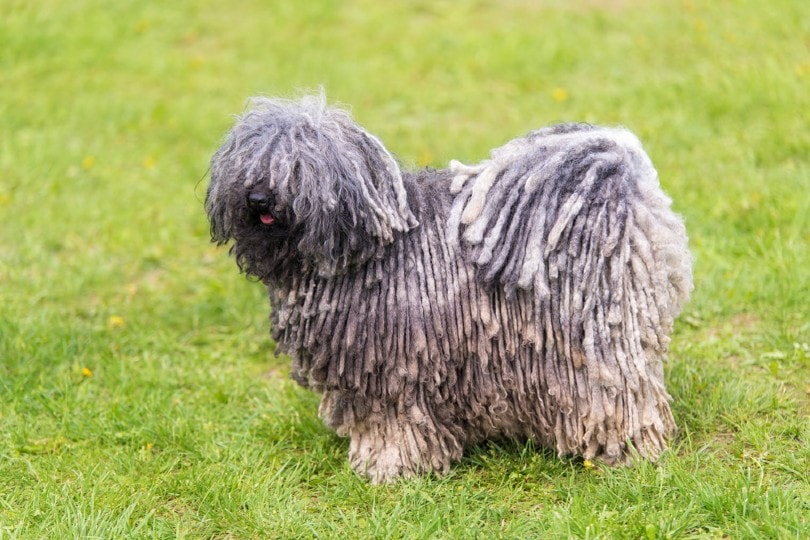
The Puli also have an association with the Magyars and are also sheepdogs that herd quite large flocks of sheep. They are famous for their corded coats that require regular maintenance.
The Puli needs a fair bit of mental and physical exercise and is quite independent and headstrong. They are smart enough to learn but dislike repetition and prefer to do things their own way, so they need an owner who is firm but loving.
6. Pumi

| Lifespan: | 12 to 13 years |
| Temperament: | Bold, intelligent, courageous, energetic |
| Colors: | Black, gray, silver-gray, fawn, white |
| Size: | Medium |
The Pumi is believed to be the oldest Hungarian dog, having originated around 800 AD. Along with the Puli and the Mudi, they are sheepdogs that are closely related to the Puli and have a combination of soft and harsh curls that only need combing every 3 to 6 weeks.
The Pumi is a very agile and energetic dog that needs frequent exercise and opportunities to exercise its mind. They can be trained quite easily thanks to their smarts and eagerness to work. They do tend to bark a fair bit, which should be discouraged through training, but they do make fantastic family pets.
7. Transylvanian Hound

| Lifespan: | 10 to 14 years |
| Temperament: | Brave, quiet, determined, calm, playful, friendly |
| Colors: | Black & tan, black, tan & white, red & white |
| Size: | Medium |
The Transylvanian Hound (named Erdelyi Kopó in Hungarian) has been around for centuries and was a preferred hunting dog for royalty in the Middle Ages. This breed was commonly found in the Carpathian Mountains as a courageous and tough scent hound.
Transylvanian Hounds have short coats which only need a weekly brushing. They are quite active and need a minimum of a 1-hour walk every day. They should always be leashed while out as their instincts to give chase will take over when any small animal crosses their path. Training might prove challenging as these dogs are stubborn.
8. Vizsla

| Lifespan: | 12 to 14 years |
| Temperament: | Intelligent, playful, friendly, loving |
| Color: | Golden rust |
| Size: | Medium |
The Vizsla’s ancestors ran with the Magyar warriors while on horseback, and they evolved into the gorgeous red-gold hunting dogs we see today. These dogs are not as independent as the rest of the breeds on this list, as Vizslas tend to form a very strong bond with their owners and don’t do well when left alone for long periods.
Vizslas need weekly brushing and will require at least 30 minutes of vigorous exercise every day. Vizslas should be given the opportunity to run hard as often as possible. A bored Vizsla is a destructive Vizsla, so training is a necessity.
9. Wirehaired Vizsla

| Lifespan: | 12 to 14 years |
| Temperament: | Gentle, intelligent, devoted, playful |
| Color: | Golden rust |
| Size: | Medium |
The Wirehaired Vizsla is a similar but separate breed from the Vizsla, with the main difference being his wiry coat and distinguished eyebrows and beard. They are also not as ancient a breed as the Vizsla as they were bred in the 20th century for hunters looking for a denser coat and sturdier frame for their hunting dogs.
Wirehaired Vizslas only need a minimal amount of grooming and are full of energy. They require quite a lot of exercise and prefer to spend time with their families. Like the Vizsla, Wirehaired Vizslas can get bored very easily, so training should be firm but entertaining.
- Related read: Male vs Female Vizslas
Conclusion
Hungarian dogs all have amazing personalities and would make a fantastic addition to most families. They are all working dogs in some form or other that are exceptionally smart and quite independent (with the exception of the Vizsla).
Before you consider adding one of these breeds to your household, be sure to do your homework. Your own experience with dogs and how much energy you have are all definitely factors when choosing a new dog. Be sure to check rescue groups before considering a puppy. You’ll potentially end up with a dog that’s already been trained and will be grateful for getting a second chance in a happier home.
See Also:
Featured Image Credit: SasaStock, Shutterstock
 The 9 Hungarian Dog Breeds