In this article
View 2 More +Dogs can be extremely protective of their owners, and some people might even get a particular breed for this reason. If you’ve noticed that your dog is getting increasingly protective of you, or you just wonder what makes them stand by your side so much, you can certainly gain some insight by reading this article.
We will discuss exactly what factors go into making a dog protective, how you can manage it, and when professional training might be required to correct certain associated behavioral Issues.

The 4 Reasons Why Your Dog Is So Protective
1. Dogs Are Naturally Protective of Their Own
Dogs are social animals that often live in packs in the wild. By nature, they are designed to look out for each other. If a dog knows that you’re part of their pack, they may feel protective of you, even if they are completely docile and do nothing in response to strangers or other pets.
Some dogs show that they are protective in different ways. One might subtly guard you if they suspect that there is a squabble breaking out in the household. These types literally try to stand between it but don’t do anything but attempt to resolve the conflict. Other dogs might take things to a much more severe level, leading to aggression.
2. Breed Matters
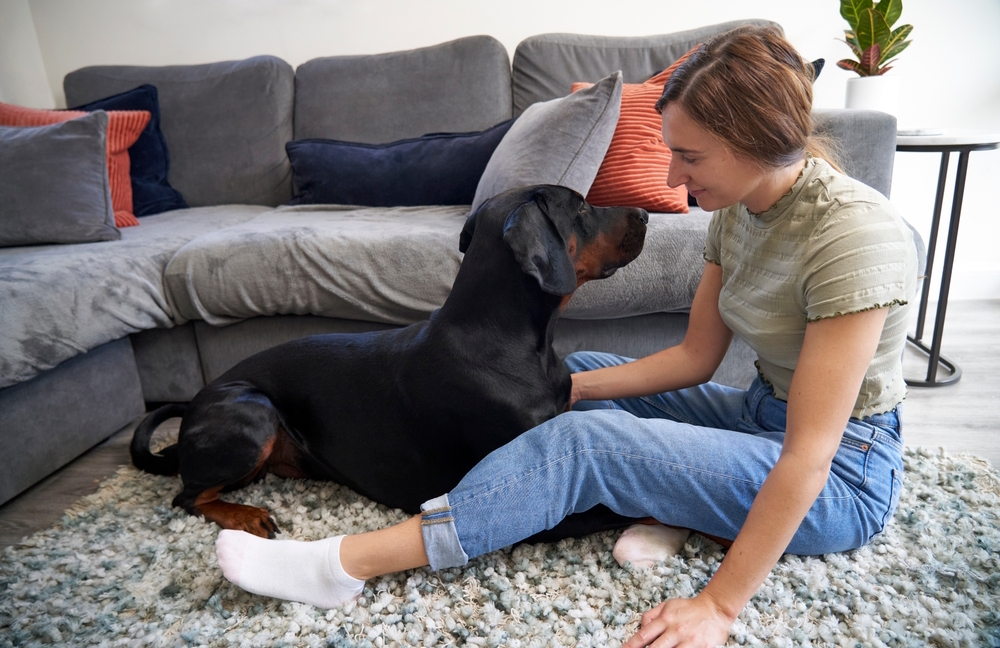
Some breeds seem naturally inclined to be more protective than others. Some examples of this include the German Shepherd, Belgian Malinois, and Doberman Pinscher, amongst others.
If you buy a protective breed, you have to understand that this is simply part of their overall character. Early on, this protectiveness can be fostered to be healthy, but sometimes, they’re going to need a little extra motivation to be complacent with others.
3. They Have Been Trained
If the dog is particularly assertive or aggressive in protecting you, it could be that they have been trained to do so. For instance, if a dog previously was a working dog, and was trained in this manner, they may transfer this training to you. Examples include dogs that have been trained to work with livestock, police dogs, and assistance dogs.
4. It Depends on the Environment
Dogs might only be protective in certain environments. For example, if you’re out walking around, your dog might meet everyone with a wagging tail. However, if you’re at your house, a dog might be more suspicious or protected than usual because they know that’s your space and their space, and they may see other dogs or people as intruders or threats to that space.
Protectiveness vs. Aggressiveness
There is a difference between a dog being protective and a dog being aggressive. Some dogs are naturally loving and protective by nature but not inherently aggressive at all.
A really great example of this would be the Great Pyrenees. These dogs are notoriously calm, patient, and loving. However, they take their role in the household very seriously and will gladly defend their hearth and home.
Other dogs, however, might show protectiveness in a much more aggressive fashion as either part of their breed instincts or their past history. Understanding the difference is important so you know what’s normal and what’s not, and when you might need to seek professional help.
If you need to speak with a vet but can't get to one, head over to PangoVet. It's our online service where you can talk to a vet online and get the advice you need for your pet — all at an affordable price!
Considerations for Protectiveness in Dogs
If you start noticing that your dog is getting more protective as they start maturing, it’s important to address the issue as it comes up. Often, these types of dogs benefit from a very strict training regimen. It is important to work with a veterinary professional to help address this situation.
They desperately need to know the difference between a threat and a friend. There are a lot of mistakes that experienced pet owners make when dealing with these situations completely unknowingly.
Here are some different ways that you can hinder training retention or even make the situation worse.
Being Submissive
Often, if you are very submissive and do not assert yourself as the leader, your dog feels an obligation to take over that role. Because dogs are social animals by nature, they naturally distribute the roles among the pack.
Because dogs instinctively know from their ancestral history that they need a pack leader, many of them feel very inclined to take on the role if a human will not. Other dogs will naturally try to take on this role as they are very dominant by nature.
It is our job to make dogs understand their place in the social group so that everyone can get along. You definitely should not be aggressive or mean to your dog to assert dominance. You simply have to be firm and consistent. Since this can be very difficult for some people, professional resources might help to define that power differential in the relationship.
Inconsistent Training
If dogs that lean towards being dominant are not properly trained, it can lead to the tendency of being overprotective. They might not understand your way of training, and it can cause them to misunderstand their role.
If your dog is properly and consistently trained, and they’re being overly protective, one command should call them off.
If you feel like maybe you just aren’t equipped to handle it at all, then you should seek the help of a professional trainer. There are also tons of resources online to help with ideas.
Conclusion
The bottom line is that your dog loves you. They devote themselves to you and want to make sure that you are also taken care of. If your dog is protective, it’s simply because they want to defend you in the same way you do for them.
We can certainly be thankful to our canine friends for their companionship, affection, and protection. However, if the situation is getting out of control, you might want professional help so they can help you handle the situation.
Featured Image Credit: Tanya Dol, Shutterstock