You may have heard the term “cherry eye” before but are unsure what it means. Does it hurt your dog? How can you treat it? When should you be concerned? Cherry eye can affect any breed, including your Beagle. Continue reading to learn more about what cherry eye is, what it looks like, and what your treatment options are if your Beagle has a cherry eye.

What Is a Cherry Eye?
Cherry Eye is the generic term for a prolapsed gland of the nicitans. The gland of the nicitans is also known as the third eyelid and is one of the glands associated with your dog’s eye that produces tears. The third eyelid is found on the inner corner of each eye, closest to the nose. You may notice a small, pink, triangular piece of tissue in this area. Usually, this area is flat, pink, and barely noticeable.
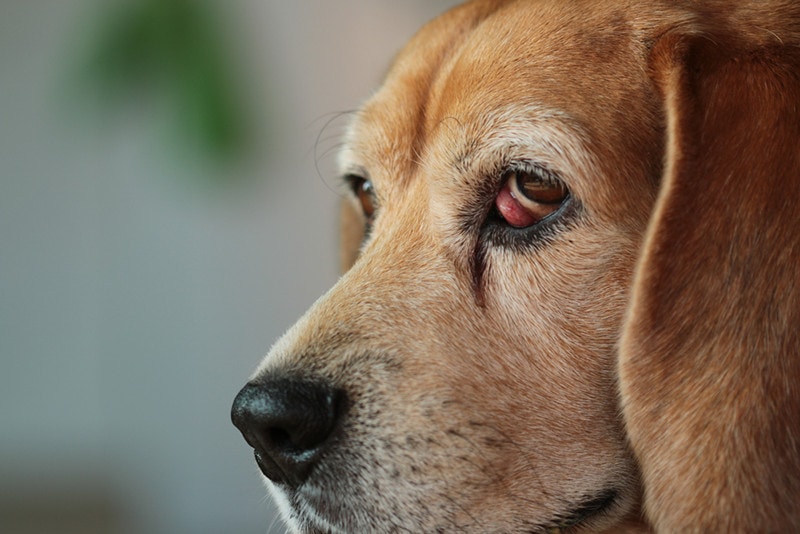
When a dog suffers from cherry eye, the gland becomes prolapsed or pops out of its normal position. This can occur in one or both eyes of your Beagle and can vary in severity, depending on how much of the gland is displaced.
If you are concerned about the health and well-being of your pet, seek veterinary advice for the best course of action.
If you need to speak with a vet but can't get to one, head over to PangoVet. It's our online service where you can talk to a vet online and get the advice you need for your pet — all at an affordable price!
What Are the Signs of Cherry Eye in a Beagle?
When you look at your Beagle’s healthy eye, you should barely notice a small, healthy pink triangular piece of tissue on the inner corner of each eye. When your Beagle is sleepy, you may notice these glands cover a large portion of the eye to help protect the globe as they sleep.
When cherry eye occurs, this gland will prolapse out of its normal position and appear as a small, pink, or red-colored round swelling at the corner of the eye. This round swelling has the appearance of a very small cherry, hence the name. The color can range from bubble gum pink to dark red, and the size can be small or appear to protrude over a large portion of the eyeball. Cherry eye can occur in one or both eyes, sometimes simultaneously.
This condition isn’t painful, and your Beagle will not notice anything is wrong. They typically will not be pawing at the eye, trying to hold it shut, or experiencing any discharge or crusting of the eye. Because this gland helps produce tears for the eyes, your dog’s eyes may become dry and irritated with time.
If dry eye occurs, it can be very uncomfortable and even painful for your dog. You may notice redness in the whites of the eye, increased crusting around the eyes, and general irritation. Eye dryness does not occur acutely but over time if the cherry eye is not treated.

What Are the Causes of a Cherry Eye in a Beagle?
The third eyelid is normally held in place by a small, fibrous attachment. In Beagles, it’s theorized that this attachment can weaken and break down, causing the third eyelid to prolapse. However, there are no good studies to support this theory.
Cherry eye is more common in brachycephalic or flat-faced dogs such as Bulldogs, Boston terriers, and Shih Tzus. It is more likely because the eyes in these dogs often protrude out farther from the eye socket than other dogs. This is not the case with Beagles.
Cherry eye occurs most commonly in dogs under a few years of age, and some are affected as young puppies. Dogs can have either one or both eyes affected.
How Do I Care for a Beagle With Cherry Eye
The biggest concern with a cherry eye is the development of dry eye. As discussed above, a cherry eye is typically a non-painful condition. However, if tear production is affected and tear protection of the eye(s) is affected, dry eye can occur and can be painful. Your Beagle may develop redness to the white of the eyes, crusting, squinting, and discomfort.
When you first notice a cherry eye in your dog, you should make an appointment to see your veterinarian. Depending on your dog’s age, the severity of the cherry eye, their breed, and other underlying health issues, your veterinarian will discuss medical management or surgery. Medical management involves applying artificial tears a few times daily to help combat dry eye. This may be all your dog needs.
However, some dogs will benefit from surgery. Surgery involves making a small “pocket” in the tissue to replace the gland. This little pocket is then sutured close to keep it in place. An older surgical procedure involves completely removing the prolapsed gland. This is no longer recommended because the gland that helps supply tears is removed.
If your veterinarian recommends this older procedure, you may want a second opinion. Some veterinarians don’t perform newer surgical procedures, but they should be able to recommend another veterinarian to help your dog.

Frequently Asked Questions (FAQ)
Will the Surgery Cure My Beagle’s Cherry Eye?
The surgery to replace the gland with a small pocket of tissue will resolve the cherry eye. However, it can occur again in the future, requiring another surgery.
What if I Don’t Get Surgery for My Dog?
Managing your Beagle’s cherry eye with your veterinarian is recommended. The most important thing is to ensure your Beagle does not develop dry eye. It can sometimes be treated with artificial tears, but some dogs require more specialized medications for tear production.
If you have additional questions about the condition of your beagle’s eyes or their general health, it is recommended that you contact your vet.
Conclusion
Cherry eye is a condition most commonly seen in younger dogs. It refers to the prolapse of the third eyelid or a tear gland. Some Beagles may require surgery for this condition if the prolapse obscures their vision or causes dry eye. Other times, your dog may be fine with no treatment aside from artificial tears. If your Beagle has a cherry eye, always follow up with your regular veterinarian for monitoring and treatment. If your Beagle’s eye seems irritated, red, or painful at any time, veterinary care should be sought immediately.
Related Read:
- https://pThere’s a Bump on My Dog’s Eye: Should I Worry?etkeen.com/bump-on-dogs-eye-vet-answer/
- 9 Common Eye Problems for Dogs
Featured Image Credit: jukgrapong, Shutterstock