In this article
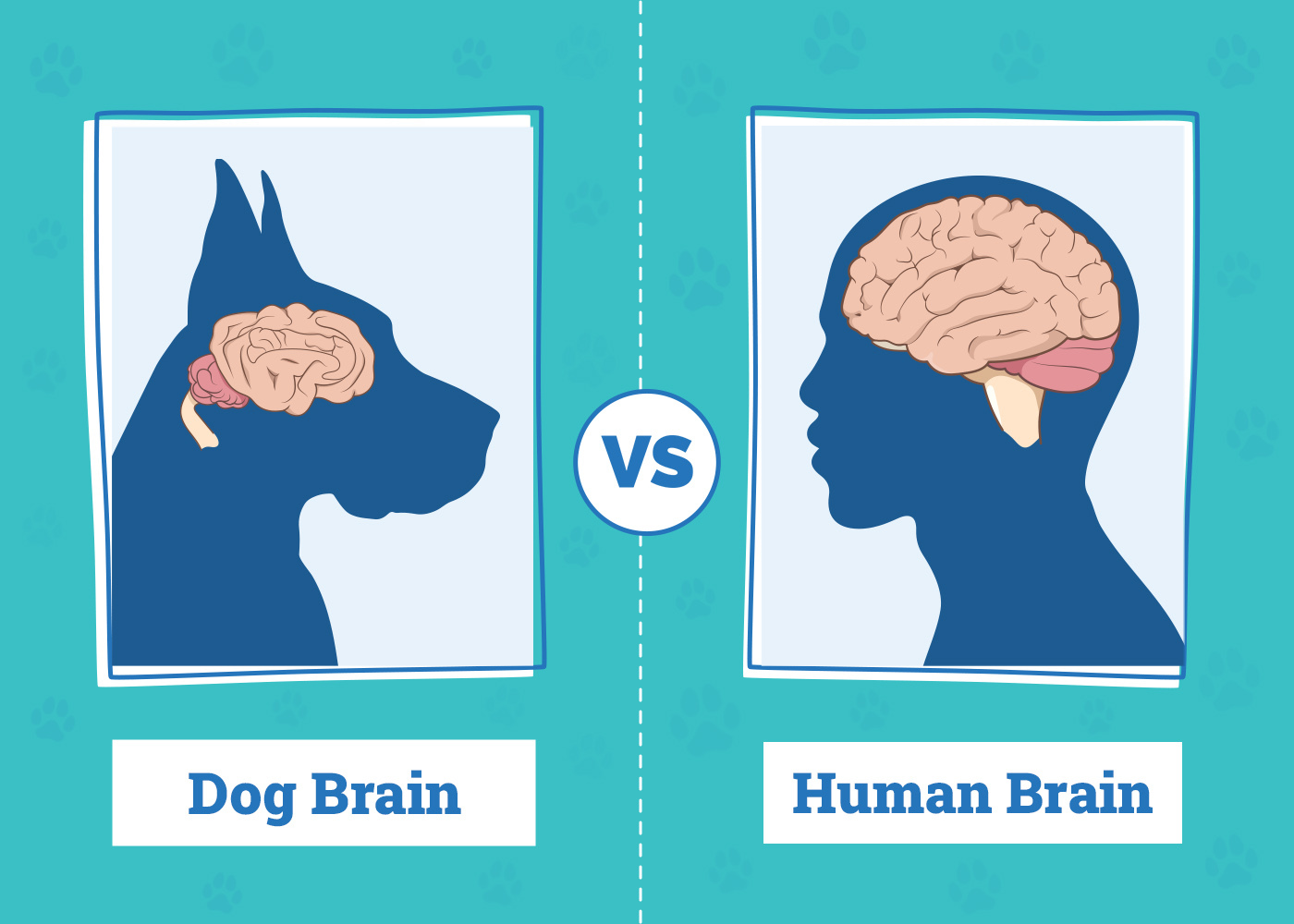
View 3 More +Putting dogs and humans in an evolutionary context is vital to appreciating the differences and similarities between their brains. Both share a common ancestor and went on their respective developmental pathways around 94 million years ago, with canines and felines diverging approximately 40 million years later. Nevertheless, dogs share 84% of their DNA with humans.1
We share many traits and features with dogs because we’re both mammals, and we have similar bodily systems and organs, but let’s focus on the brain specifically.
At a Glance
- More fold and, thus, more surface area
- Capable of complex emotions
- The ability to dream with different brain wave patterns through the stages of sleep
- Canine domestication has given people profound mental health benefits
- Fewer folds and less surface area
- Emotional capabilities of a 2.5-year-old child
- Capable of a similar ability
- Domestication has influenced the size of the canine brain

Overview of the Human Brain
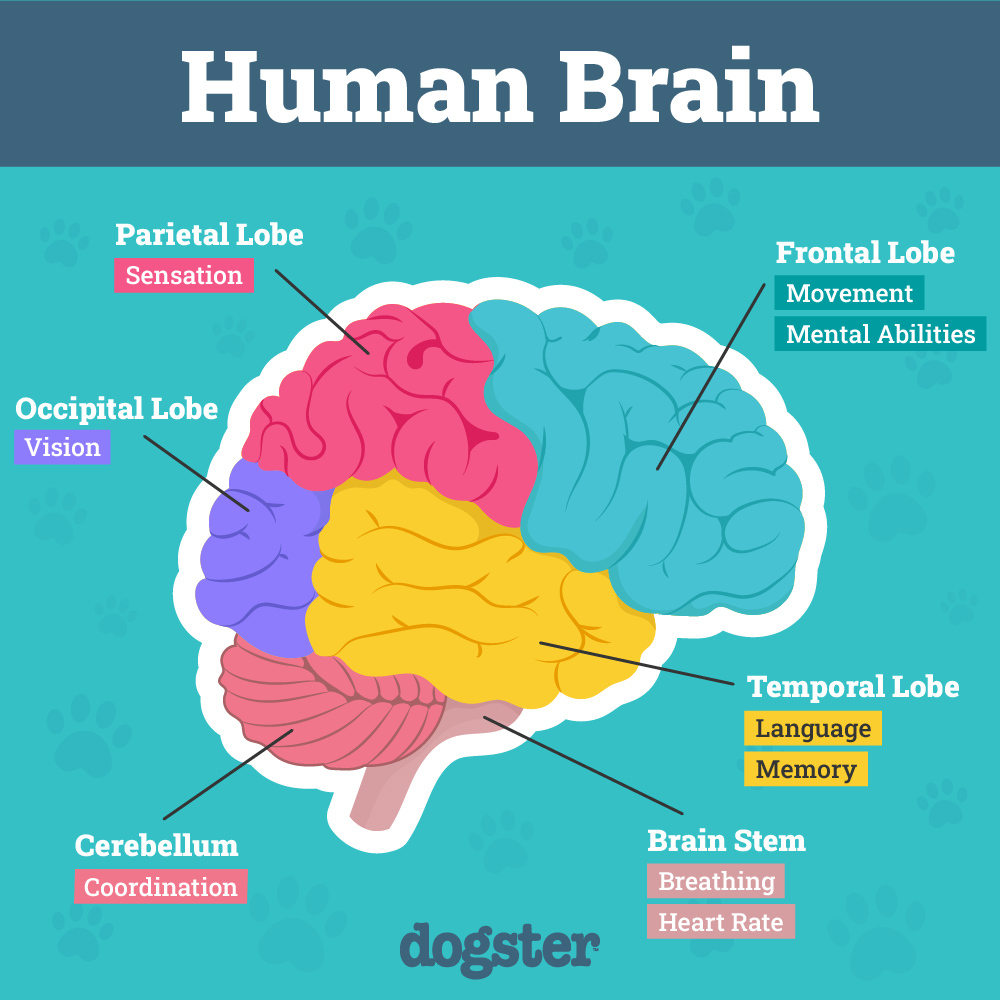
Many scientists consider the human brain the most complex unit, living or non-living, that exists. It demands enormous amounts of energy to complete tasks, and researchers estimate that it consumes roughly 20% of a person’s glucose intake yet only encompasses 2% of an individual’s weight.2 Most of it is used for information and neural processing. Remember, the brain controls everything in the body.
Theories abound as to what spurred brain development and the success of humans on the planet. One study identified the use of stone tools and its effect on eating meat, ensuring early humans could meet their nutritional needs. Cooking also plays a pivotal role by making some nutrients more readily available. Whatever it was that made humans so unique also affected dogs and their evolution.
Special Capabilities
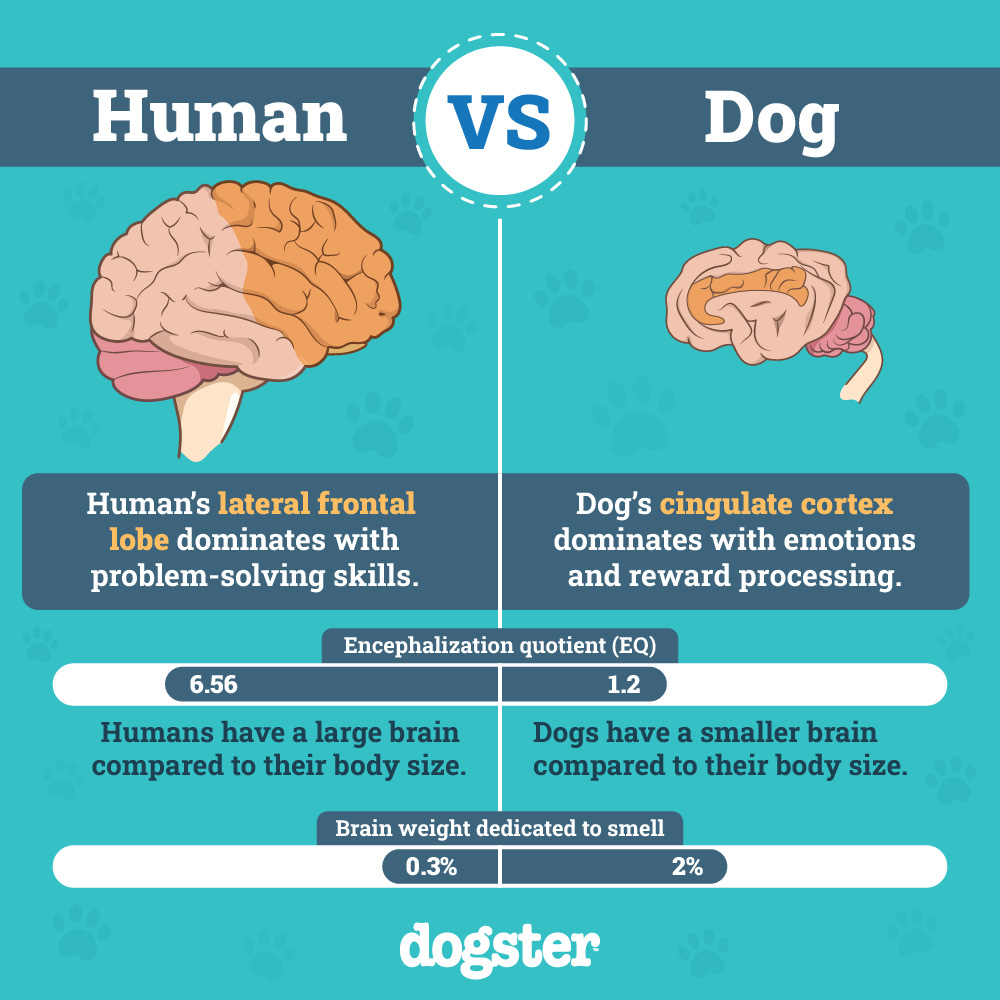
Written and verbal communication are one of many abilities that set humans apart from animals, including dogs, and explains some of the various differences between our brains, which is reflected in the encephalization quotient (EQ). This figure describes the relationship of an animal’s body weight to its brain size. The EQ of 6.56 for humans means we have large brains relative to our size, unlike dogs with a score of 1.2.
Of course, communication isn’t unique to people, but we are unique in the way in which we process and respond to voices vs. sounds.

Neural Development and Neuroplasticity
Something that both dogs and humans share is that our brains become less malleable as we age. Certain sensory abilities, such as hearing and depth perception have a limited window of development, and any limitations or hindrances during that time will have permanent effects.
However, both humans and dogs generally retain neural plasticity throughout their lives, which is why humans are always learning, and you can teach an old dogs new tricks.

Overview of the Canine Brain

Our canine companions diverged from a common ancestor of the wolf roughly 27,000 years ago. Nevertheless, our pets have retained many seemingly wild characteristics that are still hardwired into their DNA, regardless of their usefulness or need for survival. Therefore, many traits of the canine brain may reflect this connection and account for many differences with humans.
Wolves are carnivores, but evolutionary changes have occurred via domestication, and dogs are widely considered to have a more omnivorous diet. However, their predator origins are still evident in modern-day dogs, some more than others, in terms of prey drive, speed and agility, visual acuity, and a keen sense of smell.
Special Capabilities
The differences between canine and human olfaction are profound, as evidenced by the varying percentage of brain areas dedicated to this sense. It is also evident in the sensory organ, with 100 million receptors in dogs versus 6 million in humans. Some reports suggest that dogs could sense particular scents up to 12 miles away! That explains why dogs have over 60 times the brain weight devoted to smell than that of humans.
Selective Breeding and Brain Development
Selective breeding has also impacted canine brain development and explains many differences between humans, but also between breeds. In the majority of cases, people bred dogs mainly for function early during domestication. They protected our herds, provided transportation via sleds, and hunted alongside us. It wasn’t until the Victorian Era that enthusiasts started selectively breeding dogs for size, appearance, and companionship.
As dogs’ roles have changed, so has their brain structure and, hence, the varying intellects of the breeds. This is not to necessarily say that some breeds are smarter than others, but there are certainly differences in the types of intelligence displayed by different dogs.
Other Factors to Consider
Canines and humans share other traits despite our different roles. For example, we both rely on body language for the purposes of communication and survival, the information for which is stored in the temporal lobe. It makes evolutionary sense that we’d have similar ways to detect potential threats; it serves the same purpose in both species: survival.
Nonetheless, while canines seem to be born with the ability to interpret body language, humans have to learn this skill. If you’ve grown up with dogs, you’re probably more attuned to them than someone without experience with these animals. That makes a strong case for supervising playtime with the kids until they acquire this ability through their interactions with their pets.
Interestingly, we also see evidence of similar brain abnormalities in humans and dogs. One study found that obsessive-compulsive disorder (OCD) manifests with comparable behaviors in both humans and dogs, although we might develop a compulsion to wash hands, where dogs can become hyper fixated on chasing balls or pacing . Researchers identified similar structural abnormalities in dogs and humans exhibiting OCD type traits, and both respond to the same medications to treat the condition.

Conclusion
Dogs and humans have been best friends for millenia. Despite some significant differences in the structure and function of our brains, there are many shared traits as well. Perhaps these similarities have helped us understand each other better over the years, allowing us to form the relationships we have today. And given the amount of time that dogs have been our close companions, it would be reasonable to believe that our brains have evolved to emphasize qualities that aid in our ability to understand one another, making us even more alike than we might think.
Featured Image Credit: Left (Dog) Natee K Jindakum, Shutterstock, Right: Human (Krakenimages.com, Shutterstock)