

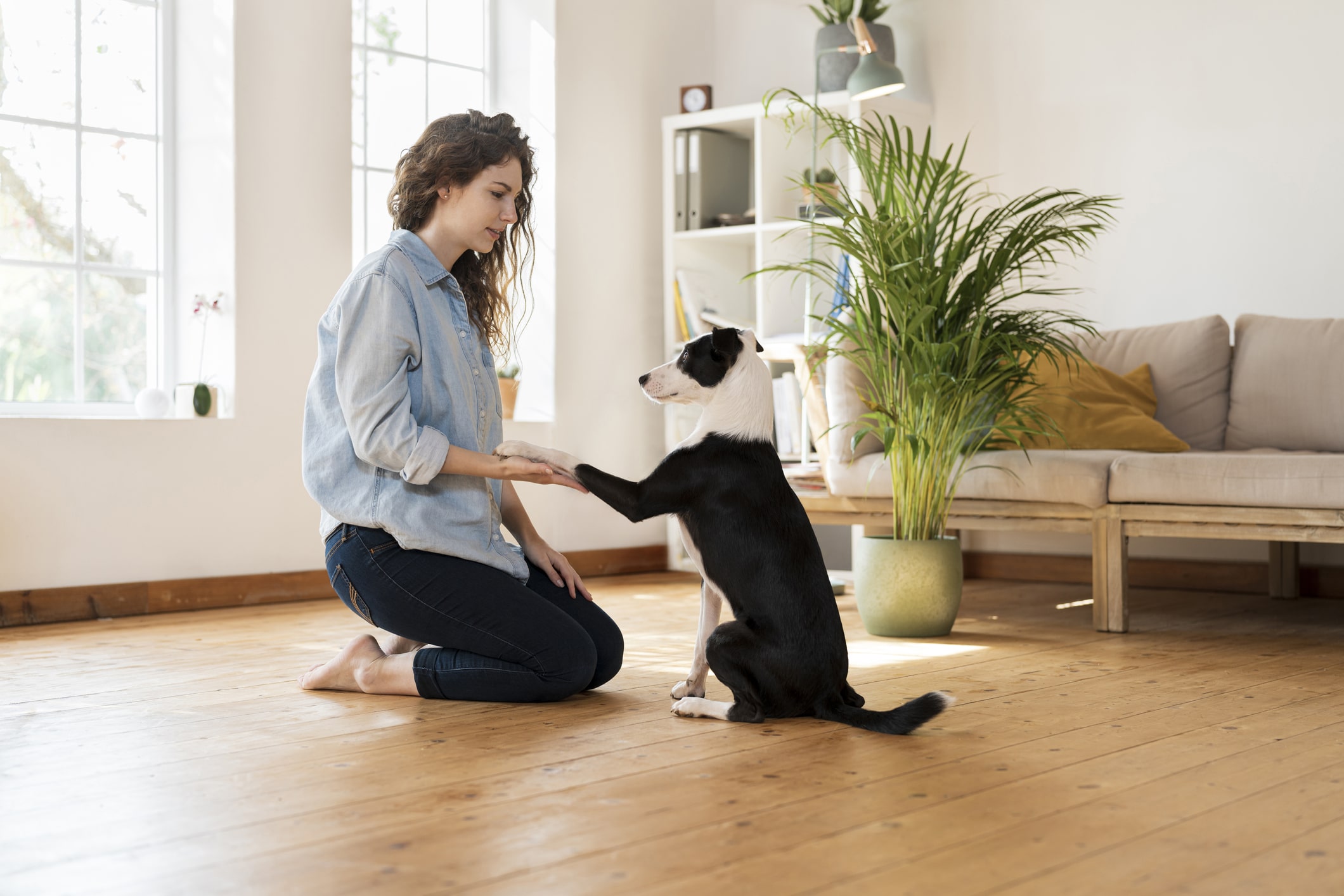
If you’ve only just brought a dog home, the prospect of obedience training can feel intimidating, especially if you’ve never done it before. The good news is that you do not need any prior experience to mold your pup into a model canine citizen. What matters most is being consistent and maintaining a positive attitude throughout the training period, along with having a dose of good humor. In this guide, we share simple steps and tips to get you started with basic obedience training. 
Obedience Training Steps & Tips
- Harness
- Leash
- Long leash
- Treats or other motivators (toys, etc.)

How to Obedience Train a Dog
1. Enroll in Obedience Classes
Even before you bring your new dog home, it would be ideal to get in contact with an obedience class group to get your pup signed up early and ask any questions you may have. This is strongly recommended because it offers you an extra support system while you’re training your dog at home. It’s also a good way to socialize your dog with other dogs in a secure environment.
2. Identify the Motivator
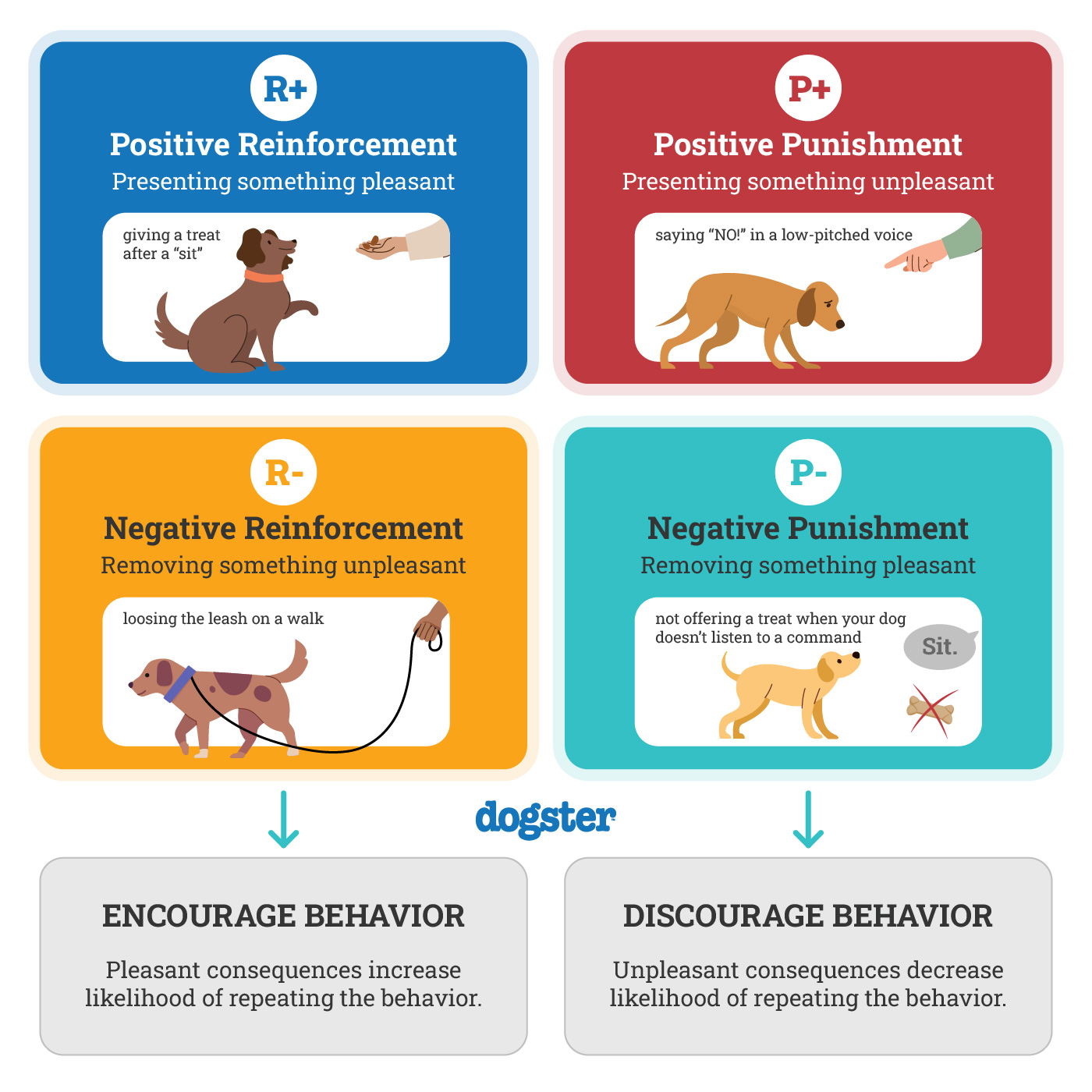
Rewarding your dog is key to motivating them during training. Dogs are motivated by different rewards; while some like treats, others like toys, play sessions, or even just a nice scratch behind the ear. Watch out for what your dog gets most excited about and use that as your training motivator.
3. Start With Basic Commands
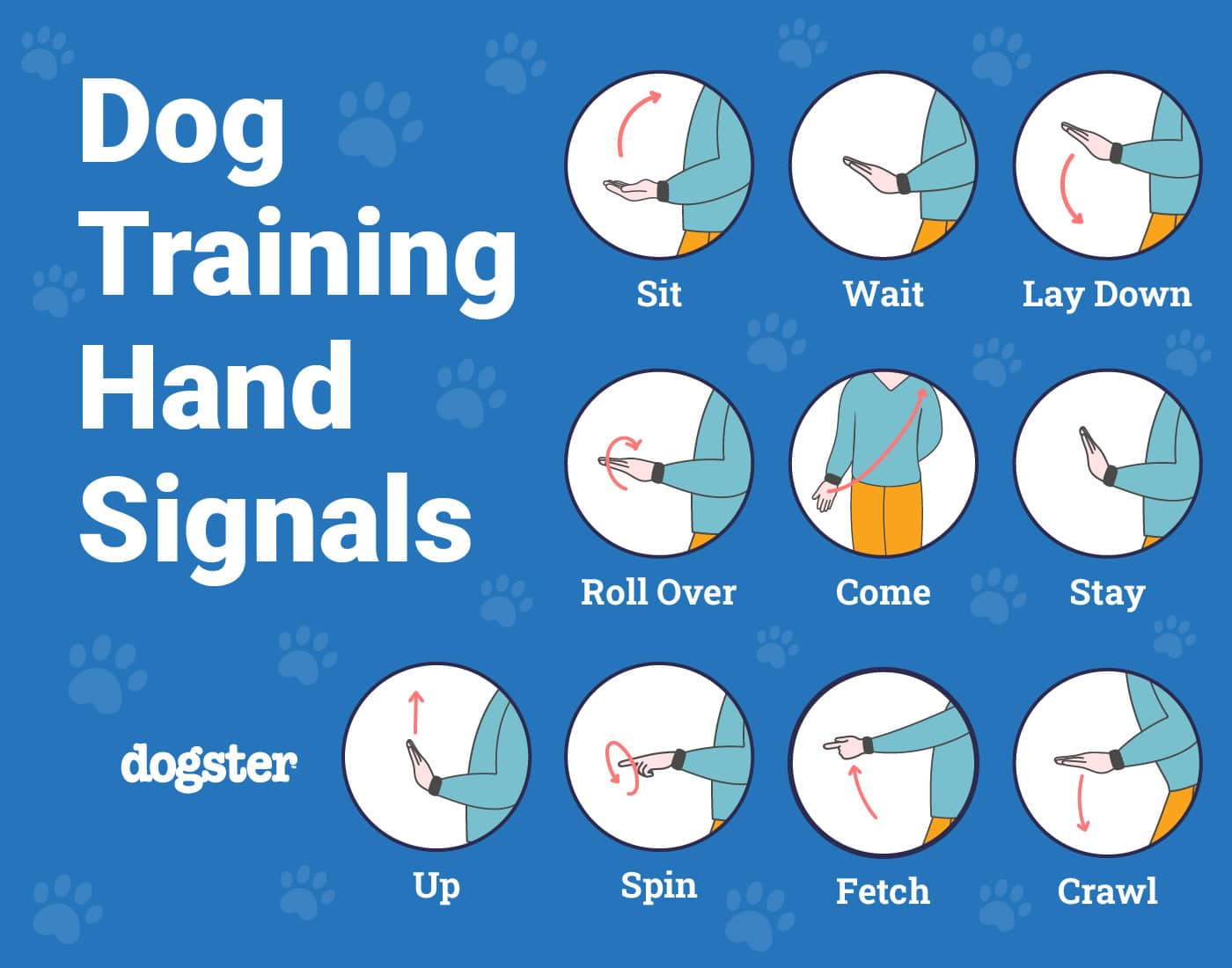
Basic commands are essential because they give you more control in a variety of situations. For example, if your dog is about to eat something they shouldn’t, a command like “leave it” could make all the difference. It’s best to start teaching basic commands at home in a distraction-free environment. Here are a few of the most basic commands (not an exhaustive list) and simple tips for how to use rewards to train your dog to do them:
- Sit
Hold a treat in front of your dog, and move it upward over their head in a curve. This encourages your dog to naturally go into the sitting position.
- Come
While your dog is at a distance from you, crouch down, and make sure they can see the treat or toy in your hand. Say “Come” in a happy voice and reward your dog. When out in public, like in the dog park, attaching a long leash can be useful for training your dog to come back to you from a farther distance.
- Stay
Have your dog sit, then show them the treat, and give the “Stop” signal with your palm facing up. Wait a second or two and then reward them. Gradually increase the length of time your dog must “Stay” before they get the treat.
- Leave
Hold a treat in your closed fist, and let your dog nudge and lick at your hand to try and take it. When they back away for a second or two, reward them with the treat. Keep doing this until your dog backs off from the treat all the time, then you can start to work on the verbal cue, “Leave it,” and advance to having your dog leave alone a treat on your open palm.
- Down
Have your dog sit and show them a treat. Move the treat toward the ground to encourage your dog to follow it into a lie-down position. When they lie down, give them the treat.
- Watch Me
Show your dog a treat, and then hold it up between your eyes. Say, “Watch me,” and reward if your dog can watch you for a few seconds. Gradually increase the time they have to focus on you to get the treat.
4. Work on Leash Behaviors
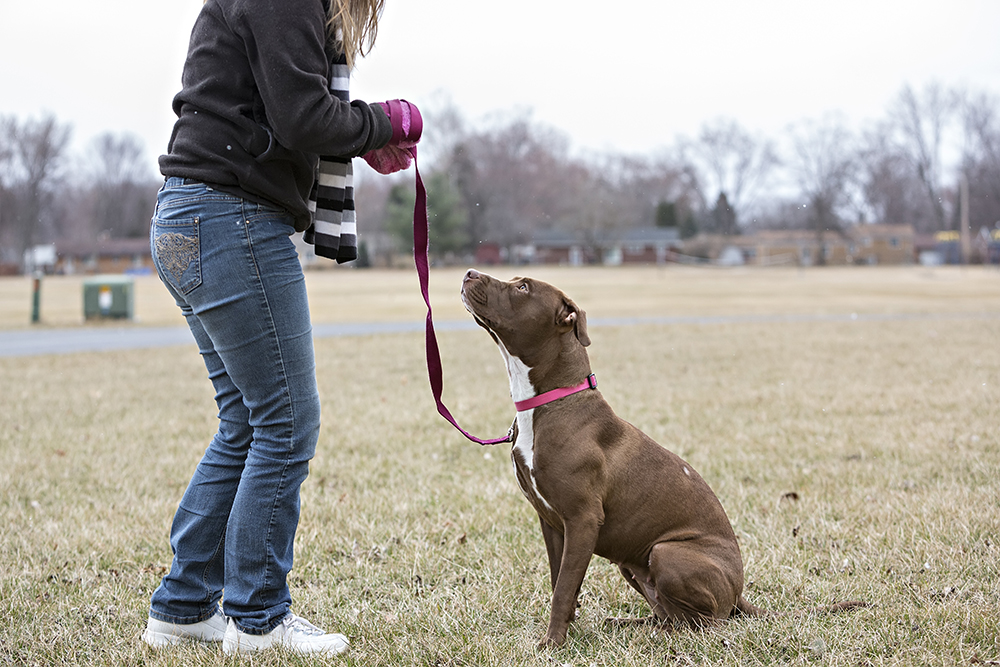
You can also work on good leash behavior both inside and outside the house. Teaching your dog to “heel” (walk at your side) is an important leash behavior because it is more comfortable than being pulled and gives you greater control. There are various ways to teach “heel,” but a common way is to start by calling your dog to your side and rewarding them when they do. You can then advance to showing them the treat and having them follow it as they walk alongside you. Gradually increase the length of time they have to wait to get the treat, from a few steps to several steps.
5. Keep Practicing
Although some dogs learn quickly, training is not an overnight job, and it’s never something that’s “done and dusted.” Training needs to be consistent. Even if your dog has started to get really good at a specific command, keep instilling it every day. If your dog takes a while to pick something up, that’s fine—give them time. Keep practicing, keep being consistent, and you’ll soon start to see the rewards.
6. Stick to Short Sessions
Avoid overwhelming your dog with lengthy training sessions: 10–15 minutes per session is just enough to work on a command or routine. It’s better to do several short sessions than big, long ones, as dogs can only stay focused for so long.
7. Reach Out for Help If Necessary
If training is not going as you expected, there’s absolutely no shame in reaching out to a professional dog trainer for help. It doesn’t mean you’re doing a bad job; it just means your dog may respond better to a different method of training that you haven’t considered. If you’re finding things a challenge, drafting in a professional that uses positive reinforcement techniques is always a good idea.
If you need to speak with a vet but can't get to one, head over to PangoVet. It's our online service where you can talk to a vet online and get the advice you need for your pet — all at an affordable price!

Final Thoughts
How you approach training your dog can make all the difference. Patience, consistency, and positive reinforcement will help keep your bond with your pup strong and build up that all-important respect. Conversely, harshness, punishments, and an inconsistent approach will only teach your dog to lack respect for you or even fear you, which is devastating for training and socialization efforts.
See also:
- How to Train a Dog to Go Down Stairs: 5 Vet Approved Tips & Tricks
- How Long Will It Take to Train a Duck Dog? Expert Tips & FAQ
Featured Image Credit: Westend61, Getty Images
 Obedience Training Steps & Tips























4 Responses
I hope this is where I need to be. My sister drove over 400 miles to rescue a dog that was wandering the streets. She has spoiled him and today he bit a woman first time. He is 1 yo. I need help training him. Do not have the money for professional training up to me. What should I do next?
Thank you
Hello Peggy,
Thank you for your message. We're sorry to hear about the difficult situation with your sister's dog. It's great that she rescued him, but a dog biting someone is a very serious issue, and we understand why you are concerned.
For a serious behavioral issue like a dog bite, the safest and most effective approach is to consult with a professional veterinarian or a certified dog trainer. They can help you identify the root cause of the behavior and create a tailored training plan. You can book a 20-minute video-call appointment with one of the veterinarians from our telehealth service at www.PangoVet.com to get a professional opinion and helpful suggestions from the comfort of your home. Our vets will be happy to answer all your questions.
We hope this helps.
Please can you help with a few tips on how to train a Border collie cross Australian Kelpie.
Hi Cindy, thanks for getting in touch. You've started in the right place, so I hope you were able to gain some knowledge from our article above. A Border Collie cross Australian Kelpie is a fantastic mix; both breeds are highly intelligent, energetic, and eager to work. You would've read some great advice already, so I'll just highlight a few key points below.
We believe in positive reinforcement training here at Dogster so be sure to use treats, praise, and toys to reward good behavior. This will encourage them to repeat those behaviors. Be consistent with your rewards, and ensure the reward is something the dog really loves—this will keep them motivated. Having a strong recall response is a great building block for other areas of training. Start with a leash on during training to help reinforce the behavior if needed. Eventually, you can practice in environments with more distractions as they get more reliable. Consistent, short sessions (even just 15 minutes a day) can make a big difference. With patience, your Border Collie-Kelpie mix will be a happy, healthy, and eager learner who enjoys working alongside you. Enjoy the journey!