In this article
View 3 More +Both the Rough Collie and the Australian Shepherd have histories as herding dogs, but they’ve been heralded as family dogs for the past few decades. The Australian Shepherd is a fairly new pet whose life in the fields just declined a mere 60 years ago. As a result, they have high-energy levels and still need to be employed in a productive task to keep from destroying things out of sheer boredom.
The Rough Collie is the larger out of the two breeds and possesses a calmer nature than the Aussie. However, they still need around an hour of exercise each day to really thrive. Both dogs are highly intelligent and need obedience and behavioral training early in life to cultivate their herding instincts. With a strong sense of loyalty and love to their families, both breeds make great indoor pets for people ready to give them their time and affection.

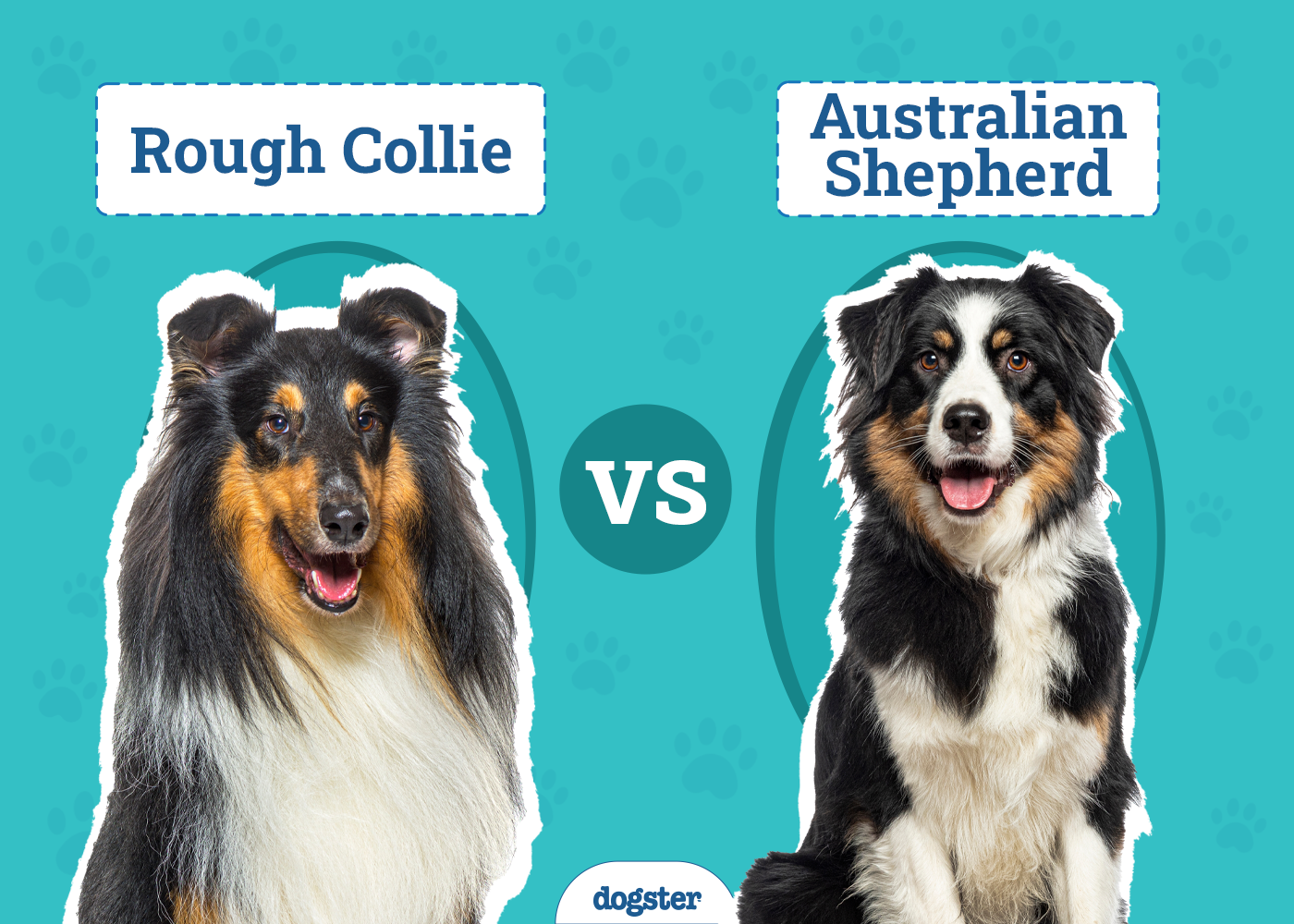
Visual Differences
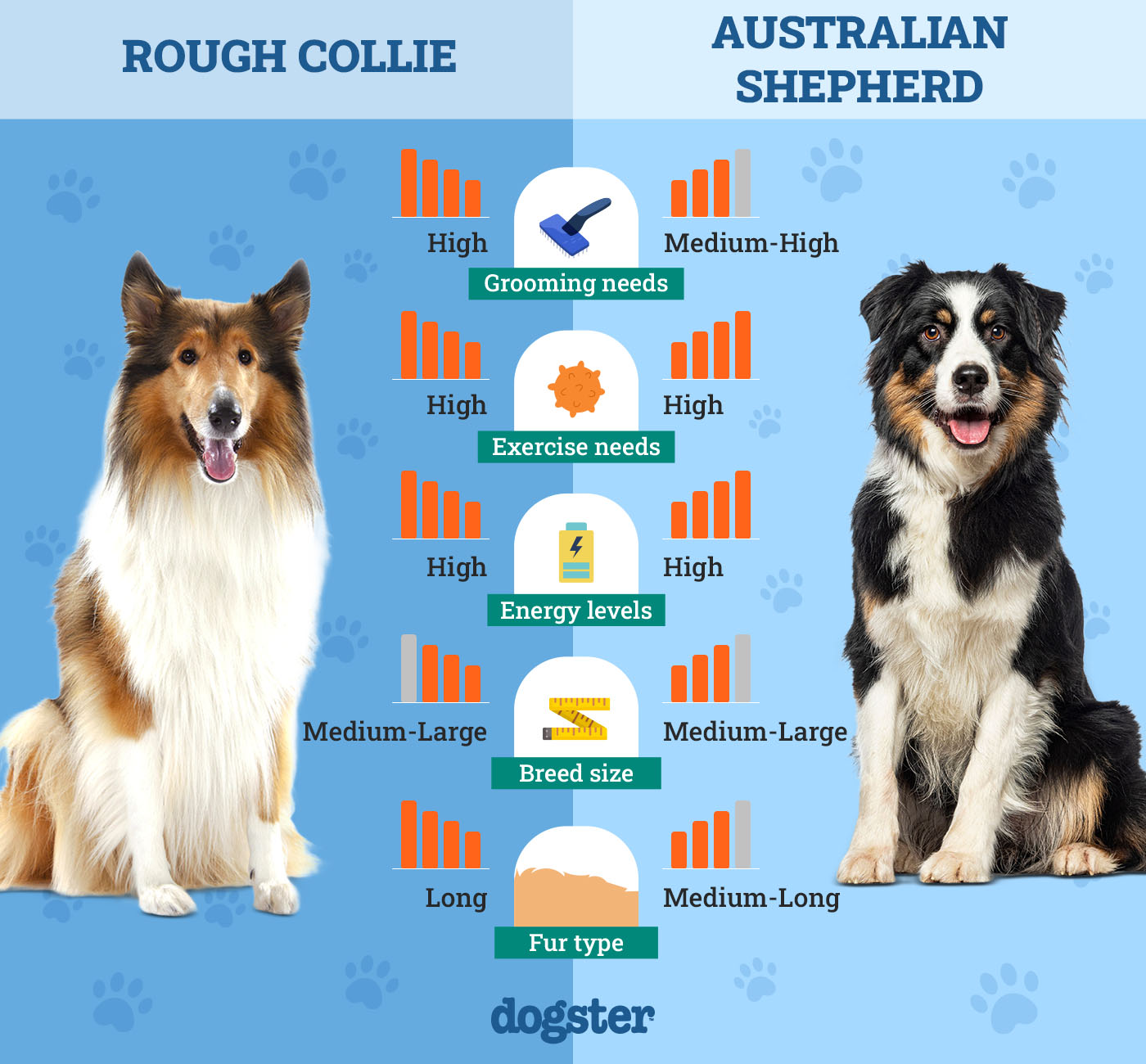
At a Glance
- Average height (adult): 22-26 inches
- Average weight (adult): 50-70 pounds
- Lifespan: 10-14 years
- Exercise: 45-80 minutes daily
- Grooming needs: Moderate brushing
- Family-friendly: Yes
- Other pet-friendly: Yes
- Trainability: Yes
- Average height (adult): 18-23 inches
- Average weight (adult): 40-65 pounds
- Lifespan: 12-15 years
- Exercise: 1-2 hours daily
- Grooming needs: Moderate brushing
- Family-friendly: Yes
- Other pet-friendly: Yes
- Trainability: Yes
Rough Collie Breed Overview

Appearance
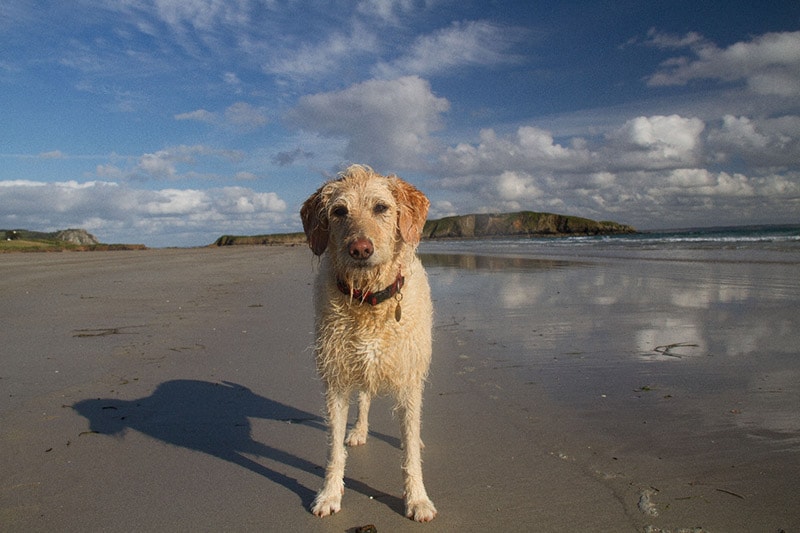
The “Lassie” dog traces its origins back to the soft, green hills of Scotland where it herded sheep for hundreds of years before achieving status as a family pet. The Rough Collie has the longest fur of any type of Collie and is probably the symbolic representative of the species as a whole. Their fur is typically white and orange. They have long, narrow snouts and intelligent brown eyes. Considered a large dog, males can reach up to 26” high at the shoulders.
Their grooming needs mostly consist of brushing a couple times a week, and more frequently in their shedding seasons. The Rough Collie loses its fur year-round, but it periodically loses its double coat in preparation for summer and winter. The excessive amount of loose fur makes them unsuitable for allergy sufferers, but a good fit for individuals who want a dog who only has modest grooming requirements.
Personality & Exercise
Requiring less exercise than their other collie counterparts, the Rough Collie still needs at least 45-80 minutes outside per day. They have an independent spirit, fostered by their love of herding and their history of chasing flocks, and would thrive if allowed to play by themselves in a fenced backyard for around an hour each day.
Once inside, it’s as if the Rough Collie remembers that its days of romping through pastures are far behind them. If they’re with you, they’ll likely curl up beside you and take a nap.

Training & Health Concerns
The Rough Collie has an aggressive reputation due to its strong herding instincts. Without training, they tend to nip at heels and may frighten small children. However, this behavior can typically be corrected through early training. You shouldn’t let their reputation intimidate you from adopting a Rough Collie. They love their humans, and they learn quickly, so it’s not likely that they’ll develop any undesirable habits as long as you begin training at a young age. With proper training, the Rough Collie makes an excellent family dog because they tend to form close bonds with their humans and are generally amiable.
Large dog breeds such as the Rough Collie are at risk from hip dysplasia, especially if they also suffer from obesity since that puts extra weight on their joints. A well-rounded diet and adequate exercise should help mitigate these risks.
Suitable For:
Rough Collies are the best fit for people who have at least a small, fenced yard for them to play for an hour or two each day. The Rough Collie can be a great family dog, but it’s best to invest in early training to prevent nipping behaviors, especially if they share a home with young children.
- Moderate energy requirements
- Brush 2x a week, more frequently in the summer and winter
- Loyal family dog
- Strong herding instincts need to be cultivated for a family environment
- Not good for allergy sufferers
- Ideally needs a yard to run
Australian Shepherd Breed Overview

Appearance
Smaller than the Rough Collie, the Australian Shepherd tends to be a medium-sized dog weighing no more than 65 pounds. Females may be as little as 40 pounds. They have medium-length fur that can come in several color combinations. Solid colored Aussies are actually the rarest kind. Their double coat needs to be brushed 1-3 times a week depending on the season. Like the Rough Collie, Aussies shed year-round, but they lose their coats in the winter and summer which results in more shedding during those times of year.
Although their name indicates that they came from the Outback, their background remains somewhat a mystery, and their modern history is all-American. Most accounts agree that the Australian Shepherd’s recent ancestors originated from the Basque, with some stories claiming that they traveled to Australia on the way to the U.S., and others saying they emigrated straight from Europe. Once they arrived in the United States, they worked as sheep herding dogs for a few years before they were developed into an official breed once farm work declined in the 1950s.
Personality & Exercise
Australian Shepherds are only recently considered pets. They still possess strong herding instincts with bounds of energy, making them unsuitable for apartment dwellers who don’t like to go outside. Conversely, the Aussie is a dream dog for a family who spends lots of time in a fenced backyard, or an individual who likes to run.
Considered a high-energy breed, the Australian Shepherd needs at least 1-2 hours of exercise daily. However, you shouldn’t push them too hard as a puppy since their joints haven’t fully developed yet. Wait on the strenuous five-mile marathons until after their first birthday to ensure optimal joint health for the many years to come.
Training & Health Concerns
Aussies like to please their owners and they’re easy to train. Start at a young age for best results, though, because if they establish dominance first it’ll be harder to break their habits. Super intelligent, Aussies can be rather clever and cunning canines who are known to outsmart unsuspecting owners, which is why early training is so important. Since the Aussie is so smart, it’s a good idea to assign them a task, such as a treat puzzle, to keep them entertained while you’re working. Otherwise, the Aussie might find its own employment, such as shedding the couch cushions.
Like other big dogs, including the Rough Collie, Australian Shepherds are prone to hip and elbow dysplasia. Giving your adult dog plenty of exercise and monitoring their food intake should help to mitigate the risks. Remember not to stress your puppy’s joints too much while they’re young because proper bone plate development reduces their risk of hip dysplasia later on.
Suitable For:
The Aussie is an awesome dog for outdoor-oriented families with small children. With proper training, you’ll have a loyal companion with a long lifespan for years to come. However, their medium-length double-coat doesn’t make them a valid option for people who have dog allergies, and their high energy levels don’t make them a good candidate for tightly spaced apartment living.
- Eager to please, easy to train
- Good for families who like to spend time outdoors
- Shedding double coat isn’t a good match for individuals with allergies
- High-energy doesn’t suit them for living in tight spaces without a yard
Which Breed Is Right for You?
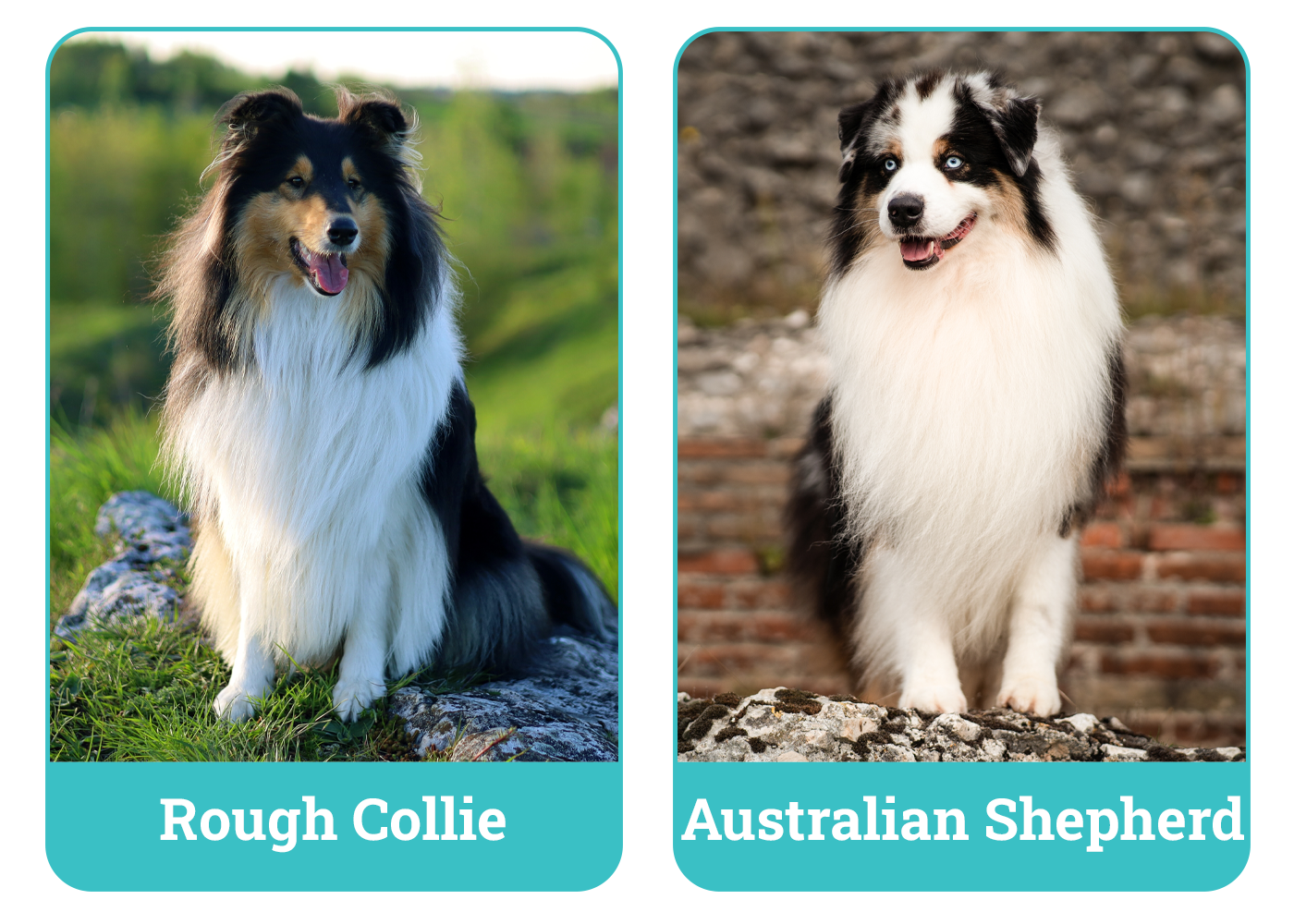
Similar in many ways, the Rough Collie and the Australian Shepherd probably differ the most in terms of energy and size. The Rough Collie is a larger dog that still needs around an hour of exercise each day, but afterwards they’ll be mostly content to take it easy as long as you’re with them. The Australian Shepherd, by contrast, is a smaller dog with higher energy needs. Committing to their lifestyle looks like 1-2 hours of daily exercise, preferably with you. The Aussie isn’t as fond of independent play, while the Rough Collie is happy to romp alone.
The more relaxed Rough Collie is probably the better candidate for apartment living, but both dogs ideally need houses with at least a small, fenced enclosure for them to run. Unfortunately, neither dog is a good choice for people with allergies due to their shedding double-coat. The best breed for you and your household depends on your personal preferences, as well as your lifestyle and living conditions. With the proper training, either breed can be a loving family dog who will give you their loyalty for their 10-15 years on Earth.
See also:
- Sheltie vs Collie: Differences Explained (With Pictures)
- Collie vs Border Collie: Visual Differences & Overview
Featured Image Credit: Top – Kanashi, Pixabay | Bottom – xkunclova, Shutterstock