Get

In Your Inbox

Dogster is reader-supported. When you buy via links on our site, we may earn an affiliate commission at no cost to you. Learn more.

Toddlers & Dogs: 6 Vet-Approved Tips to Keep Them Safe Together

Share

mother and toddler cuddling with a dog near the window

Roughly 44.6% of American households have a dog,1 making safety a valid concern if you have toddlers at home. Canines bite about 4.5 million people yearly in the United States,2 and children are among the most common victims. Several factors come into play, though, starting with the kids’ inability to recognize the dogs’ body language and emotions, particularly fear. Remember that survival drives this feeling, and the animal is only trying to protect themselves.

Keeping toddlers safe around dogs involves understanding the emotional capacity of the parties involved. You must be realistic and not let personal blinders obscure the risks. So, how exactly do you make your home a safe place for both of them?

divider dog paws 3 oct 2024

Before You Start

The most important thing to realize is that the threat of danger is very real to your dog. Despite domestication, aggression is normal canine behavior. After all, they must protect themselves, their territories, and their offspring. Nature and genetics pull the strings on this accord.

If a dog is feeling uncomfortable in a situation, they will start by using body language signs to show that they are anxious and unsure. However, if these signals are misunderstood or ignored (for example, by an exuberant toddler), they can escalate to the point that a dog may bite. Dog aggression toward toddlers is normally fear based, as toddlers can be unpredictable and loud and make sudden noises. They are often very interested in dogs and their toys and may behave inappropriately toward them by pulling their fur, tail, or ears.

Remember that keeping people safe around your dog is part of your responsibility as a pet owner. You must do everything you can to ensure your dog isn’t a threat to other people, no matter what the situation. The same also applies to keeping your pets safe from humans, especially toddlers, who don’t understand how to act appropriately around or handle dogs just yet.

divider dog paws 3 oct 2024

The 6 Tips for Keeping Dogs and Toddlers Safe Together

1. Get Your Household on Board With the House Rules

We recommend holding a household meeting to discuss the issue of toddlers and dogs. Everyone must understand the risks and the measures they must take to ensure the safety of the little ones and all household members, pets included.

So, we suggest having a game plan that everyone is on board with to provide consistency. It’s the best way to keep unwanted behavior in check and to let your dog know what they can expect from everyone in the house.

parents introduced dog to a toddler at home
Image Credit: Lopolo, Shutterstock

2. Teach Your Toddlers the Rules About Being Around Your Dog

You must also set the rules with your kids in a language they can understand. You don’t want to make them scared of your pet, so the goal is to create respect. This condition gives you a wide berth for action since each pet varies in their tolerance. The important thing is to instill the concept that boundaries exist. Never let children touch or disturb a resting or sleeping dog, and don’t allow them to touch your dog while they are eating.

Another thing to consider is ensuring your child stays away from the dog’s belongings, such as their food and water bowls or toys. These should stay in your dog’s safe zone, and kids should not have access to them.


3. Supervise All Playtime and Never Leave Them Alone Together

Regardless of all the cautions, you and all adults in your household must supervise all interactions, including playtime, with toddlers and dogs. You can’t rely unconditionally upon your kids or dog to follow the rules. Accidents can happen in the blink of an eye, so if you can help it, don’t step away for even a second, even if the two seem to be ignoring each other at the time you step away.
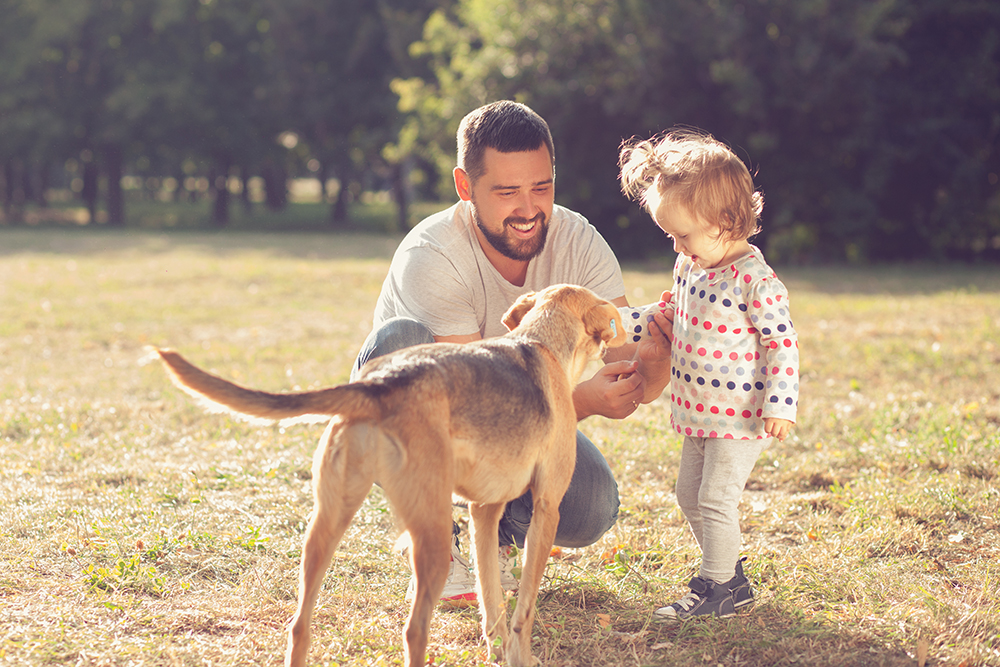
Father introduced the toddler to a dog
Image By: rastlily, Shutterstock

4. Train and Socialize Your Dog

You must train and socialize your dog, and that includes teaching them the basic commands such as “Sit!” and “Stay!” You should also train your dog not to jump up on people. Although this can be cute when they are puppies, adult dogs that jump up can easily cause injuries to small children. Making sure your dog is also socialized with lots of different people and animals is crucial, so be sure to start this from a young age.


5. Identify Any Triggers

Keeping toddlers safe involves identifying any potential triggers of unwanted behaviors, and much of this can be told through your dog’s body language. However, children may pick up new things from others that can upset the family pet unfamiliar with something different. Dogs that haven’t been socialized properly from a young age are probably more likely to respond negatively than pups used to novel experiences, hence why we recommend training and socialization. A veterinarian can be a great source of information about how to properly socialize your dog.

If you need to speak with a vet but can't get to one, head over to PangoVet. It's our online service where you can talk to a vet online and get the advice you need for your pet — all at an affordable price!

PangoVet_Mention-in-Content Savings V1


6. Give Your Dog a Safe Space

One of the best things you can do to keep both your pet and toddler safe is to give your dog a place where they can get away from the chaos of the house, like a kennel or their own room. This should be quiet and comfy and a place that they have a positive association with. No kids should be allowed in this area. Baby gates can also be invaluable for keeping dogs and toddlers separate and safe when you are unable to supervise interactions.

divider dog paws 3 oct 2024

Conclusion

Keeping toddlers safe from dogs involves recognizing the threats and putting steps in place to help them live together safely. Your pup doesn’t have it out for our child. Most of their behaviors are reactionary and instinctive. They don’t want to be aggressive or mean. Your dog is simply trying to protect themselves. Children and dogs can have lots of fun together, but safety always needs to come first and their interactions must always be supervised.


Featured Image Credit: PhotoSunnyDays, Shutterstock

Want content like this delivered to you?

Sign Up For Our Newsletter

News, insights, expert advice, and everything dog

* By submitting, you agree to our Terms & Conditions and Privacy & Cookies Policy.


How useful was this post?

Click on a star to rate (you can leave written feedback after clicking submit)

Help us improve Dogster for pet parents!

Your feedback really matters.

What did you like about this post? Also how can we improve it?

Join the conversation

Leave a Reply

You’re very welcome to leave a comment or question. Please know that all comments must meet our community guidelines, and your email address will NOT be published. Let’s have a positive and constructive conversation.


Dogster's Digital Magazine is Back!​

Dogster Magazine Cover June 2026

Vet-approved health & behavior advice

Real dog stories & community features

The Organization Helping Pets Feel Safer, Happier, and ‘Fear Free’ – Heroes of the Pet World

For many pet owners, stress during veterinary visits, grooming appointments, travel, or even routine handling can feel like an unavoidable part of life...

Why Some Dogs Treat Mealtime Like Playtime – And When to Pay Attention

Most dogs are reliable eaters. Bowl goes down, food disappears. So when a dog starts batting kibble across the kitchen floor, tossing pieces...

Major Win for Dogs: Ontario Becomes the Final Province to Ban Ear Cropping and Debarking

​​Ontario has approved new animal welfare regulations that will prohibit elective ear cropping and devocalization (debarking) procedures in dogs from January 1, 2027....

Dogster’s Weekly Photo Contest Winners: Most Adorable Puppy (June 8, 2026)

Every week our team gets the privilege of sorting through our readers photos to choose what dogs will win this weeks contest! See...

More related

10 Best Dog Foods for Loose Stools in 2026: Reviews & Top Picks

Picking up after our dogs is one of the least enjoyable aspects of canine ownership. But this task is made even harder if...

Are Pet Owners More Empathetic Than Other People? What Science Says

We’ve all heard the claims that pet owners are more loving and empathetic than non-pet owners. Not only are they supposed to be...

8 Things Penny Does That Make Me Laugh 

Hi, I’m Savanna! Read my introduction to learn more about me and my spunky Chihuahua mix, Penny. Dogs can really get up to...

Border Collie vs Australian Shepherd: The Differences (With Pictures)

Border Collies and Australian Shepherds are fantastic dogs that are full of energy and are well-known for their intelligence and trainability. If you’re...

Keep reading

Fromm Dog Food Review 2026: Recalls, Pros & Cons

Review Summary Wisconsin is best known for its cheese but is also home to Fromm. This homegrown American company has been making dog food for more than a century and uses the best ingredients—many of them sourced locally—to create premium-quality...

Dogster_Fromm Dog Food Review

10 Best Puppy Foods for Goldendoodles in 2026 – Reviews & Top Picks

Welcoming a Goldendoodle puppy into your home is fun and exciting! The right toys, beds, leashes, bowls, and food are all important things to acquire when you get a new dog. When it comes to puppies, they need different nutrition...

female goldendoodle puppy

Is Food Coloring Safe for Dogs? Health Facts & FAQ

Food coloring, or color additive, is any dye, pigment, or substance that imparts color when it is added to food or drink. Food coloring has always played a role in the food industry for multiple reasons. It makes processed food...

Dogster_Is Food Coloring Safe for Dogs

Can Dogs Eat Apricots? Vet-Verified Nutrition Facts & Precautions

Dogs are facultative carnivores, meaning that like omnivores, they can eat some plant matter as well as meat. Many like eating sweet foods and can be found eating windfall fruit. If your dog has a sweet tooth, consider feeding them...

fresh apricots

10 Dog Food Trends in 2026: Pet Food Industry Facts & Statistics

Note: This article’s statistics come from third-party sources and do not represent the opinions of this website. With today’s consumers enjoying better education and more resources to improve their dogs’ quality of life, manufacturers are ramping up their efforts to...

golden retriever dog eating healthy dry food from bowl at home

Can Dogs Eat Cloves? Vet-Reviewed Health & Nutrition Facts

Cloves add a warm, rich, almost sharp flavor to food and drinks. It’s packed full of inflammation-fighting nutrients that may help ease joint and arthritis pain. But what about dogs and cloves? Although eating a bite of food containing cloves...

Can Dogs Eat_cloves

Can Dogs Eat Capers? Vet-Reviewed Nutrition Facts & FAQ

You love your dog, so you want to give them treats every now and again, and sometimes those treats are your own food. A lot of the time, depending on the food, this is (mostly) fine for your pet. But...

Can Dogs Eat Capers

Can Dogs Eat Beans? Vet-Verified Nutrition Facts, Tips & Risks

Unlike their feline counterparts, dogs are omnivores and are adapted to derive nutrients from consuming both plant materials as well as animal tissue. So, you may wonder what plant material is safe for your pup. Are beans okay to offer?...

Can Dogs Eat_Beans

Love Dogs? So Do We! Join the Dogster Community

Stay informed with expert pet care insights delivered straight to your inbox! Discover professional guidance on animal behavior, feeding tips, trusted product picks, and much more.


Sign up for the Dogster Email Newsletter