Egypt is home to some of the world’s oldest dog breeds. The ancient Egyptians were one of the first civilizations to domesticate dogs. A tomb dating as far back as 3500 B.C. has a painting of a man walking a dog on a leash, a sure sign that dogs had existed in Egypt well before then.
Many Egyptian dogs are sleek and shorthaired, as you may expect from the climate that which they were developed.

The 6 Egyptian Dog Breeds
1. Saluki
| Height: | 20–28 inches |
| Weight: | 40–65 pounds |
| Lifespan: | 10–17 years |
| Colors: | Black, tan, red, silver, white, chocolate, golden |
| Suitable for: | Active people looking for an active, energetic, and regal canine companion |
| Temperament: | Energetic, loving, gentle and refined |
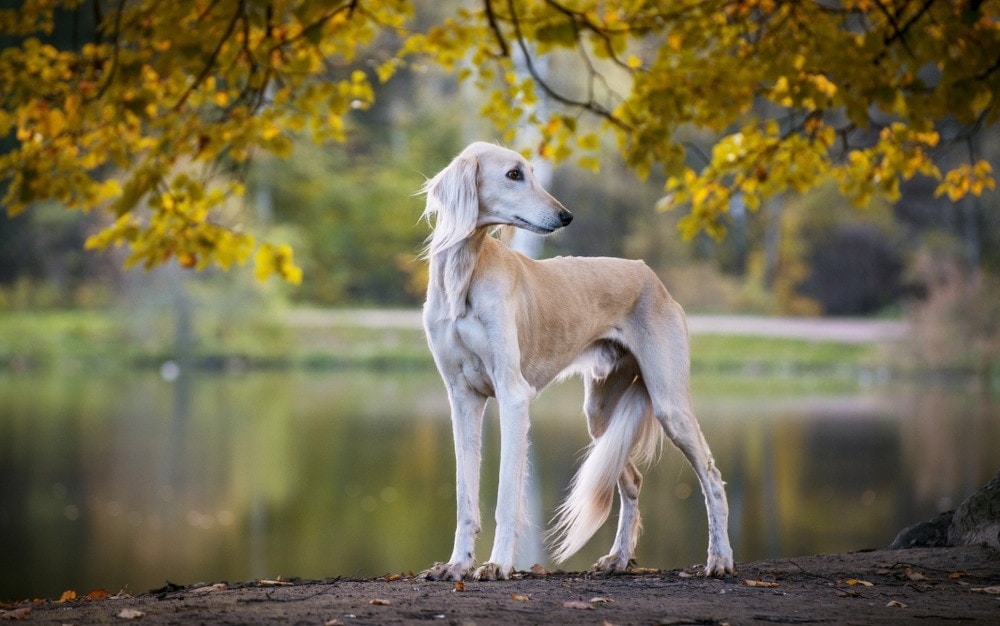
The Saluki is one of the oldest breeds of dogs in the world and the one that is most recognized as an Egyptian dog. This sighthound was once used by nomadic tribes to run down game animals. They were likely first bred in the Fertile Crescent but were later developed into the modern breed that we know today by the Egyptians.
The Greyhound is the fastest dog over short distances, but the Saluki is thought to be faster over long distances. They can reach a speed up to 42.8 mph and sustain it. They have substantially padded feet that absorb shock waves as they run, giving them high stamina.
Typical prey for these animals included hare, fox, gazelle, and jackal. The dogs sometimes were held on top of camels, and then they jumped off whenever a prey animal appeared, giving them an instant speed advantage.
The Saluki still acts much like a hunting dog today. They are reserved around strangers, though they aren’t aggressive by any means. They can be independent, which makes training difficult. They also get bored quickly, so they aren’t the best for staying alone for long periods. These dogs need a bit of exercise, but they don’t like rough play or games like fetch. They do love soft toys, though.
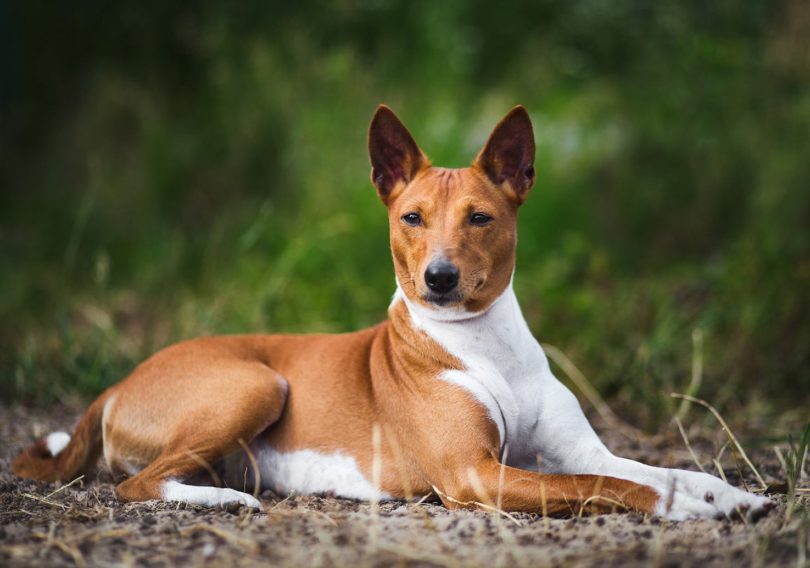
2. Basenji

| Height: | 16–17 inches |
| Weight: | 22–24 pounds |
| Lifespan: | 13–14 years |
| Colors: | Black and white, black, tan, and white, brindle and white, red and white |
| Suitable for: | Active families, canine competitors, experienced owners |
| Temperament: | Sweet, high-energy, fastidious |
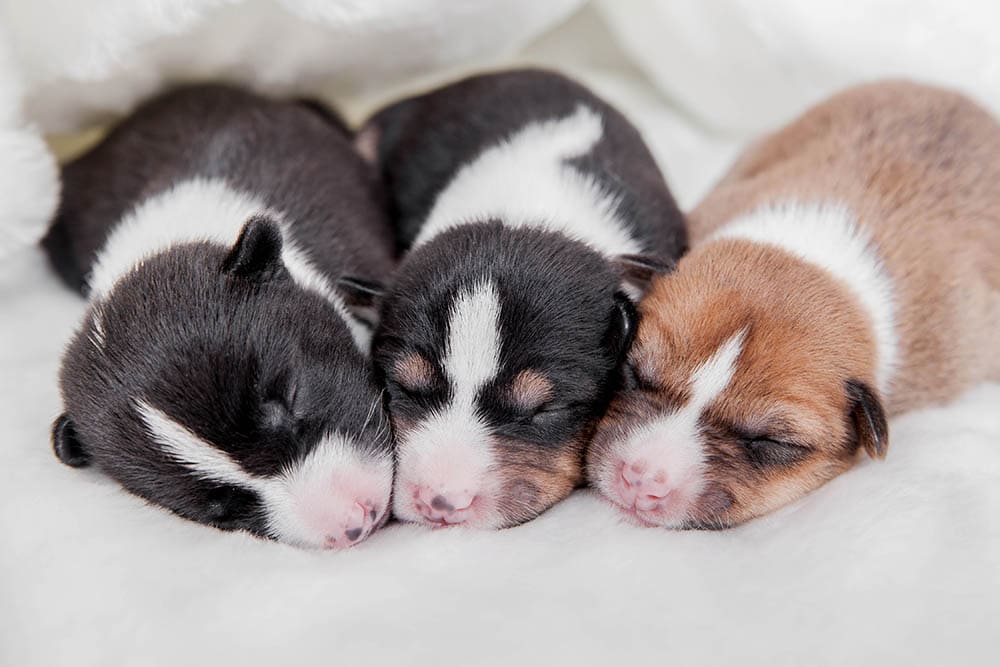
The Basenji is a type of ancient hunting dog. They are best known for their unusual yodeling sound, similar to the “bark” of a Siberian Husky but higher-pitched. The Basenji is nicknamed the “barkless” dog, but they are not silent by any means. In fact, they can be quite noisy.
These dogs also have other strange traits. For instance, they only go into heat once a year, which is something that they share with dingoes. They also have practically no odor, unlike most canines. They sometimes stand on their hind legs like a meerkat to get a better view.
These dogs are incredibly alert and curious. They’re reserved with strangers and tend to attach themselves closely to one person and not socialize with others. They don’t get along well with non-canine pets, like cats, as they have a strong prey drive. They also don’t like damp weather, and many will avoid water at all costs.
They are extremely intelligent but usually use it for their gain, like for getting food. They do fine in training but are often too independent and aloof.
3. Baladi

| Height: | 13–22 inches |
| Weight: | 24–50 pounds |
| Lifespan: | 10–14 years |
| Colors: | Tan, tan and white |
| Suitable for: | Experienced owners |
| Temperament: | Sweet, intelligent, adaptable |
This dog isn’t technically a breed at all. However, the Baladi is one of the most common dogs in Egypt. They are known as Egypt’s street dogs, so they aren’t bred by any breeders but randomly breed among themselves as strays. Many of these dogs have a similar appearance to each other, as most have been on the streets for generations. They are light-skinned and skinny, with long legs and huge ears. Most have curly tails.
While the adoption of these dogs is not widespread in Egypt, they have become popular in the United States. They typically love people and adapt quickly to life in a home. They are well-mannered and can quickly learn commands. Most of these dogs go from having never seen a tennis ball to playing fetch within a few days.
They talk with a growly voice instead of barking. At first, this can be a bit off-putting, as many people think that the dog is being aggressive. However, it also means the dog is quieter than most. They sound similar to Huskies but quieter and more growly.
4. Armant
| Height: | 21-23 inches |
| Weight: | 50-65 pounds |
| Lifespan: | 12–14 years |
| Colors: | Black, black and white, grizzled, or light-brown |
| Suitable for: | Active families |
| Temperament: | Intelligent, trainable, loyal |
This is a rare breed that has an unusual backstory. Today, Armants are found mostly in Egypt, which is where they developed into the breed that we know today. However, they were likely originally European dogs that somehow found their way to Egypt and then formed their breed. Some say that they were brought by Napoleon’s army and were likely then crossed with native breeds to make the Armant.
They are named after a specific town in Egypt called Armant, which is evidentially where the breed was first developed. This breed is quite rare, especially outside of Egypt. Inside Egypt, they are used as both herding and guard dogs. Rumor says that they were used as herding dogs in Napoleon’s army, which explains where these instincts come from!
5. Ibizan Hound
| Height: | 22.5–27.5 inches |
| Weight: | 45–50 pounds |
| Lifespan: | 11–14 years |
| Colors: | Red, red & white, white, white & red |
| Suitable for: | Active and loving families that can provide plenty of exercise |
| Temperament: | Sweet-natured, serene, affectionate, energetic, loyal |
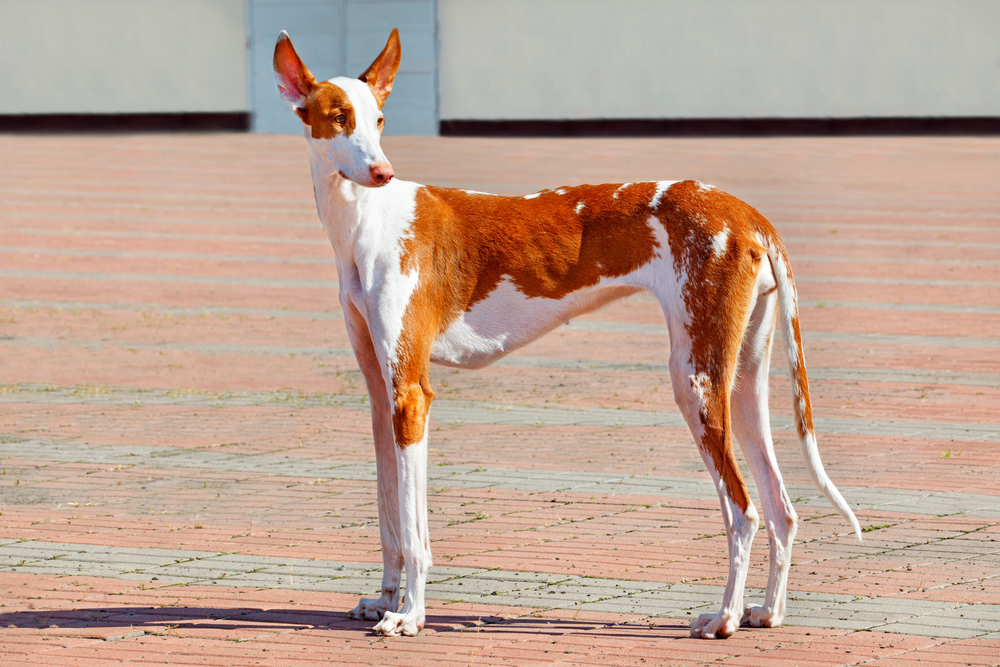
Don’t let the name fool you; the Ibizan Hound has its origins in Egypt. Over 5,000 years ago, Phoenician traders from Egypt brought their hounds to the Balearic Islands off of Spain to use them as rabbit hunters. Due to the island’s rocky and rugged terrain, these dogs helped provide much-needed food.
These hunters carried their speed and hunting ability to the breed we currently know, slim canines with elongated faces. The Ibizan Hound comes in red, red & white, white, or white & red colors. They are known for being affectionate with family members and other socialized dogs.
6. Pharaoh Hound
| Height: | 21–25 inches |
| Weight: | 45–55 pounds |
| Lifespan: | 11–13 years |
| Colors: | Reddish brown |
| Suitable for: | Active families and experienced dog owners |
| Temperament: | Gentle, affectionate, playful |
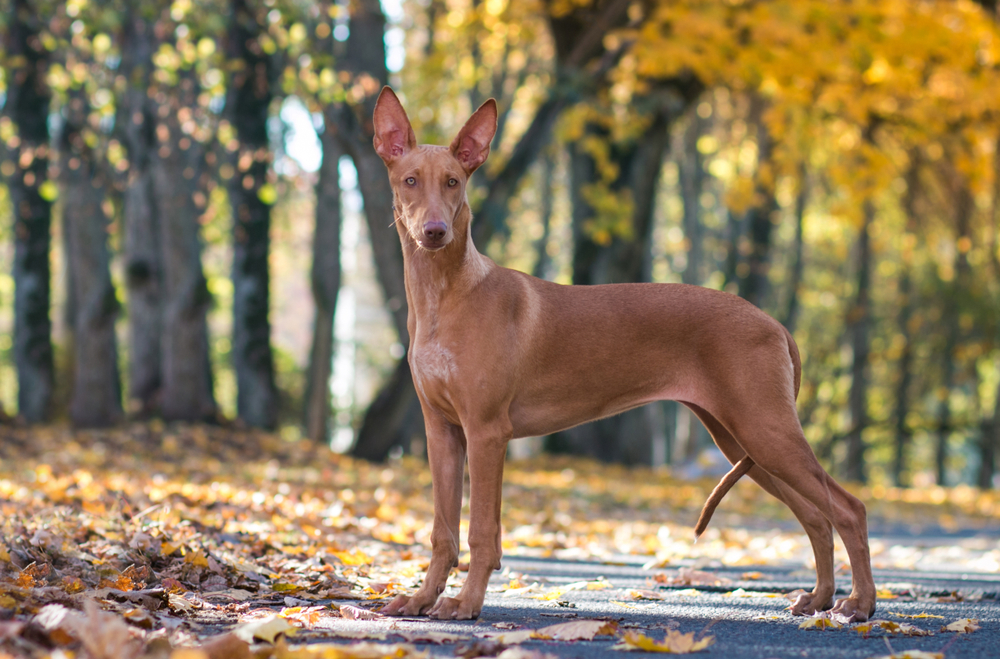
The Pharaoh Hound is another dog whose ancestors can be traced back to the Phoenician traders. This time, the traders landed in what we know today as Lebanon, along with their hounds. Much like the Ibizan Hound, the Pharaoh Hound was thought to have hunted rabbits to provide sustenance for their masters in Malta. This is perhaps why Malta named the Pharaoh Hound the national hound of the country.
The Pharaoh Hound is physically similar to the Ibizan Hound, but they only sport a reddish-brown coat color. They are great with most people so that they can make a wonderful addition to the family.
Conclusion
Egypt’s history with dogs showcases how these ancient breeds have evolved alongside human civilization for thousands of years. From the noble Saluki to the adaptable Baladi street dog, each breed carries unique traits shaped by Egypt’s climate, culture, and traditions. While some, like the Pharaoh Hound and Ibizan Hound, have found homes outside of Egypt, their origins remain tied to this historic country. Whether as loyal companions, hunters, or symbols of heritage, these Egyptian dog breeds continue to captivate dog lovers worldwide with their intelligence, agility, and rich history.
Featured Image Credit: Verbitskaya Juliya, Shutterstock
 The 6 Egyptian Dog Breeds