
Get

In Your Inbox

Dogster is reader-supported. When you buy via links on our site, we may earn an affiliate commission at no cost to you. Learn more.

Dramamine For Dogs: Vet-Reviewed Uses & Potential Side Effects

Share

Dramamine
Dramamine is a popular antihistamine used as an anti-nausea and anti-allergy medication in people, but it can also be used in dogs. Dogs suffering from nausea, vomiting, and dizziness associated with certain medical conditions can also take Dramamine at a different dosage. It’s important to consult your vet before giving your dog any medication. We’ll discuss how Dramamine benefits your dog and any potential side effects your dog might suffer.

Dogster divider_v3_NEW_MAY_24_

What Is Dramamine?

Dramamine is the brand name of an antihistamine called dimenhydrinate, which can help with allergies and nausea. Dimenhydrinate can also be found in other drugs marketed under brand names, such as Gravol, Travtabs, Driminate, and Triptone. In addition, it is an over-the-counter (OTC) medication freely available to purchase for humans.

Dramamine is primarily used in veterinary medicine to treat motion sickness and the signs associated with canine vestibular diseases, such as nausea and vomiting. Other uses include helping to relax or induce sleep and reducing itchiness or bothersome signs related to allergies like hives.

Important Considerations:

Never attempt to medicate your dog without consulting your veterinarian first. Please remember that human medication is not correctly dosed for pets, and any of the medications sold under the brand Dramamine might contain ingredients that could be toxic to dogs.

Each tablet of Dramamine Original contains 50 milligrams (mg) of dimenhydrinate along with other non-active ingredients:

  • Anhydrous Lactose: Used to help form the tablets
  • Colloidal Silicon Dioxide: Acts as an anti-caking agent and an adsorbent
  • Croscarmellose Sodium: Helps the tablets dissolve and the active ingredient to work
  • Magnesium Stearate: Helps the drug absorb in the correct areas
  • Microcrystalline cellulose: Helps form the tablets
Several versions of Dramamine are available, but veterinarians will usually prescribe the standard original formulation.

How Much Dramamine Should Be Given?

Your vet will determine the Dramamine dosage based on your dog’s weight. Generally, dogs can have between one and two milligrams of Dramamine per pound of weight, given by mouth at least every 8 hours. This dose will differ for each dog.

Remember that the dose on the Dramamine tablet is intended for humans, and the amount for your dog will be very different. Contact your vet for clarification if you’re ever unsure of the dosage. One crucial difference is Dramamine Non-Drowsy, which contains a different active ingredient (Meclizine).

Meclizine is a similar antihistamine but requires different dosages and may have other effects. Always check which version your vet prescribes.

Other varieties include:
  • Dramamine Long Lasting: Contains Meclizine in place of Dimenhydrinate
  • Ginger Chews/Multi-Purpose/Non-Drowsy: Contain ginger extract in varying amounts
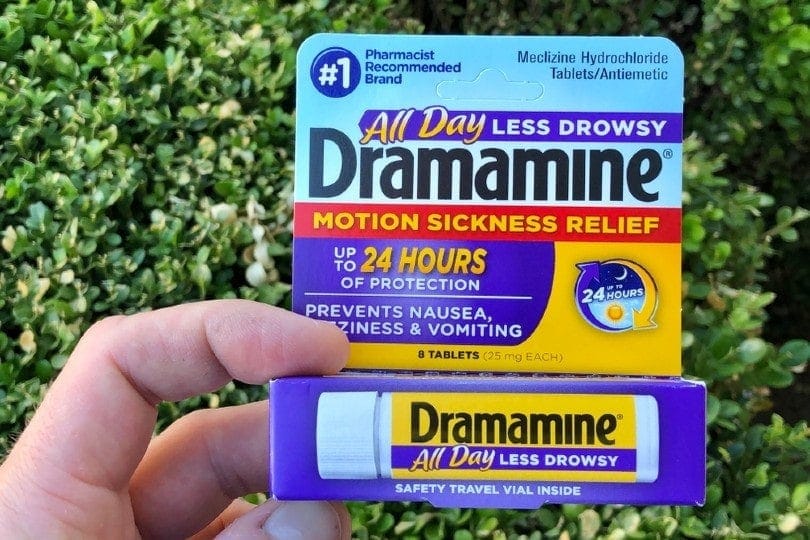
  • All Day Less Drowsy/ Less Drowsy Chewable: Contains meclizine
  • Dramamine For Kids: 25 mg of dimenhydrinate (as opposed to 50 mg)
The original formula of Dramamine comes in tablet form, in blister packs of 12 or 36 per box, and contains 50 mg of Dimenhydrinate.

dalmatian dog looking sick
Image By: Alexander Hagseth, Shutterstock

How Is Dramamine Given?

Dramamine is usually given orally. It can be taken with or without food, but your vet may advise you to serve it without food if vomiting occurs when given with food. If you’re administering Dramamine for motion sickness, it’s best to administer it around 30–60 minutes before travel to give the drug time to take effect.

Dramamine usually takes effect within 1–2 hours. Always follow your veterinarian’s advice about the timing, as some dogs will require it at a specific time.

If you need to speak with a vet but can't get to one, head over to PangoVet. It's our online service where you can talk to a vet online and get the advice you need for your dog — all at an affordable price!

PangoVet_Mention-in-Content Savings V1

What Happens If You Disrupt the Dosage Schedule?

If you miss giving your dog a dose of Dramamine and it’s close to their next dose, wait until their next dose and skip the missed one. If you miss a dose and it’s not close to the next scheduled dose, you can give it when you remember. Afterward, follow the regular dosage schedule. Never give double doses of medication to your dog!

person feeding dog by hand
Image By: Maksim Goncharenok, Pexels

Potential Side Effects of Dramamine

You should be aware of the potential side effects of Dramamine, but some dogs will not display signs. Some side effects can be mild, and others are severe. Contact your vet for advice if you are concerned about any side effects.

Mild side effects can include:
  • Sleepiness
  • Dry mouth
  • Trouble urinating
  • Depression
Some less common side effects can include:
  • Diarrhea
  • Vomiting
  • Loss of appetite
Rarer side effects are much more serious and can also indicate a Dramamine overdose:
  • Seizures
  • Coma
  • Hyperventilation
  • Respiratory depression and failure
Dogster divider_v3_NEW_MAY_24_

Frequently Asked Questions (FAQs)

Why Does Dramamine Help With Nausea and Vomiting?

Dramamine is thought to act on histamine and muscarinic receptors in the brain, interrupting signals from an overstimulated vestibular system. The vestibular system controls an animal’s sense of balance and spatial orientation, meaning they can coordinate their movements. For example, hair-like cells in the inner ear (located in the cupula) get moved around by the vestibular system fluids, which move the structure. This movement is converted into electrical signals that are processed by the brain.

If the eyes send movement signals to the brain (as in seeing movement) and the inner ear doesn’t, this can cause motion sickness. Dramamine affects these signals to rectify this difference and reduce nausea, particularly in vestibular disease.

dog vomits white bile
Image Credit: suchinan, Shutterstock

What Is Vestibular Disease in Dogs?

Vestibular disease is a problem with the vestibular system, classified as a sudden disturbance of balance. Vestibular disease is commonly seen in older dogs, which is why it’s called “Old Dog Vestibular Syndrome.” It often has a cause, but it is called idiopathic vestibular disease if there is no discernible cause.

Signs of vestibular disease include:
  • Sudden loss of balance and incoordination
  • Disorientation
  • Head tilting
  • Regular, repeating eye movements
  • Leaning, falling to one side, or circling in the direction of the head tilt
Some of the common causes of vestibular disease include:
  • Ear infections
  • Toxic drugs
  • Ear injuries
  • Tumors

Is Dramamine Approved for Use in Dogs?

While vets commonly use Dramamine in the US, it isn’t FDA (Food and Drug Association) approved for use in dogs. That doesn’t mean it’s unsafe for them; it just means Dramamine is used “off-label.” The safety and efficacy of Dramamine in dogs are well documented.

Dogster divider_v3_NEW_MAY_24_

Final Thoughts

Dramamine is commonly used to treat nausea, vomiting, and other clinical signs of motion sickness and vestibular disease in canines. It’s a brand name for a drug called dimenhydrinate, which is the active ingredient in Dramamine. Dramamine is a human drug and is not FDA-approved for use in dogs. However, veterinarians often use it to treat nausea, and it’s considered safe and effective.


Featured Image Credit: ZikG, Shutterstock

Want content like this delivered to you?

Sign Up For Our Newsletter

News, insights, expert advice, and everything dog

* By submitting, you agree to our Terms & Conditions and Privacy & Cookies Policy.


How useful was this post?

Click on a star to rate (you can leave written feedback after clicking submit)

Help us improve Dogster for pet parents!

Your feedback really matters.

What did you like about this post? Also how can we improve it?

Join the conversation

Leave a Reply

You’re very welcome to leave a comment or question. Please know that all comments must meet our community guidelines, and your email address will NOT be published. Let’s have a positive and constructive conversation.


Talk With A Vet Online

Peace of mind,
anywhere, anytime

Affordable vet advice

Why Some Dogs Treat Mealtime Like Playtime – And When to Pay Attention

Most dogs are reliable eaters. Bowl goes down, food disappears. So when a dog starts batting kibble across the kitchen floor, tossing pieces...

Major Win for Dogs: Ontario Becomes the Final Province to Ban Ear Cropping and Debarking

​​Ontario has approved new animal welfare regulations that will prohibit elective ear cropping and devocalization (debarking) procedures in dogs from January 1, 2027....

Dogster’s Weekly Photo Contest Winners: Most Adorable Puppy (June 8, 2026)

Every week our team gets the privilege of sorting through our readers photos to choose what dogs will win this weeks contest! See...

The Spice Cabinet Dangers Most Dog Owners Don’t Think About

Most people know chocolate is off-limits for dogs. Fewer realize that some of the most common herbs and spices sitting in a kitchen...

More related

12 Bloodhound Pros & Cons: What to Know Before You Get One

Known for their amazing sense of smell and adorable wrinkled faces, Bloodhounds are a truly unique breed. No dog is perfect, and the...

How Long Can My Dog Be in a Crate? Vet-Reviewed Factors & Alternatives

Crating your dog can be a helpful tool for training and providing a secure space for your pet. However, it’s essential to understand...

Dogster Photo Contest: Dogs of the Week Winners (December 12, 2024)

This Week’s Winner Cutest Most Expressive Sleepiest Silliest Most Dignified Enter Your Dog Submit your doggie for a chance to be featured! Click...

How to Treat a Dog Burn: Vet-Reviewed Care Tips & Facts

Unfortunately, accidents and injuries can occur at any time, including those involving our pets. The last thing that you want is to see...

Keep reading

Can Dogs Eat Flaxseed? Vet Reviewed Diet & Health Facts

Flaxseeds, sometimes known as linseeds, provide a host of nutritional benefits to humans. They are packed with essential omega-3 and omega-6 fatty acids and have anti-inflammatory properties that can ease joint pain and arthritis. But can dogs have flaxseed? The...

Can Dogs Eat_Flaxseed

8 Best Dog Food Containers in 2026 – Reviews & Top Picks

Buying dog food in bulk is a great way to save extra cash and make sure you always have food on hand, but without an airtight container, storing it properly can be tricky, and if the food does go rancid...

Dog food in a container with scoop

What Are By-Products in Dog Food? Vet-Reviewed Facts & Info

I spend more time and consideration making sure the pet food I choose is good quality than I do my food. I check protein, fiber, and other nutrient ratios while trying to decipher the ingredients. As with processed human food,...

Dalmatian dog eating dry food from a bowl

What Is Crude Fat in Dog Food & How Much Should There Be? Vet-Verified Facts

When feeding your furry canine companion, you want only the best high-quality food containing the best ingredients. When researching the best food, you’ll often run across crude fat in the ingredients and probably wonder what it is or how much...

Black Dachshund dog guarding and eating food

How to Build Muscle on a Dog With Food: 6 Vet Approved Tips

There are several reasons that you may want to build muscle on your dog. Canine athletes often benefit from increased muscle mass, as it helps them go harder and longer. Older dogs often lose substantial amounts of muscle mass, and...

Hunting dog eating

Can Dogs Eat Rutabagas? Vet-Reviewed Facts & FAQ

As a pet parent, you want to ensure your dog is healthy and happy. It’s well known that dogs can eat a variety of vegetables like carrots, spinach, peas, and even fruits like apples and blueberries. And you’ll even find...

Can Dogs Eat_Rutabagas

Can Dogs Eat Beans? Vet-Verified Nutrition Facts, Tips & Risks

Unlike their feline counterparts, dogs are omnivores and are adapted to derive nutrients from consuming both plant materials as well as animal tissue. So, you may wonder what plant material is safe for your pup. Are beans okay to offer?...

Can Dogs Eat_Beans

Can Dogs Eat Soybeans? Vet-Verified Facts & FAQ

The answer to whether dogs can eat soybeans is complicated. While soybeans are not technically toxic to your dog, there are plenty of concerning risks associated with soybeans that make them inadvisable as a regular treat. At the same time,...

Can Dogs Eat_Soybeans

Love Dogs? So Do We! Join the Dogster Community

Stay informed with expert pet care insights delivered straight to your inbox! Discover professional guidance on animal behavior, feeding tips, trusted product picks, and much more.


Sign up for the Dogster Email Newsletter