In this article
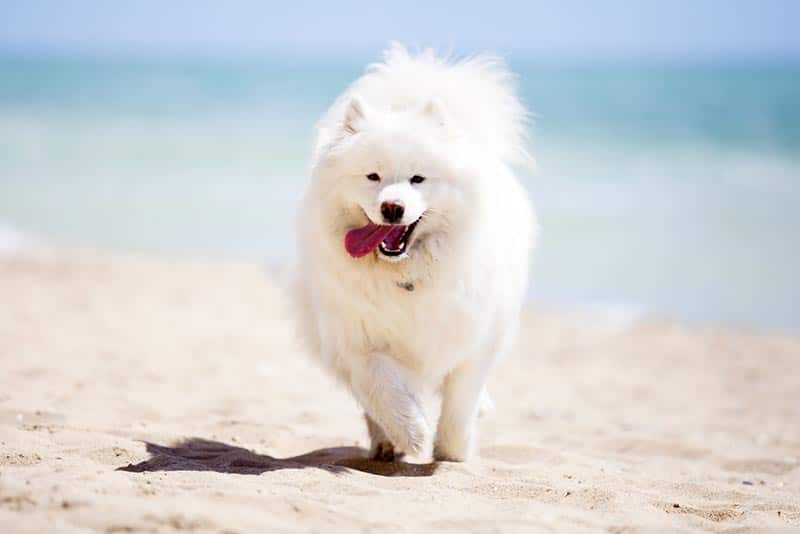
View 8 More +With their perma-smiles, friendly temperament, and poofy coats, Samoyeds have definitely earned their place in the hearts of owners and fanciers alike. These beautiful dogs have working dog DNA coursing through their bodies, but their intelligence and affectionate nature make them fantastic companions, too. Read on to learn more about this breed and see if you have what it takes to become a Samoyed owner.
Breed Overview
Height:
19–23.5 inches
Weight:
35–65 pounds
Lifespan:
12–14 years
Colors:
White, biscuit, cream, white & biscuit
Suitable for:
Families, active folks, experienced dog owners
Temperament:
Sociable, energetic, intelligent, affectionate
Samoyeds are working dogs developed in Siberia. Given their origins in frigid climates, these dogs thrive in cold weather. Their thick coat keeps them warm in the wind, snow, and freezing temperatures.
Samoyeds forged strong bonds with their masters in the Arctic, a trait even modern Sammies carry with them today. These dogs want to be part of the action and near their humans at all times. Isolated Samoyeds can become destructive.
Samoyed Characteristics

Samoyed Puppies
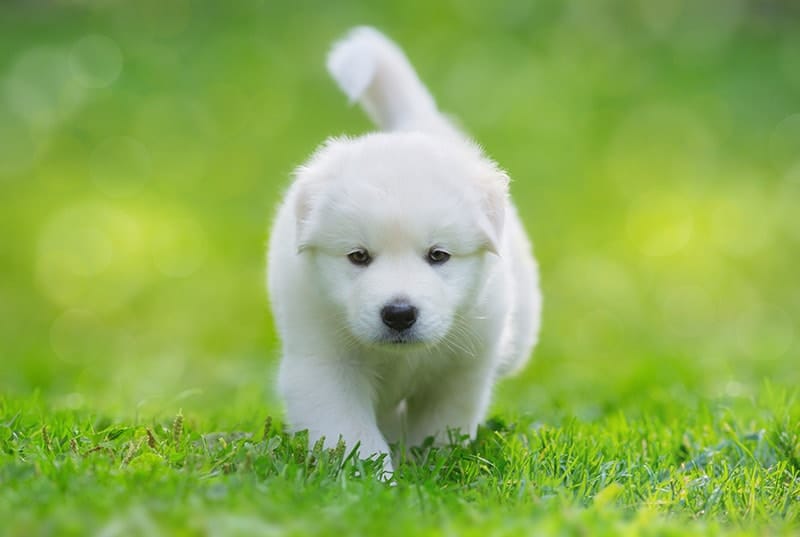
Samoyeds may not be an especially rare breed, but finding one to adopt may present a bit of a challenge. Locating a reputable breeder is of utmost importance before adopting a Samoyed. These breeders will test all prospective parents for genetic conditions before breeding them. Be sure to ask all breeders for proof of family medical history before adopting to ensure your pup has been given the best chance at living a long and healthy life. We’ll talk a little more later about the genetic conditions Samoyeds are prone to developing so you know what testing to look for.
Finding a Samoyed at a shelter may be difficult. You might have better luck with breed-specific rescues than your local animal shelter.
Temperament & Intelligence of the Samoyed 🧠
Samoyeds are playful and adventurous companions suitable for people of all ages. They have a moderate energy level and are as happy to tag along during outdoor hikes as they are lazing at home between adventures. They are adaptable, loyal, and friendly, which makes sense given they’ve spent so many years living and working alongside humans so closely.
Samoyeds are dignified and spirited pets, but they’re certainly not low maintenance. They require a significant amount of attention from their humans. They need daily exercise and require frequent grooms to keep their coats looking good.
These powerful and tireless pups are not only adorable but friendly, too. They love cold weather, and given that they’re descendants of the Reindeer Spitz, they’re built for herding and working in very cold temperatures. With a history of being working dogs, Samoyeds thrive when given a job to do.
Samoyeds can be mischievous and may become destructive if not given an outlet for their energy. They can be independent, which may make training a challenge for inexperienced dog owners.
Are These Dogs Good for Families? 🏡
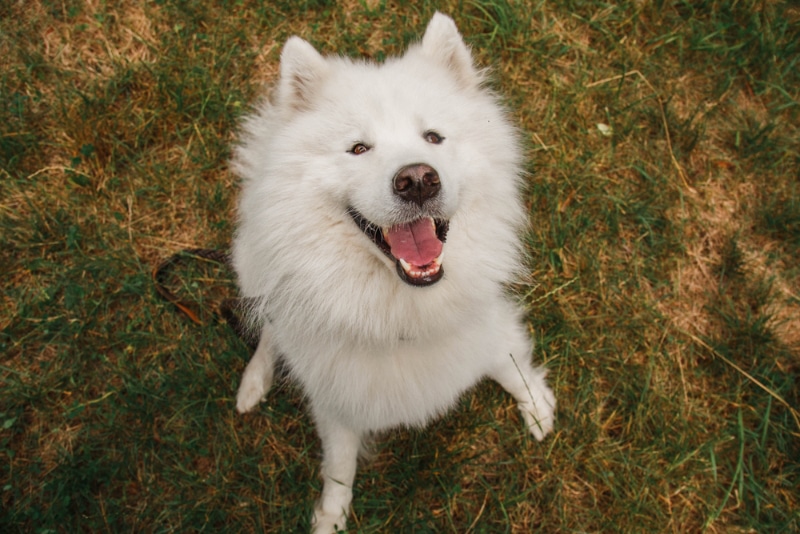
The Samoyed’s playful and friendly temperament makes them fantastic companions and great family dogs. They get along well with children, though they may play a little too boisterous for younger kids, so they should always be supervised together.
Of course, training and socialization are key to a well-behaved Samoyed. The more effort you put into training and socializing your pup, the better behaved they’ll be in households with children.
Does This Breed Get Along With Other Pets? 🐶 😽
Samoyeds can get along great with other household pets, even cats if they’re raised with them. These sociable pups are herding dogs, however, so they may be prone to chasing or nipping. Their high prey drive, stubbornness, and sometimes selective hearing may make it challenging to prevent them from chasing other animals. This is where you come in as an owner. A properly trained and socialized Samoyed will listen to your commands and be recalled when necessary.

Things to Know When Owning a Samoyed
Food & Diet Requirements 🦴
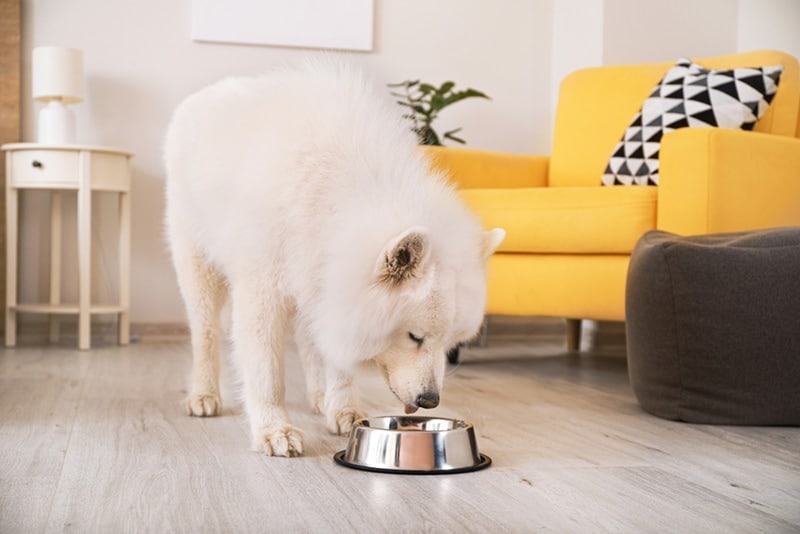
A Samoyed’s diet will depend upon their life stage, activity level, and health. Puppies less than a year old need high-quality puppy food approved by the Association of American Feed Control Officials (AAFCO) for that life stage. Samoyeds participating in strenuous exercise regularly will need food with a higher protein content than their less active counterparts. Active dogs may benefit from omega-3 supplementation or glucosamine for joint health, but speak with your veterinarian before adding any supplements to your dog’s diet.
As with any breed, it’s important to avoid overfeeding to prevent obesity and its related conditions.
Samoyeds with the kidney condition Samoyed hereditary glomerulopathy may require a special kidney-friendly diet to slow the progression of the disease.
Exercise 🐕
Samoyeds are active and playful dogs that genuinely enjoy being with their humans and tagging along for all the family activities. They require a bare minimum of 1.5 hours of exercise daily, though the more you can provide them with, the better.
Daily walks are non-negotiable. You may find breaking them up into a morning and evening stroll is easiest with your schedule. They’ll also enjoy purposeful activities like interactive visits and visits to the dog park, which will also provide them with the mental stimulation they need to stave off boredom.
Training 🎾
As with any other dog breeds, Samoyeds need training and socialization as early as possible during puppyhood to ensure they grow to be well-rounded adult dogs. They can be very headstrong and mischievous, so they require a firm and loving hand in training. Samoyeds are intelligent, eager to please, and quick learners, but they can be challenging to train. For this reason, these dogs are best suited to experienced owners dedicated to their dog’s training regimen.
Grooming ✂️
Samoyeds have thick double coats with a longer outer layer consisting of longer hair and a softer, wooly undercoat. They are relatively heavy shedders all year round but will shed much more during the shedding season.
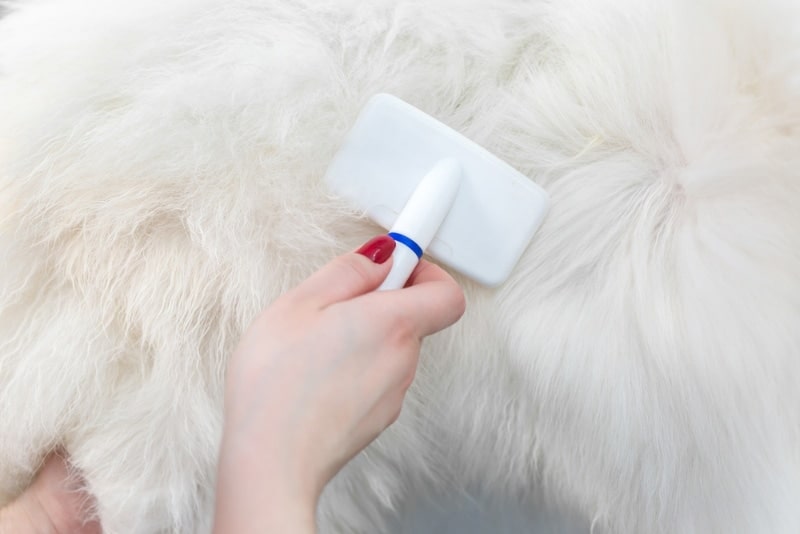
Owners should be committed to doing daily brushings to remove any loose hair and dirt to keep their dogs looking their best. A slicker brush is recommended to remove any matting or tangles. A deshedding brush may be necessary to remove excess undercoat, especially during the warmer months of the year.
Health and Conditions 🏥
Though the Samoyed can live a relatively long life, they may be predisposed to several health conditions affecting the eyes, heart, hips, and kidneys. Additionally, they are extremely sensitive to warmer temperatures, so it’s easy for them to develop heatstroke if they live in temperate climate zones.
Retinal dysplasia and progressive retinal atrophy are two of the most common retinal diseases affecting Samoyeds. These genetic conditions can be screened with a DNA test.
Uveodermatologic syndrome (UDS) is a rare, immune-mediated hereditary disease sometimes seen in Samoyeds. It is characterized by skin and eye signs such as skin lesions, lightening of the skin, and eye inflammation.
Heart issues sometimes seen in Samoyeds include atrial septal defect (a hole between the heart’s left and right atria), aortic stenosis (narrowed opening of the aortic valve), and pulmonic stenosis (narrowing of the pulmonic heart valve).
Hip dysplasia is a painful orthopedic condition that occurs when the hip joint doesn’t function as it should. Testing is now available to determine the likelihood of a dog developing the condition in their lifetime.
Samoyed hereditary glomerulopathy (SHG) is a hereditary disease affecting the glomerulus. The glomerulus is the kidney filter. It will lead to kidney failure, typically by age five. As with some of the other mentioned conditions, genetic DNA testing is available for SHG.
- Eye conditions
- Heart conditions
- Hip dysplasia
- Samoyed hereditary glomerulopathy
- Uveodermatologic syndrome
Male vs. Female
The most notable difference between male and female Samoyeds is their size. Males will be considerably larger, ranging between 20 and 22 inches in height and weighing between 44 and 66 pounds. Females, on the other hand, tend to be shorter—between 18 and 20 inches tall—and will weigh less, between 35 and 44 pounds.
Another physical difference between sexes is the ruff. All Samoyeds have a thick band of fur around their necks, but males can have a more prominent ruff than their female counterparts.
Male Samoyeds are more likely to develop SHG.

3 Little-Known Facts About the Samoyed
1. Samoyeds are always smiling.
One of the most adorable traits of the Samoyed is their perpetual smile. But did you know that this feature has a practical purpose? Their mouths’ upturned corners can stop Samoyeds from drooling. Since they were bred to work in frigid conditions, this unique trait prevents icicles from forming on their faces.
2. Samoyeds are notoriously clean dogs.
Though Samoyeds love a good adventure outside as much as any other dog, they’re one of the easiest breeds to keep clean despite their gorgeous white coats. They’re sometimes called “Teflon dogs” because of how easy it is to wipe dirt and mud off of their coats.
3. Samoyeds are genetically similar to wolves.
Samoyeds are one of 14 ancient dog breeds that are genetically similar to wolves. Their history dates back more than 5,000 years, making them one of the world’s oldest breeds. Though Samoyeds are an ancient breed, they haven’t been changed much by human selective breeding.

Final Thoughts
Samoyeds are a beautiful dog breed known for their affectionate and gentle temperament and ability to adapt. Though they thrive in cool temperatures, they can live in moderate climates so long as their humans know how `to keep them cool and safe.
Though they aren’t as high-energy as other working dog breeds, Samoyeds still require a fair amount of physical and mental stimulation to remain healthy and happy. Potential owners should be able to commit to around 1.5 to 2 hours of exercise daily. However, the sessions can be broken down into more manageable chunks to fit more seamlessly into busy schedules. Samoyeds are happiest when they’re alongside their favorite humans, so they should always be involved in all the goings on in and around the home. Understimulated and bored Sammies can become destructive, so they do best in homes where they’re made to feel like part of the family unit.
Featured Image Credit: Sbolotova, Shutterstock