In this article
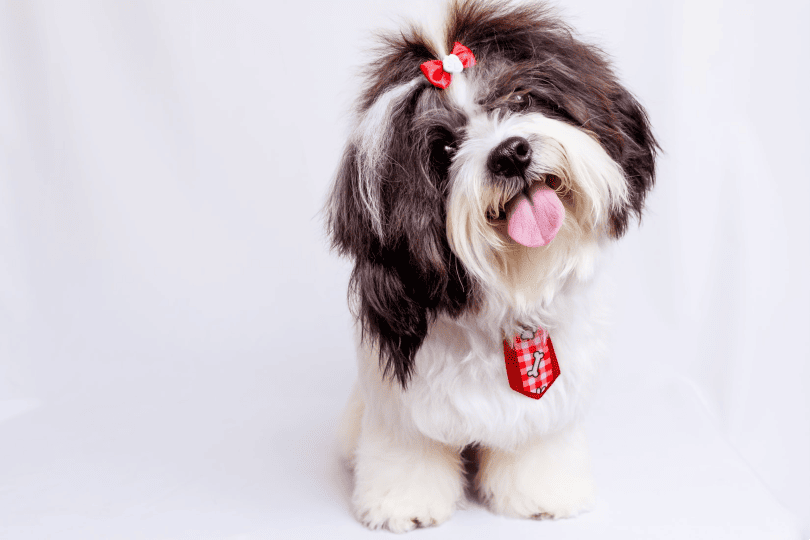
View 8 More +A Daisy Dog is a mix of several small, non-shedding dogs. Unlike other mixed breeds, this one has been carefully developed to display specific traits. Most Daisy Dog litters today are produced by breeding two different Daisy Dogs together. For this reason, this breed tends to be a bit less varied than other mixed breeds.
Breed Overview
Height:
10 – 15 pounds
Weight:
10 – 12 inches
Lifespan:
12 – 17 years
Colors:
Many colors and patterns are available
Suitable for:
Those looking for a lap dog, families with other children
Temperament:
People-oriented, happy, devoted
This breed has been developed through many generations to produce what it is today. They are still in active development, which means that the breeders who specialize in them are still incorporating and encouraging key traits.
These dogs were bred for their happy personality, low-shedding coats, and teddy-bear looks. They are companion dogs to the end, which means that they are often an easy choice for new owners. They are easy to take care of and don’t tend to be as hyper or yappy as other small dogs.
Daisy Dog Characteristics

Daisy Dog Puppies
Finding a Daisy dog depends on what the breeder or rescue means by “Daisy Dog” to begin with. If a breeder is producing puppies from the breed that started back in the 1980s, then the price will be substantially high. While this is expensive for such a small dog, it is largely due to their rarity. They have only been available to the public for a short time. This makes their demand much higher and drives up the price of the puppies.
Conversely, some people interpret the Daisy Dog to simply be a mix of a few different, smaller dogs. Maltese, Poodles, and similar dogs are usually included in these cross-breeds. Because it is easier to find these breeds than an original Daisy Dog, many breeders may make their own version and sell them under the same name. While these dogs look similar to the original Daisy Dog, they are often not at all the same. Therefore, we recommend carefully asking what type of dog a breeder is producing before making your purchase.
Temperament & Intelligence of the Daisy Dogs 🧠
The Daisy Dog was bred to be a fun companion. Over generations, the traits that helped make them great companion dogs were emphasized to the exclusion of other traits. Therefore, they have many of the personality traits that people look for when choosing a companion animal.
These dogs are often referred to as “personality animals.” They have rather big personalities, like other small breeds. This makes them quite entertaining to own.
While these dogs can be energetic, they aren’t as hyperactive as some other breeds. Most of them have short periods of activity followed by a great deal of rest. They are perfect for families that want 10 minutes of playtime and then cuddling on the couch. However, they are not able to keep up with intense physical activities, like hiking.
Most Daisy Dogs are intelligent and people-oriented, so they usually take to any sort of training with ease. They may not have the persistence of other breeds, though. They will listen to their owners in typical situations, but they are easily distracted by new people and dogs. For this reason, their recall is not particularly reliable, and they cannot be trusted to roam around off-leash.
This breed is often described as “cuddly.” They are similar to other small dogs in this way.
These canines usually get along fine with other dogs and people. That said, socialization at an early age is important. Otherwise, these dogs may become protective of their people. They don’t always have the confidence needed to accept strangers into their homes, so it is important to get them around many different people as puppies.
Are These Dogs Good for Families? 👪
These dogs were bred to be family dogs. They are friendly and people-oriented. Their low exercise needs make them perfect for families that are just looking for a lap dog. They are particularly good with older children, as long as they aren’t expected to hike or take part in any serious physical activity.
At the same time, they aren’t necessarily the best dogs for smaller children. While some of them do love children, socialization does play a large part. If they are not around children at a young age, they will likely not want to be with children when they are older. Their small size also means that they are more likely to be injured and become fearful of smaller children.
This can cause fear-biting, which is common between small dogs and children. Often, these dogs will be fine with laidback kids who know how to handle dogs, but they are not suitable for extremely hyperactive children.
Does This Breed Get Along With Other Pets? 🐶 😽
Yes, this canine is often perfectly fine with other dogs, assuming that they are socialized correctly. When they are given plenty of opportunities to interact with other animals, they often figure it out quite easily. However, if they are not given plenty of playtime with other dogs as puppies, they can be fearful when they get older. Socialization is essential for a friendly puppy.
They do not have a high prey drive, so they usually don’t chase cats with much persistence. Many may see cats as play-things if they are not provided with an opportunity to socialize with cats when they are younger. However, most Daisy Dogs raised around cats are perfectly fine with them.
Things to Know When Owning a Daisy Dog
Food & Diet Requirements 🦴
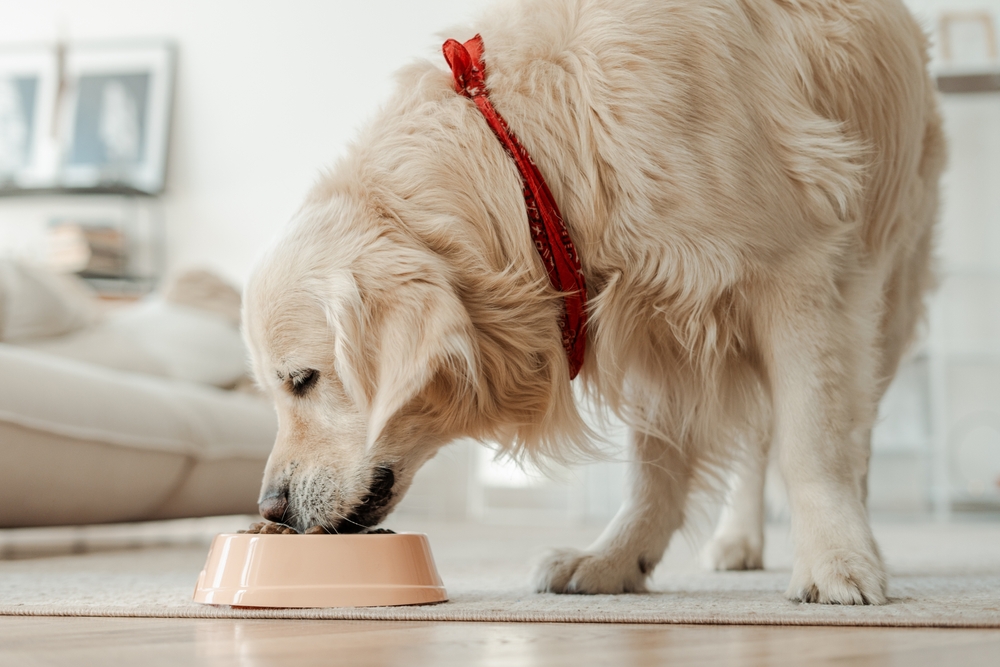
The Daisy Dog does not have any specific dietary requirements beyond what the typical dog needs. They thrive best when fed a high-quality, commercial diet. This usually includes plenty of fat and protein, which should come from meat. You should avoid foods that are full of wheat, corn, and similar low-quality ingredients.
These dogs are not particularly prone to many health problems that require a special diet. However, every dog is different. Some dogs will develop problems that require a prescription diet to manage. Speak with your vet about any special diet that your dog may need.
You should also ensure that your canine is fed a diet fitting for their life stage. Puppies need different nutrition from adults because they are growing. Your dog should be fed a puppy diet until they have reached their adult size.
There is no particular need for a senior diet unless your dog is affected by common senior problems, like eye and coat issues. There aren’t any special dietary requirements that all senior dogs have, so many will do perfectly fine on an adult diet. If you do switch to a senior diet, you should be careful to choose one that matches the particular problems that your Daisy Dog is having.
Exercise 🐕
While these dogs don’t need extensive amounts of exercise, they do need some. Most will be fine with one or two short walks a day. This is best split up, as these dogs do not have a high endurance. They are typically active for a few minutes and then go looking for cuddles.
Instead of walks, you can choose to actively play with your dog instead. Many enjoy just about any sort of game. They are smart enough to learn fetch and similar games. Of course, this does need to be active play for about 15 to 30 minutes, twice a day. A fenced-in yard is recommended because these dogs are known for running off after something interesting.
You typically don’t have to worry about mentally stimulating these dogs. While they are intelligent, they don’t get bored as easily as normal. Playtime and walking should fulfill their mental stimulation needs just fine.
Training 🎾
Daisy Dogs are not the smartest breed out there. After all, they were bred to be companion animals, not working dogs. It doesn’t take much intelligence to cuddle and play. However, they can learn most basic commands and then some.
These dogs are often advertised as being willing to train. Most are people-oriented enough to combat any stubbornness. That said, some of them will be more stubborn than others. Because they weren’t bred to work alongside people, their trainability is not that dependable. Plus, many of these traits have not been pounded in quite as much as in other breeds, so it isn’t odd for them to differ quite a bit in their trainability.
Luckily, these dogs are not overly stubborn. They are relatively trainable and behave nicely indoors.
Grooming ✂️
The grooming needs of these dogs can vary, depending on the type of Daisy Dog that you are adopting. Most either don’t shed at all or shed very little. While this will cut down on the amount of fur that ends up on your furniture, you will need to brush your dog’s coat to avoid matting. Regular trips to the groomer are also required.
Overall, these dogs are decently low-maintenance. Many only need to be brushed about once or twice a week. This will keep tangles to a minimum. Bathing is not necessary unless the dog gets visibly dirty. Otherwise, the brushing sessions will go a long way to keeping them clean. Of course, if you skip a few sessions, you may find your dog dirtier than usual. Brushing doesn’t just keep your dog’s coat tangle-free; it also removes dirt and other debris.
Like all dogs, you will need to trim their nails regularly. This can be done at the grooming sessions or at home. You should also check their ears whenever you brush them. Their furry, floppy ears can trap dirt and other debris, which can cause ear infections. If you notice that your dog’s ears are dirty, you should wipe them out with a damp cotton ball.
Be sure to brush your dog’s teeth a few times a week. This smaller breed may be more prone to periodontal disease, which can cause all sorts of serious, life-threatening illnesses.
Health and Conditions 🏥
- Hip dysplasia
- Bladder stones
- Allergies
- Epilepsy
- Patellar luxation
- Eye problems
- Breathing problems
Due to their rarity, not much is known about the health of these dogs. Typically, mixed breeds are quite healthy. However, these dogs have been bred together for some time, which can cause health conditions to become prominent within the breed.
Due to their small size, we expect that patellar luxation can become a problem. This condition occurs when the kneecap, also called the patella, slides out of place. Usually, the kneecap sits in a small groove on the femur and moves as the dog walks. Sometimes, injury can shove the kneecap loose, or genetics can cause the groove and kneecap not to fit together properly.
Usually, this condition needs to be fixed with surgery. Sometimes, medication is enough to minimize the problem.
Due to their large eyes, eye problems of all sorts may also occur. Their eyes are more prone to lacerations and similar injuries, as they stick out a bit farther than most dog’s eyes. These dogs may be more likely to have discharge from their eyes, which will require cleaning. If you notice that your dog’s eye is beginning to look red, water more than usual, or produce a strange discharge, it is important to take them to a vet.
Some of these dogs are brachycephalic, though not nearly as bad as some other breeds. They may have difficulty breathing, which will be most prominent during periods of exercise and extreme temperatures.
Basically, their short snouts make it difficult for them to breathe properly. They still have all the soft tissue in their face that other dogs have, but it is a bit squished due to the smaller amount of space. This makes their breathing channel smaller and causes breathing problems.
Due to their difficulty breathing, these dogs may be more prone to problems while under anesthesia. Anything that affects breathing will be more severe with the Daisy Dog. This is most extreme and worrisome in hot temperatures, so these pets must be kept cool. They can’t be left outside in higher temperatures. However, other health problems that affect breathing can become worse faster due to their inherent difficulty breathing.
On top of these more serious disorders, these dogs may also be affected by hip dysplasia, bladder stones, allergies, and epilepsy at a slightly higher rate than other breeds. This is based on the characteristics of the breed and their possible ancestry. Since they are so rare, though, there have been no specific health studies done on these dogs.
Male vs. Female
There is no significant difference between the sexes of this breed. Males may be slightly larger than females, but this is typically not noticeable. The temperament is identical. Neither sex is more likely to have health or behavioral problems.
For this reason, the sex that you choose is largely determined by your preferences.
3 Little-Known Facts About the Daisy Dog
1. What exactly counts as a “Daisy Dog” is confusing.
Back in the 1960s, a breeder made a line of dogs by mixing several small breeds. They later called this the Daisy Dog. However, these dogs never caught on much, so they never became widespread.
Today, some people are still breeding these original Daisy Dogs. The original kennel is still active. However, other people are creating their own Daisy Dogs. These are sometimes fairly similar to the original dog, but most of the time, they aren’t.
2. They aren’t technically a mixed breed.
While this dog was originally created by breeding together multiple dog breeds, they are no longer considered a mixed breed. This is because the same dogs have been bred over generations. You can no longer get an original Daisy Dog from breeding multiple breeds together. You get one by breeding two Daisy Dogs together.
The exception to this rule is dogs that were directly mixed from multiple small breeds and then advertised as “Daisy Dogs.” These dogs do not come from the original line but are another breeder’s attempt at crafting a similar dog breed.
3. The exact breeds originally used aren’t known.
The kennel that originally designed these dogs is keeping their “recipe” under lock and key. There is no way to tell what breeds the Daisy Dog was originally made of. It was likely at least five different breeds of various low-shedding dogs.
Conclusion
The Daisy Dog is a bit of a confusing breed. It is both old and new. The original breed was developed in the late 1950s. However, it never caught on nor was recognized by a kennel club. Today, the breed is still being bred by the same kennel. You can purchase puppies from the same line of dogs that were around back then.
However, other breeders are trying to recreate the Daisy Dog. These usually breed together dogs like the Poodle and Maltese, which leaves you with a mixed breed that is somewhat similar to the original Daisy Dog. There are a few differences, however.
The original Daisy Dog tends to be people-oriented. They’re lap dogs, through and through. On the other hand, the remade Daisy Dogs tend to be more varied, as they are hybrids. You never know exactly what you’re going to get with them. Some of them are quite similar to the Daisy Dog, while others aren’t at all.
In the end, Daisy Dogs of both types tend to be rather good companion animals. Socialization at an early age is important, as it is for most dogs. Their people-oriented nature and teddy bear looks make them attractive to those looking for a lap dog.
Featured Image Credit: Edson Torres, Unsplash