In this article
Dogs can’t use words to communicate with us, so we have to observe their behavior for clues as to how they are feeling, or if something is hurting. When your dog starts paying more attention to their paws than usual, they could be trying to tell you there’s a problem.
This is especially true if they’re not letting you get a good look at their paws when they normally don’t mind you touching their toes. Even if they will let you have a look, you may need to contact your veterinarian for a full examination if the problem persists for longer than a day or if it is incessant. However, some of the causes of paw-licking can be treated at home.

The 9 Reasons Why Dogs Lick Their Paws
1. Injuries or Pain
| Likelihood of occurring: | Moderate |
| Severity: | High |
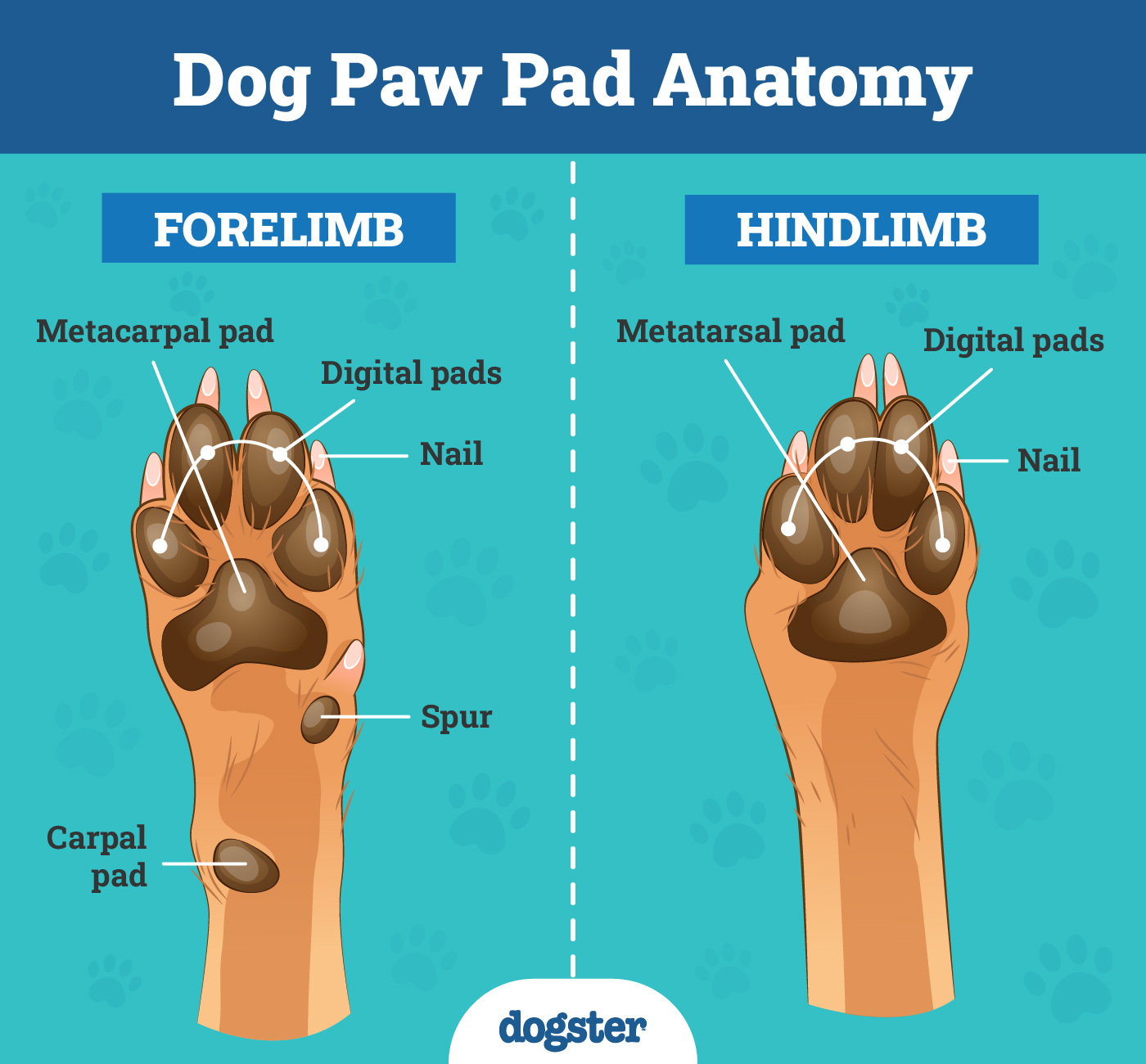
Dogs lick their paws in the wild to clean their injuries, and it may have some pain relieving properties as well. However, too much licking can do a lot more harm than good. Numerous injuries could lead to your pup licking their paws, and some of these include:
- Cuts or scratches
- Broken nails
- Fractures
- Damaged paw pads
- Stings
- Burns
- Infections – yeast or bacterial
- Interdigital cysts
Inspect your dog’s paws for an injury, and if you find one, play it safe and take them to their vet.
2. Parasites
| Likelihood of occurring: | Moderate |
| Severity: | High |
Parasites like fleas, ticks and mites can cause itching and pain and lead to more serious conditions if they’re not eliminated. Certain mites, such as harvest mites, can be particularly itchy and are common on the feet and legs. Other mites favor legs and feet but are not visible to the naked eye, such as demodex mites.
Inspect your dog’s body thoroughly, and if you see any parasites such as fleas or ticks, get them an effective anti-parasitic medication from your vet. If you can’t see any parasites, it doesn’t mean they are not there. A vet will have to perform a skin scrape to identify certain types of mite.
If you do notice fleas, you’ll need to wash all bedding, vacuum your home, and do an in-depth clean all around your home. A house spray from your local vets is recommended to ensure the flea eggs and adults living around the house are killed. If a tick is found to be the problem, you can either remove it (with a tick-remover tool) or visit your vet and ask a veterinary nurse to remove the tick for you.
3. Self-Grooming
| Likelihood of occurring: | High |
| Severity: | Moderate |
Dogs lick themselves all the time as part of routine grooming, which might be why your dog is licking their paws. However, you can inspect them to ensure they’re not in pain, show no signs of irritation or parasites, but if everything checks out and your dog doesn’t continue to groom throughout the day, you might not need to worry.
This is especially true if your dog licks their paws after a meal or while grooming the rest of their body. It’s a perfectly normal part of self-grooming, and unless it’s excessive, there is likely nothing wrong.

4. Skin Irritation
| Likelihood of occurring: | Moderate |
| Severity: | Moderate |
Skin irritation can be the reason your dog is licking their paws, and it can get worse if they lick them excessively. The problem with this is that it can be a self-perpetuating cycle until you intervene.
If you are aware of what has caused the irritation, for example, the use of a new washing powder, or your dog going for a walk on spiky grass, the itchiness and irritation will often go away within a few days. It is best to get the area checked over by your vet, but as long as it is mild, they will likely recommend you bathe the area with salt water and prevent your dog from licking the area for a few days to allow it to heal.
In cases where the inflammation is more severe, your vet may recommend anti-inflammatory medications or medicated ointments to apply to the area.
5. Allergies
| Likelihood of occurring: | High |
| Severity: | Varies |
Allergies to environmental allergens e.g. pollen, grass, dust mites are common, and usually require some treatment. In mild cases, avoidance of the allergen e.g. avoiding freshly cut grass is enough to prevent a flare up, but in other cases, medications are needed to keep your dog comfortable. If you don’t address the underlying allergy, it’s only going to get worse.
Dogs can also be allergic to certain foods, although this is less commonly seen than environmental allergies.
6. Boredom
| Likelihood of occurring: | High |
| Severity: | Moderate |
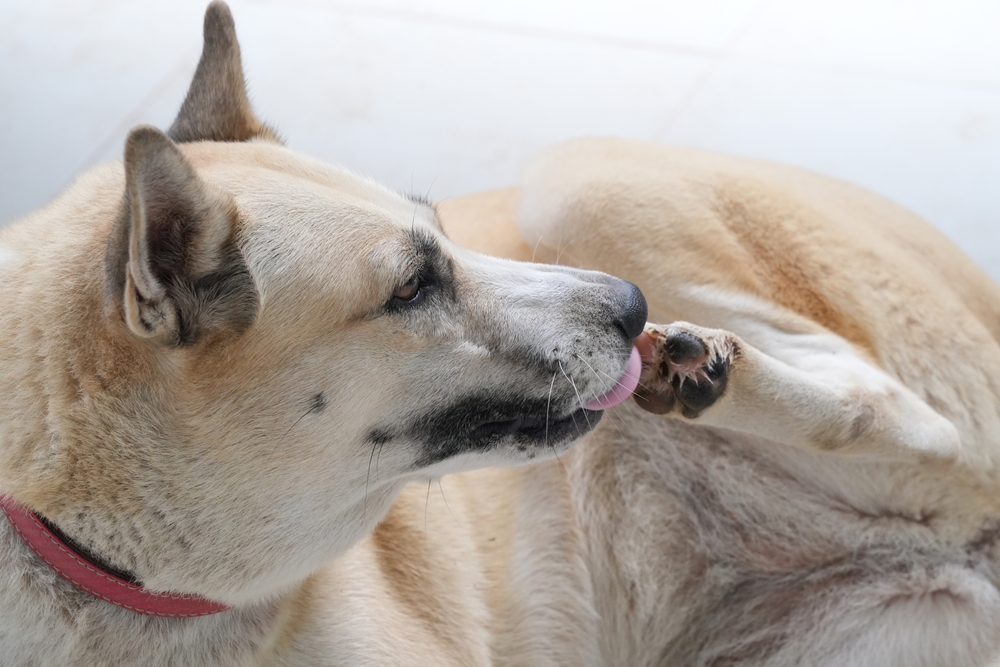
If your dog has nothing else to do and gets bored, they might resort to licking their paws. It’s important to meet your dog’s physical and intellectual needs.
Give them new toys to play with, take them for plenty of walks, and give them plenty of time to run around and exercise. Find a way to entertain them, and they won’t need to resort to licking their paws for entertainment.
7. Separation Anxiety
| Likelihood of occurring: | High |
| Severity: | Moderate |
If your dog is only licking their paws while you’re away, they might be doing it because of separation anxiety. Although you can’t stay home all the time, there are some things you can do to keep them calm while you’re out.
Consider turning on music or a TV show, giving them a shirt that smells like you, or using a natural calming supplement while you’re away. Interactive toys can also help to keep your pup entertained while you’re away.
8. Arthritis
| Likelihood of occurring: | High |
| Severity: | High |
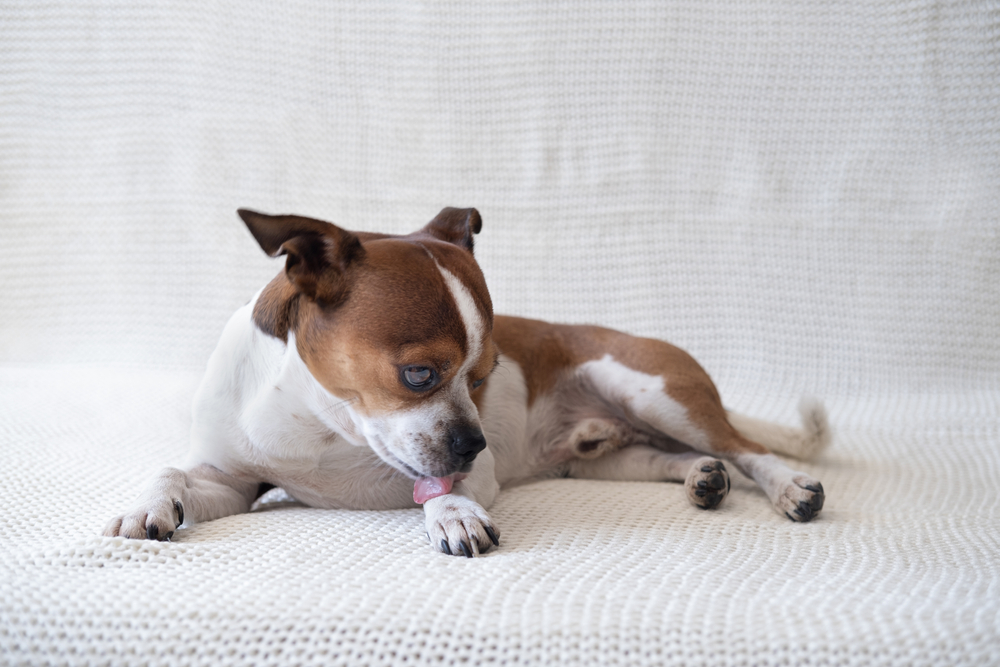
Unfortunately, arthritis is a relatively common condition for older dogs. Although you won’t be able to cure your dog’s arthritis, there are some things you can do to help. Adding more rugs to your home on hard surfaces to stop your dog from slipping, keeping them at a healthy weight, keeping up with their gentle exercise needs, and giving them pain medication as needed are all great options.
If you suspect your dog is suffering from joint pain, contact your veterinarian for an examination and advice on the next steps.
9. Canine Compulsive Disorder (CCD)
| Likelihood of occurring: | Moderate |
| Severity: | Moderate |
Canine-compulsive disorder can occur in some dogs. It is thought to have a genetic link because some breeds are more susceptible than others, although any breed can develop this disorder. CCD is characterized by normal behaviors that a dog performs in a frantic and repetitive way. These behaviors can include incessant licking, sucking on toys, spinning in circles and pacing, amongst others. The compulsive behavior can interfere with a dog’s ability to carry out other normal behaviors such as sleeping and eating.
If your dog is licking their paws excessively and you can’t understand why, it is best to take them for a check up at the vet.
If you need to speak with a vet but can't get to one, head over to PangoVet. It's our online service where you can talk to a vet online and get the advice you need for your pet — all at an affordable price!


When Should You Worry About Paw Licking?
Just because your dog is licking their paws, even a little more than usual, it doesn’t mean you need to rush them to the vet’s office. In fact, a little self-grooming is a perfectly normal and healthy behavior.
However, if the behavior is new or excessive, we recommend examining the dog thoroughly and contacting a vet. Check for pain, irritation, or an open wound, and if they’re injured, take them to the vet for assessment and necessary treatment.
- Bleeding from paws
- Swollen paws
- Limping
- Pus or discharge
- Whimpering, wincing, or crying when touched.
After your vet treats your dog, they may have to take antibiotics or wear a cone, depending on the severity of the injury.
Conclusion
If your dog is paying more attention to their paws than you think they should, it could be a minor issue, but it’s vital to examine them thoroughly. Your veterinarian can treat them and help them recover if it’s an injury, allergy, infection, or behavioral issue.
Excessive licking can damage their skin and cause an infection, and it’s vital to treat the condition promptly to prevent it from worsening.
See Also:
- Frito Feet: Why Your Dog’s Paws Smell Like Corn Chips
- Why Do Poodles Lick So Much? 7 Vet Reviewed Behavioral & Medical Reasons
Featured Image Credit: MDV Edwards, Shutterstock