

In this article
View 5 More +Well-trained dogs make good canine citizens who respond quickly and consistently to commands. Training has several benefits; it ensures that dogs remain well-mannered when meeting new people and will respond promptly to requests if you want them to stop doing something or behave differently.
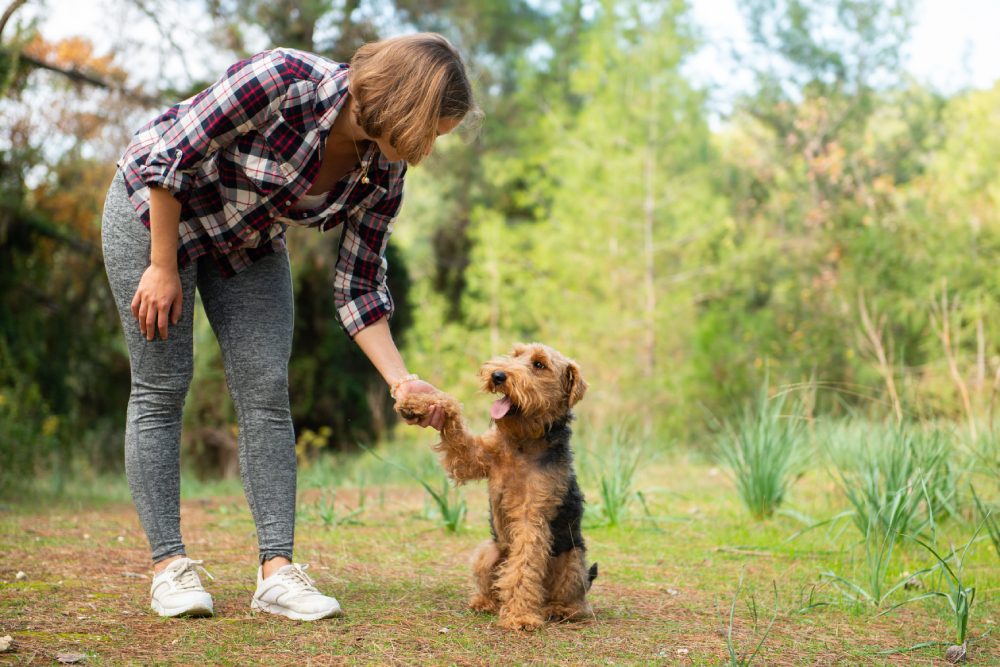
Positive reinforcement training is recommended for teaching dogs everything, from basic commands to tricks. It’s essentially the process of rewarding a dog for doing the things you want them to do.

How Does It Work?
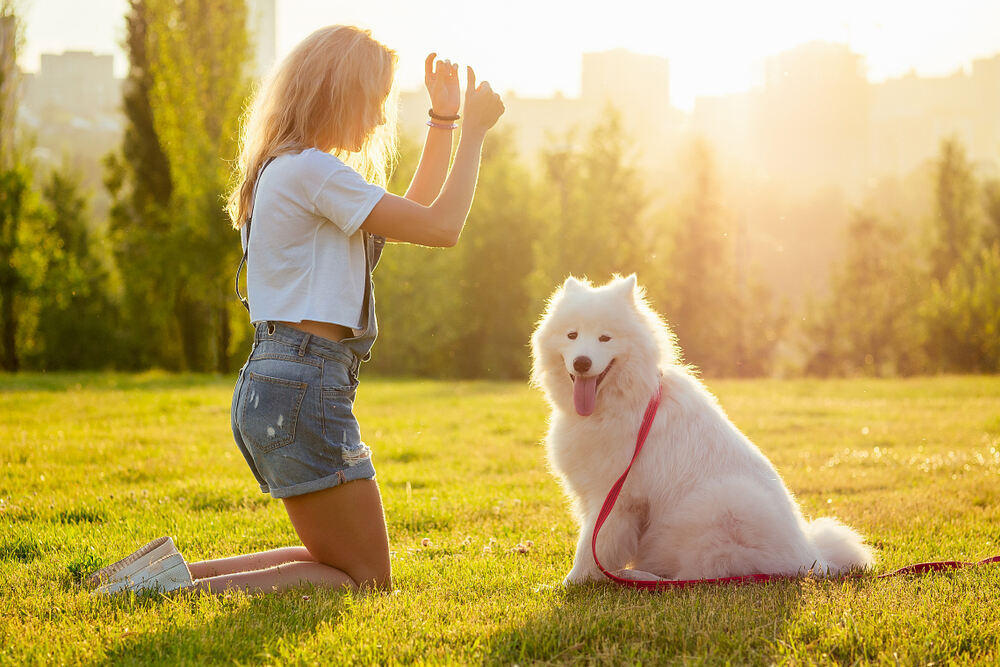
Positive reinforcement training involves rewarding dogs when they demonstrate a specific desired behavior. Dogs enjoy getting treats, toys, and praise, and they can be used as reinforcers to motivate them to learn commands and tricks. Dogs are more likely to repeat something when they know that good things follow.
Timely rewards are important to ensure dogs know what behavior they’re being praised or given treats for performing. Using consistent signals or cues is also a critical part of the process since dogs can quickly get confused when multiple cues are used for one behavior.
During the training process, rewards are provided every time a dog performs a step or approximation toward the desired behavior. Once a dog has mastered the command or behavior, the praise continues, but treats and toys are only occasionally given.
What Is the Scientific Basis of Positive Reinforcement Training?
Positive reinforcement training is based on the operant conditioning method (or essentially learning to associate a particular behavior with a specific consequence).
Believe it or not, operant conditioning involves both punishment and reinforcement techniques because this training method works on the theory that dogs will do more things that result in rewards and engage in fewer activities that result in something undesired or aversive.
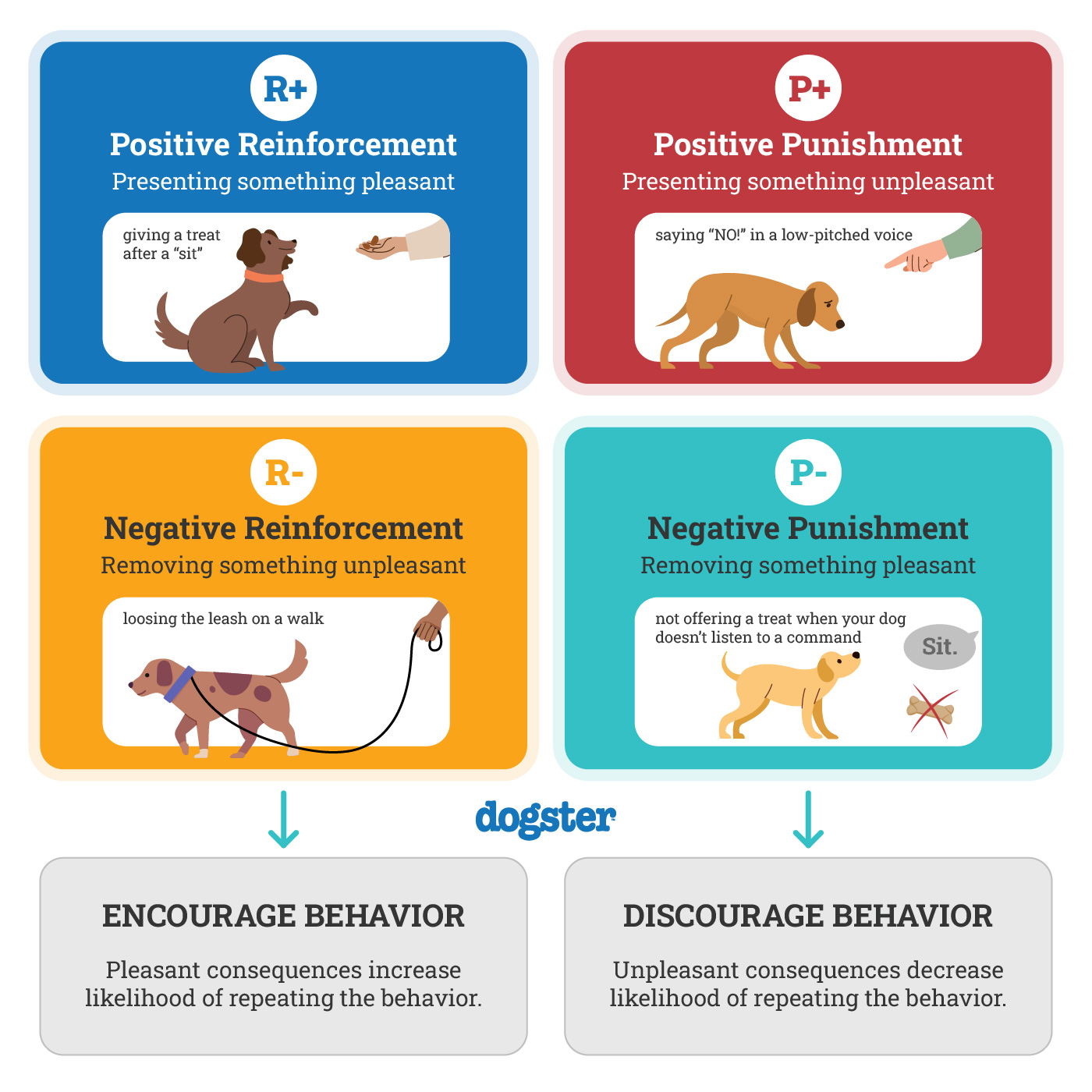
The terminology is a little bit confusing; however, it can be easier if you remember the following definitions:
-
- Reinforcer: Something that will increase the likelihood of a behavior being repeated in the future.
- Punishment: Something that will reduce the likelihood of a behavior from being repeated in the future.
- Positive: The addition of something to the scenario or environment
- Negative: The removal of something from the scenario or environment.
Negative Reinforcement
Negative reinforcement involves taking something unpleasant away to increase the likelihood of a certain behavior being repeated in the future.
Positive Punishment
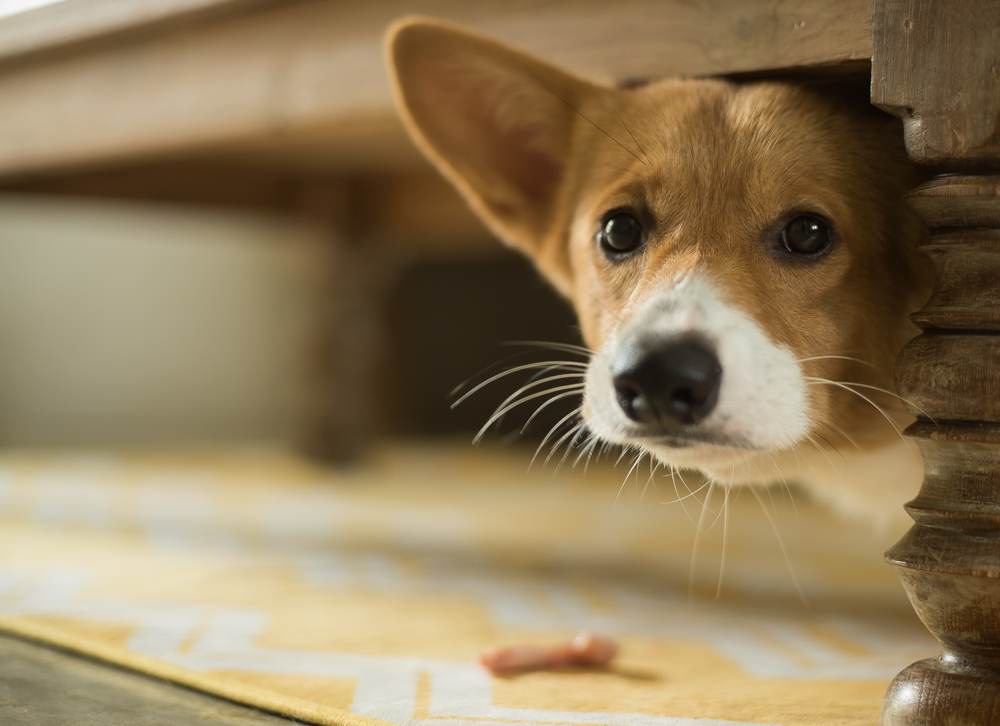
Positive punishment involves actively adding something new to punishing a dog for bad behavior. Common examples are muzzle holds, loud noises, and leash jerks.
Negative Punishment
Negative Punishment involves taking something a dog likes away in response to unwanted behavior. Removing a toy away when your dog is doing something unpleasant is an example of negative punishment.
Positive Reinforcement
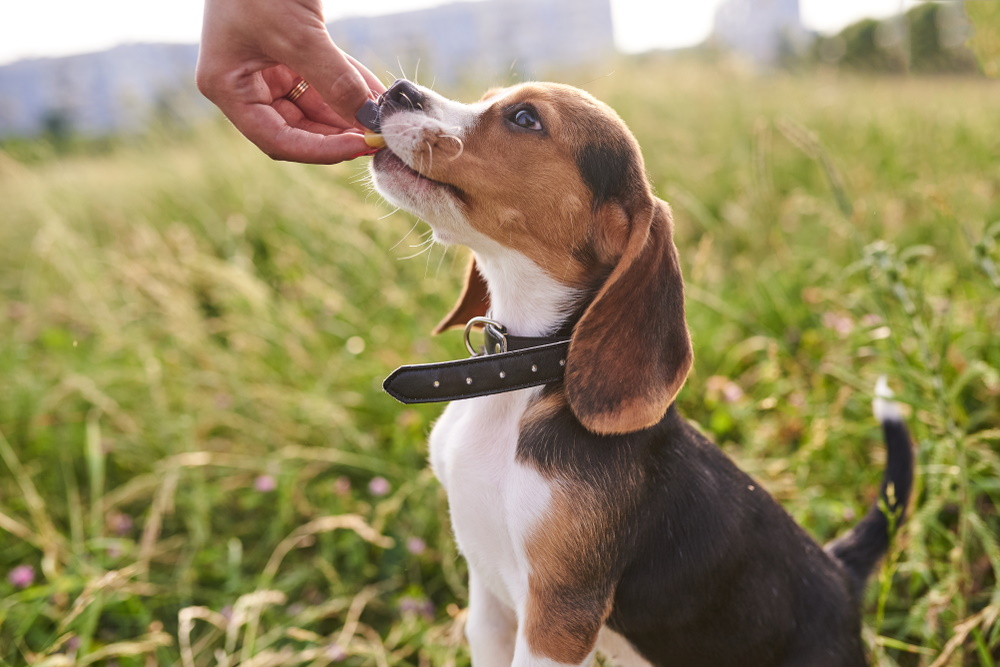
Positive Reinforcement training techniques involve offering or adding something positive each time your dog behaves as expected.
While positive reinforcement training is based on the scientific basis of operant conditioning, successful trainers focus more on reinforcing desired behaviors than on punishing undesired ones.
Rather than punishing undesired behaviors, we focus on giving a reinforcing scenario; for example, ignoring them and continuing walking when your dog jumps on you. Dogs generally like attention, so not responding when they seek it in undesired ways is thought to discourage them from continuing to do so without the need to scream, scold, or overreact. Why? Because that might be perceived as a punishment by some dogs but might be reinforcing to others since it is giving attention to them.
Advantages of Positive Reinforcement Training Methods
Positive reinforcement training methods have several benefits. They strengthen the bonds between dogs and their owners and make training fun for dogs. This can increase the ease with which pups master things as they are engaged, motivated, and interested in learning.
It’s effective at motivating behavior changes and does so in ways that don’t cause stress. It also provides lots of fun and mental stimulation, which is important for dogs’ overall well-being. Positive reinforcement training helps dogs to learn while developing a relationship built on trust.
Aversive methods may negatively impact dogs during training and afterward. They can also cause dogs to dislike training, which can lead to their loss of interest in the process. Aversive techniques can also give dogs reasons to distrust those who frequently use them, which can be problematic for human-canine bonds. Aversive methods cause dogs to be mistrusting and fearful, which might result in aberrant behaviors, such as destructive behaviors and aggression.
Positive and negative punishment can cause dogs to become insecure and stressed, which makes it incredibly difficult for them to learn.
Disadvantages of Positive Reinforcement Training Methods
Positive reinforcement training requires consistency from pet parents. The process takes time, so it requires effort and patience. Once a targeted behavior has been mastered, pet parents need to stay on top of the praise to ensure their commands stick. Positive reinforcement might have some limitations compared to other dog training methods when it comes to extinguishing undesired behaviors, especially for inexperienced trainers.
Positive Reinforcement Training Tips and Tricks
Positive reinforcement training should be fun for everyone involved. However, keep in mind that it takes time to train your dog, and patience is vital to the process.
1. Pick a Quiet Place
Dogs learn easily when they can focus on the task at hand and don’t have to deal with distractions. Try to find a quiet place where you and your dog won’t be disturbed during the training process.
2. Use the Right Reward
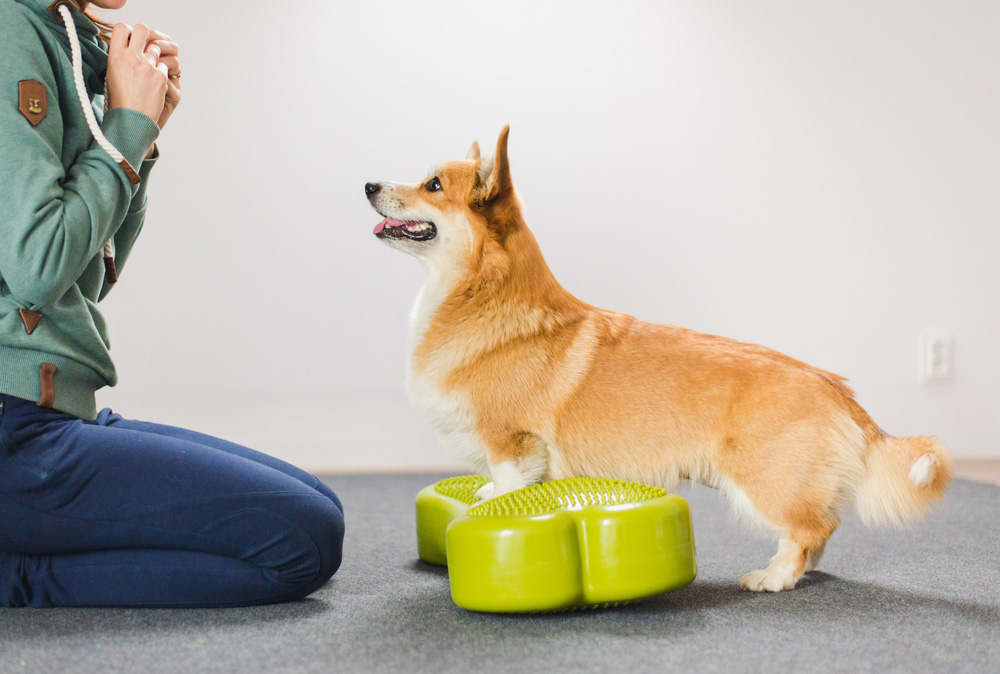
Most dogs are food-motivated, but they all have some things they like the best, and since calories should be limited, it is important to find alternative reinforcers that work for your companion. Toys, games, praise, and attention are all excellent options for rewarding dogs.
3. Keep Things Short
Dogs learn best during short training sessions that last about 10 minutes. Make sure to end the session on a high note when your pup is still interested, winning, and motivated to encourage your dog to look forward to the next one.
4. Monitor Your Dog’s Progress
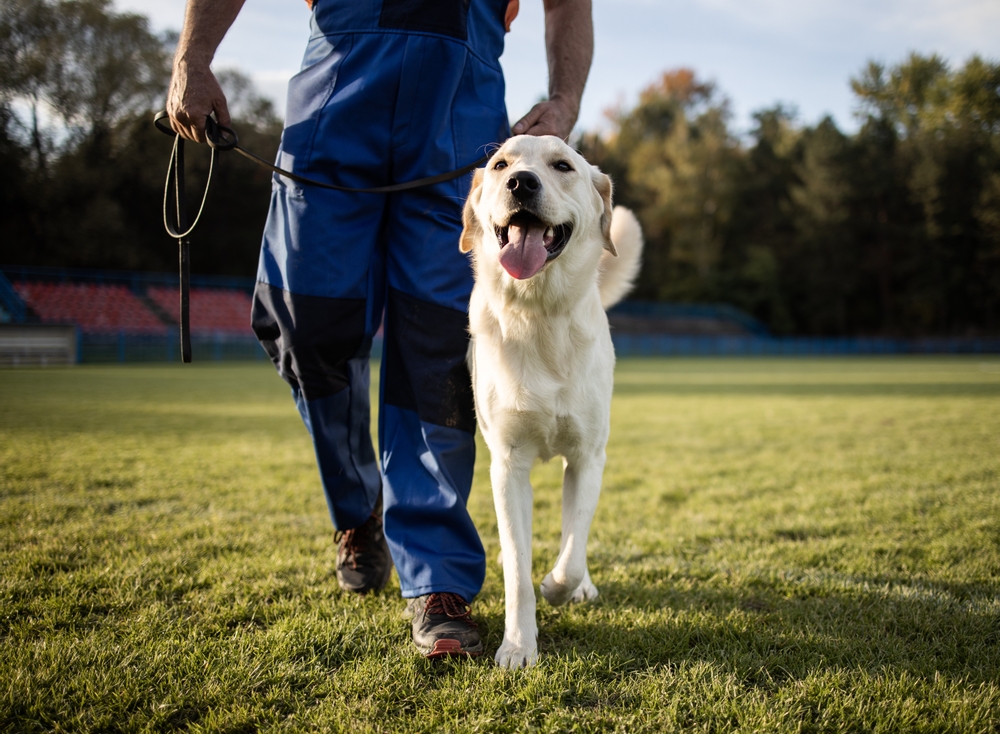
Consider taking a few minutes to write down how your dog is doing so you can get an accurate idea of whether they’re making progress or not.
5. Think About Using a Clicker
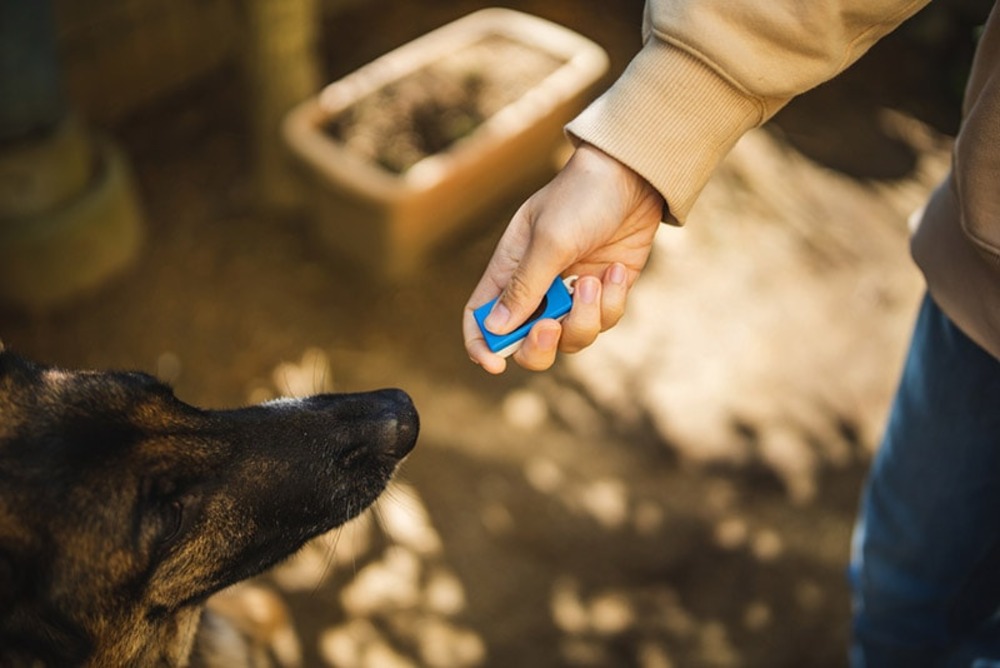
Clickers can be helpful when training dogs using positive reinforcement. The sound makes the action they’re being rewarded for performing clear to dogs, which can make learning new commands much easier.
Frequently Asked Questions (FAQ)
What Is R+ Dog Training?
R+ is short for positive reinforcement training. It’s just a convenient abbreviation that some use when writing or talking about training methods.
What’s an Example of Negative Reinforcement?
A negative reinforcement example commonly used in dog training is when a pulling dog performs the desired behavior of walking relaxed next to you. You can remove (negative) the leash tension and lose the leash. This will increase the likelihood of your dog walking calmly next to you in the future. As you can see, it is not as terrible as the terminology might sound.
Are Shock Collars an Example of Negative Reinforcement?
No, shock collars are one example of a positive punishment. When used to force dogs not to bark, a painful stimulus is applied when they start vocalizing; therefore, this is adding an unpleasant stimulus as a consequence of an undesired behavior to reduce the likelihood of it happening in the future. As you can see there is nothing really good about the shock; the term “positive” merely refers to the addition of something.
It is well known that punishment can cause dogs to develop negative responses. It can also cause dogs to become anxious, stressed, scared, and fearful.
Do Any Professional Veterinary Organizations Have a Stance on Positive Reinforcement Training?
The American Veterinary Society of Animal Behavior (AVSAB) “supports the use of reward-based methods for all canine training.”
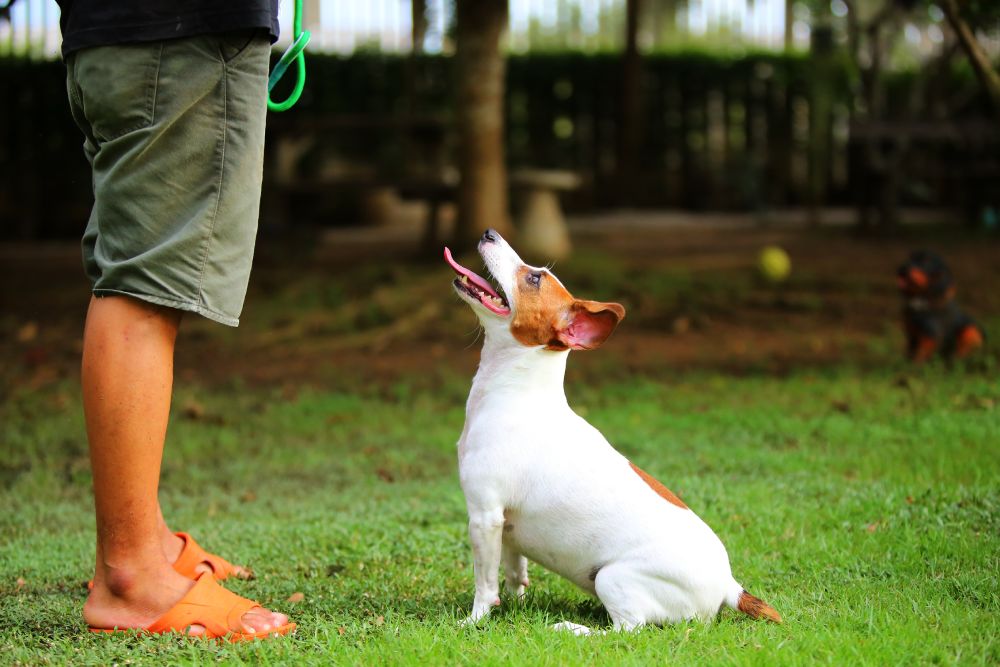
Conclusion
Positive reinforcement training involves rewarding dogs when they perform desired actions. It is based on theories of operant conditioning and holds that dogs will naturally choose to engage in behavior that results in good things like praise, toys, and treats.
Positive reinforcement training provides mental stimulation that is great for dogs’ overall well-being and happiness and can be a fantastic way of creating strong bonds between dogs and the people they love.
Featured Image Credit: Dragon_Fly, Shutterstock





























2 Responses
In August of 2024, I adopted a 51/2 year old female Airedale Terrier from a breeder. The breeder has retired her shortly after she gave birth to her last litter then had her spayed. I was informed that the dog was shy and fearful but starting a new life with an older and single person would help with her rehabilitation. I have been patient with her and she has made positive progress in areas. Every morning we take a 45 minute walk, she responds well on the leash and wants to meet every dog we encounter during our walks. She accepts affection from people and no longer shys away from them.
However she becomes a different dog inside the house and avoids being in the same room with me. I even feed her outside 2 x daily.
I would appreciate any information you may have to help her relax while inside the house. She has accomplished relaxation outside.
Thank you
Hello Don,
thank you for sharing your story about your Airedale Terrier! Although, I am sorry to hear about your issues with her. Behavioral issues with adopted dogs are always a bit tricky since these dogs already have their habits and sometimes their past wasn't great. It is therefore admirable that you decided to adopt one.
When it comes to calming a dog down, we have a useful article, I can recommend: https://www.dogster.com/dog-health-care/how-to-calm-a-dog-down
Just copy and paste the URL into your browser.
Another option I could offer you is a consultation with one of our veterinarians from www.PangoVet.com. You can book a 20-minute video-call where our veterinarian will answer all your questions and give you some helpful training tips how to learn your female Airedale relax at home.
Hope this helps!