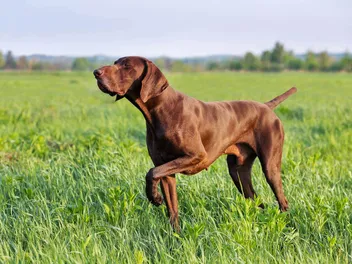
10 Military Dog Breeds: Info, Pictures & History

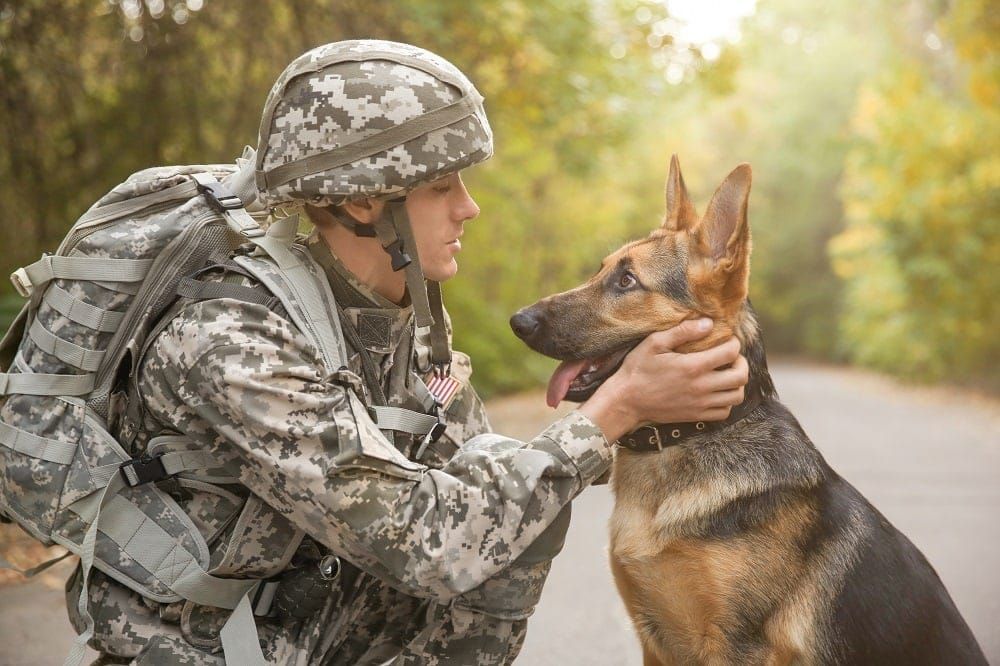
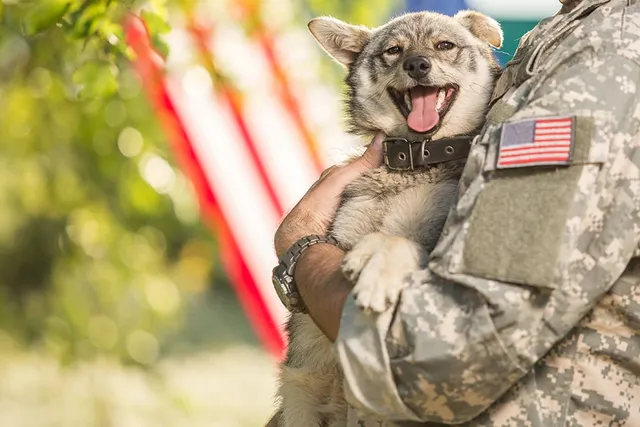
Dogs have fulfilled several roles for humans for thousands of years. We hunted with them when they were once our competitors. Undoubtedly, instinct and intelligence influenced their segue as guardians and watchdogs. Canines protect their territories and will actively defend them. That makes them well-suited to military work. Of course, some breeds are better for this work than others.
Several factors come into play when it comes to military dog breeds. Desirable qualities are loyalty, courage, and confidence. Of course, the military has many suitable jobs for canines that can take advantage of their unique traits. Some work depends on a keen sense of smell or vision, while tenacity and stamina also come in handy in other roles.

How Are Military Dog Breeds Classified?
The American Kennel Club (AKC) and the United Kennel Club (UKC) are the primary dog registries in the United States. Both use different categories for classifying breeds. You’ll see several similarities between the two. Both systems rely on the dog’s initial job their ancestors had. It provides a starting point for the breed’s development.
Many military breeds represent dogs that have had a specific job. We see it often in AKC with the Working or Herding Groups. The UKC even has a Guardian Dog category, and it’s worth noting the significance of this classification. Military dogs aren’t typically herders. Their work is more paws-on against threats. So, let’s jump into potential military dog breeds here.
The 10 Military Dog Breeds
1. Belgian Malinois

| Origin: | Belgium |
| Average Height: | 22–26 inches |
| Average Weight: | 40–80 pounds |
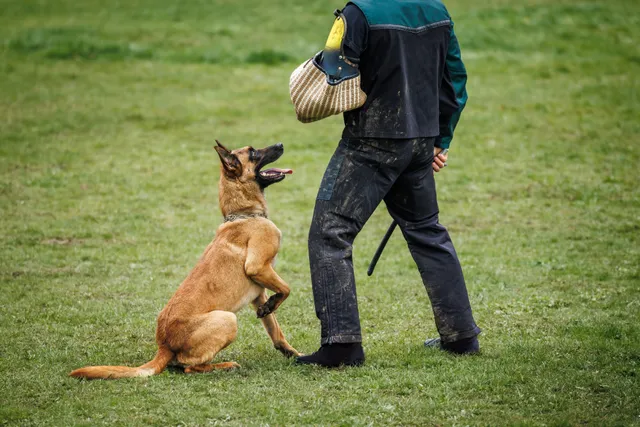
The Belgian Malinois is a hardworking animal with the intelligence to boot. This dog is easy to train with a strong protective nature. That makes this breed a natural choice for a Navy SEAL dog.1 A Belgian Malinois named Cairo stood up to the task as part of the team that took out Osama bin Laden in 2011. They have the stamina and courage to get the job done, leaving no one behind.
2. Bloodhound

| Origin: | Ancient Mediterranean area |
| Average Height: | 23–27 inches |
| Average Weight: | 80–110 pounds |
The Bloodhound’s sense of smell is legendary. It’s a valuable trait for bomb detection and locating people. They have almost 40 times as many olfactory sensors as humans.2 They are also reliable, particularly well-trained dogs. Researchers have found they can even provide dependable evidence for law enforcement, which can also serve them well in the military.3
3. Bouvier des Flandres

| Origin: | Belgium |
| Average Height: | 23.5–27.5 inches |
| Average Weight: | 70–110 pounds |
The Bouvier des Flandres is part of AKC’s Herding Group. That explains the breed’s protective nature. It also accounts for the dog’s courage when working with large animals like cattle. The Bouvier stepped up to the plate in World War I, fulfilling many roles, from messenger to trackers for stretcher-bearers.4 They continued this valuable work during World War II.
4. Boxer

| Origin: | Germany |
| Average Height: | 21.5–25 inches |
| Average Weight: | 50–80 pounds |
The Boxer succeeds in the military partly because of how friendly they are. They are also trainable, with the energy to keep up with many tasks. These traits come in handy when you must ask a lot out of your dog. Vittles the Boxer is the perfect example.5 This pup was with Allied forces, going on 131 missions and 2,000 flying hours. This dog even had a special parachute in case jumping from the plane was necessary.
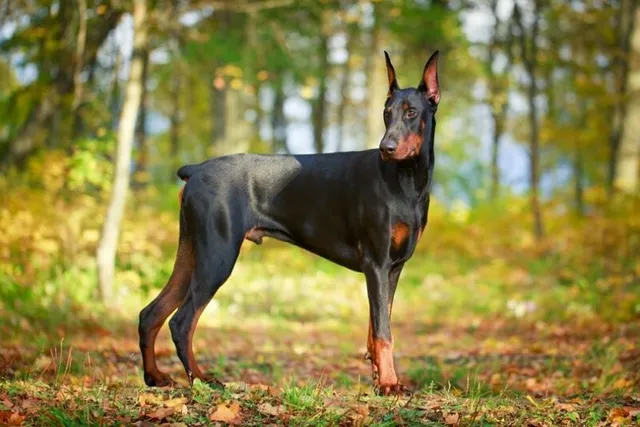
5. Doberman Pinscher

| Origin: | Germany |
| Average Height: | 24–28 inches |
| Average Weight: | 60–100 pounds |
The Doberman Pinscher served myriad roles in both world wars. This pup is eager to please and easy to train, which makes them perfect for the military. They also have a protective nature, which makes them good choices for sentries. The dogs came into their own during World War II when they also served as messengers and scouts. That’s saying nothing of how formidable this canine looks.
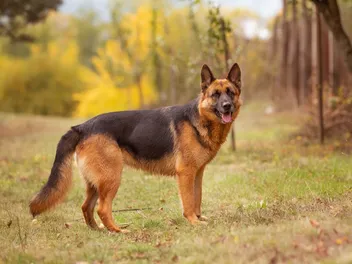
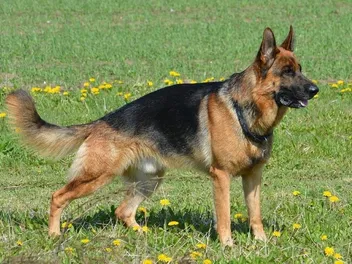
6. German Shepherd Dog

| Origin: | Germany |
| Average Height: | 22–26 inches |
| Average Weight: | 50–90 pounds |
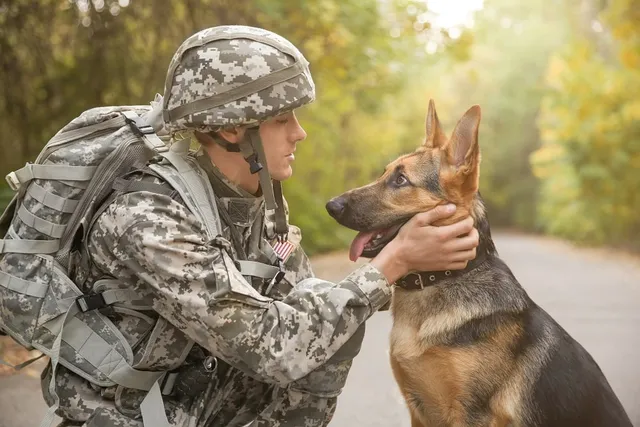
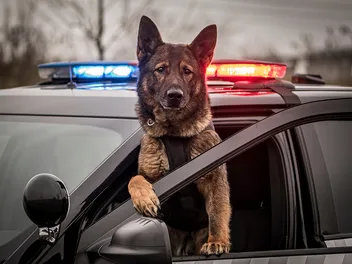
The German Shepherd Dog is probably the first breed that comes to mind when you think of canines in the military. They are highly intelligent and protective. They are also adaptable to handle this lifestyle. A military man developed the breed. They were a godsend for wounded soldiers in the field during World War I, which continued into World War II while being used for search and rescue and as messengers.
7. Giant Schnauzer

| Origin: | Germany |
| Average Height: | 23.5–27.5 inches |
| Average Weight: | 55–85 pounds |
The Giant Schnauzer is a loyal animal that makes them a trustworthy companion on or off the field. The breed’s history has prepared them well for the military. They initially drove cattle and protected the herd. Their sniffers make them excellent canines for explosive detection. They notably worked for the US Air Force and on security with the Secret Service for former President Trump.
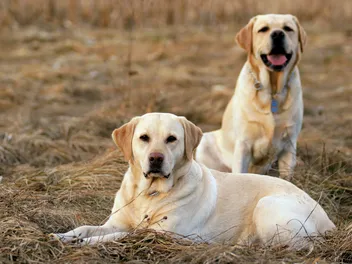
8. Labrador Retriever

| Origin: | Newfoundland |
| Average Height: | 21.5–24.5 inches |
| Average Weight: | 55–80 pounds |
The Labrador Retriever may seem an unlikely choice for a military breed, as friendly as this dog is. However, this breed has a stellar record serving our country. Gabe served in Iraq. This pup famously saved soldiers in the group by detecting explosives on the riverbank. It was only one of 26 finds this heroic dog made on their 210 combat missions, but being a scenthound surely comes in handy for this work.
9. Rottweiler

| Origin: | Germany |
| Average Height: | 22–27 inches |
| Average Weight: | 80–135 pounds |
The strength and size of the Rottweiler make them an excellent military breed. They benefit from the selective breeding the Romans undertook to develop these animals to protect livestock. The breed worked in several roles, including cattle driver. They have a protective nature that makes them suitable for military work, as they exceed as watchdogs with a bite to back up the bark.
10. Siberian Husky

| Origin: | Siberia |
| Average Height: | 20–23.5 inches |
| Average Weight: | 35–60 pounds |
The Siberian Husky may seem like an odd pick on our list. However, the breed has a long association with people. They are hardy and able to tolerate extreme weather conditions, making them excellent animals for search-and-rescue missions. Their role in the military goes back to World War II. These dogs served as pack and sled dogs, tapping their initial jobs.

Conclusion
Military dog breeds have proven themselves invaluable. Canines can do some things better than people, thanks to their superior senses of smell and sight. Their instinctive behavior is an excellent fit in many cases. These animals can respond seemingly lightning fast and tip the scale in the operators’ favor. The long history of dogs in the military proves we can rely on canine companions to have our backs.
See Also:
Sources
https://www.akc.org/expert-advice/lifestyle/7-akc-dog-breed-groups-explained/
https://vetmed.tennessee.edu/about/war-dog-memorial/wardog-background/
https://www.mwdtsa.org/german-shepherd-dogs-military-brief-historical-overview/
https://www.palmbeachpost.com/story/lifestyle/pets/2013/01/21/a-hero-on-four-legs/7613005007/
Featured Image Credit: Africa Studio, Shutterstock
Expert dog care, straight to your inbox
Vet-reviewed advice, training tips, and the best of Dogster. Free, and you can unsubscribe anytime.
By signing up, you agree to our Terms & Conditions and Privacy & Cookies Policy.
Since 2009, Chris has written on a variety of topics. Her motto with all of her writing is “science-based writing nurtured by education and critical thinking.” She specializes in scientific topics, with a special love for health and environmental topics, and of course, pets of all shapes and sizes.
Chris lives happily with her husband and three cats in the land of 10,000 lakes, writing, wining, and boating as much as she can. She and her husband, Norm, were awarded the State of Kentucky Colonel Honor for their restoration work at Mammoth Cave National Park.
Join the conversation
Ask a question, share your story, or send private feedback.