Puppy's First Vet Visit: Checklist & 15 Preparation Tips (Vet Approved)


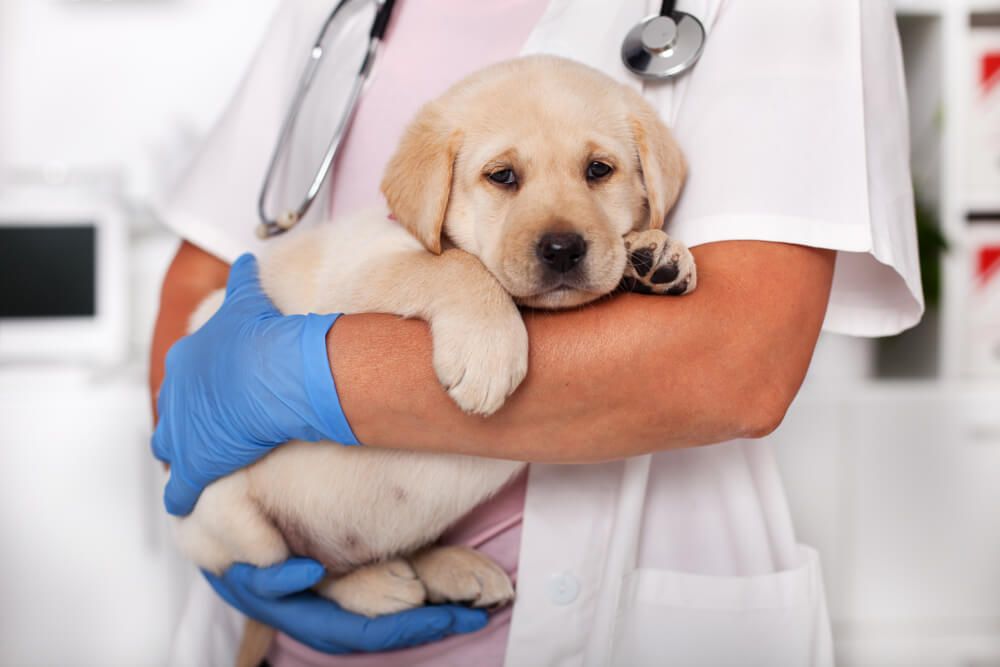
Congratulations on your new puppy! While pet ownership requires a significant amount of time and effort, we are confident that you’ll find the experience rewarding. That said, veterinary care is an integral part of responsible pet ownership, and puppies aren’t unlike babies in terms of the number of checkups and vaccinations they need. Introducing your pet to the vet while young will make it a positive experience and ensure that your pup is on the right course to have the optimal quality of life. The things that you should do before, during, and after your puppy’s first visit include the following:
- Find a good and affordable veterinarian.
- Get pet insurance for your pet.
- Write down any questions or concerns you have.
- Have a copy of your pup's medical history.
- Bring a copy of your pet's health guarantee.
- Bring any forms required by your insurer.
- Pack some treats to create a positive experience.
- Get a leash and collar.
- Complete a new client form online if applicable.
- Set up your online account if applicable.
- Collect a fecal sample.
- Take your pup outside before entering the building.
- Arrive early or on time for your appointment.
- Verify the pup's microchip ID if applicable.
- Set up a vaccination schedule and make your next appointment.

The 15 Checklist and Preparation Tips for Your Puppy’s First Vet Visit
1. Find a Good and Affordable Veterinarian
Medium-sized dogs live about 10 to 13 years, with smaller breeds averaging more and larger ones a bit less. Suffice it to say that you’re going to have a long relationship with your pet’s veterinarian. Therefore, it makes sense to research your choice of a vet carefully. You can ask your family and friends for recommendations. Online reviews are another valuable source of information and guidance.

2. Get Pet Insurance for Your Pet
We recommend getting pet insurance for your puppy. Insurers have varying requirements for issuing policies, with many not covering pre-existing conditions. So, the sooner you get coverage, the better. Coverage also differs between companies, and many offer wellness protection add-ons that can help shoulder the cost of preventive care. Ensure that you understand the conditions and your obligations as the policyholder, though.
3. Write Down Any Questions or Concerns You Have
Make the best use of your one-on-one time with your vet by writing down any questions or concerns you have before your appointment. Veterinarians understand the anxiety that novice pet owners feel when they get their first puppy. No question is silly! It’s much better to get your answers from a professional than from Google.

4. Have a Copy of Your Pup's Medical History
The seller should have had some veterinary care for your puppy. This likely included deworming and the first set of vaccinations. Bring a copy of any information the seller provides. Reputable breeders will also conduct health screenings on their animals, so have this information with you so your vet can note it on your pet’s chart.
5. Bring a Copy of Your Pet's Health Guarantee
Many reputable breeders provide a health guarantee when selling their puppies. The agreement may also contain specific stipulations about your responsibility as a pet owner. We recommend bringing it for your vet to examine to ensure that you’re holding up your end of the bargain. Many documents may require sticking to a recommended vaccination and deworming schedule, for instance.

6. Bring Any Forms Required by Your Insurer
Your pet insurer may require specific forms for your vet to complete so you can submit claims. Trust us, it’s better to get them completed at the time of the appointment than trying to get them filled afterward. Some companies may have deadlines for you to submit these documents. We also suggest downloading the insurer’s app on your smartphone to save time, if one is available.
7. Pack Some Treats to Create a Positive Experience
Your puppy’s first vet visit will introduce your pet to many new experiences. Your job is to ensure they are positive. One of the best ways to foster this association is with treats. After all, canines are food-motivated. A yummy treat makes everything better, even after getting a shot. So, we recommend reserving them as training aids to increase their impact on your pup.

8. Get a Leash and Collar
Undoubtedly, your vet requires pets to be in carriers or on a leash. It is important to keep puppies as calm and comfortable as possible before and during their visit, so it’s best to get them used to new harnesses or collars beforehand. A familiar blanket and favorite toy to distract them while you wait for your appointment are also useful. The blanket can be placed on the table in the consultation room for your puppy to sit on. If your puppy is unvaccinated, make sure they don’t sit on the floor with the other dogs; if they're not in a carrier, they will need to sit on your lap.
9. Complete a New Client Form Online If Applicable
Many veterinary clinics have forms available online to streamline getting new clients into their systems. We suggest checking for any necessary documentation and filling them out before your visit. The administrative staff will thank you for your efforts. Bring a hard copy of the completed forms in case of a computer glitch. It’ll give your vet a heads-up about your puppy.

10. Set Up Your Online Account If Applicable
You can also set up an online account with your vet if applicable. It’ll save time and allow your vet to devote their time to dealing with your puppy instead of having to read a paper copy to get up to speed. We suggest checking out the resources available online. Many clinics have informative websites that can answer many of your questions.
11. Collect a Fecal Sample
Most puppies are born with worms. They often inadvertently contract them from their mothers. The Companion Animal Parasite Council recommends deworming puppies every 2 weeks until the pup is 2 months old. Most vets request a fresh fecal sample from your puppy. You can put it in a resealable, disposable bag or a clean plastic container. Only a small piece is necessary; you won’t have to pick up the entire bowel movement.

12. Take Your Pup Outside Before Entering the Building
Puppies often urinate when they get excited. The first vet visit qualifies as that type of event. Do the clinic’s staff a favor, and if possible, take your puppy outside to void their bladder before entering the building. If you weren’t able to get a fecal sample, you may get a chance at this time, and the staff can provide you with a suitable container to pick it up.
13. Arrive Early or On Time for Your Appointment
We recommend arriving early or on time for your appointment. Be courteous of your vet and their time. They have other clients, and another pet owner may have a medical emergency. Make sure to check in with the reception desk when you enter the building. You can also give them the fecal sample so a tech can run it before you see the vet.

14. Verify the Pup's Microchip ID If Applicable
Many sellers microchip their puppies before allowing them to go home. Shelters often require microchipping for adopted pets, so we suggest verifying the ID to ensure it’s the same as your documentation. Sadly, one study found that 41.9% of lost pets entering shelters lacked current identification information to reunite the animals with their owners.
15. Set Up a Vaccination Schedule and Make Your Next Appointment
You should set up a vaccination schedule for your puppy at that first visit. Your vet will recommend core vaccines. They may recommend others based on your lifestyle. For example, hunting dogs may require additional vaccines because of their risk of exposure. Remember that you must get your pup vaccinated against rabies legally in the U.S., and you may need proof for licensing, boarding, or travel.


Other Factors Involved With Your First Visit
The takeaway from your puppy’s first visit is creating a health maintenance plan. There are things that apply to all dogs, such as annual exams. These are necessary to keep your pup updated on vaccinations and routine testing. It’s also worth noting that preventive care can make veterinary care more affordable by avoiding the consequences of preventable health conditions.
Making the experience good is imperative. Sometimes, exams aren’t pleasant; they may be painful or uncomfortable. Nevertheless, it’s vital to make all aspects of the visits positive, including the car ride to the clinic.
In Conclusion
Your puppy’s vet visit is an exciting time. It’s an opportunity for your pet to meet new friends, but it’s also an excellent chance for you to get questions answered and set your pup on the path to good health. Preparing for your appointment will optimize the time for you and your vet, and it ensures that everything runs smoothly and that your new pup doesn’t fear any upcoming visits.
Sources
Featured Photo Credit: Ilike, Shutterstock
Expert dog care, straight to your inbox
News, insights, expert advice, and everything dog.

No spam — unsubscribe anytime.
By signing up, you agree to our Terms & Conditions and Privacy & Cookies Policy.
How useful was this post?
Click a star to rate. You can leave written feedback afterwards. (We read all feedback.)

Since 2009, Chris has written on a variety of topics. Her motto with all of her writing is “science-based writing nurtured by education and critical thinking.” She specializes in scientific topics, with a special love for health and environmental topics, and of course, pets of all shapes and sizes.
Chris lives happily with her husband and three cats in the land of 10,000 lakes, writing, wining, and boating as much as she can. She and her husband, Norm, were awarded the State of Kentucky Colonel Honor for their restoration work at Mammoth Cave National Park.