In this article
Dog ownership is one of the most rewarding experiences for pet lovers. Unfortunately, having a dog means dealing with both internal and external parasites from time to time. While common, parasites must be treated immediately by your veterinarian if and when your dog has them. Having your dog on preventatives is a must because, without preventatives, your dog is more likely to acquire these nasty little pests.
So, how do you know if your dog has parasites? In this post, we’ll discuss both external and internal parasites your pup can get, the signs associated with each one, and how to prevent your dog from getting them.

How Dogs Get Parasites
All dogs are susceptible to getting some type of parasite. If you’re a dog owner, keeping your dog on some form of preventative is vital. The outdoor world is riddled with parasites that can harm you and your dog. Each parasite has a different life cycle, which includes transmission, but transmission through fecal-oral routes, insect vectors, raw meat, or eggs/larvae in the environment is common.
Parasites are commonly found in dog feces, which can lead to your dog acquiring parasites if not on preventatives. Studies have shown that 85% of dog parks throughout the United States had parasites collected in feces—that’s quite a high percentage. The parasites commonly found were hookworms, whipworms, and giardia, all of which are internal parasites.
On the other hand, heartworms are serious and deadly if not treated. One case series even showed a mortality rate of 14% during heartworm treatment,1 highlighting that prevention is better than cure. Dogs acquire heartworms through a simple mosquito bite, which means keeping your dog on a heartworm preventative year-round is recommended.
In this next section, we’ll discuss the different parasites, explain what they are, how to spot them, and what signs to look for.
External Parasites and the Signs to Look For
Common external parasites include fleas, ticks, and mites. These parasites are quite common and are easily treated, but remember that prevention is key. Fleas and ticks can easily catch a ride on your dog while outside, but if your dog is on a flea and tick preventative, these little buggers will die once they contact or bite your dog. Let’s break them down.
1. Fleas
Fleas can become a horrible nuisance if left untreated, not only for your dog but also for you. An infestation is incredibly difficult to eradicate and usually requires professional intervention once they invade your home, due to the large number of eggs that build up in the environment.
These little guys are tiny and can jump 13 inches. They are small, brown, wingless insects, and you can typically see them crawling around in your dog’s coat.
Using a flea comb is beneficial in checking for them on your dog, they especially like to live at the base of the tail so start there. They bite and feed on blood and can be found on many outdoor animals, such as birds, squirrels, rodents, etc. They also love to nest in brush or overgrown areas and can spread diseases.
- Itching
- Scratching
- Chewing and gnawing at coat and skin
- Hair loss
- Scabs/redness, usually on the belly, groin, or base of the tail
- Fleas seen in the hair
- “Flea dirt,” which is the feces of fleas that looks like black/ brown dirt

2. Ticks
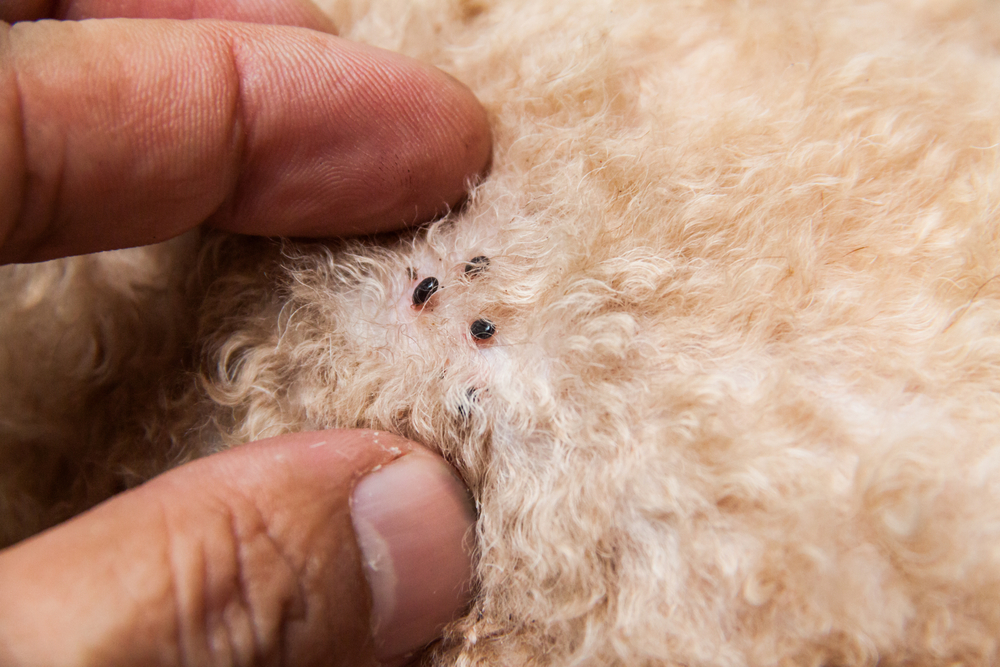
Ticks are external parasites that suck the blood of the host animal. There are many different species of ticks, and they are all very capable of spreading harmful diseases, such as Lyme disease and Rocky Mountain Spotted Fever. They resemble spiders with eight legs and flat, oval bodies; they can be brown, gray, tan, or black.
The body of a tick or the juvenile nymph becomes engorged if attached for 2 to 3 days. They are hard to spot if not engorged, but there are specific areas to search your dog for ticks, including the head, ears, between the toes, tail, groin, eyelids, under the collar, and under the arms. To search, run your fingers through your dog’s entire coat. If you feel a lump, inspect for a tick that may have burrowed there.
Be careful when removing a tick, as leaving the head attached can cause an infection. Use tweezers, a tick remover, or even have your vet remove it for you.
- Hard bump on the skin
- Chewing and scratching
- Inflammation at site
- Head shaking or tilt
3. Ear Mites
There are a few types of mites that can affect your dog, but the most common are ear mites. Ear mites are surface mites that affect dogs, cats, rabbits, and ferrets. You can usually spot them in the ear canal, but they can also live on the skin surface.
Ear mites are highly contagious and affect dogs through direct contact with an infected animal. They can barely be seen with the naked eye but may be seen as a white speck against a dark background. Ear mites are a common cause of ear infections in dogs and cats and are even more common in puppies and kittens.
- Ear irritation
- Head shaking
- Dark, waxy discharge from the ear
- Crusted-over rash in or around the ear
- Hair loss from excessive scratching and grooming
- Blood blister (aural hematoma) on the affected ear

Internal Parasites and the Signs to Look For
Common internal parasites include hookworms, whipworms, roundworms, tapeworms, and heartworms. Let’s examine each one.
1. Hookworms
Hookworms live off a dog’s blood using their sharp “teeth” to attach to the lining of the small intestine. Puppies are commonly affected by an infected mother through nursing, and adult dogs typically become infected by ingesting the eggs spread in feces. They can also become affected by eating infected cockroaches or prey.
Once inside the body, the larvae can travel through the lungs and other tissues before reaching the small intestine, where they develop into adults. They can be in the intestine for up to 2 years, and an adult hookworm can produce 6,000 eggs or more daily.
- Pale, whitish gums due to anemia (caused by severe infection in puppies)
- Diarrhea
- Bloody or black stools
- Cough
- Weight loss
- Skin irritation and itching (especially around the paws)
- Dull and dry coat
- Death (puppies are more susceptible if not treated)

2. Whipworms
Whipworms are tiny and live in a small pouch at the beginning of your dog’s large intestine, known as the cecum. They may also live in the colon. The intestine can bleed and become inflamed due to the whipworms threading themselves in the lining. Dogs rarely show signs unless the infection is severe. Dogs become infected through egg ingestion, typically through contaminated soil.
- Diarrhea with mucus and blood
- Weight loss
- Death
3. Roundworms
Roundworms infect both puppies and adults. Dogs become infected by ingesting contaminated feces, which can be through contaminated objects. Ingesting prey can also lead to dogs being infected with roundworms.
Once eggs are ingested, they hatch and migrate through the liver and lungs before being coughed up and swallowed, returning to the intestines, where they grow into adults. Not every dog will show signs, but large infections can cause some.
- Coughing
- Vomiting
- Diarrhea (adult worms may be visible in feces)
- Failure to grain weight in puppies
- Pot-bellied appearance
- Death

4. Tapeworms
Tapeworms are flat, segmented internal parasites. There are several species of tapeworms; however, the most common species found in dogs is called Dipylidium caninum (the flea tapeworm). They have hook-like mouthparts that allow them to anchor to the intestinal wall of the small intestine. Adult tapeworms can reach 11 inches in length, with parts of their segmented bodies breaking off and passing through a dog’s feces. The segmented parts seen in feces resemble grains of rice and are typically ½ inches in length.
Tapeworm infection starts when a dog ingests a flea or rodent carrying a tapeworm. Treatment is generally simple and easy to resolve; however, keeping your dog on a flea preventative will prevent flea tapeworm infection.
- Scooting or dragging the hind to relieve itching
- Segments of tapeworm visibly seen around the anus or in feces
- Segments found in bedding (may be moving or dried out)
5. Heartworms
Heartworm disease is serious and potentially deadly. It is caused by parasitic worms that live in the heart, lungs, and blood vessels. It can affect dogs and cats when microfilaria (larvae) enter the bloodstream during a bite from an infected mosquito. However, heartworm prevention is easily administered and will keep your pet safe from the disease.
Signs of heartworm infection typically go unnoticed unless the disease has advanced, making heartworm testing vital in discovering infection.
- Lethargy
- Exercise intolerance
- Difficulty breathing
- Swollen belly from fluid retention in the abdomen
- Coughing
- Decreased appetite
- Weight loss
- Collapse
- Pale gums
- Discolored urine
- Death
Is your dog presenting any of these signs? We suggest you speak with a vet online.
If you need to speak with a vet but can't get to one, head over to PangoVet. It's our online service where you can talk to a vet online and get the advice you need for your dog — all at an affordable price!
How to Prevent Parasites in Dogs
While reading about all the possible external and internal parasites that can affect your dog, you are probably keen to prevent them. Prevention is easy by keeping your dog on parasite preventatives year-round. It’s also critical to keep up with regular check-ups, where your veterinarian can help you choose the best preventative medicine for your particular pooch.
- Remove feces from your yard, and always wash your hands after doing so
- Remove shoes before entering your home to prevent tracking parasitic eggs
- Control rodents in your yard
- Keep your dog from hunting wildlife and pests
- Remove standing water from the area (standing water is a breeding ground for mosquitoes)
- Keep your yard mowed and prevent overgrown areas in and around your yard
- Check your dog regularly for signs of parasites
- Keep all pets in the household on parasite prevention
- Ask your veterinarian about fecal tests for parasites
Zoonotic Disease
A zoonotic disease is a disease that can be passed on from animals to humans. Fleas and ticks are able to bite humans, and pass vector borne diseases onto people. For example plague bacteria, typhus, cat scratch disease, and tapeworm can be transmitted by fleas. People can contract Lyme disease or Rocky Mountain Spotted Fever from tick bites.
While people aren’t affected by adult worms in the digestive tract due to exposure to canine worms, their larvae can cause problems, especially in children. Cutaneous and visceral larva migrans occurs when the larvae of roundworms and hookworms migrate through the body.
Conclusion
While parasitic infection is common in dogs, it can easily be prevented by implementing the measures mentioned above. It’s crucial to keep your dog on a preventative year-round, regardless of the season, and keeping up with vet exams is just as important. These simple measures will keep your dog healthy and free from infection. Remember to check your dog often for fleas and ticks and remove a tick immediately if it is attached to prevent your dog from potentially developing a disease from the tick itself.
Featured Image Credit: ThamKC, Shutterstock