Get

In Your Inbox

Dogster is reader-supported. When you buy via links on our site, we may earn an affiliate commission at no cost to you. Learn more.

How to Prepare for a House Fire With a Dog: 6 Vet-Approved Steps

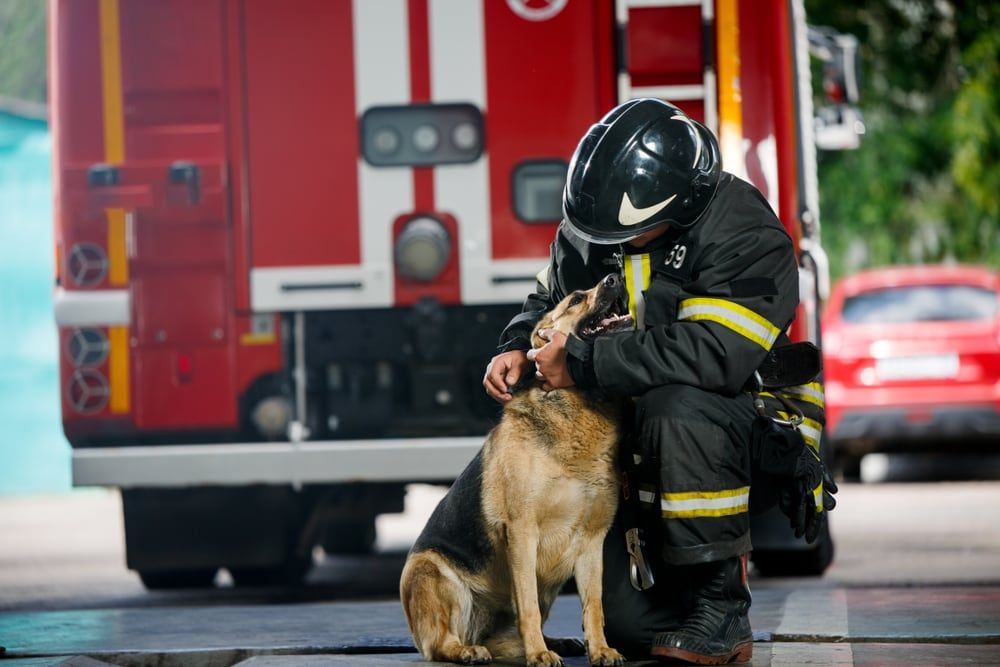
Photo of fireman squatting next to service dog near fire engine

House fire preparedness is information everyone should learn and hope to never use. Unfortunately, house fires happen often and can be deadly, but proper preparedness can be the difference between life and death for you and your dog. With that said, here are six steps for preparing for a house fire with a dog.

divider dog paws 4 oct 2024

The 6 Ways to Prepare for a House Fire With a Dog

1.  Check Emergency Tools and Alarms

Check that all fire alarms, extinguishers, sprinklers, and carbon monoxide alarms are in place and working properly. Replace any of the batteries if needed. Smoke alarms should be replaced every 10 years. Additionally, you can install extra smoke alarms in buildings that house pets and farm animals.


2. Create a Floor Plan

Draw a floor plan of your home and mark two escape routes for each room. Don’t do this step in your head—put it on paper!

If any rooms do not have proper escapes, such as basements, keep your pet out of those rooms when you leave the house. In the event of a house fire, while you’re away, your pet will have a greater chance of escape when kept out of these areas. It also helps firefighters locate your pets faster.

Apartments on second stories and above should have fire escapes, but in many serious situations, the balcony may be your only option for escape. Talk to your apartment complex about evacuation safety to prepare ahead of time.

woman writing at home with her dog
Image Credit: Lazy_Bear, Shutterstock

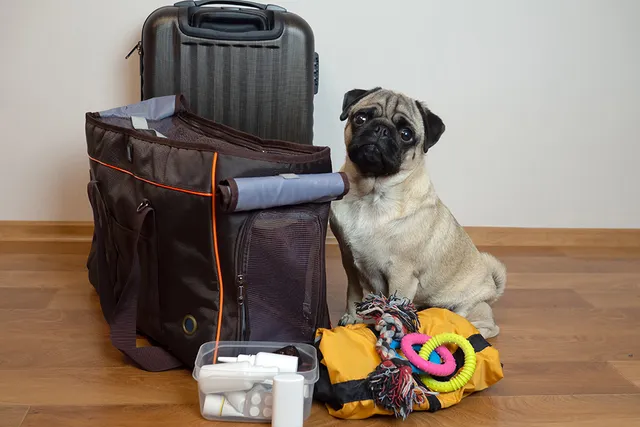
3. Create a Pet Disaster Kit

Include a disaster kit for you and your pet with emergency supplies. These supplies will get you through until you figure out your next step (see below for ideas on what to include in your pet’s disaster kit). The disaster kit should be kept in an area that’s ideally quick to grab in case of an emergency evacuation.


4. Choose Meeting Spots

Choose two meeting spots to escape to if there is a fire: one near your house and the other outside the neighborhood. The meeting spot near your house will be where you go when you escape your house. The distant meeting spot will be where you stay if you can’t return home. Opt for a pet-friendly hotel or a friend’s or relative’s house who is okay with you bringing your pets along.

Neighbors talking over the fence
Image Credit: BearFotos, Shutterstock

5. Place a Pet Alert Window Cling in Clear Sight

A pet window cling alerts neighbors and emergency services that you have pets inside your house. If a house fire starts, firefighters will know how many pets are in the house and quickly rescue them.

The widow cling should be in clear sight so it’s easy to spot. We never know where the fire will start, so posting a window cling on both sides of the house is a good idea for safe measures.


6. Practice Fire Drills With Your Dog

It’s time to put everything into practice, just like in school. You and your dog will learn the procedure the more you practice and, if the time comes, you’ll be ready. You can’t beat the feeling of confidence during a time of uncertainty. While it might seem strange to simulate an emergency with your dog, it will leave you feeling prepared in case the worst does happen. And hopefully, your dog will remember their training and know where to go in case the fire alarm ever goes off.

woman training a golden retriever dog
Image Credit: Soloviova Liudmyla, Shutterstock

Dogster divider_v1_NEW_MAY_24_

Building a Pet Emergency Kit: Essential Supplies

So, what exactly goes in a pet emergency kit? It should include anything your pet may need if you can’t return to your home after an emergency.

A few ideas include:
  • Sealed pet food and a can opener
  • Bottled water
  • Prescriptions
  • Food and water bowls
  • Dog leash, collar, and tags
  • Potty supplies
  • Toys
  • One month of preventative medicine
  • Dog bed, blankets, and carrier
  • Additional items to keep your dog calm
  • Copies of vet records
  • Recent heartworm test results

Additionally, keeping your contact information with a recent photo of your dog is a good idea in case you are separated.

pet supplies outside the crate box
Image Credit: Iryna Imago, Shutterstock

Additional Safety and Training Tips

Almost 1,000 home fires accidentally start from pets annually. To prevent your dog from burning the house down, follow these tips:

Tips:
  • Be careful of open flames: Candles and fireplaces are often the culprits of many house fires. It doesn’t take long for the hutch or drapes to erupt in flames. If you burn an open fire in your house, have an extinguisher nearby and never leave an open flame unattended. If you have young pets in the house, it’s best to pass on the open flames until your pet is completely trained. Even then, never leave your pet unsupervised around them.
  • Remove stove knobs: Pets can easily turn on stove tops without knowing it. Remove stove knobs or add protective covers if you plan to leave the house.
  • Do not leave young pets unattended in rooms alone: Young pets are curious and enjoy investigating areas that can be dangerous. Confine your puppies and kittens and do not leave them unattended in a space with potential danger.
  • Know where your dog sleeps in the house: Dogs tend to hide when they’re scared. This is dangerous when the situation calls for immediate evacuation. Know where your dog tends to hide to make the evacuation process faster and safer.
  • Practice basic obedience training: Emergency safety is more efficient when your dog has basic obedience training down. Take time to practice basic obedience during fire drills
  • Microchip your dog: A microchip can help you reunite with your dog if you were to separate. If your dog is already microchipped check that the information is updated.

divider dog paws 4 oct 2024

Conclusion

House fires are one of the scariest, most unpredictable situations you can find yourself in. Do yourself and your dog a favor and practice for the unexpected. You have a better chance of saving each other’s lives when both of you know what to do.


Featured Image Credit: Sergey Mironov, Shutterstock

Want content like this delivered to you?

Sign Up For Our Newsletter

News, insights, expert advice, and everything dog

* By submitting, you agree to our Terms & Conditions and Privacy & Cookies Policy.

How useful was this post?

Click on a star to rate (you can leave written feedback after clicking submit)

Help us improve Dogster for pet parents!

Your feedback really matters.

What did you like about this post? Also how can we improve it?

Join the conversation

Leave a Reply

You’re very welcome to leave a comment or question. Please know that all comments must meet our community guidelines, and your email address will NOT be published. Let’s have a positive and constructive conversation.

Talk With A Vet Online

Peace of mind,
anywhere, anytime

Affordable vet advice

How to Become a Dog Trainer in 12 Easy Steps

It’s a good time to get started in the animal care business. According to the US Bureau of Labor Statistics, the animal trainer...

Small Munsterlander: Info, Pictures, Facts, & Traits

The Small Munsterlander is a versatile German hunting dog that is becoming more popular due to how affectionate they are with family members...

Are Golden Retrievers Good for Apartment Living? 2025 Guide

When it comes to large dogs, many people think that they are not suited to live in apartments. The assumption is that big...

7 Best Dog Foods for Weimaraners 2025: Reviews & Top Picks

The sleek, silvery Weimaraner makes a beautiful, fun addition to the home. Due to their high intelligence and never-ending energy, you will have...

More related

Brown Newfoundland Dog: Info, Pictures, Origin & More

Newfoundland dogs are enormous, and some large males can weigh up to 150 pounds! Although they’re one of the largest pedigree dog breeds,...

15 Hardest Dog Breeds to Train: With Info & Pictures

All dogs, regardless of breed, require training once you’ve brought them home. Luckily, many dog breeds take well to training and pick up...

Do Great Pyrenees Make Good Service Dogs? Characteristics, Traits & FAQ

Great Pyrenees are large, powerful, and thickly coated working dogs initially bred centuries ago to work with shepherds and herding dogs in the...

How Many Dogs and Cats Are Neutered in the US? 2025 Update

Note: This article’s statistics come from third-party sources and do not represent the opinions of this website. Most vets recommend it, and animal...

Keep reading

Can Dogs Eat Couscous? Vet-Reviewed Nutrition Facts & FAQ

Couscous has become an increasingly popular grain in people’s diets because it’s delicious, versatile, and healthy. If you make couscous often and have a dog, you might have wondered if this food is safe to give to your pup. After...

Can Dogs Eat Couscous

9 Ways to Keep Your Dog Out of Your Cat’s Food

For one reason or another, animals always seem to like food that doesn’t belong to them. Perhaps dogs think that cat food tastes better or that the food that doesn’t belong to them is always tastier! Either way, your canine...

labrador retriever eating dog food

10 Best Dog Foods for Greyhounds in 2025 – Reviews & Top Picks

Greyhounds might not be the most popular breed, but they have a loyal following of enthusiasts who appreciate the dogs’ unique characteristics, particularly their speed. As you may expect, this pup is high energy with equally demanding exercise needs. It’s...

Italian Greyhound dog eating from bowl at home

Is Lamb Dog Food Good for Dogs? Vet-Reviewed Benefits & FAQ

There are a host of dog foods out there to choose from when it comes to feeding your dog and many different meat options available to tempt your pet’s palate. While a good majority of dog foods will contain chicken,...

dachshund dog eating from elevated bowl

What Is Powdered Cellulose in Dog Food? Vet-Approved Safety Facts & FAQ

Choosing the best food for our furry companions is no easy task. With more options and specialized diets available than ever, pet parents are often left in the dark about what goes into their pet’s food. Cellulose is a fiber...

Powdered cellulose in a wooden bowl

Can Dogs Eat Lobster? Vet-Approved Facts & FAQ

Providing your dog with a varied diet can help them have access to more nutrients and keep them happier, as they likely enjoy trying new foods. However, it’s important to ensure that those foods are good for canines. One item...

Can Dogs Eat Lobster

Can You Judge Dog Food Solely by Its First Ingredient? Facts & FAQ

Judging dog food can be overwhelming. There is a lot that you need to keep in mind when checking out dog food. You may be tempted to shorten the process by only looking at the first ingredient. While you can...

Portrait of woman with small dog choosing preserves in pet shop

10 Best Raw Dog Foods in 2025 – Reviews & Top Picks

Raw food diets come with several benefits for your furry friend. Your dog won’t receive all of the benefits of a raw food diet if you don’t select the best food type available. To make the process at least a...

australian shepherd dog eating, steel bowl