In this article
Crate training is a hotly debated topic in the canine world. The Humane Society of the United States says it caters to a dog’s natural instincts; however, some animal rights organizations condemn them. Crate training isn’t common in places like Europe or Australia, and it’s even illegal outside of exceptional cases and transportation in countries like Finland and Sweden. However, it’s not only an approved practice but also expected that some American dog owners will leave their pups in crates when they’re away from home.
Ultimately, the decision to crate or not will come down to your personal beliefs, work schedule, and your dog’s personality. Read on to learn more about crating your dog when you leave home and to find some alternatives that might work better for your pet.

What Is Crate Training?
Crate training is a process that could help your pup adapt to spending time in their crate, which will ultimately become something like their own personal apartment. It’s especially useful when potty training a new puppy. Dogs have a natural inclination to keep their sleeping spaces clean and will learn to hold their urine or feces until they’ve been taken to a more appropriate elimination space. However, crate training has other benefits outside of assisting with potty training.
Some dog owners put their dogs in their crates when they go to work for the day or step out to run errands. Keeping your pup in a crate during the periods you will not be home can keep them safe and stop them from participating in mischievous behaviors in your absence.
Moreover, the aim of crate training is that your dog comes to view their crate as a secure, comforting space they can retreat to whenever they feel overwhelmed or stressed.
What Are the Benefits of Crating My Dog While I’m Away?
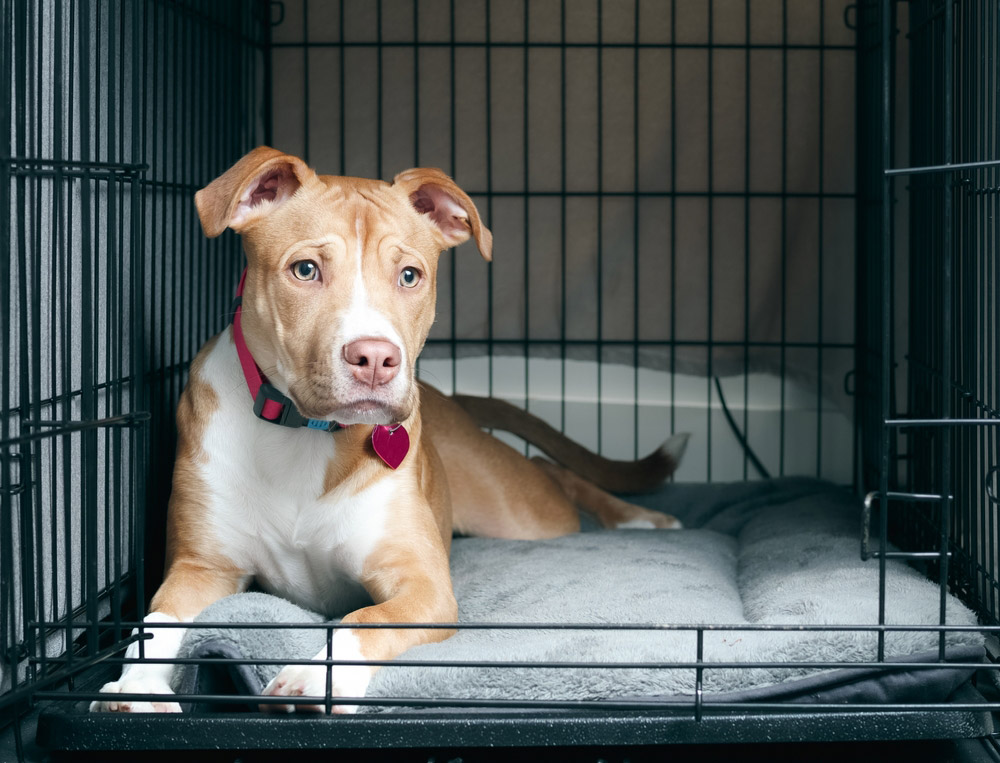
Your dog’s crate, used correctly, can become one of their favorite places to be and provide a comfortable and safe place for them to spend their time while you’re away.
- Preventing destruction to your home
- Preventing injuries to your dog(s)
- Removing opportunities for problem behaviors like barking or window reactivity
Should I Crate My Dog When I Leave the House?
We can’t tell you whether you should crate your pup when you’re not home, as it depends entirely on how long you’ll be gone and your dog’s personality.
How long a dog can stay in a crate is hotly debated. Some experts say eight hours is okay for adults, while others say no more than four. You may have one dog that can happily spend your workday in their crate while the other gets anxious after a few hours.
If you are out of the home for 8+ hours, you should consider something other than crate training. You wouldn’t want to spend eight hours in a small, confined space with no bathroom, no matter how cozy it is or how much enrichment is present. Prolonged confinement could potentially be damaging.
A dog left in their crate all day and night will not get enough physical activity or human interaction to be healthy and happy. These pups can develop problem behaviors, opening up a whole other can of worms that you’ll have to deal with eventually.
Additionally, young puppies shouldn’t spend more than 30 to 60 minutes in their crate at a time. You can slowly increase the time spent in the crate as your dog ages, with the goal of reaching eight hours daily when they’re an adult if you plan on keeping your pup crated while you’re at work.


The 4 Tips to Crate Train Your Dog
Let’s take a look at some tips you should consider if you’d like to get started with crate training.
1. Pick the Right Crate
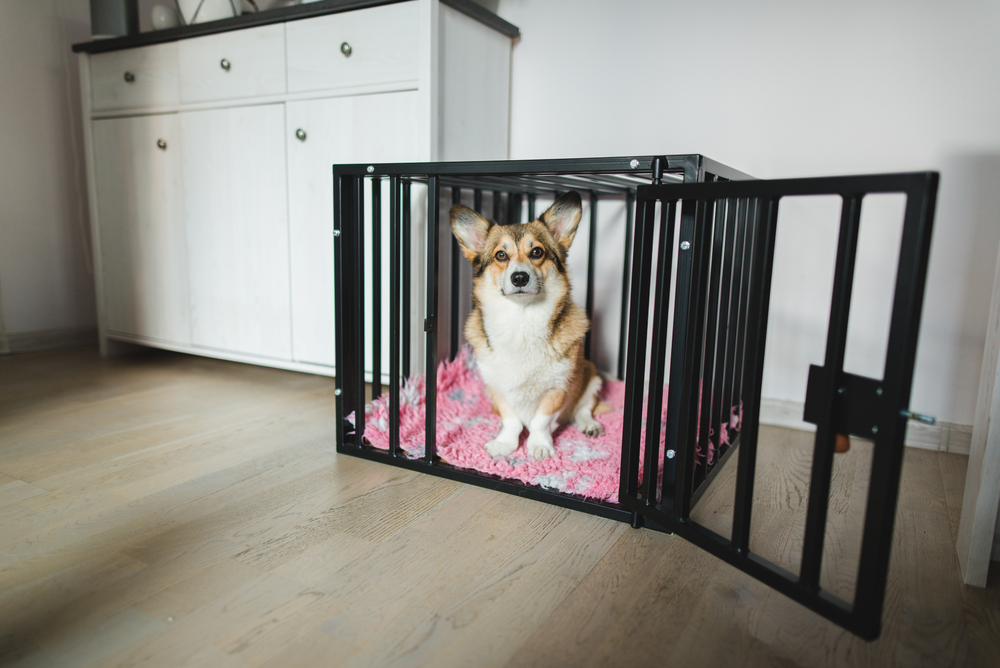
Not all crates are created equal, and your success in training your pup to tolerate (or even like) theirs will depend heavily on whether you start with the right crate. There are two major factors to consider when crate shopping: size and type.
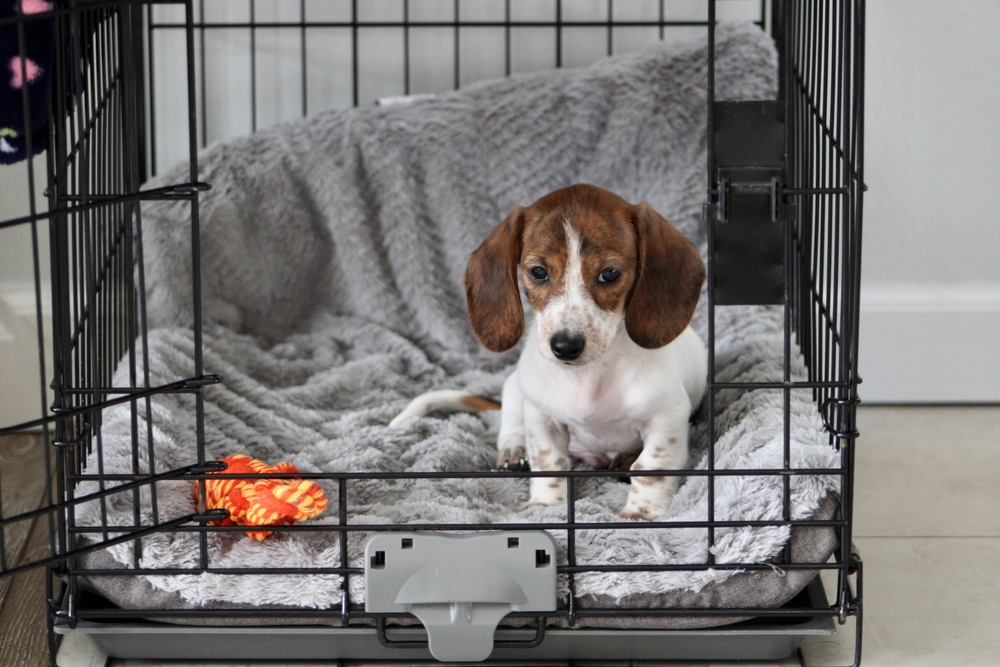
Plastic or metal crates are the best types as they’re heavier-duty with plenty of breathability. We do prefer metal over plastic, however, as they’re easier to customize and more durable.
The perfect crate size allows your dog to stand up, turn around, and lie down comfortably, but not much bigger than that. It can be tempting to buy the biggest crate you can afford to ensure your dog has ample space, but doing so can actually derail your potty-training progress as it allows your pup a space to separate their sleeping quarters from their potty quarters.
2. Create Positive Associations
Another huge aspect of successful crate training is ensuring your pup associates their crate with positive experiences. The last thing you want to do is introduce them to their crate by shoving them inside and leaving them there while you go to work.
Instead, put your pup’s favorite blanket or bed in their crate along with their preferred enrichment items like toys and treats. Place the crate in an area of your home your dog already associates with happy memories, such as an area where they spend much of their time with you.
Never use the crate as a form of punishment. If your dog is forced inside when anxious or distressed, they’ll form negative associations with the crate, which can make training them to enjoy their time there very challenging.
3. Tire Them Out
Take your pup out for a long walk or exercise session before putting them in the crate for the day. Physical activity will not only make them happier and healthier, but they’ll also burn off excess energy that could otherwise lead to destructive, anxious behaviors at home.

4. Make the Crate Enjoyable
Make your pup’s crate a place they can retreat to comfortably for periods of quiet enjoyment. Some ways you can encourage happy, calm behaviors in the crate include feeding them meals with an interactive feeding toy or slow feeder or providing food-stuffed toys (such as a KONG filled with healthy snacks).

Are There Other Non-Crate Options?
Crates aren’t for every dog or every dog owner. If you or your dog is resistant to their crate training but you still want them to stay safe and mischief-free when you’re at work, you have other options.
- Hire a sitter. A dog sitter or walker can be a great lifeline if you want to crate your pup, but you know they can’t stay in their crate for your full eight-hour-plus day. Your sitter or walker can pop in halfway through your work day to visit with your pup and take them for a walk to give them time to pee and stretch out.
- Go to doggy daycare. Doggy daycare is another fantastic option for folks who can afford it. You’ll drop your dog off in the morning when you go to work, and they’ll spend their day socializing with their caretakers and other dogs.
- Install fence gates or playpens. Interior fence gates or playpens are a good way to keep your pup confined to one room while you’re at work. However, you must give these a test run before leaving your dog home alone all day. Dogs are highly intelligent, and some can Houdini their way out of even the best thought-out barriers.
Can All Dogs Be Crated?
Not all dogs will learn to enjoy their crate. This is particularly true in pups with separation-related behavioral problems, as being cooped up in a small space can cause distressed and destructive behavior. So, while crate training might seem like the perfect answer for a dog that exhibits destructive or anxious behaviors when they’re at home alone, crating these pups can actually exacerbate the problem.
We do not recommend continuing with crate training your dog if they appear to be distressed, they are trying to escape, or if they injure themselves in any way. These behaviors do not mean you require a heavier-duty crate or more extensive training; they tell you that you need to find out and address the underlying causes of such behavior, and take training very slowly. You might decide to abandon the plan to crate train if your pup isn’t taking to it.

Final Thoughts
Crate training isn’t for every dog, but if yours appears receptive to the idea, it could be a great way to keep your dog safe while you’re at work. However, it is important to consider how long you’ll be away and your dog’s personality. Not all dogs will take well to being cooped up in a kennel for a number of hours daily, and if this is the case for your pup, we highly encourage you to consider other options.
Featured Image Credit: Jus_Ol, Shutterstock