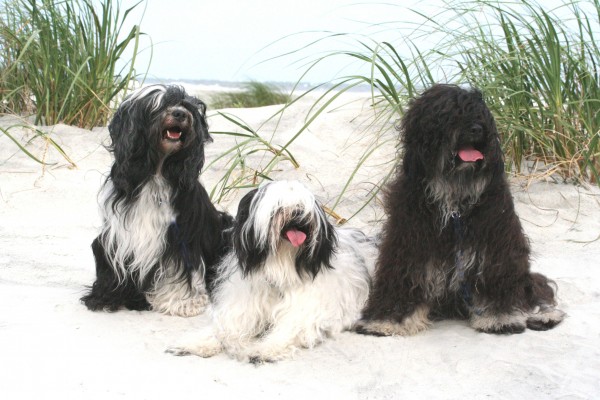
Tibetan Spaniel Dog Breed: Info, Pictures, Facts & Traits


In this article
As a Spaniel in name only, the Tibetan Spaniel is a far cry from the Western world’s gun dogs. The breed was less of a hunter and more of a lookout in their native Tibet, where the region’s smaller dogs have always blended exotic looks with charmingly bold personalities.
Tibetan Spaniels are relatively new to cultures outside the Far East but have cemented their place in the homes and hearts of adoring enthusiasts across the globe. If you’re looking for a fun and affectionate addition to the family, discover why the Tibetan Spaniel could be worth your consideration in this breakdown of their temperament and traits.
Breed Overview
Height:
Weight:
Lifespan:
Colors:
Suitable for:
Temperament:
The Tibetan Spaniel is part of a group of Tibetan companion dogs that includes the Shih Tzu, Lhasa Apso, and Tibetan Terrier. Like their relatives, the “little lion” dogs have long, flowing coats and feathery features, with a big dog attitude contradicting their small stature.
Tibetan Spaniels are all about attention, whether they give or receive it. They love playing, snuggling, and spending quality time with their people. With a long history of being part companion and part alert dog, they are always aware of their people and environment. They stay sensitive to their owner’s needs and alert to nearby threats, always focusing on keeping their family comfortable and content.
Tibetan Spaniel Characteristics

Tibetan Spaniel Puppies

They aren’t the most popular dog breed, but several breeders of Tibetan Spaniel Puppies operate across the United States, making them fairly accessible in more populated areas. The Tibetan Spaniel Club of America maintains an updated breeder list.1 The club also provides its member code of ethics, a helpful tool adopters can use to ask the right questions, vet breeders, and ensure they make informed decisions.2
You can’t discount the value of research before choosing a Tibetan Spaniel. Investigating sires and dams, checking out breeder facilities, and spending time with puppies will determine if they fit your lifestyle.
Reputable breeders perform comprehensive health and temperament tests on their puppies before finding a home for them. Their focus is ensuring cohesive matches and many years of happy companionship with your dog.
After adopting a Tibetan Spaniel, training and socialization are critical, with the latter perhaps being the primary focus for Tibetan Spaniel puppies. Though friendly with family, they can be reserved with strangers and other animals. Giving them plenty of positive experiences with diverse people and pets will help them overcome their wariness of others and realize their natural self-confidence.
Tibetan Spaniel Origin & History
The Tibetan Spaniel originated in Tibet’s mountaintop Buddhist monasteries. For the monks and lamas who lived there, they were ideal lap dogs. They were small and plush, with a soothingly pettable coat that helped their people stay warm at night. Meanwhile, a calm temperament suited their peaceful handlers to a tee. Tibbies made exceptional meditation companions.
Their duty as a watchdog was even more important than their role as a pet. When they weren’t delighting their owners in the temple, Tibetan Spaniels protected them from incoming threats. They would perch atop walls to keep a sharp eye out for potential threats. Their loud bark erupted at the first sight of anything suspicious, alerting the fearsome Tibetan Mastiffs stationed below.
For centuries, Tibetan Spaniels stayed relatively confined to their snowy domain. Some were rare gifts to nobles of neighboring countries, but they didn’t become known beyond their region until the late 19th century. Breeding efforts ramped up following WWII, and the Tibetan Spaniel Club was formed in 1971. Twelve years later, Tibetan Spaniels earned AKC recognition in the non-sporting group.

Temperament & Intelligence of the Tibetan Spaniel 🧠
The Tibetan Spaniel’s temperament blends liveliness and energy with a calm, mellow personality, making them one of the more adaptable dogs for different lifestyles. Their only demand is attention. Whether you want to play or cuddle on the couch, Tibbies are content with almost anything involving spending time with their loved ones.
An agreeable nature doesn’t entail easy training with the Tibetan Spaniel. Though intelligent, clever, and trainable, they’re also fiercely independent-minded and stubborn. They can be manipulative and relatively unreliable with recall and other obedience basics, preferring to heed their own desires. If they don’t see enough reason to follow your direction, they won’t.
Despite the challenges, Tibetan Spaniels are charming and affectionate with those they trust. They look out for their family, and while they aren’t aggressive, they’re generally aloof with strangers until they figure them out.
Are These Dogs Good for Families? 👪
Tibetan Spaniels forge strong bonds with loved ones. Too much time alone isn’t for them, making a family setting ideal for most. Around their favorite people, Tibbies are outgoing and fun, with neither the size nor the poor sense to risk harming a child during play. As long as the children are well-behaved and considerate, Tibetan Spaniels are only a benefit to the household.

Does This Breed Get Along With Other Pets? 🐶 😽
Other pets equal more play buddies for Tibetan Spaniels. Although their reservation around strangers extends to unfamiliar animals, they generally get along well with other dogs, especially those around their size. Since hunting was never their milieu, they don’t have much prey drive, allowing them to get along equally well with cats when introduced properly.
Things to Know When Owning a Tibetan Spaniel
Tibetan Spaniels are highly adaptable dogs that can take on new situations and routines with curiosity and poise. Their calm demeanor is attractive to many owners, and as effective watchdogs, they rarely bark unless they sense something amiss.
Alongside limited exercise demands, this relaxed nature makes them equally practical in urban apartments or rural homes. In the home, Tibbies keep close. You’ll commonly find them perched on the backs of sofas or windowsills, guarding the household. Otherwise, they enjoy snuggling up at their owner’s feet.
The stubborn, self-driven temperament is the only significant challenge. While not ideal for people wanting to train dogs for competitions, Tibetan Spaniels are wonderful for laid-back owners looking for a naturally easy-going dog that is up for anything.
Food & Diet Requirements 🦴
Tibetan Spaniels don’t have any unique dietary needs. Generally, you’ll need high-quality dog food with animal protein sources, healthy fats, and a fulfilling blend of vitamins and minerals. They’re light eaters, having small frames and somewhat low activity levels. Adults only need roughly ½–1 cup daily between two meals.
Treats are an excellent motivator for Tibetan Spaniels, but given their limited caloric intake, you must be careful about overfeeding them during training. Treats should account for no more than 10% of their daily food.

Exercise 🐕
Tibetan Spaniels don’t need loads of exercise and won’t act out in need of mental stimulation if they don’t exhaust themselves physically. Most will be happy with a walk and backyard games of fetch, totaling up to an hour of activity. They aren’t the dogs for active, outdoorsy types.
As a brachycephalic breed, they have a low tolerance for intense workouts and will be happy to lie around for the rest of the day. Off-leash walks can be challenging due to the Tibbie’s dodgy recall. A high, secure backyard fence is necessary for similar reasons, as they may take off if they find something worthwhile on the other side.
They’re agile and clever and are capable of exploiting any weakness to go over or under barriers to escape.
Training 🎾
Tibetan Spaniels are intelligent dogs that respond to training, yet their independence and stubbornness will often supersede your instruction if they seem more incentive in something else. Their unreliable nature makes taking them off-lead challenging, and only the most well-trained will excel in agility, obedience, and other competitive sports.
Obedience isn’t impossible if you commit to early, frequent training. Professional training as a puppy is highly beneficial. Successful owners are firm and consistent and ensure their dogs know the rewards and consequences of their actions.
At the same time, there must be a balance of patience and positivity. Tibetan Spaniels are sensitive and remain the most open to training when they can have fun and delight in pleasing their owners. Short sessions are ideal, and changes in activities will keep them from losing interest.
Grooming ✂️
Tibetan Spaniels are moderate shedders with relatively easy grooming needs. They don’t require professional service, with only the area between the paw pads needing regular trimming for comfort. The fluffy coats shed heavily twice annually, requiring daily attention.
Otherwise, brushing twice a week is enough to remove loose hairs and maintain their mat-resistant coat. Introducing Tibetan Spaniels to grooming at a young age and making it a rewarding experience will make the process easier when they’re adults.
They can be ambivalent to some wellness routines, like nail trimming or taking medicines. Building positive associations with these tasks should be part of your training focus.

Health and Conditions 🏥
Tibetan Spaniels are generally healthy, with a few common problems related to their unique body type. Their squashed faces cause more frequent respiratory issues and heat intolerance, and they are susceptible to several eye issues, including entropion and PRA. Fortunately, breeder genetic testing can help them avoid many of these issues.
Male vs. Female
Male and female Tibetan Spaniels are similar in size but somewhat distinguishable by coat variations. The males have a more robust coat due primarily to a thicker mane around the neck and shoulders alongside more prominent feathering down the legs and through the tail.
3 Little-Known Facts About the Tibetan Spaniel
1. Tibetan Spaniels Live a Long Time
The Tibetan Spaniel is a healthy dog but may not be the first one you think of when considering longevity. However, science has found that the Tibetan Spaniel is among the longest-living dogs around. According to a 2024 study of UK dogs, the average Tibetan Spaniel’s lifespan of 15.2 years was second only to the Lancashire Heeler’s 15.4 years. Both were well above the average of 12.5 years for all dogs.
2. Tibetan Spaniels Have a Unique “Scream”
Tibetan Spaniels made every effort to alert the monks in their Tibetan temple homes, and sometimes, the typical bark wasn’t enough to garner attention. To sound the alarm, the diminutive watchdogs developed a unique screaming bark, which is a drawn-out, high-pitched, and undulating “AAAHH!” that is almost impossible to ignore. The modern breed still possesses the “Tibbie Scream.” If you wait for a visitor to come to the door, you’ll likely hear them show it off!
3. They Are Also Called “Simkhyi”
As mellow as the monks who owned them, Tibetan Spaniels were much-revered companions. In Tibet, they’re even known as “Simkhyi,” translating to “house dog,” “room dog,” or “bedroom dog.” Many would agree the label is arguably more appropriate than the “Spaniel” misnomer.
Final Thoughts
Tibet Spaniels prove that dogs may be tricky to train, but that doesn’t mean they have to be challenging to live with. Despite their stubbornness, you can count on a Tibbie’s affection, calm manner, and adaptable character. When you provide the love and attention they deserve, you’ll enjoy the daily rewards of their kinship that have set the breed apart for centuries. See also:
Featured Image Credit: BIGANDT.COM, Shutterstock
Expert dog care, straight to your inbox
News, insights, expert advice, and everything dog.

No spam — unsubscribe anytime.
By signing up, you agree to our Terms & Conditions and Privacy & Cookies Policy.
How useful was this post?
Click a star to rate. You can leave written feedback afterwards. (We read all feedback.)
Nicole has loved animals of all sizes her whole life so it's no wonder she has dedicated her career to helping them through what she loves best: learning, writing, and sharing knowledge with others. She’s the proud mom of two dogs, a cat, and a human. With a degree in Education and 15+ years of writing experience, Nicole wants to help pet parents and pets around the planet to live happy, safe, and healthy lives.