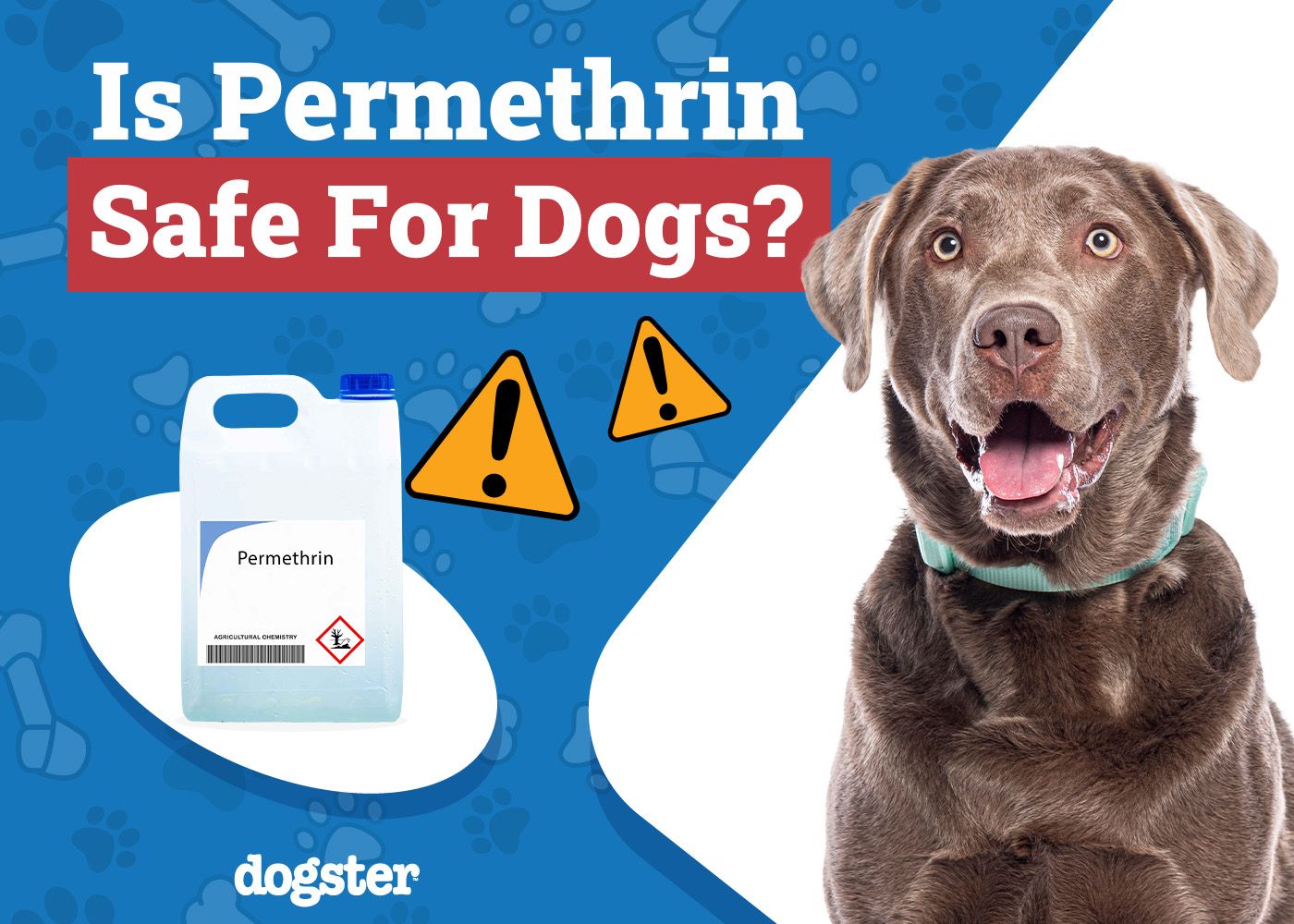
Is Permethrin Safe for Dogs? Our Vet Explains
In this article
Variety is a wonderful thing, and it’s great to have lots of choices, but when you’re trying to find the right product to keep your dog and house free from fleas and ticks, the number of different brands, formulations, and ingredients can be a bit overwhelming!
Fipronil, imidacloprid, fluralaner, sarolaner, selamectin—the list goes on! Permethrin is yet another active ingredient you’ll read on the outside of some popular flea and tick treatments for dogs, and although we know these products have been designed to be used on our pets, it’s always good to do your own research.
You’ll be relieved to know that, in the right doses, permethrin is generally safe for dogs. However, there will always be some dogs that react badly to certain chemicals. And just like with any chemical or medication, the right dose is important, and the wrong dose can be deadly.
Let’s take a closer look at how permethrin is used for dogs and how to keep your dog safe.

What Is Permethrin?
Permethrin is a synthetic formulation of pyrethroids, naturally occurring insecticides found in chrysanthemum plants. They have a wide range of uses in both domestic and agricultural settings to kill and repel various mites and insects from crops, gardens, lawns, livestock, and horses. It is a popular insecticide, and although it does kill insects when they ingest it, they only need to touch the chemical to be affected.
Permethrins act by disrupting the nerve pathways, and insects and arachnids lack the enzymes needed to break down this chemical, making it highly toxic to them. Most mammals, with the exception of cats, are able to metabolize permethrin, making it a relatively safe option when used correctly.
How Is Permethrin Given?
Permethrin is found in a number of different formulations, including aerosol sprays for use on indoor surfaces, concentrated liquids for use on larger areas or farming, and the one you will be most familiar with, spot-on liquids to be applied directly to the skin of your dog.
Frontline Shield, Advantix, Vectra, and FirstAct Plus are some of the more well-known topical flea products for dogs. They use a measured dose of permethrin to provide 4 weeks of protection against fleas, ticks, lice, biting flies, mosquitoes, and mites. The liquid is absorbed through the skin and disperses through the sebaceous glands all over the body.
Each product is presented in different weight ranges, but the actual concentration of the liquid doesn’t change, only the volume. For example, Advantix contains 500 milligrams of Permethrin in every 1 milliliter of solution, and small dogs have 0.4 milliliters applied, while large dogs need 4 milliliters.
How Often Does It Need to Be Given?
Some dog owners only use flea treatments when fleas have been seen. However, because most insecticides, including permethrins, are only effective against certain stages of the flea life cycle, using these products sporadically is more likely to result in flea outbreaks and infestations. It takes at least two to three successive treatments to get rid of adult fleas, as well as their eggs, pupa, and larvae, which is why the manufacturer recommends that the product be used on a monthly basis. For anyone wishing to use it less frequently, you should give 3 months of treatment each time to properly address an infestation.
Some people claim that fleas have become resistant to many of the insecticides used in flea treatments, but the problem is usually the incorrect usage of those products, killing the adult fleas but leaving eggs and pupae in the environment to emerge at a later date.

Potential Side Effects of Permethrin
When used on dogs at the correct dose, side effects are relatively uncommon.
- Itching and greasy fur at the application site in <1% of dogs
- Vomiting (likely after licking product) in <1% of dogs
- Diarrhea and redness at the application site in <0.1% of dogs
- Neuromuscular or behavioral changes (agitation, twitching, unsteady gait) in <0.1% of dogs
Due to the unpleasant taste of the product, poisoning is unlikely to occur, but in rare cases where it has, neurological signs such as tremors and lethargy were seen but were only transient. There is no specific antidote for permethrin toxicity, and treatment is supportive.
What About Permethrin and Cats?
While permethrin is a relatively safe substance to use on dogs and around humans, it is extremely toxic to cats. They lack the same enzyme that makes insects susceptible to its neuromuscular effects, and when exposed to permethrin, cats develop similar clinical signs, including:
- Twitching, tremors, and seizures
- Incoordination and weakness
- Hypersensitivity to touch and sound
- Difficulty breathing
- Blindness (rare)
It is vital to never use products containing permethrin on cats, and if you have cats and dogs, you must either keep them separate from each other for at least 24 hours after you have applied the product or use an alternative product that does not contain permethrin.

Frequently Asked Questions (FAQ)
What Are the Main Benefits of Using Permethrin?
Many other flea and tick products require the parasite to bite the animal for the product to work. Permethrin works on contact, which is a significant benefit for dogs that suffer from flea allergy dermatitis (FAD), a hypersensitivity reaction to the antigens in flea saliva.
Having a repellent effect makes it an excellent option for dogs living in, or traveling to, areas with insect-borne diseases.

Can I Wash My Dog After Using Permethrin?
After 24 hours, most products containing permethrin should be resistant to water, but you should avoid shampooing your dog for at least 2 weeks after an application.
My Cat Likes to Groom My Dog, How Long Should I Keep Them Apart?
The minimum recommended time is 24 hours; however, if your cat and dog have a close friendship, you might want to consider an alternative product to be completely safe.
What Should I Do If My Cat Is Exposed to Permethrin?
It’s not uncommon for cats to accidentally be exposed to permethrin. If they have come into contact with it, wash the area of their skin/fur thoroughly, being careful to remove all traces. Also, call a vet or pet poisons hotline for advice.
If you think your cat may have licked/ingested a product containing permethrin, contact a vet urgently. Do not attempt to make your cat vomit. A vet will instruct you on what to do next, which will most likely be to bring them straight in for treatment.
Bring the packaging of the product with you so a vet knows exactly what has been used and how much.
Final Thoughts
Permethrin is a relatively safe insecticide for dogs and has the benefit of killing and repelling fleas, ticks, mites, mosquitoes, lice, and biting flies. While prolonged exposure to very high doses can have side effects, in the majority of situations, the risk of significant adverse reactions is quite low unless you own felines.
See also:
Sources
Featured Image Credit: Yeti studio, Shutterstock
Expert dog care, straight to your inbox
Vet-reviewed advice, training tips, and the best of Dogster. Free, and you can unsubscribe anytime.
By signing up, you agree to our Terms & Conditions and Privacy & Cookies Policy.
Dr. Karyn Kanowski, BVSc MRCVS (Vet)
Dr. Karyn is originally from Queensland, Australia, and has resided in the UK for the past 10 years. She graduated from The University of Queensland School of Veterinary Science in 2010, and also holds a Bachelor’s degree in Zoology. Karyn is passionate about using experience, evidence, and working with pet owners to provide the best solutions for pets. She also believes in making reliable information about animal health accessible to everyone. 5 cats and 4 dogs let her share their home with her and her husband, and when she is not practising as a veterinary surgeon, she spends her time writing, gardening, and cleaning up pet hair!
Join the conversation
Ask a question, share your story, or send private feedback.