When something affects your dog’s appearance, it can elicit fear for their health, especially if it impacts your pet’s face and eyes. Horner’s syndrome is a health condition that can completely alter how a dog looks, seemingly overnight.
Let’s examine Horner’s syndrome in more detail so you can better recognize the signs and learn how it is diagnosed and treated.

What Is Horner’s Syndrome in Dogs?
The wiring of the nervous system is like a complicated map, with many different pathways and intersections and multiple systems innervating the same area. These are called the autonomic and the somatic nervous systems. The somatic nervous system is, at the most basic level, responsible for voluntary movement and sensation, while the autonomic system takes care of those functions that you don’t have to think about.
The autonomic system can be further broken down into sympathetic and parasympathetic systems. The sympathetic portion takes over when the body needs to take action. You may have heard it called the “fight or flight” system because it puts things in motion. The parasympathetic portion does the opposite, promoting rest and calmness.
Horner’s syndrome occurs when there’s a disruption in the sympathetic nervous system to the eye and facial muscles on one side of the face or less commonly, on both sides. To put it mildly, it puts those muscles to the eye and face in a constant state of relaxation, leading to various obvious signs.
What Are the Signs of Horner’s Syndrome in Dogs?
To understand the signs that Horner’s syndrome will produce, think of your dog’s body in a relaxed state. Their muscles are loose instead of rigid, and the eye is relaxed and not on the lookout for danger—it’s like your pup is getting ready for sleep. So, the signs of Horner’s syndrome include:
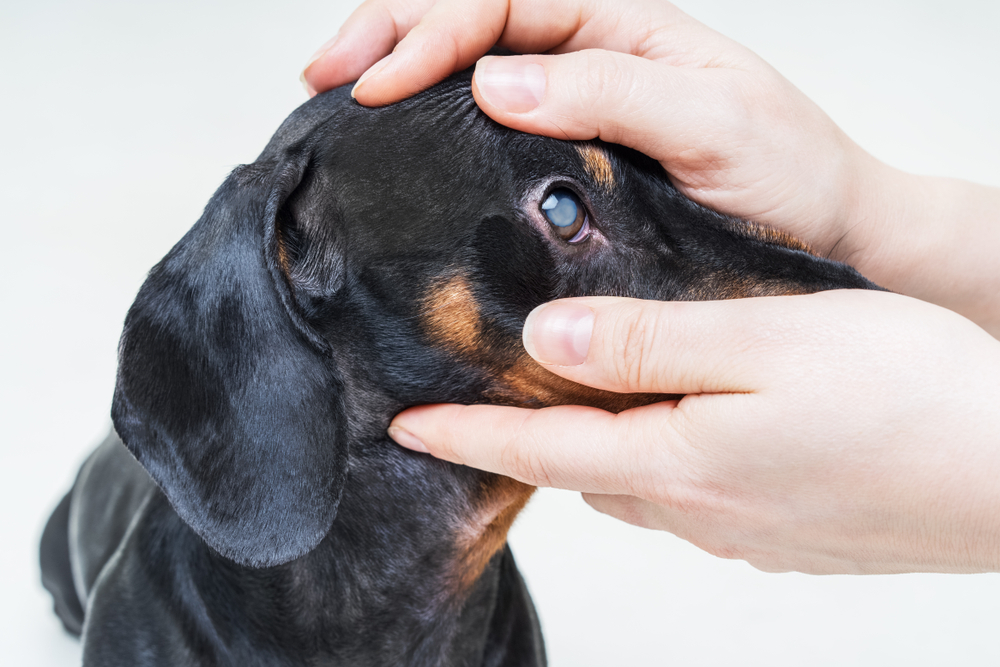
- Constricted or small pupil
- Drooping eyelid
- Visible third eyelid
- Retraction of the eyeball, causing sunken eye
Again, Horner’s syndrome commonly affects one side but can show up in both at the same time, albeit rarely.
If you’re concerned about your pet’s well-being, we recommend you contact a veterinarian.
If you need to speak with a vet but can't get to one, head over to PangoVet. It's our online service where you can talk to a vet online and get the advice you need for your pet — all at an affordable price!
What Causes Horner’s Syndrome in Dogs?
The sympathetic innervation of the eye is quite complicated. The nerves travel from the brain and down the spinal cord, exiting in the chest and coursing back up past the ear and into the eye. Rather than a short, direct connection, it’s a long and winding one. That means the nerves are at a higher risk for injury and other sources of damage.
Basically, anything that can cause damage in the area of a dog’s head, neck, and chest, including the eye and ear, can disrupt the sympathetic innervation of the eye, leading to Horner’s syndrome. Things like trauma from a bite or blunt force, a blood clot, or a tumor in any of these areas can be causes.
Intervertebral disc disease can cause damage to the nerve as it exits the spinal cord, and even diseases of the eye or an internal or middle ear infection may be to blame. There’s also the heavy possibility that the cause won’t be known, referred to as idiopathic Horner’s syndrome.
How Do I Care for a Dog With Horner’s Syndrome?
If you notice any of the signs in your dog, see a vet. While Horner’s syndrome isn’t painful to canines, it’s still good to get to the bottom of it in case there’s an underlying condition that needs attention. That said, many cases of Horner’s syndrome won’t require treatment, as they typically turn out to be cosmetic issues and not something that causes pain or discomfort.
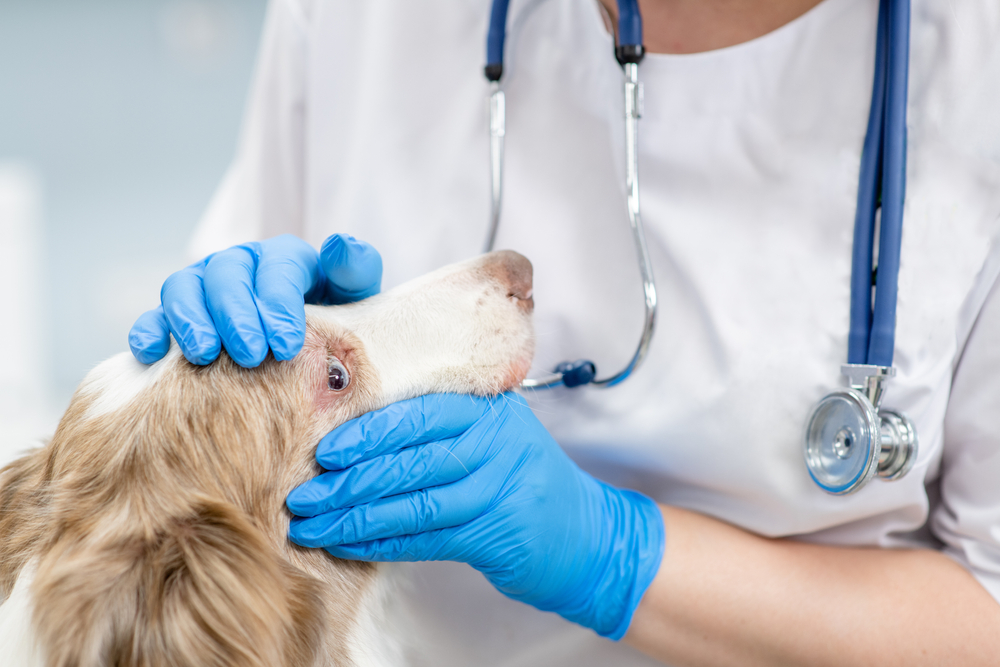
Even if treatment may not be necessary, you should see a vet to ensure that there isn’t an underlying issue that should be addressed. Your veterinarian can determine this by trying to pinpoint a cause. An exam and imaging may help reveal trauma or a tumor or rule out eye disease or an ear infection.
Dogs can be given special eye drops that stimulate different areas of the neural pathway to help narrow down the location of the disruption, which may or may not require treatment.
If an underlying condition is diagnosed, it can be treated; otherwise, the dog may simply need to rest and recuperate. Most dogs slowly return to normal within a few weeks or months. Giving them eye drops can help relieve a few of the signs but won’t necessarily speed up recovery.

Frequently Asked Questions
Is Horner’s Syndrome Life Threatening in Dogs?
A syndrome is a collection of signs rather than an exact diagnosis, so by this definition, a syndrome is never fatal. However, the underlying cause of the signs might be. Certain causes of Horner’s syndrome may be life-threatening, specifically tumors, blood clots, or trauma to the brain.
Is Horner’s Syndrome an Emergency?
The signs of Horner’s syndrome do typically show up suddenly, which does warrant a visit to the vet, but it’s only considered an emergency if it was brought on by a kind of trauma that could have damaged other parts of the body or if it’s accompanied by any other concerning signs, such as disorientation, incoordination, or behavioral changes.
Can Horner’s Syndrome Go Away?
Most cases of idiopathic Horner’s syndrome will go away on their own once the nerve gets a chance to heal. Other cases related to trauma, eye disease, or an ear infection can also fade with proper treatment of the underlying cause. Even cases caused by tumors can disappear if the tumor is removed.

Conclusion
Horner’s syndrome does create a scary list of signs, but fortunately, it isn’t painful for a dog. The signs will often gradually go away on their own with time and rest. That said, it does warrant a veterinary visit to make sure there isn’t an underlying cause that needs treatment.
Featured Image Credit: Masarik, Shutterstock