In this article
View 8 More +The Kooikerhondje (pronounced COY-ker-HUND-che) is a playful, active, and energetic breed that is considered a sporting dog. This Dutch breed resembles a small spaniel that originated as a duck hunter and favorite dog breed of Dutch nobility.
Breed Overview
Height:
15 – 16 inches
Weight:
20 – 30 pounds
Lifespan:
12 – 15 years
Colors:
White and red
Suitable for:
Active families that can give lots of attention
Temperament:
Friendly, loving, easy to train, energetic, alert
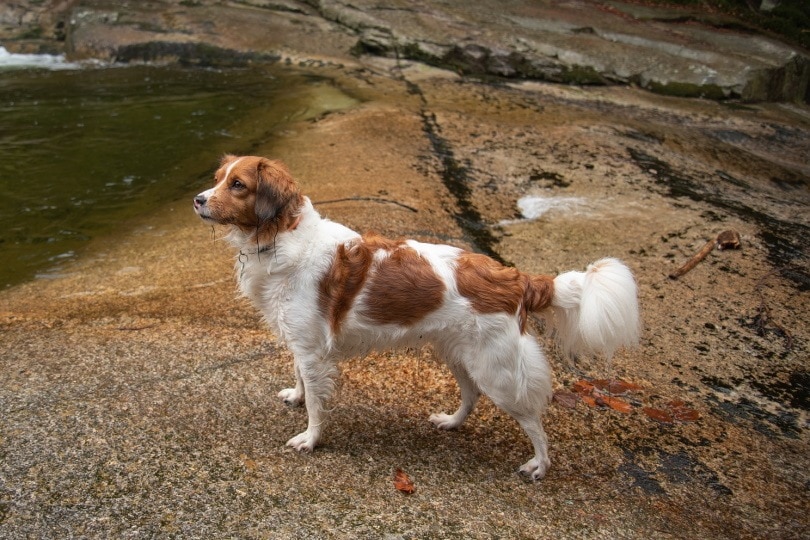
Kooikerhondjes can be easily recognized by their breed-standard wavy, medium-length, white coat with red patches. They also have large ears with black tips and a feathery tail. These dogs have a reputation for having a big heart and happy temperament as long as they are given plenty of affection and attention. Kooikerhondjes have big personalities, but they are loving dogs that will serve as a loyal companion for many years.
Kooikerhondje Characteristics

Kooikerhondje Puppies

As a sporting breed, Kooikerhondjes are vigilant dogs with high levels of stamina and agility. They are also highly intelligent dogs, but they require much stimulation and attention to keep them at their happiest. Kooikerhondjes are known for having high levels of energy, but they are very easy to train. As long as they are properly cared for, this breed has a lifespan that is longer than other medium-sized dogs.
If you can offer your pup enough attention, regular exercise, and training sessions, and you’re ready to shower your dog with tons of love, the Kooikerhondje might be a great fit for you. Keep reading their care guide to know what you can expect from these energetic dogs!

Temperament & Intelligence of the Kooikerhondje
Kooikerhondjes are intelligent, agile, and attentive which is part of what makes them such good sporting dogs. They love being outside and will exhibit a ton of energy and playfulness. But, Kooikerhondjes do require a lot of stimulation, so you should only get one if you have the time to dedicate to playing with them.
Because of their intelligence and desire to please their owners, they are obedient and easy to train. Kooikerhondjes are also good protectors and they are very alert. They aren’t territorial and they aren’t the most vocal breed, but they will bark if they sense danger or need to alert their human to something.
Are These Dogs Good for Families?
Kooikerhondjes are great family pets, especially if that family is an active one that does a lot of outdoor activities. This breed loves to get outside and play or exercise, so homes with big yards are a huge plus. They are also very affectionate and will thrive when there are a lot of people who can provide them with love and attention.
As with any dog breed, you should supervise Kooikerhondjes around small children. They aren’t known for being aggressive or particularly dangerous to have around children. They will love your children just as much as they love you. Supervision is required due to the fact that these dogs have a lot of energy and may be more than a small child is able to handle by themselves.
Does This Breed Get Along with Other Pets?
Because Kooikerhondjes love attention, they thrive when they are the only dogs in the house. They love it when you can devote all of your attention and playtime to them. However, that doesn’t mean that they won’t get along with your other pets, because generally, they aren’t aggressive dogs.
If the Kooikerhondje is raised from puppyhood along with other pets, they will likely get along quicker and easier than if the dog is introduced later. But because they are so easy-going, a Kooikerhondje will eventually warm up to any pet as long as the relationship isn’t forced and you give the pets time to warm up to each other.
While Kooikerhondjes tend to get along with cats and dogs very well, it is important to remember that they are sporting dogs that were once bred to hunt. You should watch them closely around birds or small furry pets because the dog may see them as prey instead of as another pet. Keep small pets in their cage around Kooikerhondjes.
Things to Know When Owning a Kooikerhondje:
Food & Diet Requirements
Kooikerhondjes are purebred dogs, so the best thing for their health is to provide them with high-quality and nutritious dog food. As with any dog, you want to make sure that you don’t overfeed Kooikerhondjes which could cause them to become overweight.
When feeding a dog, you should take into account the dog’s weight, age, and metabolism. For adult Kooikerhondjes that weigh between 20 and 30 pounds, it is recommended to feed them 1½ to 1¾ cups of adult food per day. That amount of food can be divided up over two separate feedings.
Kooikerhondje puppies have a higher metabolism so they may require more feedings per day. Likewise, older dogs may not need as many feedings or may require less food because they have a slower metabolism.
The food you feed them should also match their age. Puppies should be given puppy food and older dogs should be given senior dog food. If you’re unsure of how much food to give a dog, the recommended feeding amounts can usually be found on the back of the bag.
Exercise
Kooikerhondjes are very active dogs that love to run around and exercise. A large, fenced-in yard provides a great place for the dogs to run and play chase or fetch, but you’ll need to take them out for a proper walk or activity 30-60 minutes a day. They also love to explore. Taking them for a hike or a walk around the neighborhood will provide them with plenty of activity and stimulation. Just be sure to keep them on a leash.
Training
Since the Kooikerhondje is an intelligent dog and has an eager-to-please personality, they are highly trainable. A gentle but firm approach works best because they have a lot of determination but like most dogs, they can be sensitive when talked to in a harsh way. Positive reinforcement, treats, and lots of love are great motivators for Kooikerhondjes.
Grooming ✂️
Regular grooming is important to keep your dog’s coat looking its best. Kooikerhondjes have medium-length, silky fur that is longer around the ears and tail. A weekly brushing and monthly bath can keep the coat from becoming matted and tangled. They also aren’t particularly prone to year-round shedding, but they will shed during the warmer months so more frequent brushing may be necessary.
Kooikerhondjes also have fast-growing nails, so regular nail trimmings are important. You should also check their ears regularly for ticks, ear mites, and wax buildup and brush their teeth to prevent plaque buildup and cavities. If your dog is well-trained, you can do all of this yourself or take the dog to a professional groomer.
Health and Conditions
- Hip dysplasia
- Von Willebrand’s Disease
- Overweight
- Ear infections
- Dental disease
Male vs Female
There are very few differences between male and female Kooikerhondjes in terms of temperament and character. Both sexes are very easy-going and affectionate towards humans. The biggest difference is their size. Males are usually around 16 inches tall while females are around 15 inches tall.
Some people own rare dog breeds such as Kooikerhondje for the purpose of breeding them. Female dogs can undergo their first heat cycle at as little as 6 months old, whereas male dogs are sexually mature when they are around 12 months old.
If you are planning on breeding your Kooikerhondje, you should consult with your vet first so that genetic testing can be done. But you shouldn’t breed your female dog during her first couple of heat cycles. If you don’t want to breed your dog, you should spay or neuter it to protect the dog’s health as well as prevent puppies and other unwanted behaviors.
3 Little-Known Facts About the Kooikerhondje
1. The full breed name is Nederlandse Kooikerhondje.
The name comes from the fact that this dog was primarily bred in the Netherlands. The breed is very old and images of Kooikerhondjes can be found in Dutch paintings dating back to the Middle Ages.
2. Kooikerhondje translates to “duck hunter” and “dog.”
The Dutch word “kooiker” means “duck hunter” and “hond” means “dog.” Before gunpowder was invented, Kooikerhondjes were instrumental in helping to lure ducks into an elaborate trap.
3. The breed wasn’t recognized by the AKC until 2018.
Kooikerhondjes are still rare in America. The first litter wasn’t even recorded in the United States until 1999. Although they weren’t officially recognized by the American Kennel Club until 2018, the Kooikerhondje Club of the United States has served the AKC since 2014.
Final Thoughts
If you have your heart set on owning a Kooikerhondje, you may have a hard time finding one as these dogs are rare, especially in America. There aren’t many rescue groups for this breed. You will have to seek out a reputable breeder and you can expect to pay a lot of money. But you will get a purebred, healthy dog as a result.
Should you get lucky enough to own one of these beautiful dogs, you will find that he or she is incredibly loving, obedient, and energetic without being hyperactive. Be sure to take your Kooikerhondje on all of your outdoor adventures. You will have a loyal companion that will enjoy spending time with you just as much as you do with them.
- Related Read: 10 Top Sporting Dog Breeds (with Pictures)
Featured Image Credit: warpmike, Pixabay