In this article
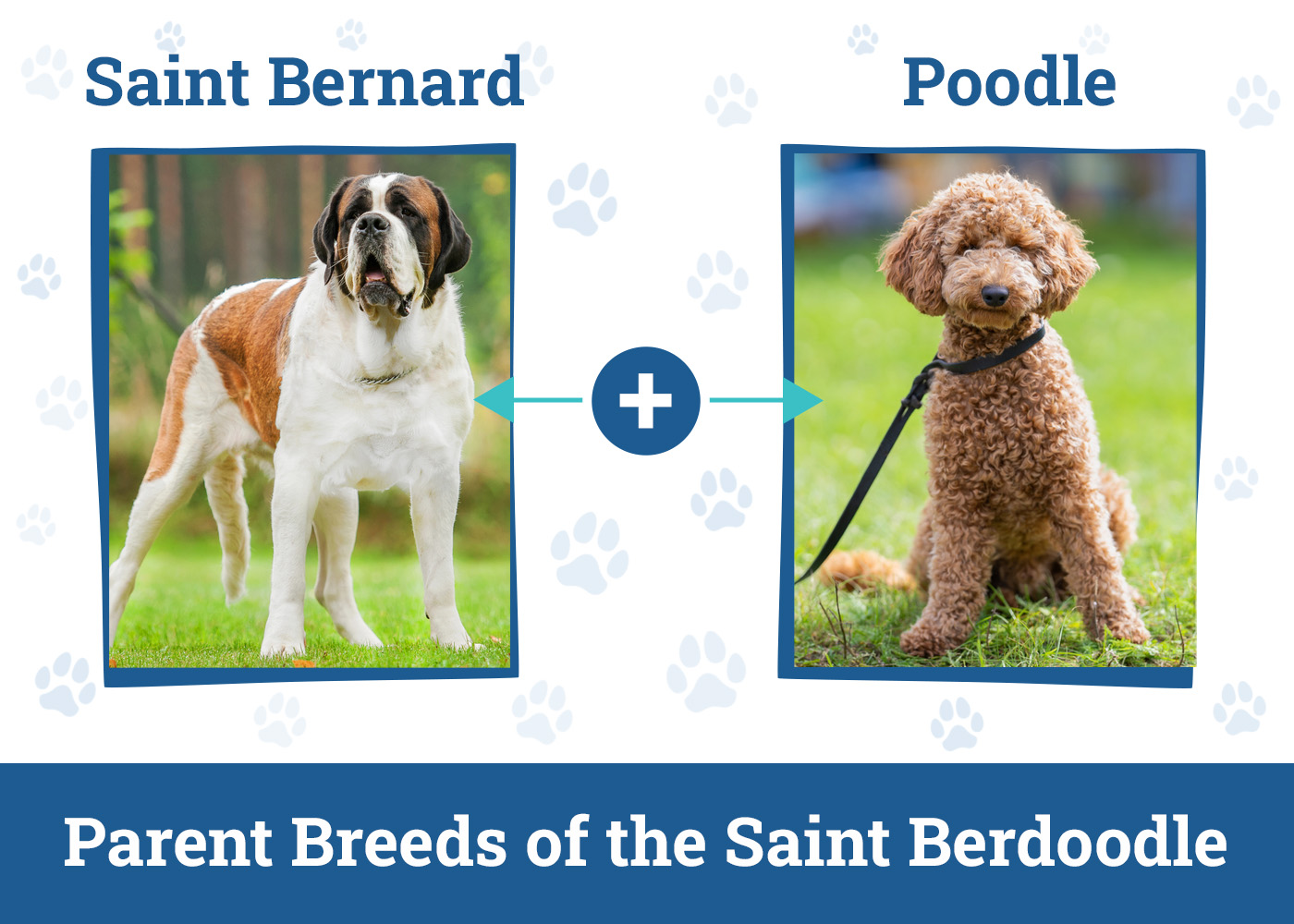
View 8 More +Saint Berdoodles are a hybrid breed, a mix between the massive Saint Bernard and the popular Poodle. Like both Saint Bernards and Poodles, Berdoodles are great family dogs and love to be around their owners and family at all times. They love being around children and will spend hours entertaining them in the backyard.
Indeed, Berdoodles are like large, living teddy bears that are great around kids!
Breed Overview
Height:
24–30 inches
Weight:
110–220 pounds
Lifespan:
10–12 years
Colors:
Black, brown, white
Suitable for:
Active families and singles, homes with large backyards
Temperament:
Active, social, affectionate, loyal, intelligent, friendly
While the Berdoodle is not officially recognized by the American Kennel Club (AKC), they are steadily growing in popularity, especially as family dogs. They have a large, intimidating size, and are loyal family protectors too—these dogs are inherently protective of their human family and make great guard dogs. Still, they are friendly pooches, even toward new faces, and are rarely aggressive.
There’s a lot to love about these large pooches, and if you’re thinking of bringing one home, read on below for more in-depth information on their origins, care, and personality.
Saint Berdoodle Characteristics
Saint Berdoodle Puppies
Saint Berdoodles are like their Saint Bernard parent breed, large dogs. This is an important consideration before bringing one of these giants home, as a dog that can easily reach up to 220 pounds in weight needs a ton of space, exercise, and, of course—food!
They are great family dogs, although can be rather boisterous during play sessions and with their large size, can easily mistakenly hurt very young children. For this reason, they are more suited to families with older kids.
Temperament & Intelligence of the Saint Berdoodle 🧠
Saint Berdoodles are first and foremost affectionate, friendly, loving pooches. They may be large and somewhat intimidating but are gentle giants that are rarely if ever aggressive. In fact, you’d be hard-pressed to find a more loving dog! They love to be around people and thrive on human interaction. They don’t do well if left alone for long periods, so much so that they are known to get up to some destructive behaviors when bored and are prone to separation anxiety.
Berdoodles combine the best traits of both their parent breeds; friendly, affectionate, loyal, intelligent, and exceedingly social. They are protective dogs, earning them the nickname “nanny dog” due to their caring and attentive nature when it comes to small kids. They are eager to please and thus easily trainable, and while they are large dogs with a fair bit of energy, don’t need as much exercise as you’d think and prefer moderate, slow walks over intensive exercise.
While mixed breeds like the Berdoodle can vary in terms of their temperament, the Berdoodle is always friendly, affectionate, and loving, and since they are so easy to train and make a great dog for novice owners—provided you have the space!
Are These Dogs Good for Families?🏡
Saint Berdoodles are family dogs through and through. They are loyal, loving, and protective, and make great playmates for children. There are some caveats, however. Berdoodles are large, powerful dogs that can easily get overexcited, and may knock over smaller kids accidentally while playing. Older kids are usually fine with these large, gentle giants, but if you have small kids you’ll need to keep a close eye during play sessions.
If you have very small children and are away from home a lot, the Berdoodle may unfortunately not be the ideal choice for you. If you have older kids and a lot of time to devote to your pooch, the Berdoodle is a wonderful family dog!
Does This Breed Get Along with Other Pets?
Berdoodles have little to no prey drive and are generally great around other pets, with proper socialization, of course. They make fast friends with other dogs, and even cats will be seen as friends to play with rather than something to chase!
They are not aggressive dogs, so there shouldn’t be an issue with any other dogs in your home. That said, they are highly attention-seeking, and may become withdrawn if they are not getting center stage!

Things to Know When Owning a Saint Berdoodle:
Food & Diet Requirements
As you can well imagine, Saint Berdoodles eat a lot of food! Depending on their size, age, and activity levels, Berdoodles will need as much as 8–10 cups of high-quality dry food per day. That said, Berdoodles are not overly active animals and as such, overfeeding is still a risk. Try to split their meals into two, and make sure their food is free from artificial or filler ingredients that can add unnecessary extra calories.
Choose foods with a quality animal protein in the first listed ingredients and avoid foods with too many grains like corn or soy, and go for wholegrain for grain-free foods instead.
Exercise
Despite their large size, Berdoodles are not overly active animals and don’t need as much exercise as you’d think. While Poodles are known to be fairly high-energy animals, Saint Bernards are not energetic dogs, and your Berdoodle is a mix of these two. They prefer casual, moderate walks around the block rather than intensive exercise, and even a play session in the yard is enough to send them off for a nap!
They are carrying a lot of weight around and as such tire out rather quickly, especially on hot days due to their thick double coats. In general, an hour or two of gentle exercise per day is ideal for a Berdoodle.
Training
Berdoodles are intelligent and eager to please dogs, which usually makes training a breeze, even for novice owners. Of course, their large size and power make proper training essential, and beginning training from a young age—ideally, the day you bring them home—is key to a well-trained pooch. Early socialization is also an important aspect of good training, which shouldn’t be an issue for the friendly Berdoodle!
These dogs want to make their owners happy and are highly sensitive, and so positive reinforcement training methods are best—harsh training methods will not get you very far with a Berdoodle.
Grooming ✂️
Berdoodles typically have medium-length, thick coats, either curly like a Poodle’s or long and wavy like a Saint Bernard’s, and so daily grooming is essential no matter the coat they inherit. Surprisingly, they don’t shed all that much, and brushing is more to keep their coats knot-free, healthy, and smooth. They usually have water-resistant, somewhat oily coats, and so don’t need bathing unless they get really filthy.
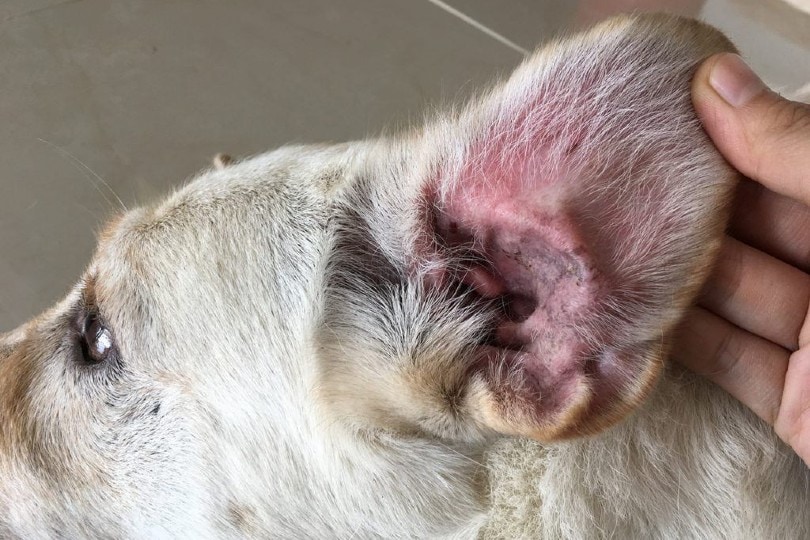
Keep an eye on their ears and make sure they are clean and dry at all times to reduce the risk of infection. You’ll also need to brush their teeth a few times per week and trim their nails every month or two.
Health and Conditions
Berdoodles are healthy, robust dogs overall and suffer from very few health issues. That said, they may inherit some of the health issues from their parent breeds, which you’ll need to keep an eye out for.
- Allergies
- Obesity
- Bloat
- Ear Infections
- Hip Dysplasia
- Wobbler Syndrome
- Von Willebrand’s Disease

Male vs Female
There are almost no differences between male and female Berdoodles other than size. Males are typically larger than females, although even females are also massive dogs, so this doesn’t make too much of a difference. Most experts recommend spaying females and neutering males, which will go a long way in mitigating any hormonal differences between males and females.
This will also prevent males from wandering and stop any unwanted pregnancies in females.
3 Little-Known Facts About the Saint Berdoodle
1. They are hard workers.
Both Saint Bernards and Poodles were bred as working dogs and had important jobs before becoming companion pooches. Saint Bernards worked for centuries in the snowy passes of the Swiss Alps, working as rescue dogs that were experts at clearing snow-filled paths, sniffing out trapped bodies, and even allegedly predicting avalanches.
Poodles were also hard-working dogs—despite their pampered modern appearance—and were originally bred as water retrievers, a job some Poodles are still used for today.
2. They are clumsy!
The Saint Berdoodle has a body that’s far too big for its personality! These dogs are small lap dogs at heart, and as such, are known for being exceedingly clumsy at times, knocking over all manner of household items trying to squeeze into areas they cannot fit, including attempting to climb onto their owner’s lap!
3. They are highly intelligent.
Don’t let the clumsy nature of the Berdoodle fool you, though; these dogs are highly intelligent. Saint Bernards may not rate very high in intelligence when compared to the Poodle (the second smartest dog in the world), they are known for their emotional intelligence and their unique ability to assess perceived threats, plus their ease of training.
With the combined smarts of the Poodle, Berdoodles certainly have a unique and valuable form of intellect.

Final Thoughts
The Saint Berdoodle is a friendly, loyal, and easy-going pooch, and makes an ideal family pet. These gentle giants are great with kids and are devoted protectors, making them excellent guard dogs yet sweet and gentle family pooches. The only downside to owning a Berdoodle is its large size—a factor that can become overwhelming in a small space.
These dogs are massive, and ideally need a large backyard to play in to keep them happy. They are not suited to apartment living. They are eager to please and generally easy to train, even for novice owners, and are some of the most affectionate dogs you’re likely to meet!
Featured Image Credit: Kaylee1229, Shutterstock