In this article
View 3 More +Note: This article’s statistics come from third-party sources and do not represent the opinions of this website.
Pets have been shown to improve our mental wellbeing. They can provide company and comfort, and they also offer motivation that can spark physical exercise and even improve social connections. Companionship is the single biggest reason that people own pets, and the UK is a nation of animal lovers with 57% of households owning at least one pet.
The most popular species are dogs and cats, respectively, but with this popularity comes the harrowing statistic that there are believed to be 100,000 homeless dogs, while 150,000 homeless cats enter shelters every year with a further quarter of a million homeless cats living in towns and cities.
Adopting pets not only helps save the lives of these pets, which can spend 3 months or more in shelters before finding their forever home, but it is also less expensive than buying from a breeder, and many shelters will have covered the costs of neutering and spaying, as well as vaccinations and even microchipping.
Below, we look at 16 of the latest statistics and trends in pet adoption in the UK.

The 16 Pet Adoption Statistics in the UK
- There are more than 30 million pets in the UK.
- Approximately 57% of households have at least one pet.
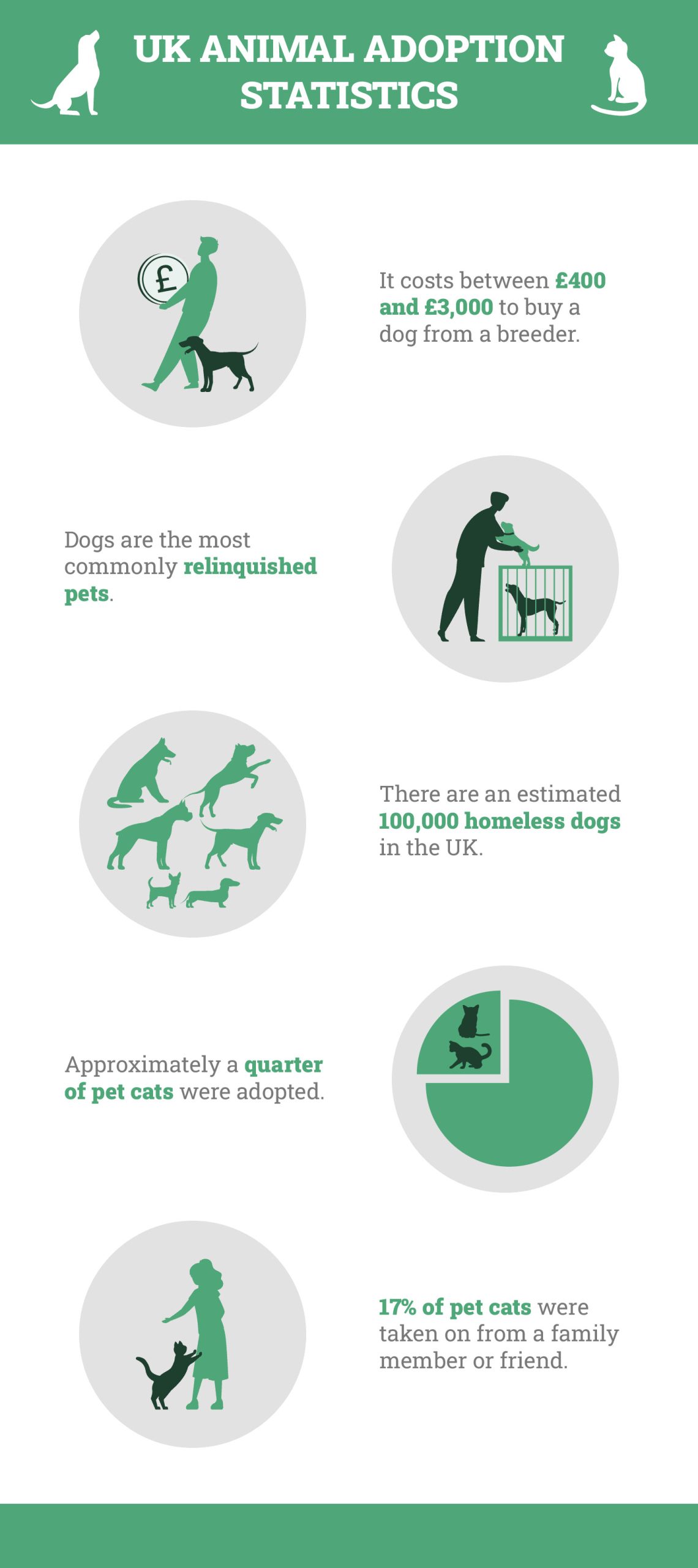
- It costs between £400 and £3,000 to buy a dog from a breeder.
- Around 13% of households gave up a pet in 2022.
- Dogs are the most commonly relinquished pets.
- 1 in 5 pet dogs in the UK was adopted, rather than bought.
- Prices vary but it costs approximately £200 to adopt a dog.
- 25% of people who rehomed their dogs say it was down to costs.
- There are an estimated 100,000 homeless dogs in the UK.
- Approximately 150,000 cats enter UK shelters every year.
- The average length of stay for dogs in shelters is 93 days.
- 21 dogs a day are euthanised in the UK.
- Approximately a quarter of pet cats were adopted.
- 17% of pet cats were taken on from a family member or friend.
- It costs around £100 to adopt a cat, although prices vary.
- Cats stay in shelters for 67 days, on average, while rabbits remain for 117 days.
Pet Ownership Statistics
1. There are more than 30 million pets in the UK.
(UK Pet Food)
Although the figures are only estimated, it is believed there are more than 30 million pets across the UK with dogs being the most popular, followed quite closely by cats. There are 13.5 million and 12.5 million of the two species, respectively. Other notable numbers include 1.5 million indoor birds, 1.3 million domestic fowl, and a million pet rabbits.
There is also an increasing number of people keeping exotic pets like reptiles and snakes while small, caged animals are also popular choices.

2. Approximately 57% of households have at least one pet.
(Veterinary Practice)
The number of households owning one or more pets increased considerably in the last few years, leading to more than half of all households having pets. In fact, 57% of households keep one or more animals as pets.
3. It costs between £400 and £3,000 to buy a dog from a breeder.
(Blue Cross)
The cost of a dog varies primarily according to its breed, but also according to whether it has good breeding, its age, and even the breeder. Prospective buyers can expect to pay anywhere from £400 to £3,000 or more to buy a dog from a breeder. The cheaper dogs tend to be mixed breeds or mutts, while purebreds cost more.
As well as the initial cost of buying the dog, potential owners need to consider additional costs like spaying and neutering, and ongoing costs including food and veterinary care.

4. Around 13% of households gave up a pet in 2022.
(Veterinary Practice)
2021 was an unusual year with national lockdowns. Many people bought and adopted pets to help get them through the difficult year, but circumstances changed in 2022. People who had been working from home returned to the office, and this change in working conditions meant that many new pet owners were unable to provide proper care for their pets.
As a result, according to one survey, around 13% of households relinquished ownership of at least one pet.
Dog Adoption Figures
5. Dogs are the most commonly relinquished pets.
(Veterinary Practice)
Dogs are the most popular species of pet, so it is hardly surprising they are also the most commonly relinquished type of pet. This is further exacerbated by the fact that dogs require more care than other pets. They need regular walking and are usually more demanding of their humans’ time.
Dogs are also more expensive to keep, with higher food, vet, and insurance prices compared to cats and other pet types. 47% of the pets given up for adoption were dogs, compared to 36% that were cats. 12% gave up birds with 8%, 6%, and 7% giving up rabbits, guinea pigs, and other pets, respectively.

6. 1 in 5 pet dogs in the UK was adopted, rather than bought.
(Statista)
When it comes to how pet owners acquire their pets, the most popular source is breeders, with a third of all dogs being bought in this way. A further 25% were bought from private sellers, with 20% coming from rescues and shelters.
22% of pets are listed as coming from “other” sources which includes taking on dogs from friends and family.
7. Prices vary but it costs approximately £200 to adopt a dog.
(RSPCA)
Adopting a dog costs less than buying from a breeder. Costs can vary from as little as £100 to £300, but a typical adoption cost is around £200 for a dog.
This can be 10% of the price of buying a pet from a breeder, and rescue centres usually ensure that all dogs they adopt out are spayed or neutered, vaccinated, and microchipped, which means the new owner isn’t faced with these costs, either.

8. 25% of people who rehomed their dogs say it was down to costs.
(Novuna)
A change in personal circumstances is a common reason that pets are relinquished, but the most common reason is cost. Increased cost of living and a change in financial circumstances were the two most common specific reasons for giving up a dog.
Moving homes was the next most commonly cited reason.
9. There are an estimated 100,000 homeless dogs in the UK.
(PETA)
There isn’t a single registry or database of homeless dogs, but it is estimated that approximately 100,000 dogs are in shelters and rescues at any time in the UK.

10. Approximately 150,000 cats enter UK shelters every year.
(NCBI)
It is even more difficult to determine the number of stray and homeless cats in the UK. There are a lot of stray cats that live in towns and cities, near reliable food sources, and they can be very difficult to catch or track.
Those who live in rural areas are even more difficult to track, and some farm and working cats are essentially left to their own devices. 150,000 cats enter shelters and rescues every year, adding to the number of homeless cats.
11. The average length of stay for dogs in shelters is 93 days.
(City Doggo)
Shelters can be very stressful environments for dogs. They live in cramped, dirty conditions, surrounded by other dogs in loud surroundings. Despite the best efforts of volunteers and carers, the dogs don’t get the human attention and care they really need or that they would get in a home.
The longer a dog stays in a shelter, the more difficult it becomes to rehome. The average length of stay for a dog in UK shelters is 93 days or 3 months.

12. 21 dogs a day are euthanised in the UK.
(City Doggo)
Because there are so many dogs in shelters and rescues, a lot of otherwise healthy dogs are euthanised, despite most shelters receiving multiple applications for every dog in their care.
There are calls to reduce the requirements and stipulations placed on potential adopters to make the adoption process more accessible for all and to help reduce the number of dogs that are euthanised.
Cat Adoption Figures
13. Approximately a quarter of pet cats were adopted.
(Cats Protection)
A quarter of pet cats were adopted, rather than bought. Cats are considered lower maintenance pets than dogs because they don’t need walking and some cats fare better when left alone while the owner goes out to work.
But while it is true they don’t need walking, they do still need feeding, regular exercise, and human attention.
14. 17% of pet cats were taken on from a family member or friend.
(Cats Protection)
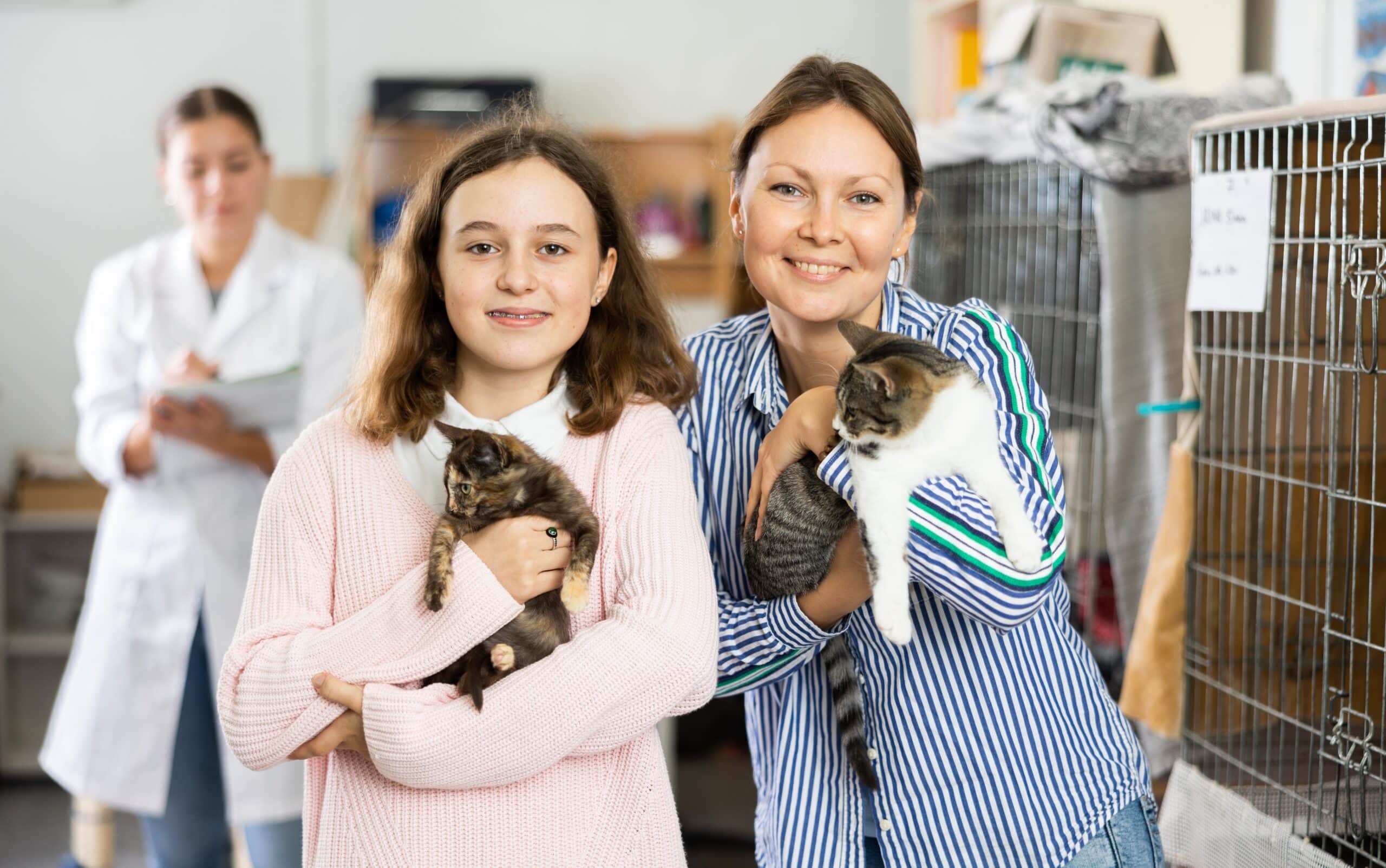
Rescues and shelters aren’t the only sources of adopted pets. Some owners take on new pets when family members, friends, and even neighbours are no longer able to care for them. 17% of cats are adopted in this way, rather than through shelters and rescues.
15. It costs around £100 to adopt a cat, although prices vary.
(RSPCA)
Cats are typically less expensive to buy than dogs, although some pedigree breeds can cost thousands of pounds, especially if they have award winners in their lineage. Adoption fees also tend to be lower for cats than for dogs, with it typically costing £100 to take on a cat.
Shelters usually ensure the cats are neutered and spayed and that they have had their vaccinations before leaving. They will also microchip the cat and hand over microchip ownership to the new owner.
16. Cats stay in shelters for 67 days, on average, while rabbits remain for 117 days.
(City Doggo)
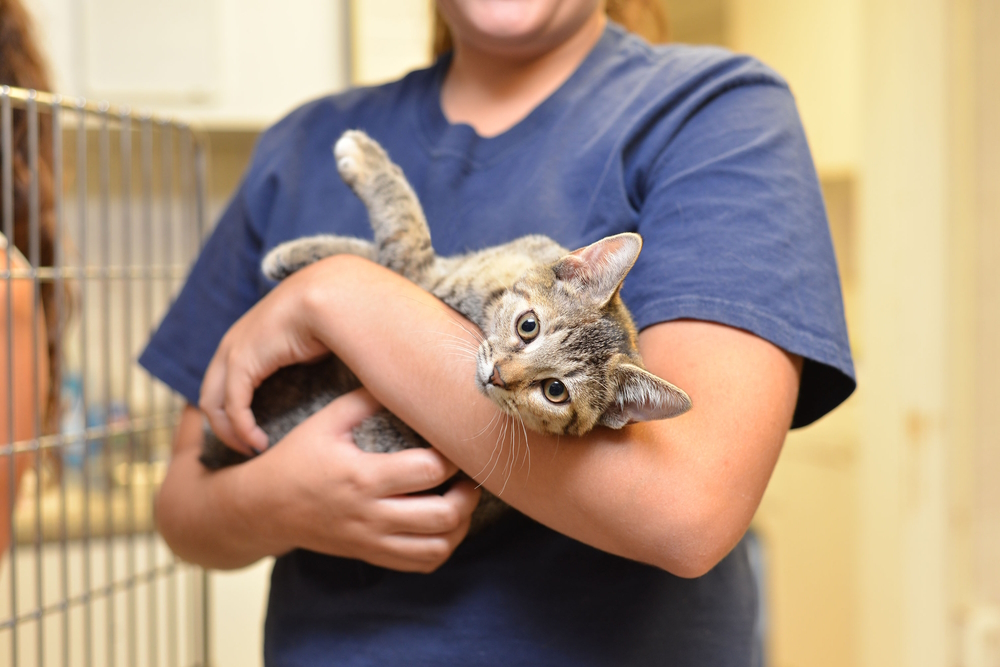
While dogs stay in shelters for an average of 3 months, a cat’s average stay is 67 days or just over 2 months. It is rabbits, though, that face the longest typical stays, averaging 117 days before they get adopted.
Rabbits are viewed as being low-maintenance pets, but they take a lot of work with hutch cleaning, socialising, and other aspects of ownership. This causes quite a high rate of relinquishment.
Frequently Asked Questions
Why do people adopt pets?
Pets are good for our physical health and can provide companionship to owners. Rather than buying pets from breeders, some owners choose to adopt because it saves the lives of relinquished pets.
Adopting also frees up the space in a shelter so that another animal can be rehoused. Adopting also typically works out to be less expensive than buying a cat or dog from a breeder.
Why do people give up their pets?
The most common reason for giving up a pet is money. The recent cost of living crisis saw a sharp increase in the number of cats and dogs that were handed over to shelters.
A change in personal circumstances, such as going back to work in the office, is another common reason. A family bereavement, the arrival of a new baby, and moving house are other reasons given by pet parents who hand over their pets.
What animals can be adopted?
There are rescue centres and shelters for every type of pet. While cats and dogs are the most commonly adopted pets, it is also possible to adopt rabbits, caged animals, and birds. Even exotic pets, like lizards and snakes, are relinquished by their owners and in need of good homes.
Although it is more common to see adult and even senior pets in rescues, you may find younger kittens, puppies, and kits that are available for adoption.

Conclusion
The UK loves its pets, and there is a population of more than 30 million pets for 67 million people. More than half of all households own at least one pet, with dogs being the most popular, quickly followed by cats.
According to studies, 20% of dogs currently kept as pets were adopted rather than bought, while a quarter of the pet cat population was adopted from shelters and rescues. Despite this, there is still a huge number of animals in rescues—approximately 100,000 dogs and 150,000 cats, although these numbers are estimates and there is no way of knowing the precise figure.
Featured Image Credit: Chendongshan, Shutterstock