Chesapeake Bay Retriever: Info, Pictures, Facts & Traits

In this article
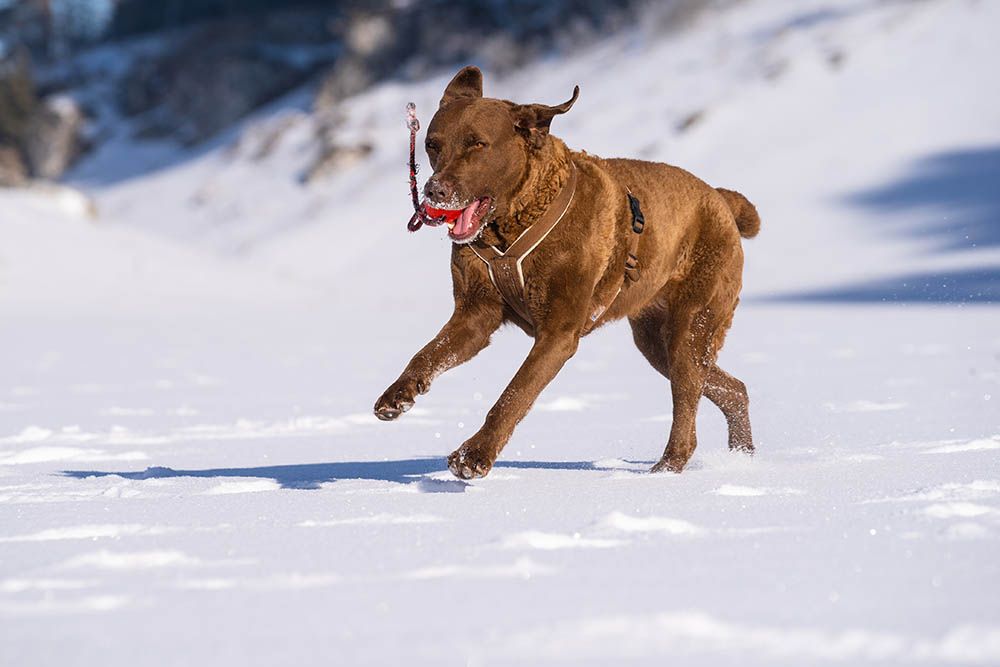
If you’re a fan of retriever breeds, you’re likely familiar with popular breeds like the Labrador Retriever and Golden Retriever. You may not be aware of their intelligent and energetic cousin, the Chesapeake Bay Retriever, also known as the Chessie, by their enthusiasts. This versatile breed has a distinctive coat with a notable wave and an oily finish. Keep reading for more information about the charming Chessie.
Breed Overview
Height:
Weight:
Lifespan:
Colors:
Suitable for:
Temperament:
The Chessie is an adaptable breed that falls into the retriever, gundog, and sporting dog categories. This is a complex breed, often showing greater emotional complexity than other gundog breeds. Because they were bred primarily for hunting waterfowl, the Chessie has a waterproof coat covered with natural oils that help maintain its waterproofing. This breed is the ideal hunting companion, but the Chessie can be tenacious and stubborn.
Chesapeake Bay Retriever Characteristics

Chesapeake Bay Retriever Puppies

Although not an overly popular breed, the Chesapeake Bay Retriever has enthusiasts and breeders across the country, so you shouldn’t have much trouble getting a puppy. You may also find a puppy or adult dog through a breed-specific rescue or shelter.
When choosing a breeder, it’s extremely important that you choose one who performs all health testing recommended by the national breed club. There are multiple genetic conditions that this breed is susceptible to, but they can be mitigated through health testing.
Early socialization and training are both critical aspects of raising your pup. The stubbornness inherent in this breed can make training a challenge, especially if not started early, but this highly intelligent pup often aims to please, which may give you a training advantage. Positive reinforcement training and engaging training sessions are great tools for training a Chessie.
Chesapeake Bay Retriever Breed Origin & History
During the 1800s, duck hunters along the Chesapeake Bay were finalizing the breed that would go on to become the Chesapeake Bay Retriever. When the AKC was founded in 1884, a standardized breed had been established, with regional names including the Brown Winchester and Red Chester. Because of the frigid temperatures of the Chesapeake Bay, it was essential for the breed to be developed to withstand the harsh environment. The oily coat of the Chessie waterproofs and insulates them, while their webbed toes and broad shoulders make them strong swimmers.
Temperament & Intelligence of the Chesapeake Bay Retriever 🧠
The Chessie is not only a smart dog but also an emotionally intelligent dog. They do an excellent job of picking up on the emotions of their people and then providing comfort, which makes them a good option for therapy work. Although they are sometimes standoffish with strangers, early training and socialization can reduce the likelihood of this trait, and they are likely to be protective of their people.
As a highly adaptable breed, the Chessie can perform various jobs outside of retrieving, including search and rescue, drug and bomb detection, and canine sports.

Are These Dogs Good for Families? 👪
Although loyal and sensitive, the Chessie isn’t always the ideal pet for homes with small children. They are typically gentle and sweet with children but may be intolerant of smaller kids. They are sensitive and affectionate with their people but are also protective and may be uninterested or suspicious of strangers. Early socialization will provide your Chessie with confidence and trust, setting them up to be the best companion for your family. With proper socialization and training, the Chessie makes an excellent family dog.
Does This Breed Get Along With Other Pets? 🐶 😽
Chessies can be tolerant of other dogs when proper introductions are performed. However, they aren't the best dogs for multi-dog homes due to their sensitivity and desire to protect their people. When it comes to cats and other small animals, socialization is vital. This is a hunting dog, so they may view small pets as prey to be caught, leading to injuries or even death.
Things to Know When Owning a Chesapeake Bay Retriever
Food & Diet Requirements 🦴
A high-quality diet that meets WSAVA recommendations is the best baseline for choosing a food for your Chessie. For the average pet Chessie, a diet appropriate for their age will suffice. However, for working dogs, a sport dog food may be necessary to provide them with enough energy to perform and maintain their body weight. If your dog is more active sometimes, like during duck hunting season, you may need to adjust their daily intake, providing them with extra food on days when they’re active.
Exercise 🐕
The Chesapeake Bay Retriever is an active breed that needs daily exercise to thrive. They excel at canine sports, including agility, dock diving, Cani-cross, and obedience. They are happiest when provided with a job to do, but for a dog without a job, you will need to provide plenty of exercise every day. Running, hiking, and playing fetch are good options for keeping your Chessie active.
Training 🎾
Early training is best for this breed. As they age, Chessies can become quite tenacious and may be rebellious. Starting training while the dog is still young will ingrain the training into them, helping ensure you have an obedient adult dog. When it comes to hunting and retrieving, the Chessie is driven by strong instincts, so many will naturally perform these tasks with minimal training.

Grooming ✂️
The Chessie has a rough, short outer coat with a soft undercoat. They are moderate shedders, but weekly brushing will reduce loose hair and dander. Brushing will also distribute the natural oils of the Chessie’s coat, maintaining the natural waterproofing and the health of the skin and coat. It's also crucial to keep the nails trimmed to prevent breakage and injury to the feet. They are prone to ear infections, so routine cleaning of the ears with a vet-approved ear-cleaning solution may be necessary, especially for dogs that swim a lot.
Also see: Best Dog Wipes - Reviews & Top Picks
Health and Conditions 🏥
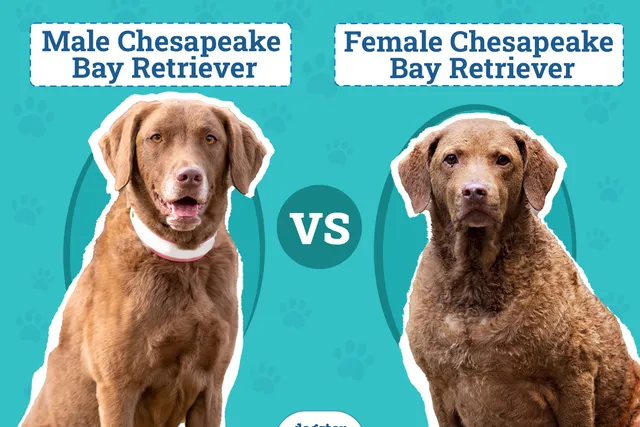
Male vs. Female
Male Chessies are slightly larger than females, with males reaching up to 26 inches and 80 pounds, while females typically stay below 24 inches and 70 pounds. Regarding temperament, females are usually more laid back and less likely to be aggressive than males. Females also tend to be more loving and gentle. Conversely, males are likely to have a higher energy level than females, as well as a stronger protective instinct.

3 Little-Known Facts About the Chesapeake Bay Retriever
1. They’re Masters at Retrieving
The Chessie may be a versatile dog, but retrieving is their strongest skill. Generally, a Chessie could be expected to retrieve around 100 ducks daily, but some reports indicate that Chessies can retrieve even more.
2. They Have Webbed Feet
Like other dogs developed for retrieving game from water, the Chessie has webbed feet. This provides them with built-in “flippers” that make them more powerful swimmers than dogs without webbed feet. Being a strong swimmer serves the Chessie well in the icy waters of the Chesapeake Bay.
3. The Breed Started With Two Dogs
In 1807, two St. John’s Water Dogs arrived in Maryland, forming the basis for the Chesapeake Bay Retriever. Sailor, the male, and Canton, the female, were not recorded as having had puppies together, but both dogs were bred to other dogs in the area, including Hounds and Spaniels. The combination of traits that were put together in the breed's early days resulted in one of the finest retrieving canines in the world.
Conclusion
The Chesapeake Bay Retriever is an excellent retriever with strong instincts for performing their job and protecting and loving their people. They can be stubborn but are typically trainable and eager to please their people. They are emotionally sensitive and are suitable for therapy work, and their many great qualities also make them reliable working and hunting dogs.
Sources
Featured Image Credit: Bildagentur Zoonar GmbH. Shutterstock
Expert dog care, straight to your inbox
News, insights, expert advice, and everything dog.

No spam — unsubscribe anytime.
By signing up, you agree to our Terms & Conditions and Privacy & Cookies Policy.
How useful was this post?
Click a star to rate. You can leave written feedback afterwards. (We read all feedback.)
Brooke Billingsley spent 9 years as a veterinary assistant before becoming a nurse in 2013. She lives in Arkansas with her boyfriend, and loves all animals; currently sharing a home with three dogs, two cats, five fish, and two snails. She has a soft spot for special needs animals and has a three-legged senior dog and an internet famous cat with acromegaly and cerebellar hypoplasia. Fish keeping has become a hobby of Brooke’s and she is continually learning how to give her aquarium pets the best life possible. Brooke enjoys gardening and keeps a vegetable garden during the summer months. She stays active with yoga and obtained her 200-hour yoga teacher certification in 2020. She hosts a podcast focusing on folklore and myth and loves spending her free time researching and writing. Brooke believes that every day is an opportunity for learning and growth and she spends time daily working toward new skills and knowledge.