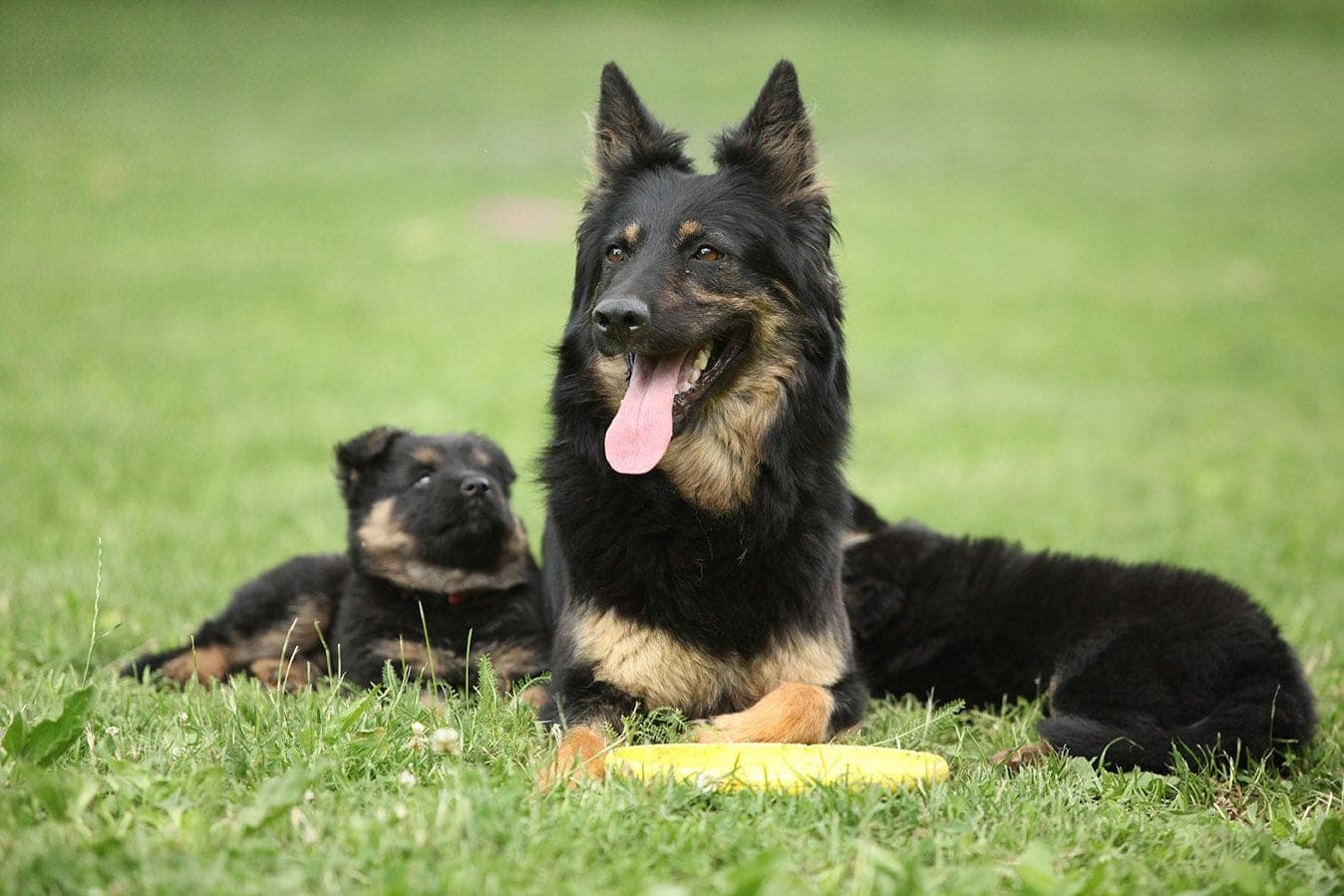
Most pups do not live alongside their mother for long. They are usually separated at around three months old. But do puppies remember their mothers and mothers their puppies after separation?
Dogs can develop a mother-puppy bond early on because pups are usually heavily reliant on their mothers for food and safety. Thanks to this bond, dogs do remember their mothers through her unique scent. Research suggests that dogs can remember their mother for up to 2 years after separation.1
Here’s a concise finding based on all research and studies about a dog’s ability to remember the mother, offspring, and siblings.

Do Dogs Remember Their Mothers?
Humans understand that no love is like a mother-child bond. Every May, whether young or old, people pause to remember and honor their mothers. But what about the bond between a mother dog and her puppies?
Dogs are social animals and follow a pack hierarchy. These creatures don’t socialize, perceive, or memorize events in their lives as humans do, so their concept of memory is a lot different than that of humans. Some canines remember their parents, especially the mother, but some just don’t.
A dog’s nose has close to 300 million olfactory cues compared to a human’s 6 million. This means that a pup’s ability to discern different scents is theoretically around 50 times greater (though in practice possibly much higher) than a human’s ability. Puppies can pick on their mother’s smell early on before separation and can use it to recognize their parents if they meet.
These animals also possess associative memory of repetitive events at best. Nevertheless, it helps them remember their favorite things, which means that the short time together gives mom dogs and their puppies some memories. They also imprint on their mothers and associate her smell, sound, and touch with safety.
A dog can also remember his/her mother through phenotype recognition; this means that a dog can remember what their mother looked like as well. However, their primary means of identifying their mother is through scent. A theory postulates that scent is the primary sense driving this ability presumably because dogs are born blind but with the ability to smell.
As such, they would likely associate their mothers with a specific smell before anything else. In addition, their sense of smell supersedes their other senses in terms of interpreting their environment. Though it sounds strange to us, dogs primarily interpret the world through their nose!
Puppies and mothers retain information about each other for close to 2 years. So, it only makes sense that if dogs can recognize their mothers, they can remember them as well.

Will Dogs Always Remember Their Mother?
Since dogs can recognize and remember their mothers after a two-year separation, will they remember them long after that? Well, a dog is capable of carrying its mother’s memory from infancy to adulthood. They do so by recognizing a particular scent.
If you present an adult dog with a cloth with their mother’s scent on it, they will spend more time sniffing the specific cloth than a random one. Again, this is because something about the cloth feels familiar to them. However, this might be influenced by how long it’s been since they last smelled their mother too; if too much time has passed, they might still curiously sniff the cloth but might not be able to make the kinship connection in their minds.
Do Mother Dogs Remember Their Puppies?
Humans may have imposed limits on domesticated dogs’ freedom, but mother nature has provided means for mom dogs to recognize their young still. A bitch (female dog) can recognize their offspring for up to a period of 2 years as well, with some anecdotal evidence suggesting much longer memories.
Domesticated pups rarely get an opportunity to live with their puppies for years as wild dogs, so their relationship may not be that profound. Plus, a dog’s long-term memory isn’t as developed as in humans. But thanks to a biochemical process known as imprinting, dogs form puppy-mother bonds.
Imprinting makes scent, touch, sound, and appearance psychological triggers for dogs. This promotes a sense of familiarity between puppies and their mother. However, “reverse” imprinting isn’t a thing in dogs; a female dog wouldn’t imprint on her puppies. Instead, a mother’s attachment to her puppies is based on her hormones and instinct.
The consensus on how long imprinting lasts is also thought to be that of a dog’s scent memories, as these last longer than their other physiological senses.

What Prevents Mother-Puppy Bonding
Ordinarily, there isn’t anything that owners must do to ensure that a mother dog will bond with her puppies. Her maternal instincts coupled with the fact that newborn puppies are reliant on their mothers for warmth, nutrition, and protection pretty much ensures this.
The rare circumstance where this doesn’t happen is when a female rejects her litter. That being said, there’s no one reason as to why a dog may choose to do so; the list of underlying reasons is very extensive and ranges from psychological issues to a dog feeling as though her own needs (such as that of nutrition) are not being met.

Will Male Dogs Mate with Their Mothers?
Don’t assume that mother dogs and their male offspring won’t mate because they can recognize each other. As much as the thought of a mom dog mating with its male offspring is cringe-inducing, the two can absolutely mate.
Dogs are socially promiscuous, and their desire to mate is hormone-driven. Male dogs actually prefer to mate with distant-kin dogs over dogs they don’t recognize at all, which means that the odds of a male dog attempting to mate with his mother are remarkably high.
Summary
When a mother dog meets her offspring in the flesh after around 2 years of separation, they may be able to identify each other as their kin. They’ll use their sense of smell & phenotype cues to recognize each other. And if you see them mating, just know that a dog is still an animal and does not have morality as humans do.
Therefore, incest, taboo, and social-moral constraints do not apply to them.
You might also be interested in:
- When Can Puppies Live Without Their Mother?
- Weaning Puppies Off Their Mother: Vet-Approved Step-By-Step Guide
Featured Image Credit: Zuzule, Shutterstock
 Do Dogs Remember Their Mothers?