If you love the flowing locks of a herding dog but are blighted by allergies, you might be under the impression that you’re destined to only love those dogs from afar. Finding a herding dog that doesn’t bother your allergies is tricky, but you’ll be pleased to know that it isn’t impossible.
We’ve found nine hypoallergenic breeds in the working or herding category. However, caring for a herding dog is not for everyone, especially since they require more exercise and stimulation than most companion animals. So, we’ll also take a look at what these energetic dogs are like to live with, so you’re in the best possible position to decide if one is right for you!

How Can a Dog Be Hypoallergenic?
When we talk about a hypoallergenic dog or cat, it is a case of being “relatively hypoallergenic” rather than truly hypoallergenic. No dog is 100% allergen-free1, so when we refer to dogs as hypoallergenic, we’re referring to dogs that are less likely to trigger an allergic reaction because they shed less or produce less of the protein responsible for most allergies.
Allergies to pet hair are not to the hair itself, but to the proteins found in the dander (dead skin cells) and saliva. So, if you find a dog that slobbers or sheds less than the average, your allergies might have an easier time.

The 9 Hypoallergenic Herding Dog Breeds
1. Spanish Water Dog

The Spanish Water Dog is allergy-friendly, but they typically need to be trimmed every two to three months. This high-energy dog requires at least an hour of playing, running, or swimming to stay fit and healthy. They are loving, friendly dogs known to get along with other pets and make wonderful additions to the family.
2. Bergamasco Shepherd

The Bergamasco Shepherd’s coat, with dreadlocks similar to that of the Puli and Komondor dog, doesn’t need to be brushed, and should never be shaved down because it aids in thermoregulation. They also don’t need to be bathed more than two or three times yearly – talk about low maintenance!
They’re loving, loyal, and independent and will watch closely over those they love. They only require moderate exercise, and because they’re so bonded to their humans, they prefer playing games with their family rather than playing alone with their toys.
3. Briard
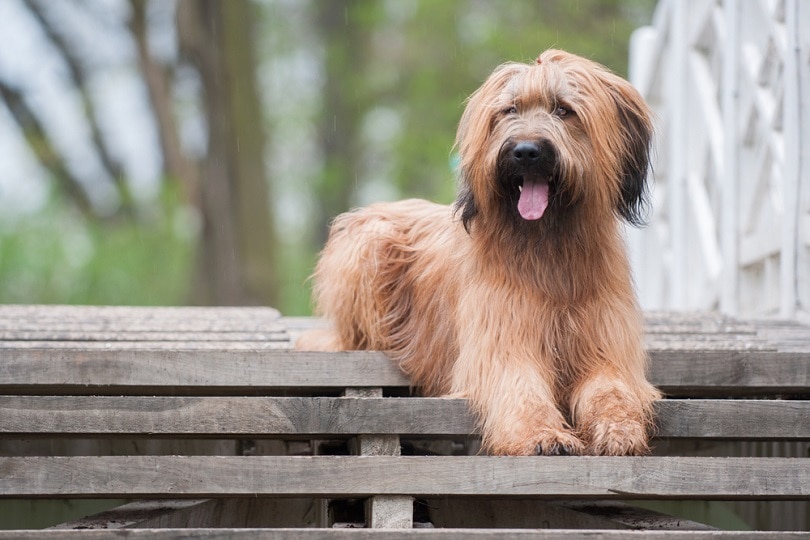
The Briard has been described as a “heart wrapped in fur.” They have a coarse coat that repels dirt and water, but they must be brushed several times weekly to keep their fur tangle-free.
They thrive when they have a job to do, which will help them burn off energy. They make excellent companions for owners who enjoy jogging, going for hikes, or bike rides. They have a real zest for life, and you’ll make an enthusiastic friend when you adopt a Briard.
4. Bouvier des Flandres
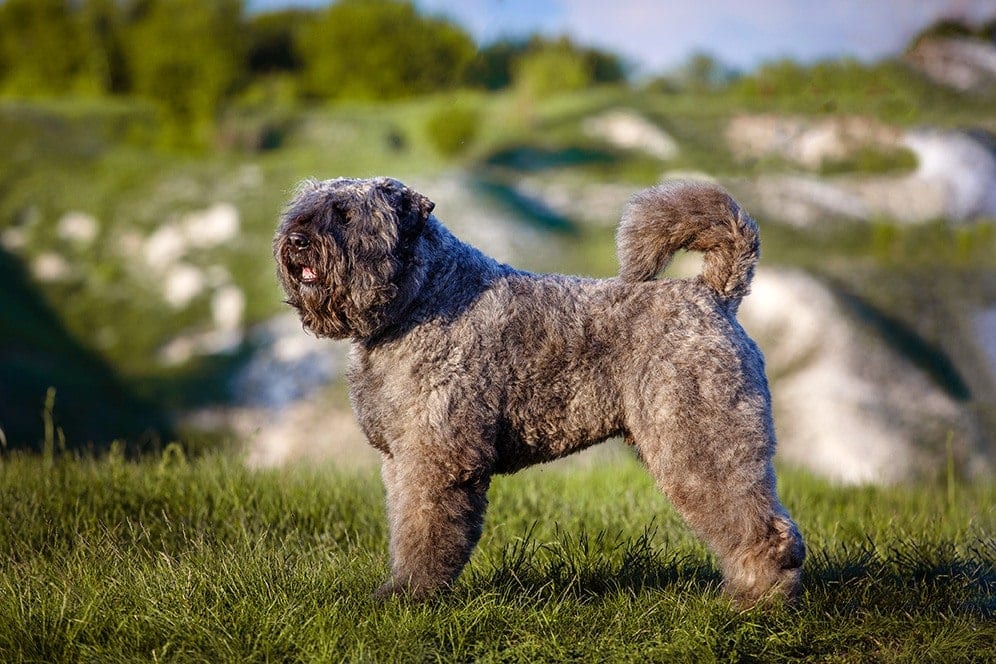
This burly Belgian canine has a double coat that doesn’t shed much, but you must comb them every week or so to prevent tangling and matting. The Bouvier des Flandres becomes destructive when bored and does best with an active owner that will take them jogging or hiking. They need a large yard and preferably other dogs or kids to run around with. They are loyal and protective, and make excellent guard dogs.
5. Polish Lowland Sheepdog

The lively Polish Lowland Sheepdog has a hypoallergenic shaggy double coat that will require a lot of effort to maintain and prevent tangling and matting, very similar in appearance to the Bearded Collie or Old English Sheepdog They are confident and clever and can also be stubborn.
These athletic, high-energy dogs will need at least an hour or two of daily exercise. They bond closely with their humans and love nothing more than joining them on long hikes or walks. They also benefit from events such as agility trials, herding, dock diving, and obedience tasks.
6. Puli

At 16 inches tall and around 25-35lbs, the Puli might be small, but they’re also very athletic. Their fur naturally coils into dreadlocks, but can be brushed out. Their distinctive coats require a lot of maintenance, particularly in the first year of their lives, as the undercoat grows. This means you’ll be guiding the fur into cords or will have to brush them to ensure their fur grows straight continually and doesn’t mat. You must brush them daily if you choose not to cord their hair. They require lots of mental and physical stimulation and have a high prey drive.
7. Samoyed

Samoyeds look like happy marshmallows and shed a moderate amount, so at first glance, they might not seem like a hypoallergenic breed, but it is that smiley face that puts them on the low allergen list. Their upturned mouths limit drooling, which is an adaptation to prevent icicles forming on their mouths in arctic conditions. They require frequent brushing, especially when they “blow” their coat during spring and fall.
They love spending time with their favorite humans and need daily playtime and exercise. Bred more for sledding than herding, they have a strong urge to roam, so if they get loose, they can travel for miles and put themselves at risk, so make sure that your yard is secure!
8. Pumi

The compact, agile Pumi has a low-shedding coat that requires little grooming. You can brush out the coat about twice a month, and if you need to bathe them, let them air-dry and allow the coat to spring back into curls.
Their compact size and sociable personalities make them a great prospective pet, but do not let their small stature fool you. This breed needs lots of exercise and mental stimulation to ensure they don’t get bored and become destructive. They enjoy playing fetch and will perch on high vantage points to get a good view of their surroundings.
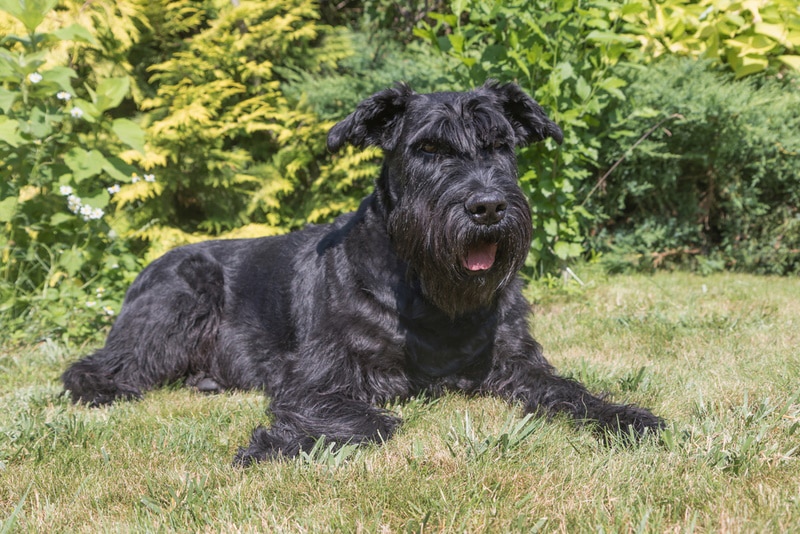
9. Giant Schnauzer
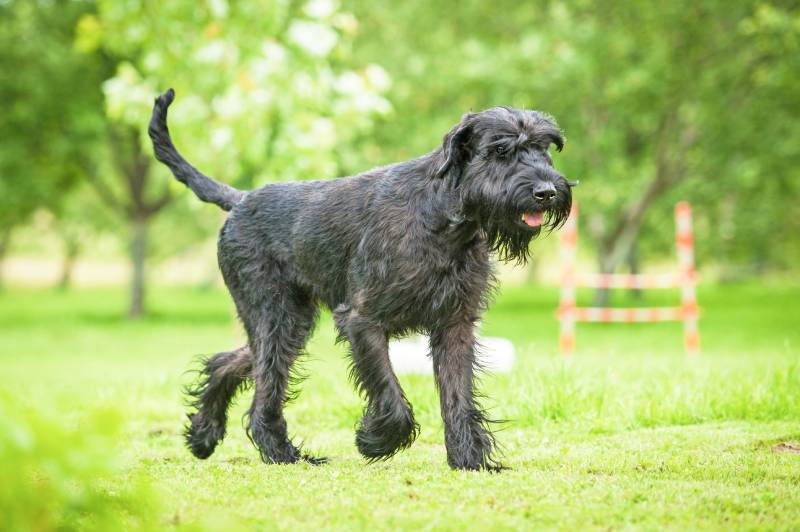
While they are classified as working dogs, they still have some of their herding instincts from back in the day when they were employed on German farms. They require weekly brushing and to be stripped or clipped regularly to maintain a healthy coat, but shed very little.
Giant Schnauzers need lots of exercise through play sessions with other dogs, long walks, or playtime in the yard with their family. They will happily join you hiking, running, swimming, or skijoring (dog-sledding on skis). The Miniature and Standard Schnauzers are both hypoallergenic, so you have options if you would like a smaller Schnauzer.
How to Manage Your Allergies
You might still suffer from allergy-related symptoms, even with a hypoallergenic dog. That doesn’t mean you have to give up your dream of owning a dog; instead, there are some strategies you can implement to ensure your allergies are kept under control as much as possible.
- Allergen-free room: Keep your dog out of one room, preferably your bedroom. You’ll get at least 8 hours of freedom away from allergens each night.
- Keep your home clean: Vacuum and mop regularly, invest in washable pet bedding, and use an air purifier.
- Limit fabrics: Upholstery, drapes, and rugs collect allergens. You can steam-clean them regularly or cover them with blankets and sheets that are easy to remove and wash.
- Allergy medication: Discuss which medication can help your allergies with your doctor to help reduce symptoms.
Can You Build Up an Immunity to Dog Allergies?
If you have your heart set on a different dog, you might wonder if you could get one that isn’t considered hypoallergenic and desensitize yourself. It is possible to build up an immunity to an allergy, but it’s rarely successful without getting allergy shots for several months.
In fact, getting a dog when you suffer from allergies can have the opposite effect. The allergy has the potential to get worse as your exposure increases, and you could end up making yourself even sicker. Therefore, it’s best to get a dog you won’t be allergic to or at least will not trigger your allergy quite as strongly, like one of the dogs on our list.
Final Thoughts
While it’s true that no dog is entirely hypoallergenic, some breeds will trigger your allergies less than others. The examples on our list can make your dream of owning a herding breed a reality. However, it is important to keep in mind that working and herding breeds can become bored, destructive, and act out because of frustration, so it is important that they have plenty of physical and mental stimulation.
If you do suffer from allergies, speak to your doctor before adopting a dog to discuss methods to reduce your sensitivity, as a hypoallergenic dog could still cause an allergic reaction if your allergies are severe.
See Also:
- Small Herding Dog Breeds (With Pictures)
- New Zealand Heading Dog: Pictures, Traits, Care Guide & More
Featured Image Credit: Frank11, Shutterstock
 How Can a Dog Be Hypoallergenic?