In this article
Although they have a fierce reputation, Rottweilers are generally gentle, loving dogs when raised by a dedicated, caring family and trained with the proper social skills. Amazingly, Rottweilers bark very little during a typical day, with many Rottie parents reporting that they seldom hear their beefy fur babies barking.
Rottweilers do bark, however, and in the right situation, they can bark an awful lot (and loudly). Indeed, if a Rottweiler is barking, it’s usually for a good reason, unlike many dogs that bark at just about everything.
If your Rottweiler is barking a lot and you want to know why and how to stop it, read on. We’ll discuss several reasons that can make your Rottie bark up a storm, and what you can do to calm them back down, below.

What Can Make a Rottweiler Bark a Lot? 5 Common Reasons
Rottweilers aren’t the type that barks a lot, like the chihuahua, poodle, and most small-breed dogs. When they’re home and all is well, the typical Rottie won’t bark at every noise it hears or critter it might see through an open window.
When something does happen to make them bark, it’s usually one of the following:
1. They’re Protecting Their People From Harm
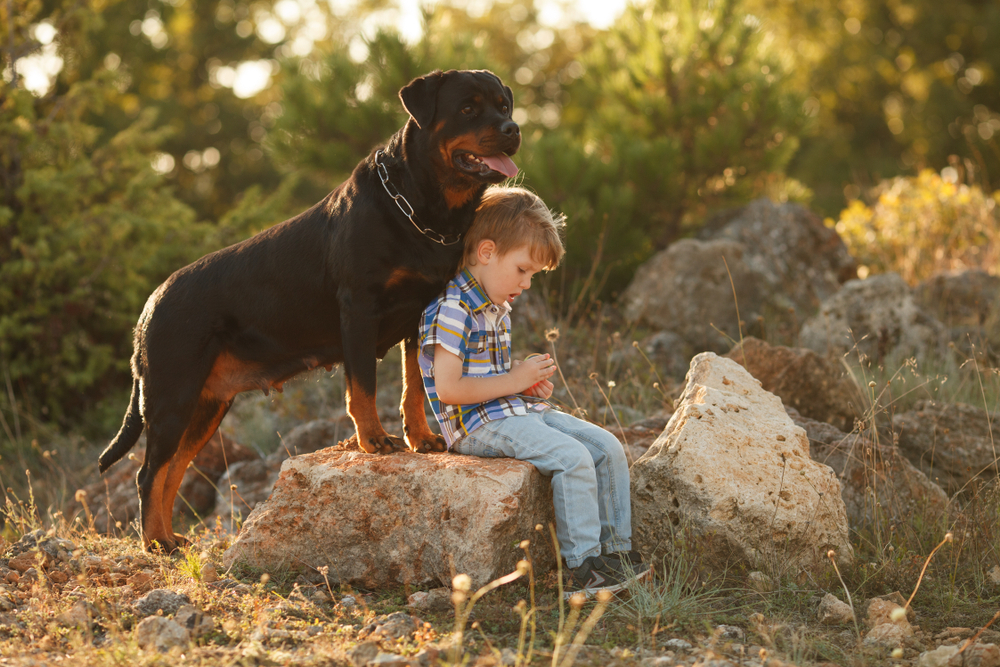
Rottweilers were bred as guarding and herding dogs thousands of years ago, and the instincts they learned are still with them today. If there is any danger, whether a stranger, an animal, or even bad weather with lightning strikes and thunderclaps, your Rottie will be barking.
Rottweilers do it to alert you and also to scare off any potential attackers, and they are one of the few breeds that will bark at strangers without being trained to do so.
2. They Are Excited to See You
The average Rottweiler is a big, scary-looking baby and, like most babies, will become excited and happy every time they see you. If you’ve been out and about and have just come home, your Rottie will likely bark and bounce around out of sheer joy.
However, the dog will bark less and less from excitement as they get older.
3. Your Rottweiler Is Bored and Lonely
Rottweilers are a breed that gets very close to their family members and is very social. If yours is alone most of the day or left out in the yard while the family is at work and play, there’s a good chance they will start to bark.

4. They Want Something
The average Rottweiler doesn’t back down and when they want something, they will let you know, often by barking directly at you. They might also want something from another dog or pet, like a toy or bone.
This propensity to back when they wanted something was bred into Rottweilers so that they would be good herders and guard dogs. It also helps that their bark is loud, commanding, and fierce, and it has allowed Rottweilers to get their way for centuries.
5. Your Rottweiler Is About 2 Years Old
This last reason your Rottie might be barking has to do more with their age than anything else. Since barking is something they do instinctively as a protection method, at about 2 years of age, you’ll notice that your adolescent Rottweiler puppy starts barking a lot more than usual (and maybe for the first time).
When they do, it’s usually a good sign that they are maturing normally, even if it can be disconcerting and startling the first few times they bark loudly.

How to Stop a Rottweiler From Barking in 7 Steps
To stop a Rottweiler from barking, you first need to know why they’re baking in the first place.
1. Eliminate or Reduce the Threat
If danger or a threat is causing your Rottweiler to bark, you will need to eliminate or reduce that threat (or they might do it for you). If thunderclaps or other weather is the cause, talking to your dog in calm, caring words and stroking them will be helpful.

2. Teach Your Rottie Good Manners
If your Rottweiler barks a lot when you return, your best bet is to train them to relax and be calm when you do. Of course, this takes time and diligence and won’t be easy to eliminate. One thing is certain; as it gets older, your pet will bark less and less when they see you, so enjoy it now.
3. Give Your Rottweiler Plenty of Play Time
A bored Rottweiler will get into all sorts of trouble, as will a lonely one. Making sure your dog gets plenty of playtime, walks, and the occasional new toy is critical. If you’ve gone for several hours every day, consider buying a doggie camera to keep in touch with your pooch.

4. Proper Training
Like all dogs, Rottweilers require bones, toys, attention, food, and water. The problem with Rottweilers is that they are big, beefy dogs who tend to throw their weight around. That’s why proper and dedicated training time is needed. A well-trained Rottie will know how to be patient and ask for things politely. Since Rottweilers can be a handful, especially for a novice owner, it is always best to have access to a vet’s help when needed.
If you need to speak with a vet but can't get to one, head over to PangoVet. It's our online service where you can talk to a vet online and get the advice you need for your pet — all at an affordable price!

5. Be Patient
If your Rottweiler is barking because it just learned how to bark, be patient. Like all adolescents, they will calm down and learn that barking is best saved for the more important stuff.
As long as you train and socialize them well, the average Rottweiler will be calmer and quieter by the time they reach age 3 or 4, at which point their barking will be much less frequent.

6. Block Off Parts of Your Yard from View
Blocking off parts of your yard where people and pets walk by, in many cases, is a great idea, as Rottweilers have a very high protective instinct. By blocking the sight of “threats,” you can reduce their protective urges and help keep them calm and quiet when needed.
7. Exercise
The average adult Rottweiler needs between 2 and 3 hours of aerobic exercise every day, which is quite a bit. The more they get, the less they will bark because a tired dog doesn’t have the energy to bark.
Long, vigorous walks are recommended; at the very least, you should play with your pet in the backyard for an hour.

Conclusion
Rottweilers don’t bark unless there’s an excellent reason for it, at least in most cases. Rotties have a very high protective instinct, and protecting you is one of their primary goals. Barking is how they do that, but Rottweilers also bark if they’re bored, lonely, excited, or want something.
We hope the information we’ve provided today will help you realize why your pup is barking and, more importantly, help you stop their racket and keep their barking to a minimum.
Featured Image Credit: JumpStory