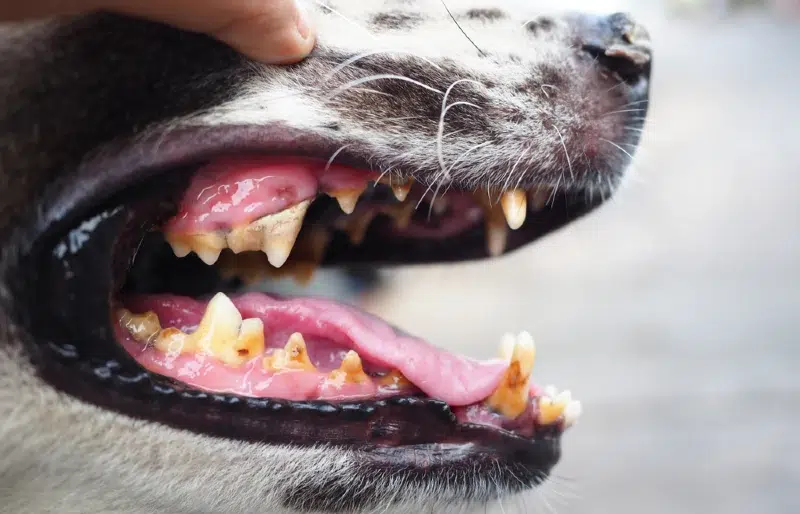
Tooth resorption is a common disease in dogs that involves the loss of tooth structure, occurring when the body removes tissue containing minerals. Although tooth resorption has been studied much more extensively in cats, it has been found to occur in dogs more frequently than previously thought. As a progressive disease, it leads to the gradual destruction or loss of teeth.
Resorption can affect all the parts of a tooth, including the root, the cementum (which covers the root), the pulp, the dentin (the layer found under the enamel), and the enamel.
Tooth resorption is usually not visible on the surface. Only X-rays can show if your dog suffers from the condition. This dental problem can also lead to infection, fracture, tooth loss, and other issues that can cause lasting damage to the teeth, gums, and jaw.

What Is Tooth Resorption?
Tooth resorption occurs when there is destruction or loss of tooth structure. There are two primary types of tooth resorption based on the origin of the damage: internal and external. Each of these types has various subcategories. This dental condition is more frequently found in older large-breed dogs.1
Similarly to humans, internal tooth resorption is quite infrequent compared to external resorption in dogs. External resorption can affect any part of the outside of the tooth, from the roots to the cementum outside. The dentin or cementum begins to be absorbed into the root canal, causing the inner and outer surfaces of the tooth to become inflamed.
Studies show that the most common types of tooth resorption in dogs are external replacement resorption and external inflammatory resorption. External cervical root surface resorption, external surface resorption, and internal surface resorption are not that common in dogs.
Lesions can appear on any tooth, but the premolars of the lower jaw are particularly affected. This condition is usually not visible to the naked eye and must be diagnosed through radiological examination (X-rays).2

What Are the Signs of Tooth Resorption in Dogs?
Tooth resorption in dogs typically has no external signs, meaning nothing is visible on the tooth. When the dentin (the layer found under the enamel) is exposed, this condition becomes painful. If you’re worried about the well-being of your dog, you should get in touch with a vet for advice.
- Reluctance to be touched
- Tremors of the jaw
If tooth resorption occurs at the root, dogs may not show any clinical signs. If resorption occurs above the gum line, dogs may experience discomfort and pain.
- Mouth bleeding
- Hypersalivation
- Difficulty eating
- Tooth fracture
Many dogs will swallow food unchewed because tooth resorption causes them pain. This behavior might be misinterpreted as an increased appetite.
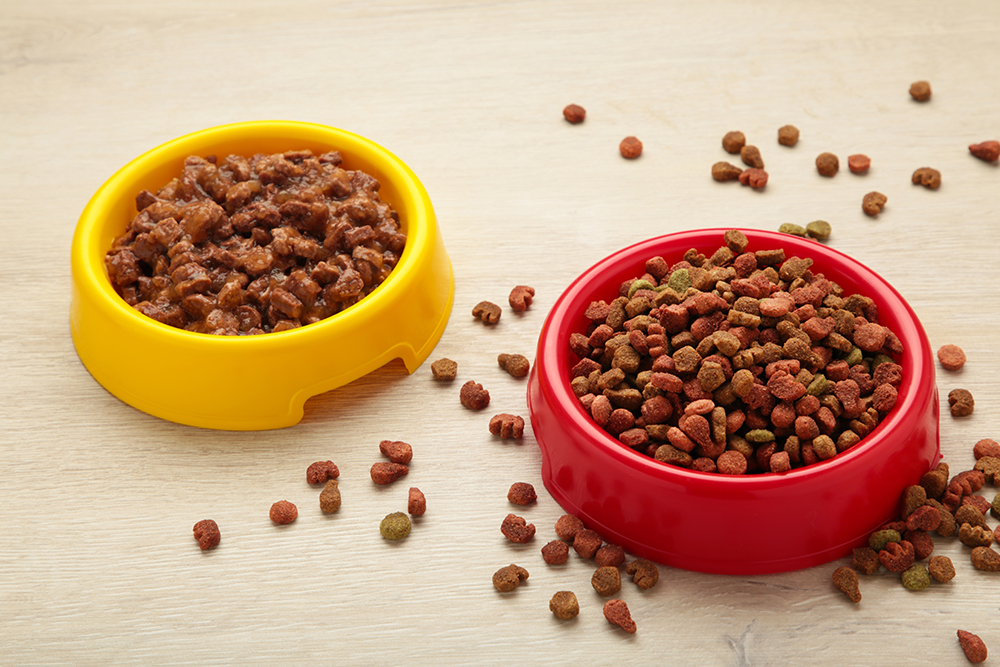
Other dogs prefer to chew only on one side, while some pets prefer solid food instead of soft food. Soft/wet food can stick to their teeth and cause discomfort and pain.
Occasionally, dogs will stop eating and may show obvious signs of pain: excessive salivation, discomfort to the touch, and food dropping from their mouth.
What Are the Causes of Tooth Resorption in Dogs?
Although there are many theories regarding what causes tooth resorption in dogs, the truth is that the exact cause is not known.
Regardless, tooth resorption leads to the erosion of dentine and cementum, reaching the pulp of the tooth. At the microscopic level, during tooth resorption, a group of cells called odontoclasts break down the hard tissue of the tooth. Odontoclasts are large, multinucleated cells with cytoplasm rich in cell organelles, as they are specialized in the process of the tooth’s substance resorption.
When the crown is affected, the disease becomes painful for dogs and causes discomfort, and the defects created in it will become entry gates for oral bacteria.


How Do I Care for a Dog With Tooth Resorption?
If your dog shows signs of oral discomfort or abnormality, take them to the vet. Your vet will examine your dog and likely recommend assessment under anesthesia and x-rays to diagnose tooth resorption. Tooth resorption may only present as mild redness in the gum covering the affected tooth.
Also, if your dog suffers from tooth resorption, more teeth might be affected in the future. The only way to detect the condition in time is through regular dental check-ups.
Interested in having a vet check your dog online? Contact one of our experts here:
If you need to speak with a vet but can't get to one, head over to PangoVet. It's our online service where you can talk to a vet online and get the advice you need for your dog — all at an affordable price!

Frequently Asked Questions (FAQ)
Can Tooth Resorption Be Reversed in Dogs?
In some cases, stopping or decreasing the progression of tooth resorption in dogs can be done through root canal therapy. As with humans, this involves cleaning the pulp of the affected tooth and filling it with dental material. That said, the preferred method of treatment for pets is to remove the affected tooth/teeth altogether; once the tooth resorption is exposed in the oral cavity, bacteria can enter the tooth, which will lead to inflammation and infection.
How Serious Is Tooth Resorption in Dogs?
Tooth resorption in dogs is a serious medical condition because it can lead to changes inside the oral cavity, including infections, tooth loss, or tooth pain. It can also cause damage to the gums, jaw, and teeth. If your dog shows signs of an oral problem, take them to the vet for a dental checkup.

What Are the Types of Resorptive Lesions?
Resorptive lesions can be classified as physiological (normal) and pathological (caused by disease). In physiological resorption, the dog’s body prepares to replace baby teeth with permanent teeth. Pathological resorption occurs in permanent teeth and can be subclassified into external and internal resorption. These two types are subdivided into 7 categories.
Conclusion
Tooth resorption in dogs is a common dental condition that especially occurs in older large breed dogs. This condition can be broadly classified depending on the location where the damage starts: internal and external. The two most common types of tooth resorption in dogs are external replacement resorption and external inflammatory resorption. This condition cannot be prevented, and treatment usually consists of extracting the affected tooth/teeth to prevent the infection from entering the oral cavity. It has no obvious visible changes on the surface of the tooth and clinical signs can be subtle. Tooth resorption usually can only be diagnosed via radiographic examination, so regular dental check-ups are recommended.
Featured Image Credit: Kasang.Foto, Shutterstock