In this article
If you have your heart set on an Akita but are unsure whether to go for the Japanese or American, you might wonder what the differences between them are to help you make this difficult decision.
Both breeds are very similar; in fact, they originated from the same ancient Japanese hunting dog, the Matagiinu (Matagi dog). However, modern Akita breeds present noticeable differences that can help you settle on a decision. The American Akita, for example, is slightly bigger than their Japanese counterpart in height and almost double the weight. The Amerikan Akita is available in more colors and was originally bred to be guard dogs, while the Japanese Akita Inu was bred for fighting and hunting.
Below, we’ve highlighted everything there is to know about these majestic dogs. Hopefully, by the end of this article, you’ll be one step closer to picking your newest pet!

Visual Differences

At a Glance
- Average height (adult): 22.5–27.5 inches
- Average weight (adult): 55–75 pounds
- Lifespan: 10–12 years
- Exercise: 1+ hours a day
- Grooming needs: Excessive
- Family-friendly: No
- Other pet-friendly: Rarely
- Trainability: Intelligent, stubborn, experienced owners required
- Average height (adult): 24–28 inches
- Average weight (adult): 70–130 pounds
- Lifespan: 10–14 years
- Exercise: 2 hours a day
- Grooming needs: Moderate
- Family-friendly: No
- Other pet-friendly: Rarel
- Trainability: Intelligent, independent, and short-tempered; experienced owners required

Japanese Akita Inu Overview

The Japanese Akita Inu is a muscular, courageous dog that is easy to fall in love with, but that can also be said for the American Akita. However, the Japanese Akita Inu is a much older breed with a long history of fighting other dogs and hunting. They’re now loyal companion dogs, but they are not suitable for every family.
Personality / Character
The Japanese Akita Inu is known for being stubborn and independent, with a tendency to be aggressive against other dogs. They are also not particularly open to strangers, and for both these reasons, early socialization is crucial. They aren’t needy or highly energetic, so they will only require a moderate amount of exercise.
Training
Training is required when you have a Japanese Akita Inu, but they won’t make it easy for you. Their intelligence and stubborn streak mean you must be an experienced dog owner to take on this challenge. Positive reinforcement and consistency are necessary; if they sense a crack in your resolve, they will take advantage of it, so confidence and assertiveness are musts. It’s best to keep training sessions short to keep them engaged, and if they seem distracted and uncooperative, it’s better to stop and resume training later.
Ancestry and Breeding
The Japanese Akita Inu originated in 1600 in the province of Akita, Japan, and was initially bred to be a successful fighting dog. However, in the late 19th century, other breeds were imported in to fight, and the Akita’s popularity suffered. However, thanks to the crosses with larger western breeds such as Mastiffs, they were able to have some success as a fighting dog breed.
The Akita Inu was almost extinct after World War II when dogs were used as a food and coat source. It is believed that this breed was successfully recovered from about 16 remaining individuals. They were originally mixed with military German Shepherds and then restored away from the dual breed line with a few remaining pure breed dogs in a remote village in Akita, Japan.
They are now wonderful companions and guard dogs that have a fierce loyalty to their owners while being wary of strangers.

Size and Appearance
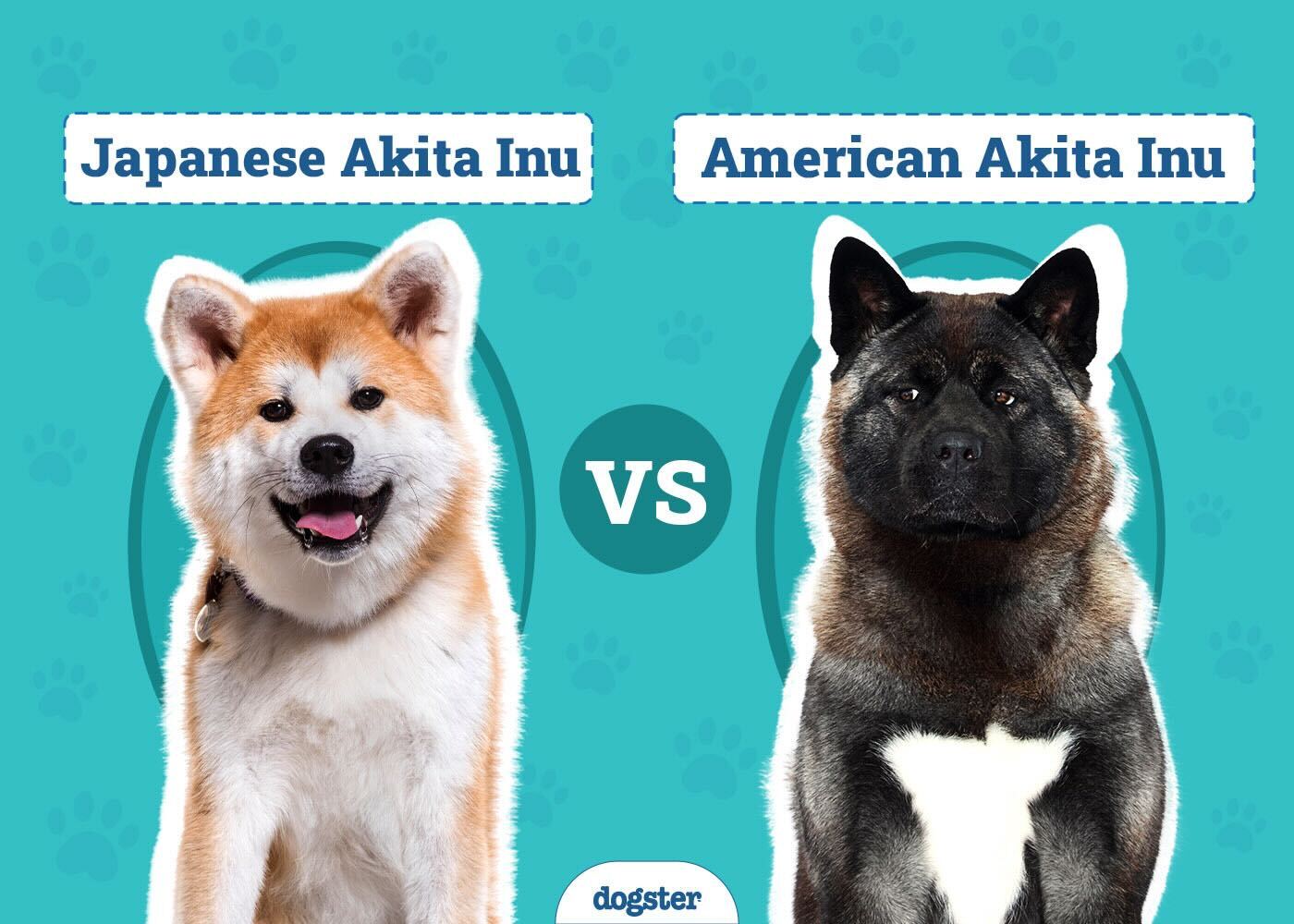
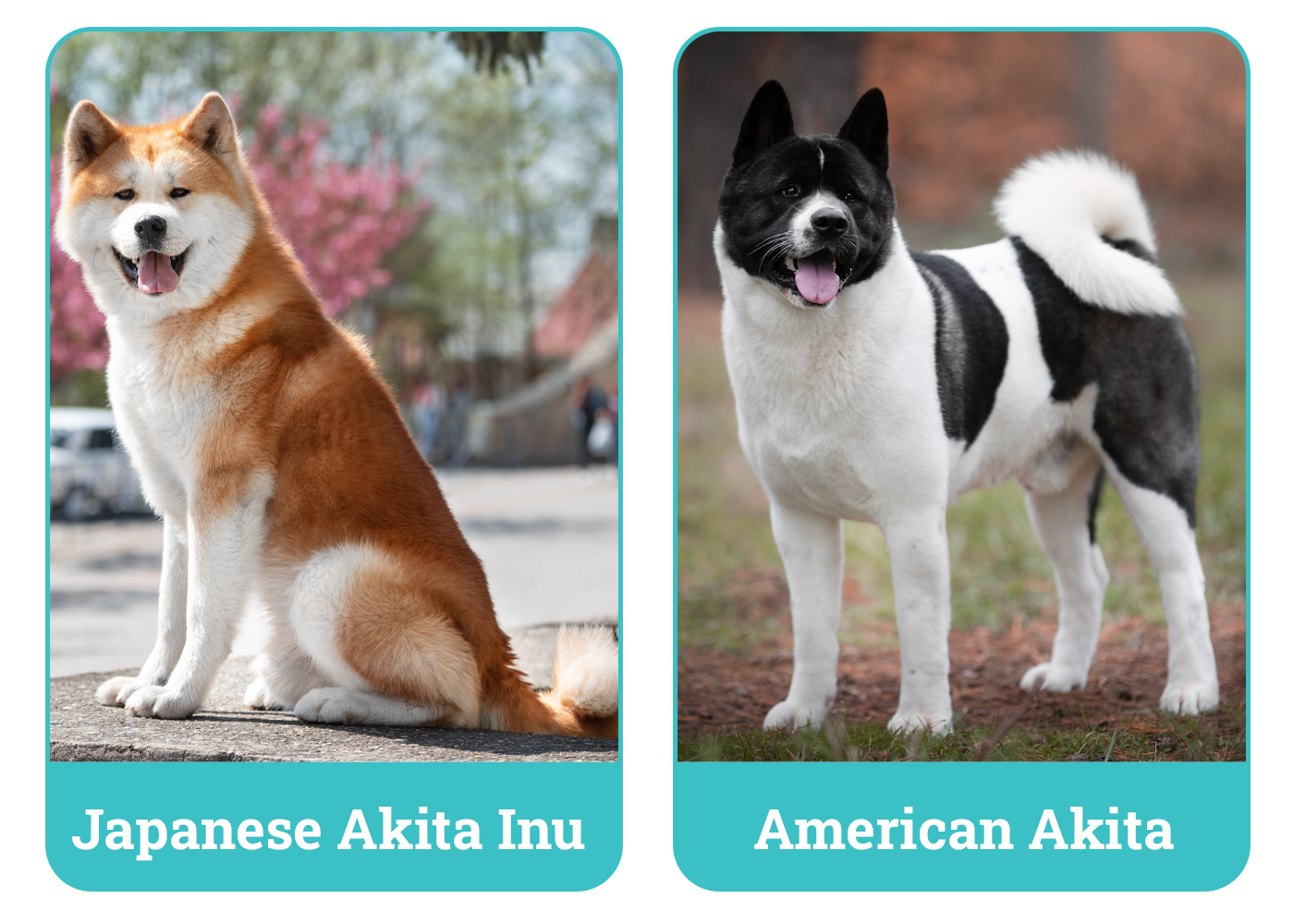
Japanese Akita Inus are quite a bit lighter than American Akitas, ranging from 55 to 75 pounds. While they are also a bit shorter, it usually isn’t by much, as they stand between 25 and 27.5 inches. The Japanese Akita Inu has what has been likened to a foxlike head, and they are also less muscular than the American Akita. They have thick, dense coats that shed frequently and need to be brushed at least three times a week to reduce loose hair and stay healthy.
Suitable For:
The Japanese Akita Inu is perfect for an experienced dog owner with no other pets in the house. They might get along well with children if they are older and your dog has been socialized early on. You will also need to teach your children how to act around your Japanese Akita Inu since they don’t react well to disrespect or mistreatment, whether it’s accidental or not.
American Akita Overview

The American Akita is a much newer breed than the Japanese Akita Inu, and one of the first to enter the United States was adopted by Hellen Keller in 1937. However, the breed didn’t become popular in the country until the 1950s, when servicemen returned to the USA from Japan’s occupation with dual-line Akitas, a cross between Akita Inus and German Shepherd dogs, from which the American Akita breed was developed.
Personality / Character
The American Akita doesn’t get along well with other pets in the house. They can live with older children but have a slightly shorter temper than the Japanese Akita Inu. They are quiet, courageous, and alert, making them great guard dogs. These dogs need slightly more exercise than their counterpart.
The American Akita is not a clingy dog but might be slightly less independent than the Japanese Akita Inu. So, along with their training and socialization needs, the American Akita will require daily walks and play sessions to stay well-behaved.
Training
While both breeds are known to have a “stubborn streak,” this is because they are independent thinkers and have strong, confident characters. However, training an American Akita is not easy and requires an owner who is experienced with large dogs and can tolerate their independence. Using positive reinforcement to shape the American Akita into a well-behaved pup is essential, and they don’t respond well to harsh punishments or negative reinforcement. They need a gentle but consistent and firm hand, so a confident and assertive trainer is a must.
Ancestry and Breeding
The American and Japanese Akitas were considered to be the same breed until 1999 when Europe’s Fedération Cynologique Internationale recognized them as two independent breeds. While American Akitas make excellent companion dogs, their wariness of strangers and fierce loyalty to those they love still make them fantastic guard dogs, which is what they were originally bred in the States to be.

Size and Appearance
The main difference between these two Akitas is their size. The American Akita can weigh 70 to 130 pounds and, despite this extra weight, stands at 24 to 28 inches, which is slightly larger than the Japanese Akita Inu. They are a more muscular, powerful dog with a head that is broader and more bear-like than the Japanese Akita. They have thick, double-coated fur, erect ears, and a muscular frame.
Suitable For:
The American Akita is perfect for families without children and other pets. Some believe that if socialized and trained early enough, they might get along with older children in the house, but it is a risk we don’t recommend taking. They require an experienced, confident, and assertive owner with the time, patience, and energy to spend on training, socialization, and quality time.
Frequently Asked Questions
Are Japanese Akita Inus and American Akitas Healthy Breeds?
Akitas, in general, are quite healthy dogs, but they are prone to some health conditions.
- Hip dysplasia (Akita)
- Hypothyroidism (Akita)
- Congenital cataracts (Akita)
- Microcytosis (Akita Inu)
- Patellar luxation (Akita Inu)
- Retina dysplasia (Akita)
- Vestibular syndrome (Akita)
- Sebaceous adenitis (Akita Inu)
- Amelogenesis Imperfects (congenital dental problem)
Why Are Both Breeds Different in Appearance?
You might wonder if creating differences in the American and Japanese varieties was on purpose. When the Akita Club of America, known at the beginning as the Akita Kennel Club, was first formed in 1956, targeted breeding of “dual line Akitas” occurred in the United States. Japan refused to recognize the American line, and the Akitainu Hozonkai (AKIHO) registry continued to work to recover the nearly extinct Akita Inu breed from the few purebred dogs left.
Alongside this, the American Kennel Club (AKC) cut off additional Japanese import registrations from 1972 until 1992. The first overseas Akitainu Hozonkai (AKIHO) club was established in the US in 1970 and the Japanese Akitainu Club of America was formed in 1997.
During this time, the different breeding lines, goals, and desired characteristics helped to create the differences between the Japanese Akita Inu and the American Akita. This led to the Fédération Cynologique Internationale (FCI) splitting both breeds in 1999 after accepting that the differences between both dogs were so great that they couldn’t be considered the same breed.

Which Breed Is Right for You?
There are only a few differences between the Japanese Akita Inu and the American Akitas besides their size. They might seem like subtle differences, but they are important to note. Neither breed does well with other pets, and they both require an experienced owner.
While both have an independent, stubborn streak, the American Akita is known to be slightly less stubborn, but don’t let that fool you into thinking that will make them easy to train; they’re intelligent and strong, so you will need to set clear, consistent boundaries to ensure they know who is boss. If you prefer a slightly smaller big dog for your home, the Japanese Akita Inu is ideal, but they still need daily exercise and a large yard to explore.
Featured Image Credit: (L) Olga Aniven, Shutterstock | (R) otsphoto, Shutterstock