While many people crave companionship, most people are content with the companionship of your average domestic dog. After all, they come in all shapes, sizes, and temperaments. However, some people prefer pets that are a little more unusual or exotic.
When it comes to dogs, there are a handful of wild species that some people keep as pets, although the laws can vary between states, counties, and cities, and many places that do allow wild dogs as pets require special licensure. Let’s check out some of the most common wild dogs that are kept as pets below.

The 8 Wild Dogs That Are Kept as Pets
1. Coyotes and Coyote Hybrids
| Height | 20–24 inches |
| Weight | 20–50 pounds |
| Temperament | Mischievous, cunning |
The coyote is a common wild animal across the United States, and many people consider them to be pests because of their tendency to attack livestock and pets, especially in areas where their environment has been encroached upon. Some people choose to keep coyotes as pets, though, and coyotes are able to crossbreed with dogs, resulting in coyote hybrids, also called Coydogs.
Coyotes are cunning animals that have excellent problem-solving skills, and it’s not uncommon for Coydogs to showcase some of these behaviors. Coydogs tend to be more manageable and tamable than coyotes, and they are less likely to want to stick to the nocturnal habits of the coyote.
2. Wolves and Wolf Hybrids

| Height | 26–34 inches |
| Weight | 60–120 pounds |
| Temperament | Stubborn, aggressive |
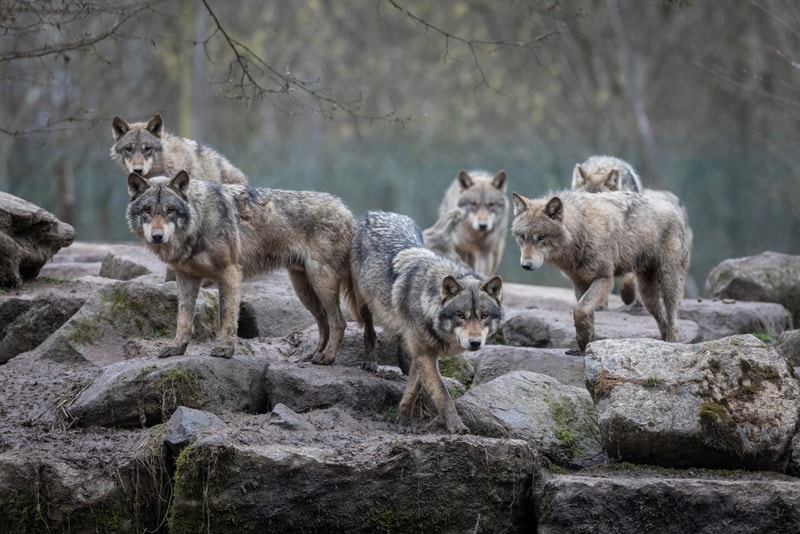
Wolves are beautiful canines that are uncommon for people to see in the wild. They are large canines, with some large males exceeding 120 pounds, but there are many species of wolves, so the size can vary. The most common wolf species kept as pets is the gray wolf.
Like coyotes, wolves are able to crossbreed with domestic dogs, resulting in Wolfdog hybrids. Wolves and Wolfdogs are not for the faint of heart or inexperienced keepers. These canines can be headstrong, touchy, and downright aggressive. It’s not uncommon to hear stories from keepers about a wolf or Wolfdog becoming unmanageable, especially with an inexperienced owner. They are also illegal to own in many areas.
3. Red Foxes

| Height | 15–16 inches |
| Weight | 8–15 pounds |
| Temperament | Friendly, loving |
Red foxes are another United States native, and they are quickly becoming more popular as pets. While they can be charming and interesting, the behavior of red foxes is very different from domestic dogs, so there is a learning curve when dealing with these cute canines.
Because of their popularity, some people have started to breed domesticated red foxes for the pet industry. While they can make good pets in some households, they are not suitable pets for the average pet owner. While friendly and social, they can also be aloof and spookable.
4. Fennec Foxes

| Height | 14–16 inches |
| Weight | 2–3.5 pounds |
| Temperament | Playful, nervous |
Fennec foxes are the smaller cousins of the red fox. They have ears that appear far too large for them, giving them a cartoonish appearance. They are the smallest canids, usually weighing less than 4 pounds when fully grown.
Fennec foxes, like red foxes, have unusual behaviors that are different from your average domestic dog, and most do not come from “domesticated” fox breeders. Some of their behaviors do mimic the playful behaviors of a dog, but these little critters tend to be nervous. Most do not like to cuddle or feel trapped, and if forced into uncomfortable situations, it’s not unusual for them to bite.
5. Other Foxes

| Height | Variable |
| Weight | Variable |
| Temperament | Variable |
On top of red and fennec foxes, there are a handful of other fox species that some people keep as pets, including swift foxes, gray foxes, Arctic foxes, and corsac foxes. While the appearance, size, and temperament can vary between species and individuals, most have similar behaviors to that of the red fox.
They may be loving and social animals, but they are likely to be uncomfortable with cuddling and strangers. They are not suitable pets for most homes, and most of these foxes are not considered to be domesticated.
6. New Guinea Singing Dogs

| Height | 15–17 inches |
| Weight | 20–25 pounds |
| Temperament | Intelligent, loyal |
New Guinea singing dogs are an unusual canine species that most people will never even see. These dogs have reflective eyes, much like cats, so they will appear to glow green in low lighting. They can also jump high into the air like cats. They are named for their extensive vocalizations and unique howl, with each dog having their own unique sound.
It is believed that most New Guinea singing dogs live solitary lives, so they may not be particularly good pets. They do tend to bond closely with one or two people, showing love and affection towards them, but they tend to be aloof and standoffish with strangers, potentially even becoming nippy or aggressive.
7. Dingoes

| Height | 22–23 inches |
| Weight | 25–45 pounds |
| Temperament | Cautious, non-adaptive |
Dingoes are extremely uncommon to see just about anywhere outside of Australia, but they are legal to keep as pets in some areas. These handsome canines are generally not cut out to be pets, although their personalities can vary greatly between individuals.
Dingoes tend to be cautious animals that are fearful and easily spooked. They are not as adaptive to changing situations as most canines are, and it isn’t uncommon for them to become aggressive or stressed when kept as pets.
8. Jackals and Jackal Hybrids

| Height | 18–20 inches |
| Weight | 15–25 pounds |
| Temperament | Shy, suspicious |
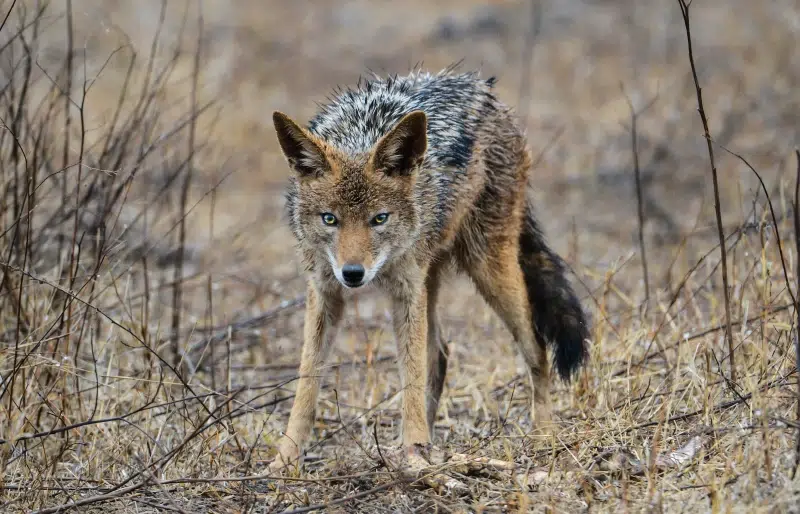
Jackals make very poor pets, so they are generally not recommended to be kept in captivity. Even when raised from birth, they tend to be shy, nervous animals. Jackals are extremely cautious and are likely to be very nervous and unsettled, especially around new people.
Like wolves and coyotes, jackals can crossbreed with dogs. While most documented cases of these hybrids have occurred in captivity, jackal-dog hybrids have also been spotted in the wild in Croatia.
Do Wild Canines Make Good Pets?
In general, the answer to this question is a resounding no. Wild animals do not usually make good pets, period. Domestic dogs and cats are the result of tens of thousands of years of domestication, so many of their wild, undesirable traits have been bred out of them. With wild dogs, their wild instincts are present and strong.
They are likely to be distrusting of people, and the strength and agility of most canines can make them a real danger if not handled properly. Oftentimes, people who keep wild dogs as pets keep them in a similar fashion to a captive zoo animal as opposed to keeping them as a “typical” pet that lives in your home and participates in activities with you.
Conclusion
While the majority of people shouldn’t keep any species of wild animal as a pet, there are multiple species of wild canines that people across the world do sometimes keep. Oftentimes, special licensure is required, and even then, some animals are not legal to own in some areas.
When considering bringing home a non-domestic dog species, you must learn everything you can about them before bringing them home, getting information from the breeder and even zoos as available, and becoming thoroughly familiar with the laws in your area.
Featured Image Credit: AB Photographie, Shutterstock
 The 8 Wild Dogs That Are Kept as Pets