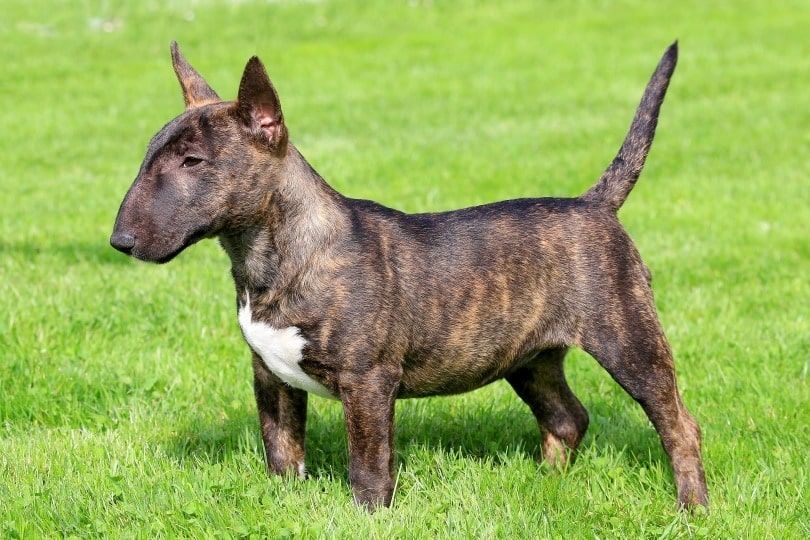
Miniature Bull Terrier Dog Breed: Info, Pictures, Traits & More

In this article
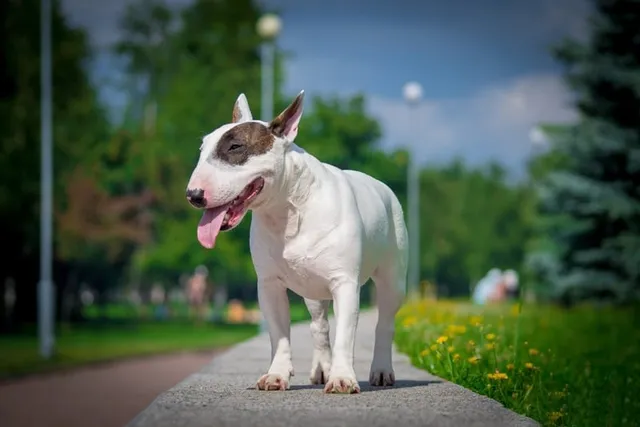
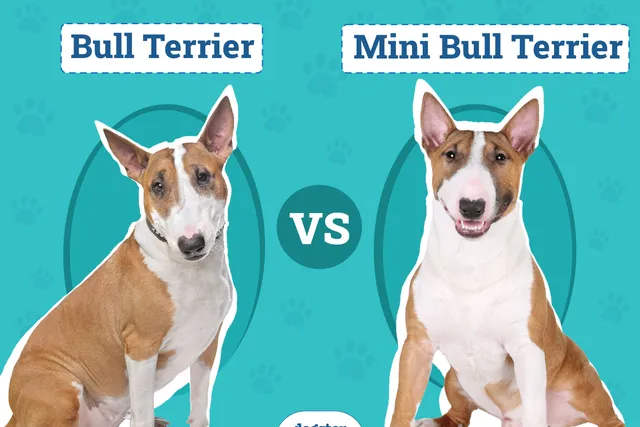
Miniature Bull Terriers are best known for their distinctive egg-shaped head. They’re often called “Miniature Bulldogs,” even though they are not related to Bulldogs. These dogs are known for being playful and energetic. However, they’re also very affectionate and bond closely with their humans.
For the right family, they can be great companion animals. If you want a smaller dog that is very active, they may be a great option.
Breed Overview
Height:
Weight:
Lifespan:
Colors:
Suitable for:
Temperament:
These energetic dogs are best for families that are looking for a smaller dog that is very athletic. They aren’t necessarily great with small children, as they can be a bit rough. They can also be sensitive to roughhousing and loud noises.
While many people love having these dogs as companions, they aren’t necessarily best for everyone. Keep reading to find out if this breed is a good option for you.
Miniature Bull Terrier Characteristics

Miniature Bull Terrier Puppies

Miniature Bull Terrier puppies are very similar to other puppies. However, they tend to be especially energetic. Expect them to be moving any second they’re awake. They bond very closely with their family, but they will spend much of their early days playing—not cuddling.
Don’t expect these dogs to spend much time in your lap. They can easily overwhelm younger children, too. Early socialization and consistent training are vital to prevent behaviors like biting and chewing. However, don’t expect to put a damper on their energy level.
Finding these dogs is often a pretty easy process. There are many breeders around the world that specialize in this breed, so you should be able to find one within driving distance. They aren’t common enough to end up at shelters and rescues, though.
We recommend choosing a reputable breeder to prevent health problems. Genetic testing and health checks are important. Many breeders will also begin training and socialization early, which increases the chance that your puppy will be well-adjusted.
Temperament & Intelligence of the Miniature Bull Terrier 🧠
Miniature Bull Terriers can be both challenging and charming. They have boundless energy and are always on the move. Their playful nature is considered endearing to some. However, it can be a lot for others to deal with. They are also very loving and affectionate. They’re often very playful with their family members, but they crave attention too. They may enjoy cuddling after playing fetch or taking a brisk walk.
These dogs are intelligent, but that doesn’t necessarily contribute to obedience. They tend to have minds of their own, making them very stubborn. They often test boundaries, so plan on having lots of patience. Miniature Bull Terriers tend to make their own decisions and not necessarily listen to your commands.
Their terrier heritage also makes them very alert and watchful. They can be good watchdogs, but proper socialization is required to make sure they aren’t aggressive. Otherwise, they may assume that everyone is a bad guy.
Their intelligence, paired with their energetic nature, can be a recipe for lots of destruction if they aren’t entertained properly. Exercise and mental stimulation are essential, or they’ll be quick to make their own fun (which often involves chewing and digging).
Are These Dogs Good for Families? 👪
In some cases, these dogs can make good companion animals. They are very loving and affectionate, so they bond closely with their families. They can also keep up with more active families despite their smaller size. They’re happy to hike and explore, especially with other children.
However, they are very high-energy and require plenty of stimulation. If you’re very busy or have limited space, this dog probably isn’t a good option for you. We also don’t recommend them for younger children, as they can quickly overwhelm them with their energy levels.
Training can also be a challenge, though it is necessary to keep these dogs well-behaved. More experienced owners who can handle their independent nature may find them easier to handle.

Does This Breed Get Along with Other Pets? 🐶 😽
Mini Bull Terriers can get along with other pets, but it has to be the right situation. They often get along okay with dogs that are their size or larger when properly socialized. However, their high prey drive makes them incompatible with smaller dogs.
Because they are terriers with high prey drives, they aren’t great for homes with cats. Even if they are socialized with cats, they tend to chase them. Like many terriers, they will run after just about anything that moves, leading to them chasing just about any feline and sometimes smaller dogs.
We also don’t recommend this breed in homes with other small animals like hamsters or birds. They will see these animals as prey.
Things to Know When Owning a Miniature Bull Terrier
Food & Diet Requirements? 🦴
Miniature Bull Terriers don’t have any special dietary needs, so they can eat your average, quality commercial dog food. They are more active, though, so they may need food designed for athletic dogs. More protein and calories are sometimes recommended, but you should base this on your dog’s activity level.
Feeding a dog extra calories when they don’t need them can lead to obesity. Just like in people, obesity can lead to all sorts of health problems. We recommend feeding these dogs at least two times a day. They are smaller, and so are their stomachs. They need to be fed more often than larger dogs for this reason. Younger puppies may need to be fed as much as three or four times a day.
Use treats sparingly and choose healthy options whenever possible. Freeze-dried meat is always a solid option. For intense training, consider using kibble as a treat.

Exercise? 🐕
Miniature Bull Terriers are energetic, playful dogs that require plenty of exercise. Their exercise needs are quite a bit higher than other dogs, so be sure you can meet them before adopting one. We recommend planning for at least an hour of exercise per day. You should split this into at least two different sessions, though.
However, many of these dogs require closer to 2 hours of daily exercise. It depends on their age and energy levels. Adults often need the most exercise, but this may decrease as they get older. Because these dogs also need quite a bit of mental stimulation, we recommend mixing up what exercise activities you do. Walking can meet your dog’s exercise needs, but it can also get boring. Try mixing up where you walk and try other exercise activities, too, like playtime.
Agility training is another stimulating activity these dogs often like. Even if you don’t plan on competing, agility challenges your dog’s body and mind. You may also want to consider mental activities, like interactive puzzle toys. Training sessions can also keep your dog’s brain fresh.
While these dogs do need quite a bit of exercise, it’s important not to push them too hard. Puppies, especially, should be carefully observed while exercising. Overexercising a dog can lead to joint problems, especially when they are younger.
Training? 🎾
Mini Bull Terriers are pretty intelligent. However, they can also be independent, which leads to stubbornness. They may decide to listen to their needs instead of your commands, which can be a serious problem. It’s important to be very patient and consistent to successfully train your canine.
Start training as soon as you bring your puppy home. Preferably, this should be around 8–12 weeks. They will be very receptive to learning at this age, and it’s important to get them started with obedience before they reach their stubborn adolescent phase.
Keep training sessions short, especially for puppies. 5–10 minutes is recommended. Aim to have at least two of these shorter training sessions a day to keep your dog entertained and make good progress in training.
You also need to socialize these canines well. They can be untrusting of strangers, so getting them out and about at an early age is important. Expose them to many people, animals, and places to make them confident in many different situations—but not fearful. We highly recommend enrolling in positive reinforcement training classes when your dog is young. These classes can get you started with training and provide lots of socialization. Group classes are best for the social aspect.
As always, be patient and understanding, especially with this breed.

Grooming✂️
These dogs are known for their short, sleek coats. They are a pretty low-maintenance breed when it comes to grooming, but they still require regular brushing and the occasional bath. Plan to brush your dog around once a week. A soft bristle brush works great to remove loose hair and dirt from your dog’s coat. Because their coat is so short, brushing can go a long way to keeping them clean.
If you stay on top of brushing, you’ll only need to bathe your dog every 2 to 3 months. Some people choose to get their dog seen by a groomer every few months for a bath, but you can easily accomplish this at home, too. Use a gentle shampoo formulated for dogs. Human shampoos are not suitable, as they’re made for a different skin pH and can cause irritation in dogs. Thoroughly rinse your dog to prevent skin irritation. Even the gentlest shampoo can cause problems if you leave it on your dog’s skin too long.
Trim your dog’s nails regularly with clippers or a grinder. Otherwise, they can become overgrown and uncomfortable. Longer nails are also prone to splitting, which is painful and opens the paw up to infection.
You should also brush your dog’s teeth a few times a week. Just like humans, dogs can develop dental issues if their teeth are kept too dirty. Therefore, regular tooth brushing is vital for their health.
Health and Conditions? 🏥
These dogs are generally healthy. However, they are prone to some health issues.
For instance, they are prone to several heart diseases, like mitral valve disease and subaortic stenosis. Both of these health problems can lead to death if not treated. Early detection is vital, so ensure your dog is seen by a vet at least once a year. Sadly, these dogs are also prone to deafness. This is most common in all-white dogs and seems to be related to pigment production. You can avoid this issue by purchasing a dog of a different color, though.
Like many small dogs, they may also be prone to luxating patella, which affects the kneecap. For one reason or another, the kneecap slips out of place, causing wear on the bones. Over time, this condition can lead to arthritis-like symptoms. While the kneecap sometimes goes back into place on its own (or can be pushed into place by a vet), some dogs need surgery to keep the kneecap in place. Once a dog’s kneecap slips out of place, the odds of it happening again are often higher.
You should also watch for eye conditions. Bull Terriers can get all the eye conditions that affect other dogs, like cataracts and glaucoma. Some of these can be solved by a vet, but others may be incurable and cause blindness.
Like many dogs, these dogs can also develop skin allergies. These can be triggered by food, pollen, and other environmental factors. Often, the easiest way to avoid problems is to eliminate your dog’s allergen when possible. Medication is also possible, but not all dogs need it.
Male vs. Female
This dog breed does not have tons of differences between the genders. Both males and females have a very similar personality. However, there are some slight differences involved. Males may be a bit heavier, while females are smaller. That said, these dogs are so small that any size difference is often very slight.
If you do not get your dog spayed and neutered, they may exhibit some physical and mental differences due to their sex hormones. For instance, females will go into heat. This shift in hormones can cause temperament changes, too. Some females become more aloof, while others become more loveable.
Males may exhibit more dominant behavior, especially towards other males. They may also mark more often, though this can often be corrected through training.
3 Little-Known Facts About the Miniature Bull Terrier
1. They don’t only come in white.
These dogs are mostly known for their white color. However, they actually come in many different colors, including red and fawn. Dogs that aren’t white may be less prone to deafness. Therefore, you may want to look at less-common colors when choosing a dog.
2. Despite their name, these dogs aren’t actually bulldogs.
Instead, they were developed in 19th century England by crossing the White English Terrier with the Old English Bulldog. Both of these breeds are currently extinct. The result was a small, terrier-like dog with a “bulldog” head.
3. While they are small, they are very athletic.
Despite their smaller size, these dogs are surprisingly active. They excel at various canine sports, like agility training and flyball.
Final Thoughts
Miniature Bull Terriers are very active, smaller dogs. They are surprisingly active and not at all a lapdog. They can be a lot for some families to handle. If you’re looking for a smaller, active dog, though, they can be a great addition to your family. They do best with older kids and active adults. Due to their exuberant nature, they can be too much for smaller children. They may also not put up with much roughhousing, even when well-socialized.
Expect their chasing instincts to be very high. They don’t do well with cats for this reason, and they may not do well with very small dogs, either. That said, they do get along well with larger dogs.
We highly recommend purchasing a puppy from a quality breeder. While this breed isn’t terribly rare, they aren’t common enough to show up at a rescue or shelter regularly.
Sources
Featured Image Credit: Radomir Rezny, Shutterstock
Expert dog care, straight to your inbox
News, insights, expert advice, and everything dog.

No spam — unsubscribe anytime.
By signing up, you agree to our Terms & Conditions and Privacy & Cookies Policy.
How useful was this post?
Click a star to rate. You can leave written feedback afterwards. (We read all feedback.)
Kristin loves to help pet parents create a fulfilling life for their pets by informing them on the latest scientific discoveries and helping them choose the best products for their pets. She currently resides in Tennessee with three cats, four dogs, two fish, and a lizard, though she has dreams of owning chickens one day!