Get

In Your Inbox

Dogster is reader-supported. When you buy via links on our site, we may earn an affiliate commission at no cost to you. Learn more.

Is a Pug Hypoallergenic? Vet-Verified Facts & FAQ

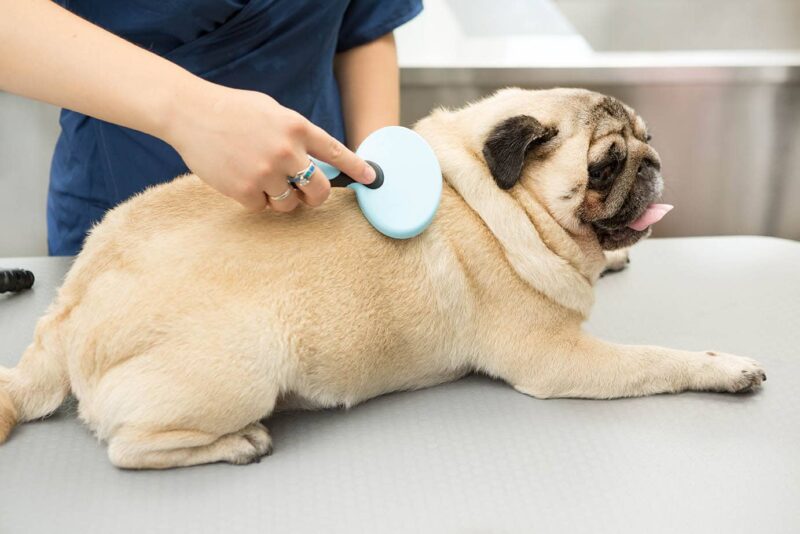
brushing a pug

With their adorably curled tails and constantly “smiling” faces, Pugs are one of the world’s most well-known and easily recognized dogs. Many dog owners have fallen for the flat-faced charm of the Pug, but those with allergies may pay the price. A Pug is not a hypoallergenic or allergy-friendly breed.

Keep reading to learn why Pugs aren’t less likely to cause an allergic reaction and why there’s no such thing as a truly hypoallergenic breed. We’ll also list a few breeds that may be more well-tolerated by people with pet allergies. Finally, if you have your heart set on a Pug, we’ll give you tips that may help you reduce your allergy symptoms and enjoy life with your pet.

divider dog paws 3 oct 2024

Why Pugs Aren’t Hypoallergenic

If you’re allergic to dogs, your immune system responds negatively in the presence of specific proteins produced by the animal. These proteins are mainly found in the dog’s saliva and dander (dead skin cells.) All dogs, even those who rarely shed or don’t have hair, still produce dander and saliva.

Because of that, there is no completely hypoallergenic breed. However, dander and saliva commonly stick to a dog’s hair, so breeds that shed heavily are more likely to spread allergens around their environment. Pugs have short hair, but they also shed quite a bit, which is why they are not hypoallergenic dogs.

girl allergic to dog sneezing in white tissue near cheerful man holding pug
Image Credit: LightField Studios, Shutterstock

What Makes a Breed More Allergy-Friendly?

Animal researchers and medical professionals all agree that no breed is truly hypoallergenic. However, it’s also true that some breeds and individual dogs are less likely to trigger an allergic response.

Not every dog produces the same amount of dander and saliva, nor do they all make the same proteins. If you have allergies, you may react to one Pug but barely sneeze in the presence of a different one.

In addition, breeds that don’t shed much keep their allergy-triggering proteins more contained. People with allergies often tolerate these dogs better, but they’re still capable of causing symptoms. Some canines that are considered more allergy-friendly include:

  • Poodle
  • Maltese
  • Yorkshire Terrier
  • Bichon Frise
  • Afghan Hound
  • Portuguese Water Dog
  • Shih Tzu

Again, even with these dogs, they can vary in how they impact people with allergies. The only way to know how you’ll react to a specific dog if you have allergies is to spend time with them.

White poodle getting training
Image Credit: Erik Mclean, Pexels

Tips for Living with a Pug If You Have Allergies

If you have allergies but also love Pugs, here are some steps you can take to reduce the allergic impact of having a dog.

  • Frequent bathing can decrease the number of allergens on your Pug. Check with your vet before you increase your dog’s baths to ensure you won’t dry out the Pug’s skin and coat. Regular brushing can also keep shedding under control, but you may want to leave this task to someone without allergies.
  • Keep your house as clean and dog hair-free as possible. Vacuum and mop regularly and avoid dry cleaning techniques like sweeping or dusting because they stir up allergens. Use static cleaning products instead.
  • Change your air filters frequently, and consider using a portable air cleaner around your house. Try to keep at least one area of your home off-limits to your Pug, such as your bedroom. Having a relatively allergen-free space can make it easier for you to live with a Pug.
  • Finally, talk to your doctor or allergist about other strategies for reducing allergens. They may also suggest medications or allergy shots to reduce symptoms triggered by your pet.
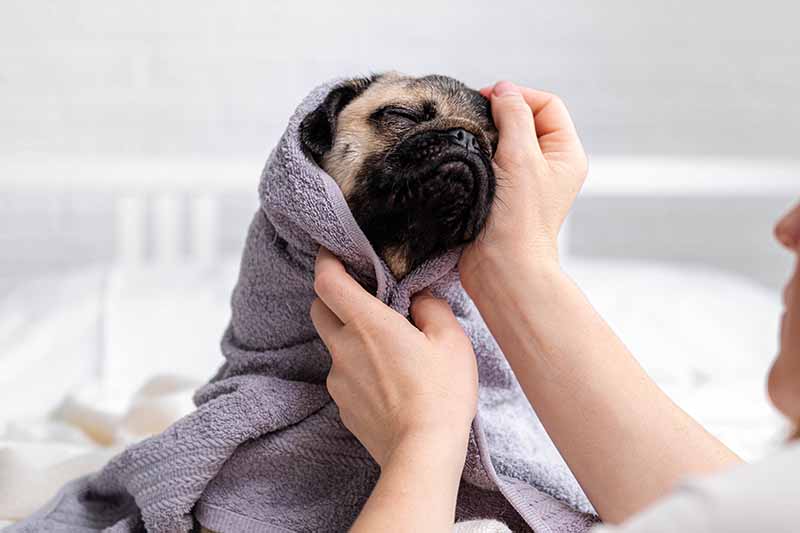
wiping pug with towel after shower
Image Credit: Natali Kuzina, Shutterstock

divider dog paws 3 oct 2024

Summing Up

Pugs aren’t hypoallergenic dogs, and their frequent shedding keeps them off the list of more allergy-friendly breeds. However, you cannot predict how your immune system will react to any dog until you first encounter them. If you have your heart set on adding a Pug to your family, spend time with your potential new pet first to see how your immune system responds. As you learned in this article, people with allergies have options to make living with a pet easier.


Featured Image Credit: Zoriana Zaitseva, Shutterstock

Want content like this delivered to you?

Sign Up For Our Newsletter

News, insights, expert advice, and everything dog

* By submitting, you agree to our Terms & Conditions and Privacy & Cookies Policy.

How useful was this post?

Click on a star to rate (you can leave written feedback after clicking submit)

Help us improve Dogster for pet parents!

Your feedback really matters.

What did you like about this post? Also how can we improve it?

Join the conversation

Leave a Reply

You’re very welcome to leave a comment or question. Please know that all comments must meet our community guidelines, and your email address will NOT be published. Let’s have a positive and constructive conversation.

Talk With A Vet Online

Peace of mind,
anywhere, anytime

Affordable vet advice

Taking Dog Food to Hart: Dogster’s Interview With Kevin Hart

You’re probably pretty familiar with Kevin Hart. This master of comedy has become a household name with blockbusters like Ride Along, Central Intelligence,...

What to Feed a Pregnant Dog: First, Second & Third Trimesters (Vet-Approved Guide)

Good news! Your dog is expecting puppies! This is an exciting time in any pet parent’s life. But it can also be overwhelming...

Why Are Puppy Mills Bad? 7 Reasons to Stop This Horrible Practice

When some people adopt a puppy, they might not think about where their origins are. Do you know where your new pet came...

Colloidal Silver for Dogs: Vet-Reviewed Safety, Uses & Risks

Colloidal silver is a suspension of tiny particles of silver in a medium such as water, a gel, or a cream. This remedy...

More related

What Breed of Dog Is Zuma From Paw Patrol? Cartoon Dogs Presented

If you have a small child, you likely know about Paw Patrol. This show focuses on a little boy named Ryder and his...

Why Do Dogs Howl at Sirens? 3 Common Reasons

There’s nothing worse than being woken up at night not just to a siren wailing but to neighborhood dogs howling in response. Although...

Paw Pods Are an Eco-Friendly Way to Say Goodbye to Your Pet

When Ben Riggan had to put his pair of 12-year-old Springer Spaniels to sleep, the vet returned them to him in what he...

10 Dog Breeds with Beards & Mustaches: Pictures, Facts, and History

As strange as it sounds, some dog breeds have beards or mustaches. Their comical bearded snouts are a beloved characteristic and are usually...

Keep reading

Can Dogs Have Persimmons? Vet-Verified Nutrition Facts & FAQ

Persimmons make a versatile addition to the kitchen and infuse foods with a delightful sweetness and unique health benefits that parents, kids, and even our pets can enjoy. Dogs can eat persimmons as an occasional treat without issue if you...

Dogster-Can-Dogs-Have-Persimmons

How Much Food Does a Great Dane Need? With Feeding Chart

Great Danes are one of the biggest dogs in the world, and it’s no surprise when you meet one face to face. If you decide to add one of these gentle giants to your family, one of the first things...

great dane dog outdoor

Can Dogs Eat Cheese? Vet-Reviewed Nutrition Facts & Safety Guide

As a dog owner, you may have given a piece of cheese to your dog as a treat, or they may have snagged a piece while you were making lunch. If you’re wondering if this is okay or are considering...

Can Dogs Eat Cheese

Can Dogs Eat Chayote? Vet-Verified Facts & FAQ

Chayote (or mirliton/choko) is a fruit that belongs to the gourd family and was first cultivated in Mexico and Honduras. These fruits are a great snack for dogs; they can eat them without any issues. Chayote is nutritious and versatile,...

Can Dogs Eat_chayote

Can Dogs Eat Grapes? Vet-Verified Risks & Safety Guide

Can dogs eat grapes? To many canines, any food left out and in their reach is for them. They don’t stop to consider whether it should be for them, which is why owners must be vigilant to ensure their pets...

Fresh red grapes on the table

Sodium Selenite in Dog Food: Vet-Verified Nutrition Info, Risks & FAQ

Feeding your dog a safe and healthy diet every day is an essential part of pet parenting and one that many owners feel like they are always searching for. New information is constantly being unveiled or discovered, with better or...

wet dog food in a yellow bowl

10 Best Dog Treats for Small Dogs in 2025 – Reviews & Top Picks

Don’t bother expecting a small dog to act their size. Whether they’re stirring up trouble against a dog twice their weight or consuming enough food to feed a Saint Bernard, small dogs will find a way to make their presence...

woman feeding her dog a treat seated in stone stairs

Can Dogs Eat Hot Dogs? Vet-Reviewed Facts & Safety Guide

If you find yourself at a barbeque party and notice your dog begging you for a little bite of your hot dog, you may be wondering if it’s safe for them. It is estimated that 150 million hot dogs are...

Can Dogs Eat Hot Dogs