In this article
Potty training a puppy can be frustrating all on its own. What makes it even worse is when complications come along with it. Some dogs learn very quickly, others take longer to catch on, and some dogs never quite seem to get the concept.
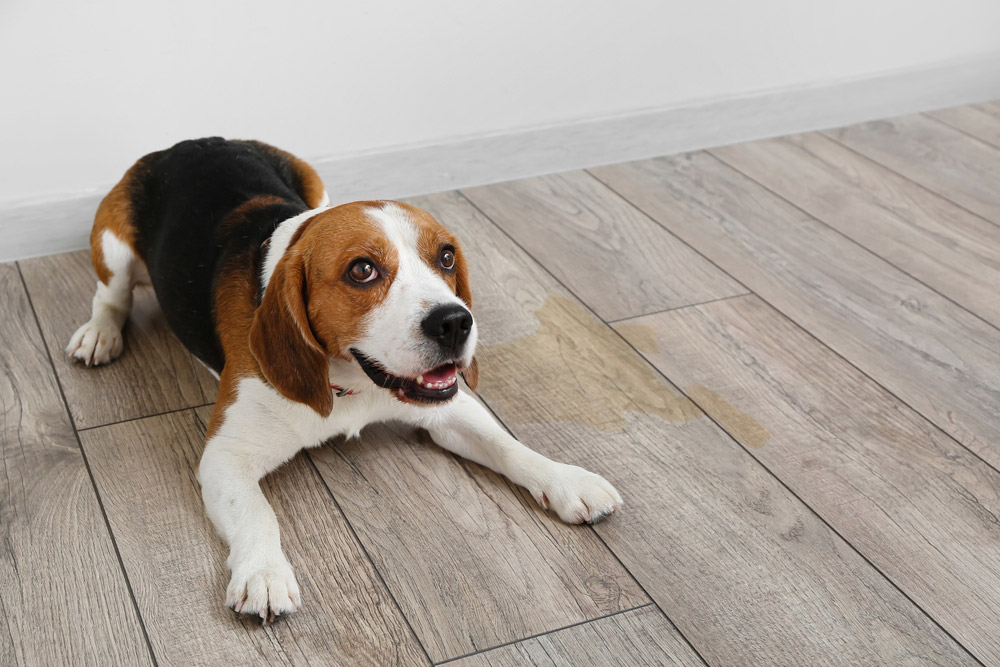
If you have noticed that your dog can’t seem to hold it at all and seems to leak urine everywhere, you may wonder if they are incontinent. Sometimes what is perceived as incontinence is simply a puppy that can’t hold their bladder for as long as we think they can. However, there are some cases where a puppy is actually incontinent. For these pups, an underlying health condition is usually to blame, so be sure to discuss any concerns with a veterinarian.
But how common is puppy incontinence? At what age does it usually strike in life? What are some methods to reduce problems related to incontinence? We have all the answers for you.

What Is Urinary Incontinence?
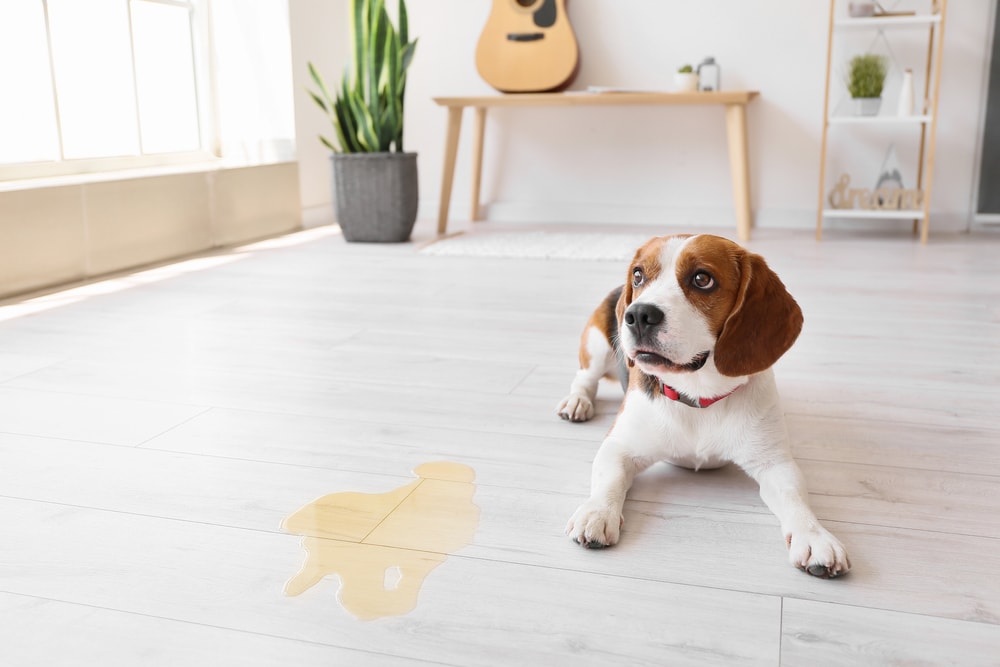
Most dogs are in control of when they release urine and when they hold it in. Dogs with urinary incontinence release urine involuntarily. They have no control over letting the urine out or holding it in. Typically, incontinence affects older dogs that are slowing down and may be losing some muscle control.
Puppies, on the other hand, may be perceived as incontinent simply because they can’t hold their bladder for very long. As a general rule, a puppy can only hold their urine for as many hours as they are months old. This means that a two-month-old puppy can hold their bladder for about two hours. If we don’t let them out often enough, they can appear incontinent because they just can’t hold it in any longer.
But that does not mean that urinary incontinence doesn’t exist in puppies. It absolutely can, so if you notice any of the following signs, speak to a veterinarian.
Did you know you can speak to a veterinarian without having to travel? Just head over to PangoVet. It's our online service where you can talk to a vet online and get the advice you need for your pet — all at an affordable price!

Signs of Urinary Incontinence in Puppies and Adult Dogs
- Pooling of urine during relaxation
- Wet spots where the dog sits/lays
- Dribbling urine while walking
- Prolonged dribbling after voluntary urination
What Causes Urinary Incontinence?
Urinary incontinence is usually a sign of an underlying health issue. There can be several causes of this, ultimately leading to different treatments. Here is some information on some commonly seen issues.
1. Urinary Tract Infections
Urinary tract infections can be very problematic and irritating for your puppy. If they have a urinary tract infection, you can expect them to need to go to the bathroom often, potentially in the house.
- Straining to urinate
- Posturing to urinate with only dribbles or no urine coming out
- Licking genitals
- Foul-smelling or cloudy urine may contain blood
Urinary tract infections happen when bacteria travel up through the urethra and potentially into the bladder. It requires a urinalysis to diagnose and is treated with antibiotics.
2. Congenital Defects of the Urinary Tract
The growth and development of a fetus is an incredible thing, but it is not one that always goes as planned. For some pups, this may mean improper development of the urinary tract that happens before birth. This can lead to incorrect placement of the tubes leading from the kidneys to the bladder, called ectopic ureters. This condition can cause urinary incontinence because the setup doesn’t allow for normal muscle control of urine flow.
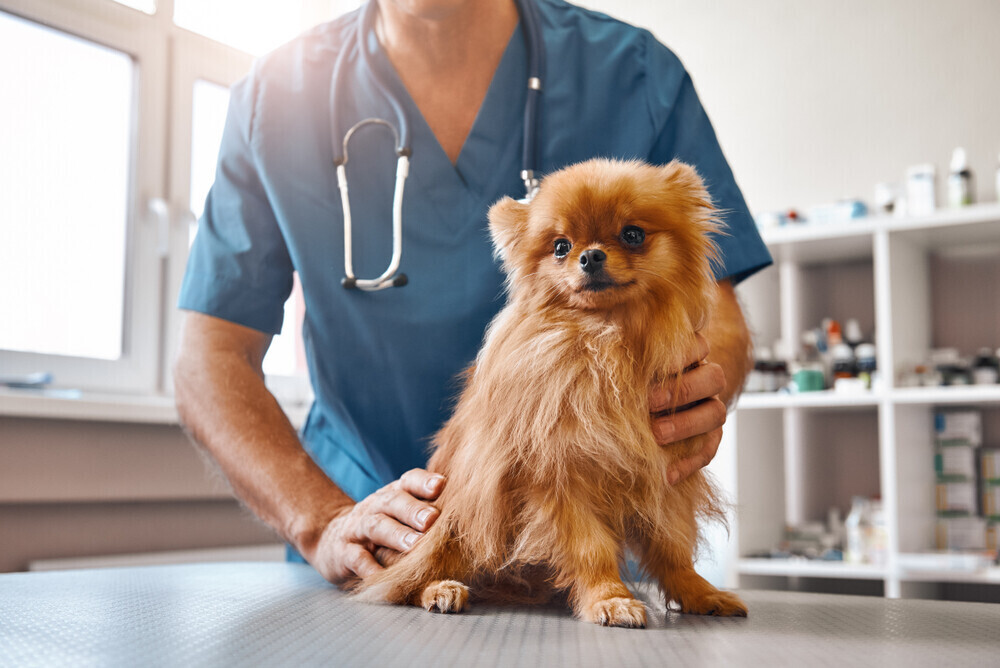
A vet will be able to diagnose ectopic ureters and potentially correct them with surgery.
3. Neurological Conditions
Certain neurological conditions can affect the way that your dog holds their bladder. Some examples include spinal injuries, injuries to the bladder nerves or issues that affect the brain, such as an abscess, injury or tumor.
An underlying genetic health problem or physical injury can cause neurological conditions. So, see a vet if you notice that your puppy doesn’t seem to have control of their bladder.

Treatment for Urinary Incontinence
Most cases of urinary incontinence in puppies are going to stem from a urinary tract infection. This means a course of antibiotics often does the trick. For puppies that are suffering from a neurological dysfunction, treatment may focus on decreasing inflammation and helping the nerves repair. Puppies that have ectopic ureters may require surgery to regain continence. No matter what the cause, seeing a vet is the first step.
What Is Submissive Urination?
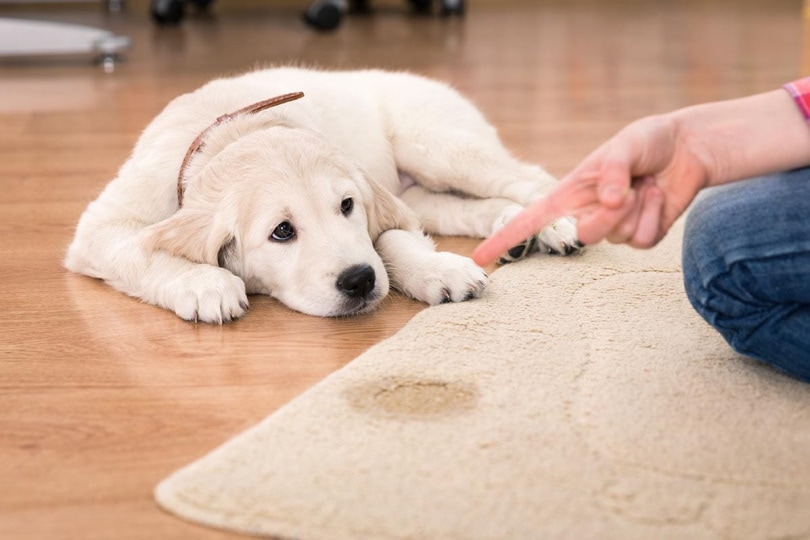
You’ve no doubt seen a puppy that leaks urine when confronted with something scary. Whether it’s a stranger approaching, a loud noise, or fear of punishment, submissive urination is leaking of urine when fearful. Dogs may also crouch or roll over, tuck their tail, or avoid eye contact as well.
Even though it is in a different spirit, excitable urination is often lumped into the same category. It’s caused by an overstimulation of some type of emotion, which causes loss of bladder control. So, in a sense, excited and submissive urination, though caused by different emotions, can be categorized similarly.
How Does Submissive Urination Differ from Urinary Incontinence?
Submissive urination is a type of urinary incontinence, but not all urinary incontinence involves submissive urination. Submissive urination usually happens in anxious dogs as a response to fear of something in the environment.
This behavior is more common among females that are roughly at the age of sexual maturity. It can taper off, and the whole issue could disappear with age, training, and patience.
Urinary incontinence often happens due to an underlying health condition or loss of function due to age, not due to environmental triggers. Submissive urination usually doesn’t require any kind of medical treatment, but urinary incontinence caused by an underlying health condition does.
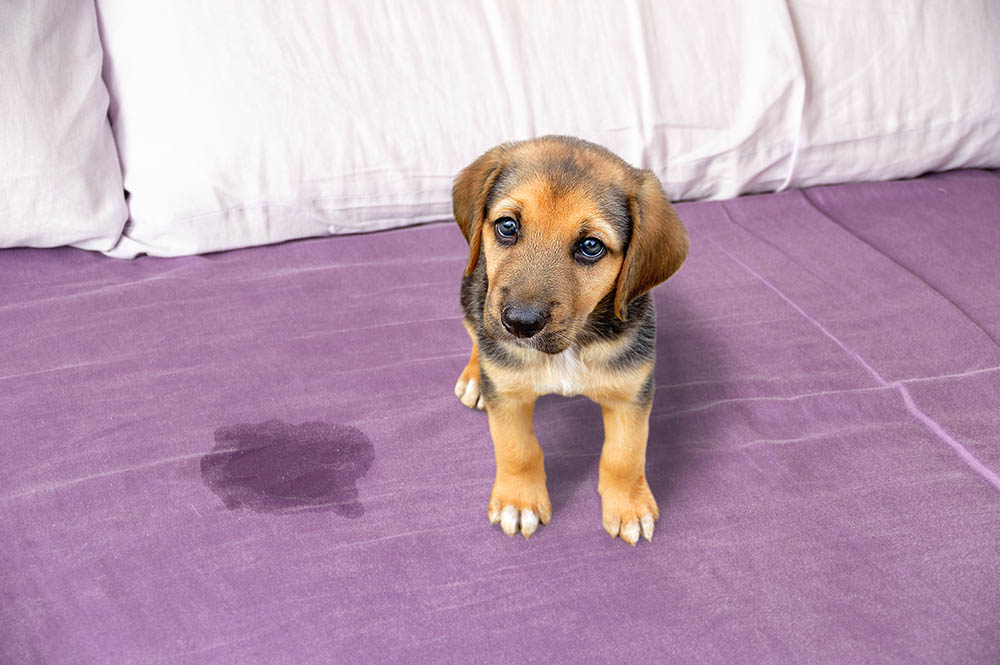
Other Reasons for Inappropriate Urination
Of course, there is no one-size-fits-all answer when it comes to health-related questions. So, while we have covered some of the more likely issues, here are some other problematic areas of dog care that can lead to inappropriate urination.
1. Incomplete House Training/Regression
Puppies that were once seemingly housetrained can regress due to a number of factors. It could be that you became more lax or inconsistent with their training, or they became fearful or otherwise stressed by the process. Either way, a regression in house training can lead to accidents in the house.
2. Separation Anxiety

Our dogs can suffer quite a bit when we’re away. Separation anxiety is an incredibly common issue among domesticated canines. They can get so attached to their family companions that being apart can make them very stressed and anxious. Separation anxiety can show itself as destructive behavior, obsessive behaviors like licking their paws, or as potty accidents in the house.
Sometimes, environmental modifications can reduce, if not eliminate, all of these behaviors. But often, separation anxiety is tough to manage, and there’s a huge reason many people enroll in professional training to help.
3. Marking/Territorial Urination
When your dog reaches the age of sexual maturity, they may develop many physical and behavioral changes that can be complicated to manage.
One of those behaviors is marking their territory with urine to show other dogs what is theirs. This is an instinctual behavior and can be to ward off other dogs of the same sex or attract mates. Unfortunately, it can also ruin your furniture and carpets.
Getting your dog spayed or neutered before they reach sexual maturity can help prevent this type of urination, so be sure to speak to a vet about the best time to have your dog fixed.

Cleaning Up Dog Urine
If you are in search of products that can help keep your puppy fresh and urine-free between baths, you will want to check out pet wipes that you can use to clean your puppy. You will also need an enzyme cleaner to clean up accidents on your floor and fabrics. Enzyme cleaners are important to remove all traces of the accident to prevent future accidents from happening in the same place.
Our Favorite Products Incorporating Hepper's Advanced Bio-Enzyme Pet Stain & Odor Eliminator Spray and Wash Wipes makes for an excellent grooming and cleaning duo when you need it most. First, by keeping your pet fresh and clean on-the-go, and second, by removing smells and stains on various surfaces to leave your home fresher than ever. At Dogster, we’ve admired Hepper for many years, and decided to take a controlling ownership interest so that we could benefit from the outstanding products of this cool pet company!
Image
Product
Details
For On-the-Go

Hepper Wash Wipes
Check Price
For Home

Hepper Advanced Bio-Enzyme Pet Stain & Odor Eliminator Spray
Check Price
Conclusion
No matter what, if your puppy’s bathroom habits change, it warrants a vet visit. Even if it is just the normal course of potty training, it’s best to report a change if you think something might be wrong. In the best-case scenario, the potty training has had a minor setback.
But, it could be a sign of an underlying health condition. A vet can easily rule out serious health conditions with a few simple tests. So, make an appointment as soon as you can.
Featured Image Credit: Pixel-Shot, Shutterstock