In this article
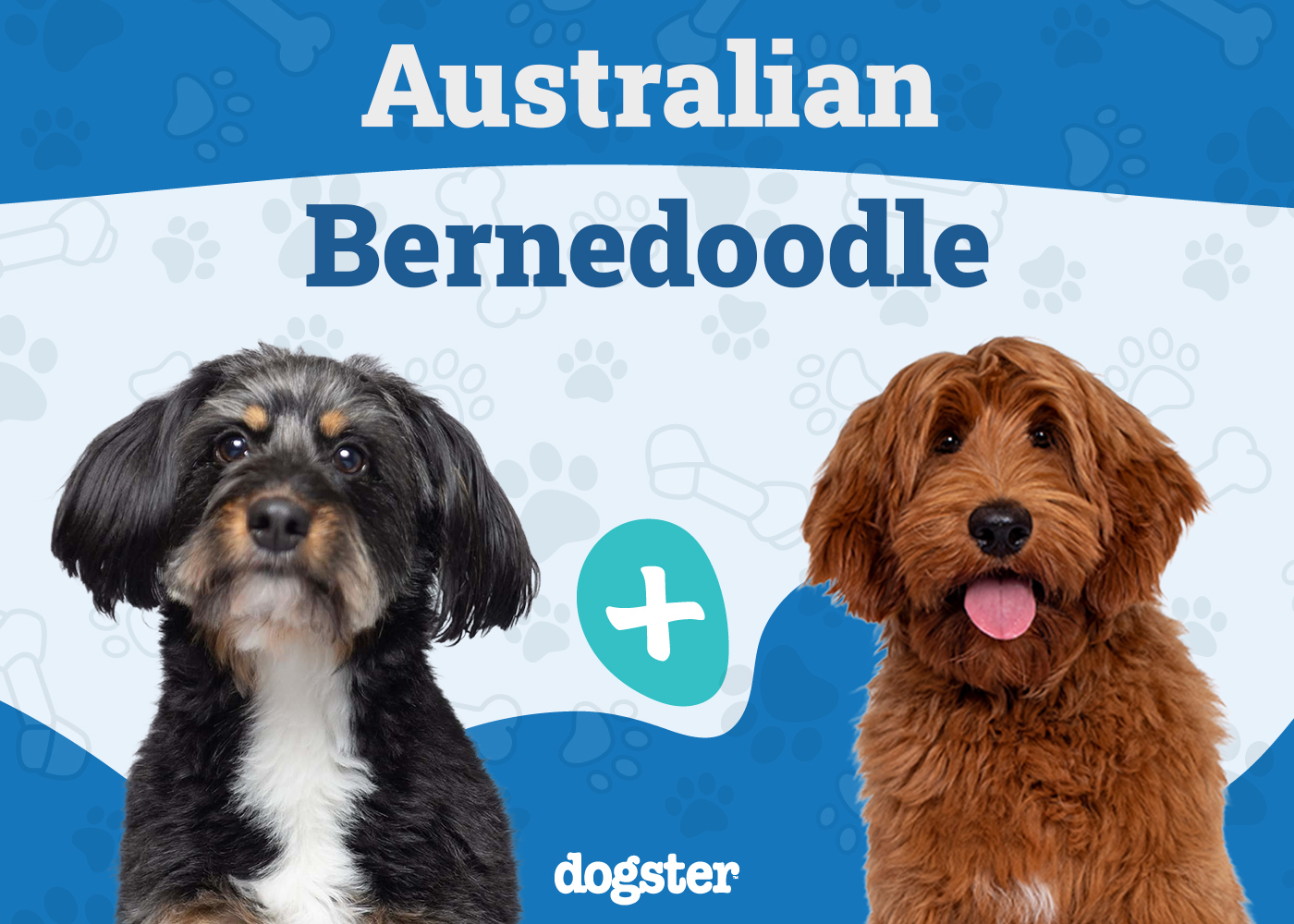
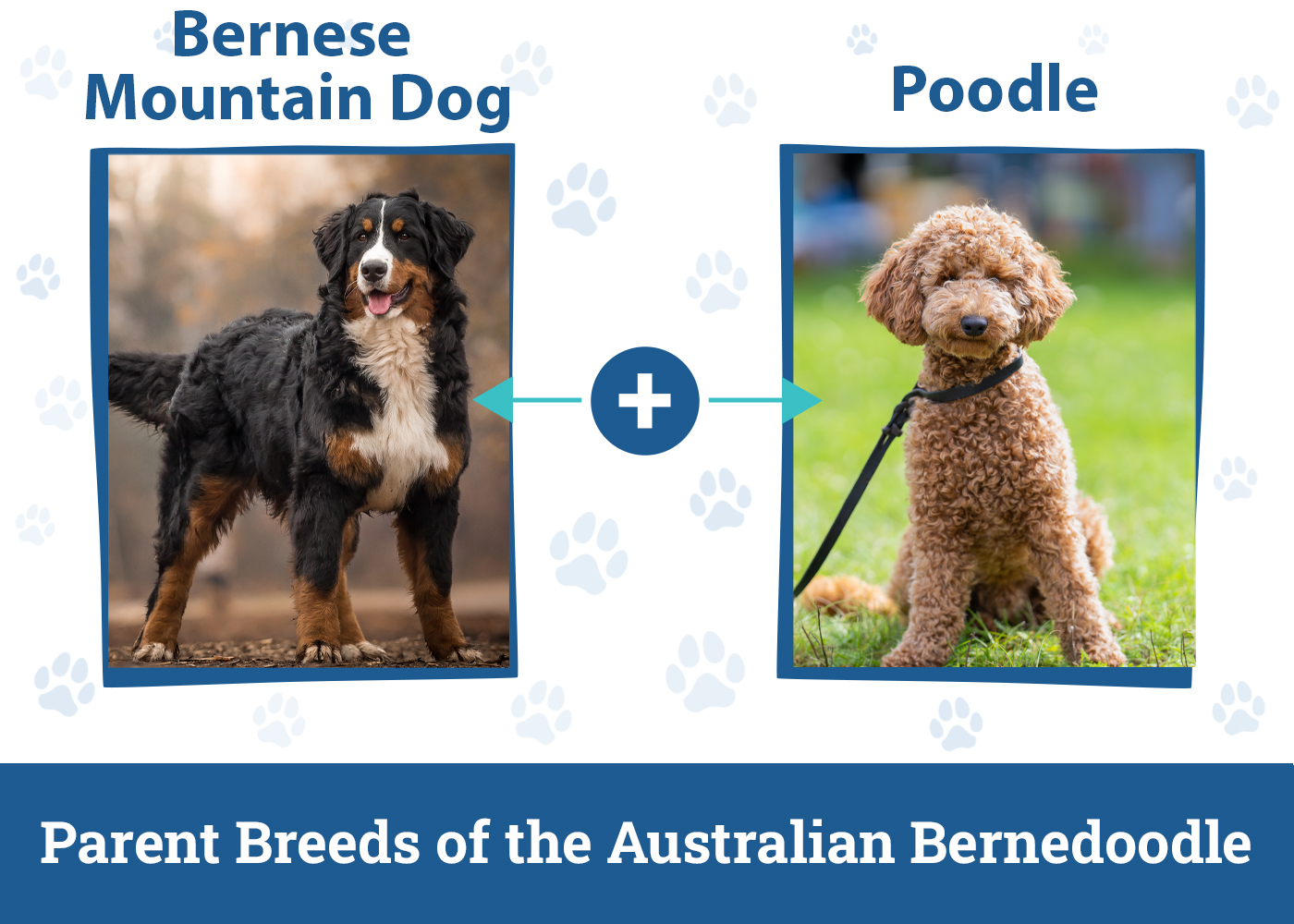
View 8 More +The Australian Bernedoodle is a modern mixed breed created by crossing a Bernedoodle (a Bernese Mountain Dog and Poodle cross) or a Bernese Mountain Dog (this depends on the breeder) with an Australian Labradoodle (Labrador, Cocker Spaniel, and Poodle blend). In this post, we walk you through what to expect when parenting one of these vivacious, friendly dogs.
Breed Overview
Height:
20–27 inches (standard), 18–22 inches (medium), 11–17 inches (tiny/micro mini)
Weight:
50 pounds (standard), 25–49 pounds (medium), 10–24 pounds (tiny/micro mini)
Lifespan:
12–18 years
Colors:
Tricolor, bi-color, phantom, red/white tuxedo, merle, brindle and white, black and white, etc.
Suitable for:
Those looking for a loving and devoted companion, suitable for families with proper socialization
Temperament:
Good-humored, goofy, easygoing, loving, intelligent
Some breeders develop Australian Bernedoodles in a variety of sizes, ranging from standard to “micro mini” or “tiny.” They have three possible coat types: wavy, curly, and straight. Since Bernedoodles and Australian Labradoodles can come in many different colors, several coat color possibilities exist for the Australian Berndedoodle. A tricolor combination is one of the most common.
Australian Bernedoodle Characteristics

Australian Bernedoodle Puppies
Buying an Australian Bernedoodle from a reputable breeder will be pricey, as while these dogs are not rare, they’re not that common either. An alternative is to check out local shelters and adoption sites to see if any Australian Bernedoodles or similar mixes, like Labradoodles and Bernedoodles, are available.
Those who have brought home Australian Bernedoodles as puppies have found that these dogs are typically a great mix of playful and mellow and are easy to fall in love with. Other common traits are friendliness and a cheerful disposition, which sets a great base for training and socialization.
Temperament & Intelligence of the Australian Bernedoodle
It seems unanimous among Australian Bernedoodle parents that they’re big (or tiny, in some cases) balls of joy that you just can’t help but smile at, even when they get into mischief!
A great temperament is one of the factors that make Australian Bernedoodles so popular, though responsible breeding practices and socialization play huge roles in bringing out the best in any dog, regardless of breed.
Are These Dogs Good for Families? 👪
Yes, Australian Bernedoodles typically make wonderful family companions due to their often gentle, calm, and happy-go-lucky personalities. Nevertheless, as with any dog, if you’re bringing a puppy home, it’s key to start socializing and training them as soon as possible to make sure they get along well with everyone in the family.
If you adopt an Australian Bernedoodle from a rescue organization, you can discuss their family-friendliness with the organization to help you make your decision.
Does This Breed Get Along With Other Pets?
This largely depends on different animals’ personalities and experiences, but if the Australian Bernedoodle’s family makes the effort to gradually and safely introduce them to other fluffy companions from a young age, the chances of all the animals in your home getting along are greatly increased.
When deciding whether to bring a dog home, consider the personalities of the dog and the other animals in your home and their past experiences to help you determine whether they’d be a good match.
For example, if you adopt a dog that has a history of aggression toward other animals, they’d be better off in a single dog/pet household. Conversely, if they’ve lived harmoniously with other pets before and/or your other pets are quite adaptable, there’s a much better chance of things working out.

Things to Know When Owning an Australian Bernedoodle
Food & Diet Requirements 🦴
Your Australian Bernedoodle needs a complete and balanced diet made up of a blend of essential nutrients—specifically, proteins, vitamins, minerals, fats, and carbs. It’s most convenient to go for a commercial diet formulated by a reputable brand to ensure your dog gets all the essential nutrients they require.
When choosing a formula, check carefully to make sure it fits your dog’s specific needs (age, size, etc.). Your dog’s meals should be portioned out by weighing to help prevent overeating or undereating (refer to the package or your vet’s instructions for the accurate daily amount), and clean water should also be available at all times.
Exercise 🐕
Australian Bernedoodles typically have moderate energy levels, and healthy adults do well with around 30–40 minutes of physical exercise per day, though this varies from dog to dog. Some especially playful Australian Bernedoodles may need around an hour or more of exercise per day.
For puppies, their exercise time should be split into short sessions to avoid overexerting them. Speak to the breeder, adoption agency, or your vet about the best amount of exercise for puppies, as too much exercise can cause damage to the joints, especially in large-breed puppies.
Training 🎾
By all accounts, Australian Bernedoodles are highly intelligent, willing dogs. Some have a tendency to be goofy, so they’ll likely need kind but firm and consistent leadership to keep them on track in training sessions.
It’s best to start training from day one (the day you bring them home), especially the basics like “sit,” “come,” and “stay,” and using the bathroom outside. Stick to short, bite-sized sessions several times per day to make it easier for your Australian Bernedoodle to retain the new information and skills. You might also want to consider heading to obedience and socialization classes for extra support.
Grooming ✂️
How much an Australian Bernedoodle will shed depends on their parentage and the coat type they inherit, but most are low-shedding. In terms of brushing, at least once per week should be sufficient for keeping an Australian Bernedoodle’s coat in good condition, and you might want to consider having them trimmed occasionally by a professional groomer.
One of the most important parts of grooming is nail care. When a dog’s nails grow too long, they can dig into the paw pads, making it painful to walk and move about as normal, so be sure to check the nails regularly and trim them as needed. Avoid the pinkish part of the nail (the quick) when trimming, as cutting this area causes pain. Stick to cutting only the ends of the nails.
- Also Read: Best Dog Wipes
Health and Conditions 🏥
There are no known health conditions linked to Australian Bernedoodles specifically, and responsible breeders will screen their dogs for genetic conditions, but any dog can develop a health condition at some point in their life. Serious and minor conditions that sometimes affect these and other dogs in general include the following.
- Mild allergies
- Minor stomach upset
- Cancer
- Hip and elbow dysplasia
- Dental disease
- Eye diseases
- Obesity
Male vs. Female
Whether your Australian Bernedoodle is male or female won’t make much difference to their personality—you can only know a dog’s character by spending time with them, as each is unique. Both males and females can be fun-loving, gentle, and loyal, and both can be stubborn, independent, and assertive—it really depends on the individual dog.
One thing to be aware of is that in unspayed female dogs in heat and unneutered male dogs, there can be noticeable and sometimes unsavory behavioral changes. For example, some unneutered males seeking a female become more territorial around other dogs than they usually would, and they are more prone to roaming, humping, and urine marking.
Unspayed females in heat may also become more feisty and irritable than usual, and they sometimes urine mark and roam too. Females in heat also experience vaginal discharge with blood, though this is normal.
Finally, unspayed females are more at risk of mammary diseases, whereas unneutered males have a higher chance of developing testicular cancer.

3 Little-Known Facts About the Australian Bernedoodle
1. Australian Shepherds Aren’t Used in Australian Bernedoodle Breeding
It’s easy to imagine that the reason for the “Australian” portion of this hybrid’s name is that Australian Shepherds are part of the parentage, but they actually play no part in the breeding of Australian Bernedoodles. The name simply refers to the fact that the mixed breed was first developed in Australia.
2. Australian Bernedoodles Are Adaptable
With their typically mellow temperament and the fact that they come in various sizes, Australian Bernedoodles are well-adapted to living in both big and small homes, as long as they get enough daily exercise.
3. The Parent Breeds Have Long Histories
The breeds that go into making an Australian Bernedoodle are the Bernese Mountain Dog, Poodle, Labrador Retriever, and Spaniel types. The Bernese Mountain Dog’s ancestors date back around 2,000 years to Roman times. The Poodle dates back to the Middle Ages, and the Labrador Retriever’s ancestors were around in the 16th century. Spaniel-type dogs may have ancestry that dates back as far as 300 A.D.
Conclusion
It didn’t take long for this modern hybrid breed to capture the hearts of dog lovers everywhere. As a quick recap, if you’re thinking about making one of these lovely dogs a member of your family, you can likely expect lots of laughs, lots of love, and a hint of mischief for many years to come.
That said, these dogs tend to cost a fortune, so you might want to keep your options open, perhaps by considering giving a shelter dog a new home or looking around for dogs that need to be rehomed.
See also: